


Table of Contents
Bringing a new guinea pig home is an exciting experience. These small, expressive animals make fantastic companions, but your new furry friend might not be ready for cuddles right away. As prey animals, guinea pigs are naturally cautious in new environments.
Building trust takes time, but it’s worth it. When you make your pet feel secure, you help a shy animal become a confident companion who seeks your attention.
This article will walk you through everything you need to know about bonding with guinea pigs, from quiet moments to interactive playtime.
Why Bonding Matters
Guinea pigs are highly social animals that thrive on interaction. In the wild, they live in herds, relying on each other for safety and companionship. When you bring a guinea pig into your home, you become their new herd.
Taking the time to bond directly impacts your pet’s physical and mental well-being. A strong bond reduces stress, which can lower their risk of illness and encourage healthy behaviors like eating and playing. For you, the bonding process creates a deep connection that makes pet ownership incredibly rewarding.
5 Fun and Easy Bonding Activities
Learning how to bond with guinea pigs doesn’t require complicated training. Simply incorporating a few gentle activities into your daily schedule will work wonders. Here are five fun, easy ways to build a lifelong connection with your pet.
Hand-Feed Treats
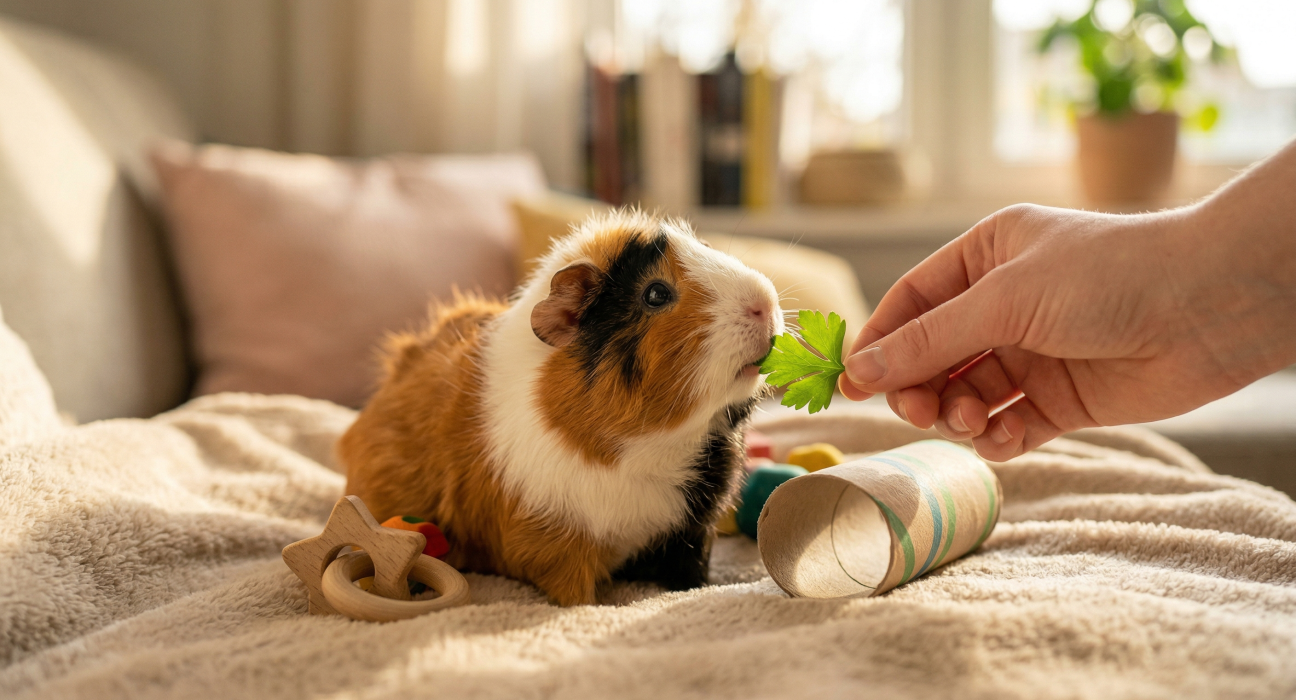
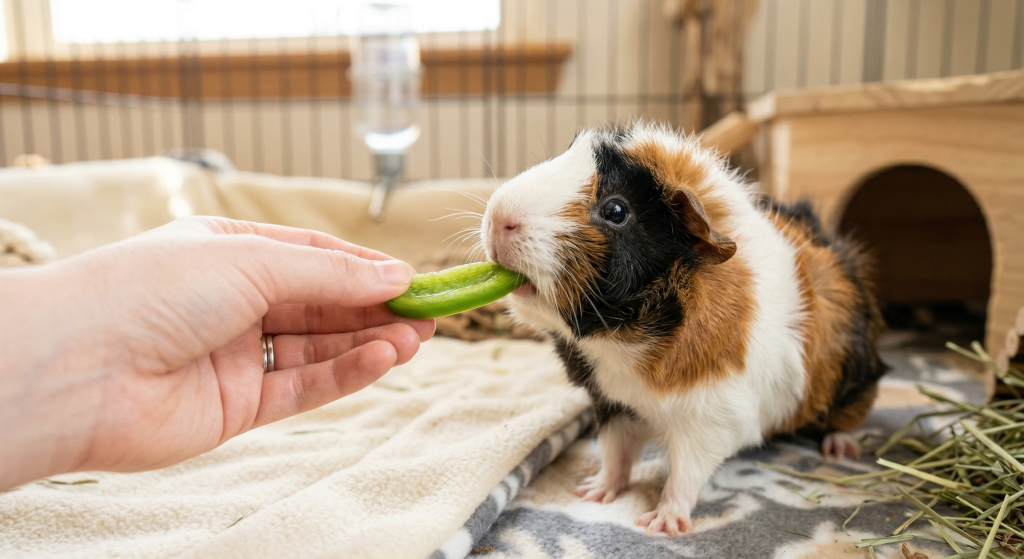
The fastest way to a guinea pig’s heart is often through its stomach. Hand-feeding is a powerful way to teach your pet that your presence brings good things.
Start by offering safe, high-value treats like a sprig of fresh parsley, a thin slice of bell pepper, or a piece of romaine lettuce. Hold the treat near the cage or rest your hand inside. Don’t force it; let them approach at their own pace. If they snatch the food and run away, let them. Over time, they will learn your hand is safe and eventually eat from your fingers.

Floor Time
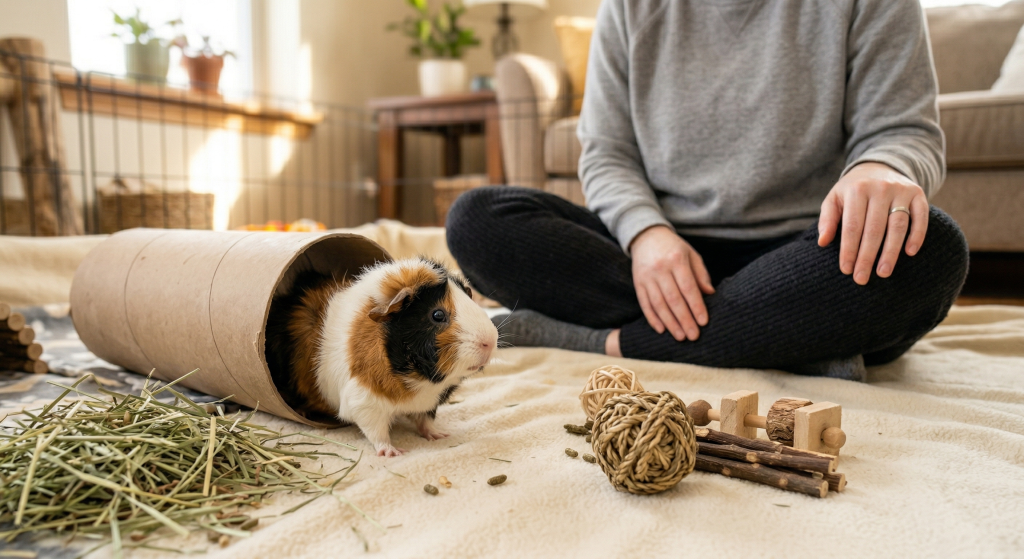
Guinea pigs love to explore, but they feel most secure with solid ground under their feet and plenty of places to hide. Supervised “floor time” outside their cage is an excellent way to interact in a low-pressure setting.
Create a safe, enclosed area with a playpen. Scatter a few tunnels, cardboard boxes, and fleece hideouts around the space. Sit on the floor with your pet. Don’t try to grab them; just sit quietly with a book or your phone and let them investigate you on their own terms. This passive interaction builds immense trust.
Gentle Petting and Grooming
Once your guinea pig is comfortable approaching you, you can introduce gentle physical contact. Knowing where to pet your guinea pig is key. Most dislike being touched on their lower back or rump.
Instead, try scratching gently behind the ears, on top of the head, or under the chin. Use one or two fingers and move slowly. If they lift their chin or close their eyes, you’ve found a sweet spot. Regular brushing with a soft-bristled pet brush is also a great bonding activity, especially for long-haired breeds that need daily grooming.
Talk to Your Guinea Pig
Guinea pigs have excellent hearing and use vocalizations to communicate. You can tap into this by talking to your pet frequently. A calm, soothing voice helps them recognize you and associate your tone with safety.
Talk to them while preparing their vegetables, narrate your day while sitting near their cage, or softly read a book aloud. Over time, they will learn the sound of your voice and may even start “wheeking” (a high-pitched squeak) in response when you enter the room.
Enrichment Toys and Games
Mental stimulation is a vital part of guinea pig care. Playing together gives you a chance to bond while keeping your pet active.
You don’t need expensive toys. Simple DIY games are often their favorites. Stuff a cardboard toilet paper roll with fresh Timothy hay and hide a few herbs in the center. Watch them toss it around to get the treats. You can also hide small pieces of vegetables around their floor time area to encourage natural foraging behaviors.
Common Mistakes to Avoid
When you bring a new pet home, it’s normal to want to hold them immediately. However, rushing the process can set you back. For a successful bonding journey, avoid these common mistakes:
- Chasing them: If your guinea pig runs into their hideout, let them stay. Chasing them triggers their prey instincts and causes panic.
- Being too loud: Loud noises and sudden movements will terrify a new guinea pig. Keep the environment quiet and move slowly.
- Pulling them from hiding spots: Their hidey-house is their safe space. Forcing them out violates that safety. Lure them out with treats instead.
- Moving too fast: Every guinea pig is different. Some may bond in a week, while others might take months. Patience is essential.
How to Recognize Progress
How do you know if your efforts are working? Guinea pigs use sounds and body language to show their mood. Here are a few clear signs your pet is starting to trust you:
- Popcorning: The ultimate sign of a happy guinea pig! They will suddenly jump straight up in the air. If they do this during floor time, you’re doing a fantastic job.
- Purring: A low, rumbling purr means they feel relaxed and comfortable during petting.
- Coming to the cage: When your pet recognizes you as a source of food, they will often run to the front of the enclosure to greet you.
- Pancaking: If your guinea pig stretches out completely flat, they feel completely safe in their environment.
Nurturing a Lifelong Friendship
Building a bond with a new guinea pig is a journey that requires patience, consistency, and plenty of fresh vegetables. By respecting their boundaries and providing a safe environment, you will soon earn their trust. Remember that every small step—from taking a treat to falling asleep in your lap—is a massive victory.
A proper environment is crucial for bonding. To ensure your pet feels secure, explore our guide on the Best Guinea Pig Cages for Comfort and Safety. You can also check out our Guinea Pig Diet and Nutrition Guide to find more healthy treats for hand-feeding.
Sudden behavioral changes or a refusal to interact might signal a health issue. If your pet seems lethargic or stops eating, consult an exotic animal veterinarian. For trusted, veterinary-reviewed information on small pet health, we recommend high-authority resources like PetMD or the ASPCA.
Enjoy getting to know your new best friend.