

Dogs and cats rarely cry out when something hurts. Many hide discomfort, so the signs your pet is in pain are often small changes that are easy to put down to age, mood or a bad day. By the time a pet limps badly or yelps, the problem may have been there for a while.
This guide covers six changes in behaviour that owners commonly miss, with examples for dogs and cats. It also explains how to tell a real change from your pet's normal routine, what to write down before a vet visit, when to call your vet and what not to do. A change in behaviour is a reason to investigate. It is not a diagnosis, and many of the signs below have causes that have nothing to do with pain.
Short answer: look for new or unusual changes in how your pet moves, grooms, interacts, eats, drinks, uses the toilet, sounds and sleeps. If you notice one that lasts or keeps returning, book a vet visit. If your pet is straining to urinate, struggling to breathe or has collapsed, treat it as an emergency.
Table of Contents
- 1. Changes in posture or movement
- 2. Altered grooming habits
- 3. Shifts in social behaviour
- 4. Changes in eating, drinking or toileting
- 5. Subtle vocalisations
- 6. Restlessness or changes in sleep
- How to recognise changes from normal
- What to record before a vet appointment
- When should you contact a vet?
- What pet owners should avoid doing
- What to do next
- Frequently asked questions
Signs your pet is in pain at a glance
| Area | What you may notice in dogs | What you may notice in cats |
|---|---|---|
| Posture and movement | Slower on stairs, stiff after rest, lagging on walks | Stops jumping up, hunched sitting, stiff gait |
| Grooming | Licking one paw or joint over and over | Matted coat, or one patch groomed bare |
| Social behaviour | Avoids touch, snaps when approached | Hides, hisses at housemates |
| Eating and toileting | Drops food, chews on one side, accidents indoors | Leaves food, avoids the litter box |
| Sounds | Whimpering, groaning, grunting when settling | Unusual yowling, or going quiet |
| Rest | Pacing, panting at rest, waking at night | Circling, repeatedly changing position |
1. Changes in posture or movement
Movement is often the first place pain shows up. Owners tend to write it off as getting older, but stiffness is not something pets simply have to live with. Vets can often help.
In dogs, look for hesitation at stairs or before jumping into the car, slow rising after a nap, shorter walks, lagging behind or a limp that comes and goes. In cats, the signs are quieter. A cat that used to leap onto the counter may start using a chair first, or stop jumping up altogether. You may also see a hunched sitting posture, a stiff walk or less interest in climbing.
Some postures can point to abdominal discomfort, such as a hunched back or a "praying" position, with the front legs low and the back end raised. Dogs also use that position to invite play, so context matters. If your dog holds it repeatedly outside play, or looks uncomfortable and restless, that is worth a call to your vet. The position cannot tell you what the problem is.
The VCA Animal Hospitals guide for dogs and the VCA guide for cats list more mobility signs to watch for.

Reluctance to use stairs is a common change that owners put down to age.
2. Altered grooming habits
Grooming is a good barometer in cats. A cat that stops grooming may find it painful to twist or stretch, and the coat can look greasy, matted or unkempt, especially along the back and hindquarters.
Too much grooming can also be a sign. A pet may lick or chew one spot repeatedly, such as a paw, a joint or a patch on the belly, which can lead to hair loss and sore skin. Pain is only one possible reason. Skin irritation, fleas or other parasites, allergies and stress can all cause the same behaviour, which is why a vet needs to look. Do not assume it is a habit.
Check that the licked area is not red, swollen, hot or wet, and look for fleas or flea dirt. If the licking continues or the skin looks damaged, book a visit.
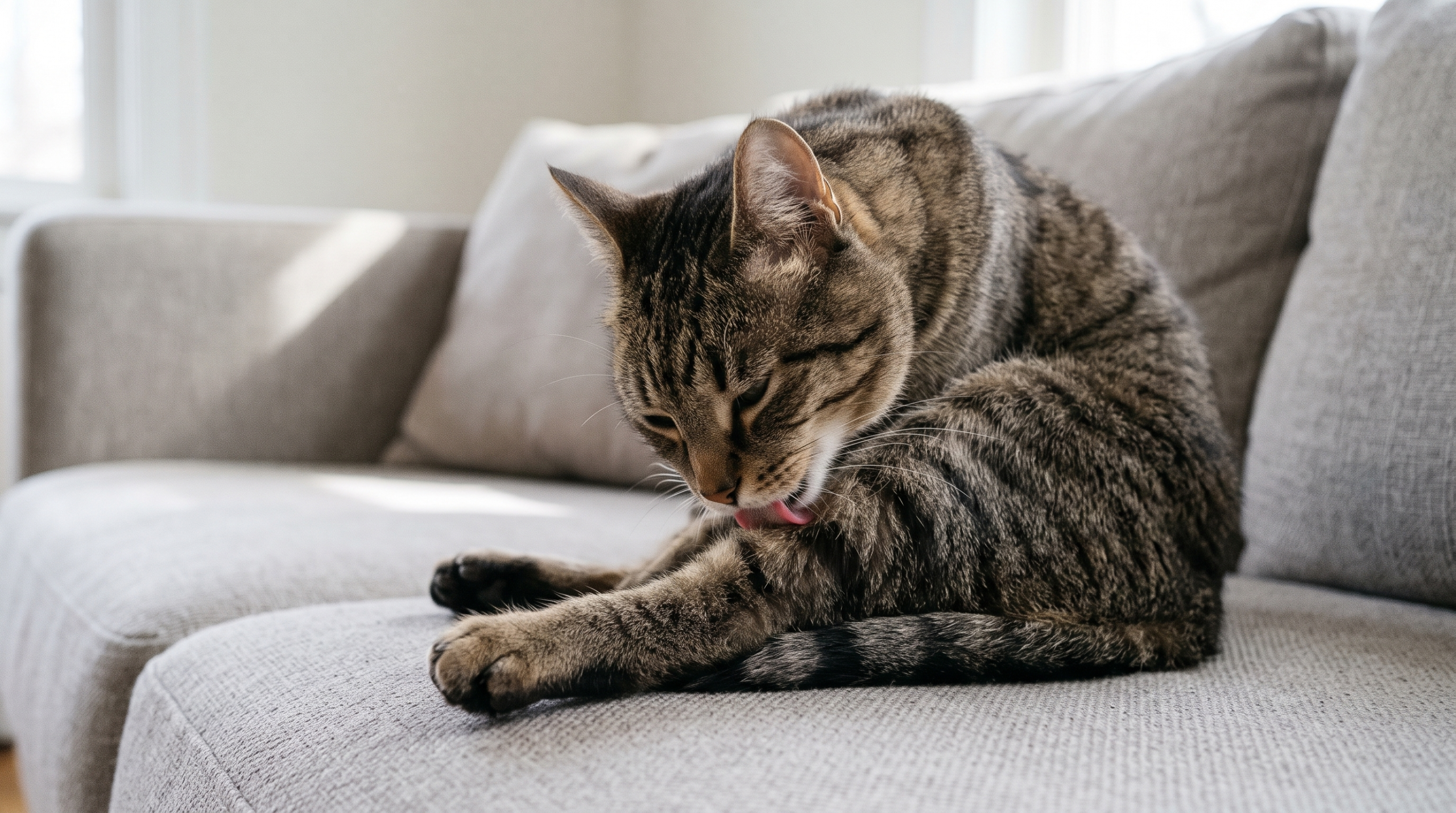
Overgrooming: A cat repeatedly licking, chewing, or focusing on one specific spot, like a back leg or joint, can be a sign of pain, stress, or skin issues that require a vet's attention.
3. Shifts in social behaviour
Pain can change a pet's personality. A friendly dog may shy away from being stroked, hide under a table or growl when you reach for a sore area. A cat may retreat to a wardrobe or the top of a shelf, stop greeting you or hiss at a housemate who comes too close. A dog that used to play may snap when another pet approaches.
That kind of irritability is often defensive. The pet is protecting a part of the body that hurts. But the same changes can come from stress, a new pet in the house, fear or illness, so treat them as a reason to investigate. If a gentle pet suddenly seems withdrawn or snappy, speak to your vet before assuming it is "attitude". If your dog's barking has changed, our guide to why dogs bark at everything explains when to rule out a medical cause.
4. Changes in eating, drinking or toileting
Appetite changes are common in pets that are hurting. Dental pain can make chewing uncomfortable, and pets may drop food, chew on one side, paw at the mouth or approach the bowl and then walk away. Nausea and abdominal discomfort can also reduce appetite. Drinking more or less than usual is another change that deserves a vet visit, although it points to several conditions, not just pain.
Toileting changes matter too. Accidents in the house are not always a behaviour problem. A dog with sore joints may not make it outside in time. A cat with arthritis may avoid a litter box with high sides, and a cat that is uncomfortable passing urine may start using other places. Cats Protection explains more in its guide to signs of pain in cats.
5. Subtle vocalisations
Most people expect pain to sound like a yelp. More often it is much quieter: a whimper when your dog lies down, a groan or grunt while getting comfortable, or a sigh that sounds unusually heavy. Cats may yowl at odd times, hiss or growl when touched in a certain spot, or go unusually quiet.
Purring needs a careful note. Cats purr when they are content, but they can also purr when stressed, unwell or in pain, so a purr alone does not prove a cat is fine and does not prove it is hurting. Look at the whole cat: posture, appetite, whether she is hiding and whether her habits have changed. Our guide to cat tail language shows how to read other cues, including a tucked or limp tail that may be a sign of discomfort.
6. Restlessness or changes in sleep
Pets in discomfort find it harder to settle. A dog may pace, pant while resting, change position again and again or wake in the night to wander. A cat may circle, get up and lie down repeatedly or move between resting places. Some pets sleep much more than usual, because hurting is tiring.
Sleep and restlessness changes have many causes, including anxiety, heat, illness and, in older dogs and cats, age-related cognitive changes. Because several causes look the same, a pet that is restless at night for more than a short time should have a vet check. The VCA Animal Hospitals page on pain in aging dogs and its page for aging cats describe changes that owners often put down to old age.
How to recognise changes from normal
Every pet has a baseline. One dog is always slow to get up, and one cat has always been shy. What matters is a change from what is normal for your pet, so the most useful habit is to notice how your pet usually behaves. Think about how quickly she eats, where she sleeps, how she greets you, how she moves on stairs and how she uses the litter box.
A simple way to do this is to keep a short note on your phone for a week or two, or to take a quick video once a month of your pet walking and getting up. Then you can compare. Gradual changes are the ones people miss most, because they happen slowly. Do not assume a new behaviour in an older pet is just age. The AAHA pain management guidelines for dogs and cats and the WSAVA guidelines for recognising, assessing and treating pain both treat behaviour changes as part of how vets recognise pain.
What to record before a vet appointment
Your vet cannot watch your pet at home, so your notes are valuable. Before the visit, write down:
- When you first noticed the change, and whether it is getting better, worse or staying the same.
- How your pet moves: stairs, jumping, rising, limping, which leg, and whether it is worse after rest or exercise.
- Appetite and thirst, including any dropped food or chewing on one side.
- Grooming, such as a matted coat or licking or chewing one spot.
- Social behaviour: hiding, avoiding touch, snapping or hissing.
- Toileting: accidents, straining, litter box changes, and how often.
- Sounds: whining, groaning, yowling, and when they happen.
- Sleep: restlessness, waking at night, and panting at rest.
- Any medication, supplements or recent changes in food, routine or home.
Where it is safe, take a short video of the behaviour, such as your dog on the stairs or your cat jumping. Do not try to provoke the movement or touch a sore spot to get the footage. Pets often act differently in the clinic, and a video can show your vet what you see at home.
When should you contact a vet?
Not every change is an emergency, and not every change can wait. Use this as a rough guide, and call your vet if you are unsure.
| How urgent | Examples |
|---|---|
| Routine appointment | A mild change that is new, such as slower on stairs, less grooming, a little more sleep or occasional stiffness. Book a check soon, and do not wait for it to worsen. |
| Urgent assessment (same day or next day) | Limping that continues or does not bear weight, not eating, pain when touched, new aggression when handled, vomiting or diarrhoea that continues, a sore that is red, swollen or discharging. |
| Emergency (go now) | Repeated attempts to urinate with little or no urine, collapse, severe breathing difficulty, serious injuries such as being hit by a car or a fall, a swollen belly with retching, seizures, or suspected poisoning. |
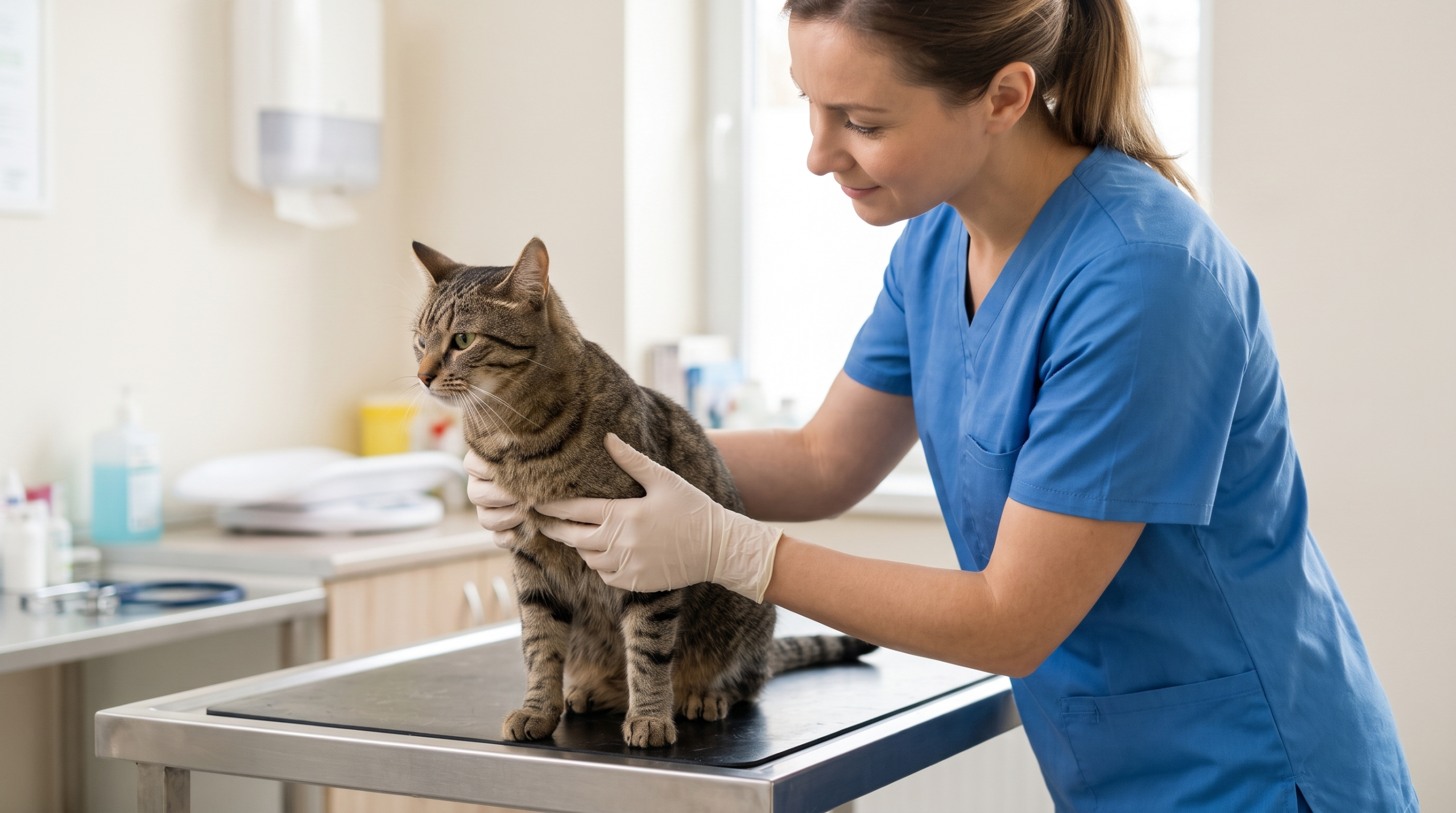
Whether it’s a mild change warranting a routine appointment or something more urgent, a gentle veterinary examination is the best way to determine your pet's needs and ensure they get the right care.
If you are not sure which category your pet falls into, phone your vet or an emergency clinic and describe what you see. They can tell you how quickly to come in.
What pet owners should avoid doing
- Giving human painkillers or leftover medication. Common human drugs such as ibuprofen and paracetamol (acetaminophen) can be toxic to dogs and cats, and some are especially dangerous to cats. Only give medicine that your vet has prescribed for that pet.
- Treating pain at home without veterinary instructions, including supplements, creams or heat, unless your vet has said they are safe.
- Forcing a pet to walk, jump or play through discomfort.
- Pressing or moving a sore area over and over to see whether it hurts. Pain can make even gentle pets bite or scratch.
- Assuming new stiffness or behaviour changes are just ageing. Older pets can have pain that can be managed.
- Waiting if your pet is straining to urinate, struggling to breathe or has collapsed.
What to do next
You do not need to worry about every sigh or nap. The goal is to know your pet well enough to spot when something is different. This week, take a few minutes to look at how your pet moves, eats, grooms and rests, and write it down. If something is new, or has been for more than a few days, call your vet and share your notes and videos. If the change is a urinary problem, breathing trouble, collapse or a serious injury, go straight to an emergency clinic.
Frequently asked questions
How can I tell if my dog is in pain?
Look for changes from your dog's normal behaviour: stiffness, reluctance to climb or jump, licking one area, hiding, snapping when touched, a change in appetite, panting at rest or trouble settling. None of these proves pain by itself, so see your vet if a change lasts.
What are the signs of pain in cats?
Cats often hide pain. Common signs include not jumping, a hunched posture, hiding, a messy coat or too much grooming of one spot, changes in litter box use, eating less and unusual vocalising. Cats Protection has a guide to signs of pain in cats.
Do cats purr when they are in pain?
Sometimes. Cats purr when they are content, but also when they are stressed or unwell, so purring alone does not tell you how a cat feels. Look at her posture, appetite and behaviour as well.
Can I give my pet human painkillers?
No. Many common human painkillers are toxic to dogs and cats. Never give leftover medication or human tablets unless your vet has told you to. If your pet has eaten any, call your vet or an animal poison helpline immediately.
- AAHA: 2022 Pain Management Guidelines for Dogs and Cats
- WSAVA: Guidelines for the recognition, assessment and treatment of pain
- VCA Animal Hospitals: How do I know if my dog is in pain?
- VCA Animal Hospitals: How do I know if my cat is in pain?
- Cats Protection: Signs of pain in cats
- International Cat Care: Urethral obstruction in cats
About the author
Irfan Hyder is the editor of PetStory.org, an independent publication covering pet care, adoption, nutrition and behaviour. He has spent around 8 years caring for pets at home, including his Golden Retriever, Max, his Persian cat, Luna, and pet birds, and writes alongside veterinary and reputable sources. Read more on the Irfan Hyder author profile.
Keep reading
Explore more guides in our Pet Health section.