

A dog that barks after the front door closes, scratches at an exit or becomes unsettled when left at home may be experiencing more than ordinary boredom. For some dogs, separation from a familiar person brings genuine fear and distress. The behaviour can be difficult for a household, but it is also important information about how the dog is coping.
Dog separation anxiety is not simply a sign that a dog is stubborn, badly behaved or trying to get attention. It is a behaviour and welfare concern that deserves a thoughtful response. Understanding when the behaviour occurs, what seems to trigger it and how the dog responds can help owners choose appropriate next steps.
This guide explains common signs and possible contributing factors, how veterinary professionals assess separation-related problems, and practical ways to support a dog while working towards more comfortable time alone.
Table of Contents
- What separation anxiety means
- Common signs to look for
- Why separation-related distress can develop
- How to assess the behaviour
- How to help a dog feel more comfortable alone
- When to seek professional help
- Choosing an appropriate training approach
- Frequently Asked Questions
- Veterinary and Behaviour References
- Conclusion
What Is Dog Separation Anxiety?
Separation anxiety describes distress that occurs when a dog is separated from a person or people to whom the dog is strongly attached. Veterinary professionals may also use the broader terms separation-related behaviour or separation distress, because not every dog shows the same pattern or has the same underlying difficulty.
Not every dog that makes noise or chews something while home alone has separation anxiety. Some dogs vocalise in response to outdoor sounds, chew because they are young or under-stimulated, or have accidents because of incomplete house training or a medical issue. The pattern matters: separation-related signs are commonly linked to the owner's departure or absence and may begin soon after the dog is left.
The aim of support is not merely to stop barking or prevent damage. It is to reduce the distress that drives the behaviour and help the dog learn, at a manageable pace, that short periods apart can be safe.
Common Signs of Separation Anxiety in Dogs
Signs vary between individual dogs. Some show obvious vocal or destructive behaviour, while others become quiet but remain unable to settle. Look for a repeated pattern around departures or during periods when the dog is alone. The ASPCA's guide to separation anxiety describes common behaviours associated with distress during absences and explains why the timing and pattern matter. Persistent barking can also have other triggers, as explained in PetStory's guide to why dogs bark at different sounds and situations.
| Behaviour noticed | What it may suggest | Other possibilities to consider |
|---|---|---|
| Repeated barking or howling soon after departure | Distress linked to being left alone | Outdoor noises, people passing or other sound triggers |
| Scratching or chewing near exits | Frustration or attempts to reach the person who left | Exploration, chewing needs or confinement-related distress |
| Toileting accidents during absences | Possible stress-related response | House-training gaps, urinary or digestive health concerns |
| Pacing, panting or inability to settle | Possible anxiety or heightened arousal | Heat, pain, noise sensitivity or another medical issue |
This comparison is a guide to observations, not a diagnostic checklist. The timing, combination and context of behaviours matter, and a veterinarian can help assess other possible causes.
Persistent barking, whining or howling
A dog may bark, whine or howl repeatedly after the owner leaves. Vocalisation may start within minutes and continue intermittently or for an extended period. A dog that barks mainly at passing people, delivery vehicles or outdoor noises may have a different trigger, so timing and context are important.
Pacing and an inability to settle
Some dogs repeatedly walk between doors and windows, follow the same route or remain on the move instead of resting. They may appear restless even in a familiar room with comfortable bedding and access to water.
Chewing, scratching or attempts to escape
Destructive behaviour may focus on door frames, windows, gates or other exit points. A distressed dog may scratch, dig or chew in an attempt to get out or reach the person who has left. These efforts can cause damaged nails, injured paws, broken teeth or other injuries. Chewing can have several causes, so owners can also review PetStory's practical guide to managing furniture chewing and choosing suitable toys while considering the full behaviour pattern.
Toileting accidents
A previously house-trained dog may urinate or defecate when left alone. However, accidents can also have medical causes, including urinary or digestive problems, and should not automatically be attributed to anxiety.
Changes around departure and reunion
Some dogs become unsettled when they notice familiar departure cues, such as keys, shoes or a work bag. Others may show heightened vigilance, repeatedly watch the exit or struggle to relax before the person leaves. On reunion, a dog may show an unusually intense greeting. These signs are useful context, especially when they occur alongside distress during the absence.
Following a person from room to room, by itself, does not establish separation anxiety and is not enough to predict that a dog will struggle when left. Look for a consistent pattern of distress linked to actual or anticipated separation.
Why Can Separation-Related Distress Develop?
There is no single explanation that applies to every dog. Temperament, early experiences, learning history, health and changes in the home environment may all be relevant. A change does not mean that an owner has done something wrong; it may simply alter how a particular dog experiences time alone.
Changes in routine or household
A dog that was rarely alone may find a new work schedule difficult. Moving home, a family member leaving, a change in daily routine or a longer-than-usual period away can also coincide with the first appearance of separation-related signs.
Rehoming or changes in familiar relationships
Some dogs experience disruption after adoption, rehoming or the loss of a familiar person or animal companion. Previous experiences may influence how an individual dog responds to separation, although a dog's history alone cannot confirm a diagnosis.
Individual temperament and health
Dogs differ in confidence, coping skills and sensitivity to change. Pain or another medical condition can also affect behaviour and should be considered, particularly when signs appear suddenly or change noticeably. A veterinary assessment helps rule out health problems that may resemble or contribute to anxiety.
How to Tell Whether Your Dog Has Separation Anxiety
Start by looking for patterns rather than relying on one incident. Note what happens before departure, how soon the behaviour begins, which behaviours appear, how long they last and whether the dog eventually settles. Record whether the same behaviour also occurs when someone is at home. Separation-related signs often appear relatively soon after departure, but timing varies and should be assessed alongside the full history.
A pet camera or a securely positioned phone can provide useful information about what happens after the door closes. Review a recording for: (1) the first departure cue that changes the dog's behaviour; (2) the time between departure and the first sign of distress; (3) pacing, panting, drooling, repeated vocalising or escape attempts; (4) whether the dog can eat, rest or use enrichment; and (5) whether the dog settles or remains distressed. Share relevant recordings with a veterinarian rather than using them to make a diagnosis independently.
A veterinarian may ask about the dog's health, routine, environment and behaviour, and may recommend an examination or tests if a medical cause needs to be ruled out. Other explanations can include noise sensitivity, outside disturbances, incomplete house training, boredom, confinement-related distress or age-related changes. The Merck Veterinary Manual's guidance on canine behaviour problems outlines why video observation and careful differential assessment are valuable.
How to Help a Dog With Separation Anxiety
There is no universal timetable for improvement. The right plan depends on how distressed the dog becomes, how long the dog can currently remain comfortable and what support is available. For many dogs, behaviour modification focuses on very gradual exposure to being alone, paired with positive experiences.
Choose a Training Approach That Matches the Dog
Training should be matched to the severity and pattern of the dog's response. A dog with mild difficulty may benefit from relaxation exercises and positive food-based activities. Dogs with more pronounced distress often need a carefully structured graduated-departure programme, ideally designed with a qualified professional. In every case, practice should stay below the point at which anxiety begins. The VCA Animal Hospitals guide to desensitisation and counterconditioning explains the gradual learning principles used in this kind of behaviour work.
| Stage | Practice | When to progress |
|---|---|---|
| 1. Calm settling | Reward relaxed behaviour in a familiar resting place while the owner is at home. | The dog can rest comfortably for a short period with the owner nearby. |
| 2. Brief distance | Step a short distance away or briefly out of sight indoors. | The dog stays relaxed and resumes normal activity. |
| 3. Very short departures | Practise stepping outside for a moment, then return before distress begins. | Repeated sessions remain calm at the current duration. |
| 4. Small increases | Extend the time away in small, variable increments. | The dog remains comfortable; shorten the next session if stress appears. |
| 5. Review and adapt | Use camera observations and a session log to review progress. | Adjust the plan to the dog's response, with professional help if needed. |
1. Begin below the dog's distress threshold
Identify a starting point at which the dog can remain relaxed. For one dog, this may mean the owner briefly stepping behind an indoor door; for another, it may mean calmly moving towards the front door and returning. Some dogs initially manage only a second or two. The goal is to return before distress begins, not to wait for the dog to become upset and then continue. If the dog is already distressed by shoes, keys or movement towards the exit, begin with those cues at an easier level rather than jumping straight to an outdoor departure.
2. Increase duration in small, flexible steps
When the dog is comfortable at the current step, gradually make the absence a little longer. Progress should be based on the dog's response, not a fixed calendar. If pacing, vocalising, panting or other signs of distress appear, make the next practice easier or shorter. Moving too quickly can make the trigger more difficult for the dog.
3. Practise departure cues calmly
Some dogs become anxious when they see a familiar sequence such as picking up keys, putting on shoes or taking a bag. At calm times, owners can practise these actions without always leaving. Keep the exercises low-key and stop if they increase the dog's distress. For dogs with more substantial separation problems, a behaviour professional may also introduce a consistent “safety cue” that is paired with relaxed, very brief absences. It should be established carefully and should not be used to signal a departure that is longer than the dog can manage.
4. Make the home environment comfortable and safe
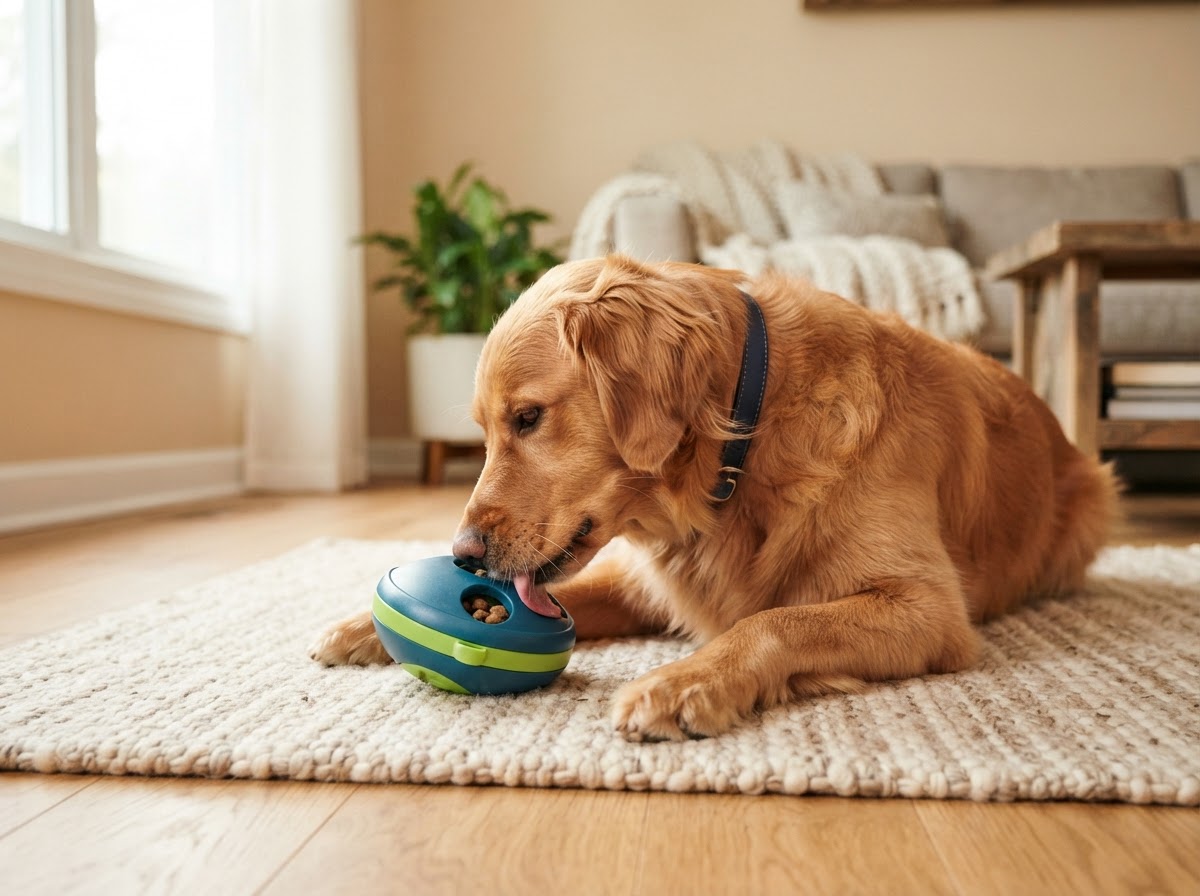
Provide access to water, a comfortable resting area and suitable enrichment. A food puzzle or stuffed food toy may help some dogs, provided the dog is relaxed enough to use it and the item is safe to leave unsupervised. If the dog ignores food when alone, that can be useful information rather than a reason to keep offering more toys.
Do not assume a crate will solve the problem. Some dogs already enjoy resting in a crate, while others become more distressed when confined. Watch the dog's response and discuss safe management options with a professional if the dog tries to escape or risks injury.
5. Plan for absences that cannot be avoided
Where possible, avoid repeatedly leaving the dog alone for longer than the dog can currently cope with. During the early stages, this may mean arranging help from a trusted friend, family member, pet sitter or suitable day-care provider. Choose care based on the individual dog's comfort; a busy group setting may not suit every dog. If an unavoidable absence is approaching, ask the veterinarian or behaviour professional for a realistic management plan rather than assuming the dog will simply adjust. Management reduces opportunities for repeated distress while the longer-term behaviour plan develops.
6. Keep routines predictable and meet everyday needs
Regular opportunities for walks, play, sniffing, rest and positive-reinforcement training support general wellbeing. Exercise and enrichment are useful parts of daily care, but they are not a stand-alone cure for separation anxiety. A dog can be physically active and still experience distress when left alone.
Keep a simple record of practice sessions, including the duration, the dog's behaviour and any signs of stress. This helps owners and professionals make informed adjustments instead of guessing whether the plan is working.
When Should You Seek Professional Help?
Contact a veterinarian if the dog repeatedly panics when left alone, injures themselves, makes determined escape attempts, cannot settle, refuses food during absences or shows a sudden change in behaviour. Seek prompt veterinary care for injuries or signs of illness. A veterinarian can assess physical health and discuss referral to a qualified veterinary behaviour professional where appropriate.
For moderate or severe cases, a tailored behaviour plan may be needed. Veterinary professionals may recommend structured desensitisation and counterconditioning, environmental management and, in some cases, prescription medication to reduce anxiety enough for the dog to learn. Medication is individualised, must be prescribed and monitored by a veterinarian, and is generally used alongside behaviour modification rather than as a stand-alone solution. Owners should discuss expected benefits, possible side effects and follow-up with the prescribing veterinarian. The American Animal Hospital Association's resource on separation anxiety in pets provides additional veterinary context for managing the condition.
Avoid punishment for barking, chewing or toileting accidents linked to distress. Punishment does not address the underlying fear and may make the dog's experience of being alone more difficult. Calm, consistent support and realistic expectations are more useful.
Conclusion: Helping Your Dog Build Confidence Over Time
Living with a dog that struggles to be alone can affect daily routines, but the behaviour can be approached with patience and a plan based on the dog's needs. Careful observation, veterinary guidance and gradual training help owners understand what their dog can manage today and what the next achievable step might be.
Progress is not always linear. Some dogs move forward quickly at first and then need smaller steps; others require professional support from the beginning. The most useful measure is whether the dog is becoming more comfortable, not simply whether the home remains undamaged or quiet.
Frequently Asked Questions
1. What are the first signs of separation anxiety in dogs?
Early signs can include becoming unsettled when departure cues appear, repeatedly watching the exit, whining, pacing or being unable to relax after the person leaves. Some dogs pant or drool, stop eating or attempt to escape. A camera can help show when the behaviour starts and whether it continues.
2. Can a dog develop separation anxiety suddenly?
Behaviour may appear to start suddenly after a change in routine, household or environment. A sudden change can also be associated with pain or another health issue, so a veterinary check is sensible when the behaviour is new or unexpected.
3. How long does it take to help a dog with separation anxiety?
There is no reliable universal timeline. Progress depends on the dog's starting point, severity, consistency of practice and other circumstances. Training should advance according to the dog's comfort rather than a preset number of days.
4. Should a dog with separation anxiety be crated?
Not automatically. Some dogs are comfortable resting in a crate, while others become more distressed when confined or may injure themselves trying to escape. Observe the dog's response and discuss safe options with a veterinarian or qualified behaviour professional.
5. Does getting another dog help with separation anxiety?
Not necessarily. Separation-related distress is often connected to being apart from a particular person, so another dog may not resolve it. A second pet should not be introduced as a treatment without considering both animals' needs and seeking professional advice.
6. When should a veterinarian be consulted?
Arrange veterinary advice if the dog repeatedly panics, cannot settle, attempts to escape, becomes injured, has toileting accidents or shows a sudden behaviour change. Seek prompt care for injuries or signs of illness.
7. What if my dog cannot avoid being left alone?
Speak with a veterinarian or qualified behaviour professional about a short-term management plan. Depending on the dog, options may include a trusted sitter, a familiar person staying at home or suitable day care. The best option is the one that keeps the dog safe and least distressed; do not assume every dog will be comfortable in a group-care setting.
Veterinary and Behaviour References
The following veterinary and animal-behaviour references provide further information about canine separation distress, assessment and treatment. Guidance should be applied to the individual dog with veterinary support.
- Merck Veterinary Manual: Behavior Problems of Dogs
- ASPCA: Separation Anxiety
- American Animal Hospital Association: Separation Anxiety in Pets
- VCA Animal Hospitals: Introduction to Desensitization and Counterconditioning
- Canine Separation Anxiety: Strategies for Treatment and Management (peer-reviewed review)
About the Author
Irfan Hyder is the editor of PetStory.org, an independent publication covering pet care, adoption, nutrition and behaviour. He has spent around 8 years caring for pets at home, including his Golden Retriever, Max, his Persian cat, Luna, and pet birds, and writes alongside veterinary and reputable sources.
Concerned About How a Dog Copes When Left Alone?
Keep a short behaviour log and, if possible, record a typical absence. These details can help a veterinarian or qualified behaviour professional understand the pattern and recommend a practical next step.