Table of Contents
Imagine reaching toward your bird’s cage, hoping for a cheerful greeting, but they flutter away in fear. When you bring a feathered friend home, you likely envision them perched on your shoulder and learning fun tricks. Before any of that can happen, you must build one foundational element: trust.
Trust is the bridge that connects you to your pet bird. Without it, even the simplest training tips will fail. Birds are prey animals, so they are instinctively cautious of large, unfamiliar creatures like us. Earning their confidence takes time, but it’s one of the most rewarding parts of bird ownership.
This guide will walk you through the essential steps to build that trust. We’ll explore how to decode their body language, highlight daily habits that foster a deep bond, and reveal common mistakes that can set you back. Whether you’re a new bird parent or trying to tame a nervous rescue, you’ll learn how to create a happy, confident companion ready for training.
Why Trust is Crucial for Bird Training
Unlike dogs, who often obey to please, birds cooperate only when they feel safe. If a bird sees you as a threat, its survival instincts take over, making it impossible to learn.
When you build trust, you remove that fear and transition from being a scary giant to a trusted flock member. A trusting bird is relaxed, curious, and eager to interact, which leads to better training sessions.
There are health benefits, too. Chronic stress can weaken a bird’s immune system, leading to feather plucking and illness. According to the Association of Avian Veterinarians, a stress-free, trusting environment is vital for a bird’s physical and mental health. A calm bird is a healthy bird, and a healthy bird is a happy learner.


Understanding Your Bird’s Body Language
Before you can communicate with your bird, you must learn to listen. Birds use their feathers, eyes, and posture to show how they feel. Misreading these silent cues is a common hurdle for many beginners. Learning to read avian body language can change everything.
Signs your bird is scared or stressed:
- Slicked-down feathers: The bird holds its feathers tight against its body, making it look thinner than usual.
- Pacing: Frantic back-and-forth movement on a perch.
- Lunging or biting: A clear signal to back away.
- Heavy breathing: Noticeable panting or an open beak without any physical exertion.
Signs your bird is relaxed and trusting:
- Fluffed cheeks: Soft, slightly puffed facial feathers indicate comfort.
- Beak grinding: A soft crunching sound, often made before sleep, that shows they feel safe.
- One-legged perching: Birds only tuck one foot up when they are completely at ease.
- Preening near you: If they groom their feathers while you’re close, they see you as a safe companion.
Steps to Build Trust with Your Bird
Building trust is a marathon, not a sprint. It requires patience, consistency, and a gentle approach. Follow these steps to build a strong bond with your bird.
1. Create a Safe Sanctuary
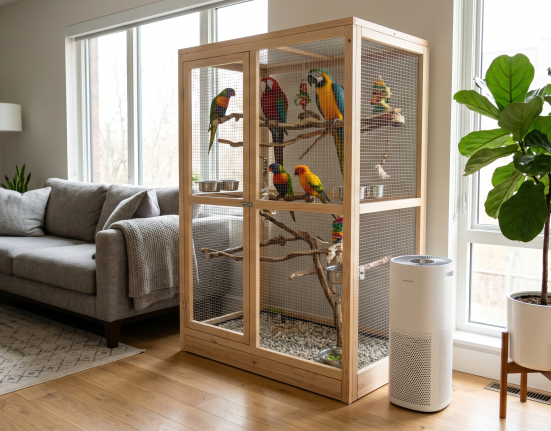
Your bird’s cage should be their safe zone. Place it in a quiet but active part of your home where they can observe family life without feeling overwhelmed. Ensure one side of the cage is against a wall for security. Never reach into the cage to grab them; let it be their protected space.
2. Spend Time Near Them
Simply being in the same room with your new bird is a great first step. Sit near their cage and read, watch TV, or work on your computer. Avoid direct eye contact, which birds can see as threatening. Your calm, quiet presence will show them you aren’t a danger and help them get used to you without feeling pressured to interact.
3. Talk Softly
Birds are sensitive to sounds and often respond well to the human voice. Make a habit of speaking to your bird in a soft, cheerful tone throughout the day. You can describe your actions as you move around the room, clean their cage, or prepare their food. Reading a book aloud or singing gently are other excellent ways to show you’re a friendly, non-threatening presence.
4. Offer High-Value Treats
The fastest way to a bird’s heart is often through its stomach. Find their favorite treat—millet spray, a piece of apple, or a sunflower seed—and offer it by hand. At first, you may need to drop it in their bowl while they watch. Eventually, hold the treat through the cage bars. Once they are comfortable, open the door and let them take it from your fingers. This creates a positive association with your presence.

Common Mistakes to Avoid
Even with the best intentions, new bird owners can make mistakes that damage their bond. Here are common pitfalls to avoid:
Forcing Interaction
Never chase your bird around the cage or try to corner them. Your bird’s cage is their safe space, so if they move away from your hand, respect their boundaries. Forcing interaction will only teach them that you can’t be trusted, which will damage the bond you’re trying to build.
Moving Too Fast
As prey animals, birds are easily startled by sudden movements. When approaching their cage, changing their food and water, or offering your hand, move slowly and predictably. To avoid triggering a fear response, keep your hands visible and don’t reach for them from above, as this can mimic a predator.
Reacting Loudly to Bites
Getting bitten hurts, but screaming or pulling your hand away can seem like a game to your bird. Some birds might start biting just to provoke this exciting reaction. If you get bitten, stay as calm as possible. Gently push into the bite—this counterintuitive move will make them open their beak. Then, calmly walk away to show that biting ends the interaction.
Withholding Food
Never withhold food to make your bird more motivated for treats during training. This is cruel, harms their delicate health, and breaks their trust in you. A bird’s primary, balanced diet should always be available, with treats used only as a supplement for positive reinforcement.
How Trust Enhances Training
Once you have built trust, training becomes much easier. Your bird will be more willing to step out of their comfort zone because they feel safe with you. Teaching the “step-up” command is simple when the bird wants to sit on your hand. From there, you can move on to fun tricks like waving or turning around.
A trusting relationship also makes necessary grooming and vet visits less traumatic. A bird that trusts you will be more tolerant of being toweled, having its nails clipped, or being examined. The trust you build today ensures a lifetime of lower stress for both of you.
Start Building a Better Bond Today
Earning a bird’s trust is a rewarding journey that requires patience and empathy. By understanding their body language, moving at their pace, and using positive reinforcement, you can build a wonderful friendship.
Once that foundation is solid, you’ll find that training is a joyous experience. The bond you create will reward you with years of happy chirps and playful antics.
Ready to start training? Implement these tips and let us know how your bird responds! Share this article with other bird lovers and explore more expert pet care content on PetStory.org.