

Dogs rarely complain about their teeth. They keep eating, playing and greeting their owners at the door, which is why dental care can easily slip down the list of everyday responsibilities. Sometimes the first noticeable sign is persistent bad breath. In other cases, a veterinarian discovers dental disease during a routine examination.
Much of a dog's oral hygiene depends on consistent care at home. A few minutes of appropriate brushing can help remove plaque before it hardens and contributes to gum disease.
Plaque is a sticky film containing bacteria that collects on tooth surfaces. Tartar, also called calculus, forms when plaque hardens. If plaque and tartar accumulate around the gums, inflammation can develop and progress into periodontal disease, which damages the tissues and bone supporting the teeth.
This guide explains how dental disease develops, how to introduce toothbrushing gradually, which dental products may help, what owners should avoid and when professional veterinary treatment is necessary.
Table of Contents
- Why Is Dental Care Important for Dogs?
- Understanding Dental Disease in Dogs
- Common Signs of Dental Problems in Dogs
- How to Brush a Dog's Teeth at Home: Step-by-Step Guide
- Choosing the Right Dog Dental Care Products
- Do Dental Chews and Dental Treats Actually Work?
- What Should Dog Owners Avoid During Dental Care?
- Professional Dog Dental Cleaning: When Is It Necessary?
- Dental Care for Puppies, Adult Dogs and Senior Dogs
- How Often Should You Brush Your Dog's Teeth?
- Creating a Simple Daily Dog Dental Care Routine
- Frequently Asked Questions
- Veterinary and Animal-Care References
- Conclusion
Why Is Dental Care Important for Dogs?
A dog with an uncomfortable mouth may continue eating and behaving normally, making dental problems difficult to recognise during their early stages. Dogs do not always show obvious signs of oral discomfort, and some only develop noticeable changes when dental disease has progressed.
According to the American Animal Hospital Association (AAHA), most dogs and cats have some degree of periodontal disease by the age of three, often without their owners realising it. This makes regular oral examinations and preventive care important throughout a dog's life. AAHA's dental-care guidance explains why dental disease can affect a pet's comfort and overall health.
Periodontal disease is more than a cosmetic problem. It can cause inflamed gums, oral pain, infection, bone loss and eventually loose or missing teeth. Advanced oral infections can also allow bacteria to enter the bloodstream. Research has identified associations between periodontal disease and changes affecting organs such as the heart, liver and kidneys, although an association does not mean that every dog with dental disease will develop an organ condition. The AVMA's pet dental-care guidance discusses the wider health considerations of dental disease.
The American Veterinary Medical Association (AVMA) recommends having a dog's teeth and gums checked by a veterinarian at least once a year, with earlier examinations when signs of dental problems appear. The AVMA's pet dental-care guidance provides additional information about oral-health examinations and preventive care.
Dental hygiene is also one part of a broader preventive-care routine. Nutrition, appropriate exercise, maintaining a healthy weight and regular veterinary checkups all contribute to a dog's long-term wellbeing. For a broader look at canine longevity, explore PetStory's guide to dog breeds with the longest lifespans.
Understanding Dental Disease in Dogs
Dental disease generally develops gradually. Understanding the difference between plaque, tartar, gingivitis and periodontal disease helps owners recognise why regular brushing matters.
Dental Plaque
Plaque is a soft, sticky film made up of bacteria and other material that collects on tooth surfaces. It begins forming shortly after teeth are cleaned.
If plaque is not regularly removed, bacteria can multiply and irritate the surrounding gum tissue. Cornell University College of Veterinary Medicine explains that minerals in saliva can begin hardening plaque into tartar within as little as 24 hours. Cornell's guide to dental disease and home dental care explains this process.
Tartar or Calculus
Tartar, also called calculus, is hardened plaque that attaches to the surface of teeth. It often appears as yellow or brown deposits near the gumline.
Unlike soft plaque, established tartar cannot be removed effectively with an ordinary toothbrush. Professional veterinary cleaning is generally required to remove it safely, including deposits below the gumline.
Gingivitis
Gingivitis is inflammation of the gums caused by plaque accumulation. Common signs include redness, swelling and bleeding around the teeth.
Early gingivitis can often be reversed when plaque is effectively controlled and the underlying dental problem is addressed. However, brushing gums that are already inflamed can cause pain and make a dog resistant to future brushing. AAHA's home oral-hygiene recommendations advise owners to seek veterinary guidance when the gums are inflamed rather than forcing a brushing routine.
Periodontal Disease
Periodontal disease develops when inflammation and infection extend into the tissues supporting the teeth.
As the condition progresses, pockets can form between the teeth and gums. Damage to the supporting tissues and bone can eventually cause teeth to become loose or fall out.
Much of this damage occurs below the visible gumline. A dog may therefore have significant dental disease even when the teeth look relatively clean from the outside. Cornell's guide to canine periodontal disease explains why a veterinary examination is important.
What Can Brushing Actually Prevent?
Regular toothbrushing helps remove plaque before it hardens into tartar. It is one of the most effective home-care methods for reducing plaque accumulation and supporting gum health.
However, brushing does not remove established calculus or restore bone that has already been lost. Those problems require veterinary assessment and, when indicated, professional dental treatment.
AAHA's home oral-hygiene recommendations explain that brushing removes plaque rather than hardened calculus and should form part of a consistent daily routine.
Common Signs of Dental Problems in Dogs
Persistent bad breath is often one of the first signs that something may be wrong with a dog's mouth. However, unpleasant breath is not the only symptom owners should watch for.
Other possible signs of dental disease include:
- Yellow or brown deposits on the teeth.
- Red, swollen or bleeding gums.
- Excessive drooling.
- Pawing or rubbing at the mouth.
- Dropping food while eating.
- Chewing more slowly or favouring one side of the mouth.
- Reduced appetite or reluctance to eat.
- Loose, broken or discoloured teeth.
- Facial or jaw swelling.
- Nasal discharge, which may occasionally contain blood.
Some dogs continue eating despite oral discomfort. Changes such as taking longer to finish meals, avoiding favourite chew toys or becoming less interested in food may indicate a problem.
The AVMA's dental-care guidance recommends having a pet examined sooner than the next routine checkup when these signs appear.
A few signs deserve particularly prompt veterinary attention. Facial swelling, bleeding from the mouth, obvious pain, a broken tooth, bloody nasal discharge or difficulty eating should not be ignored. Contact a veterinary clinic promptly to determine how urgently your dog needs an examination. Difficulty breathing or swallowing requires emergency veterinary care.
Owners should avoid forcing a dog's mouth open to inspect painful areas. A dog experiencing discomfort may react defensively, even if it is usually gentle.
How to Brush a Dog's Teeth at Home: Step-by-Step Guide
Introducing toothbrushing is often easier when it happens gradually. A dog that has never had its mouth handled may initially dislike having a toothbrush near its face.
The World Small Animal Veterinary Association (WSAVA) Global Dental Guidelines and UC Davis School of Veterinary Medicine's home-care instructions support gradual introduction, gentle handling and positive reinforcement rather than forcing the mouth open.
Progress may take several days or even weeks, depending on the individual dog. The aim is to help the dog become comfortable with each stage before moving forward.
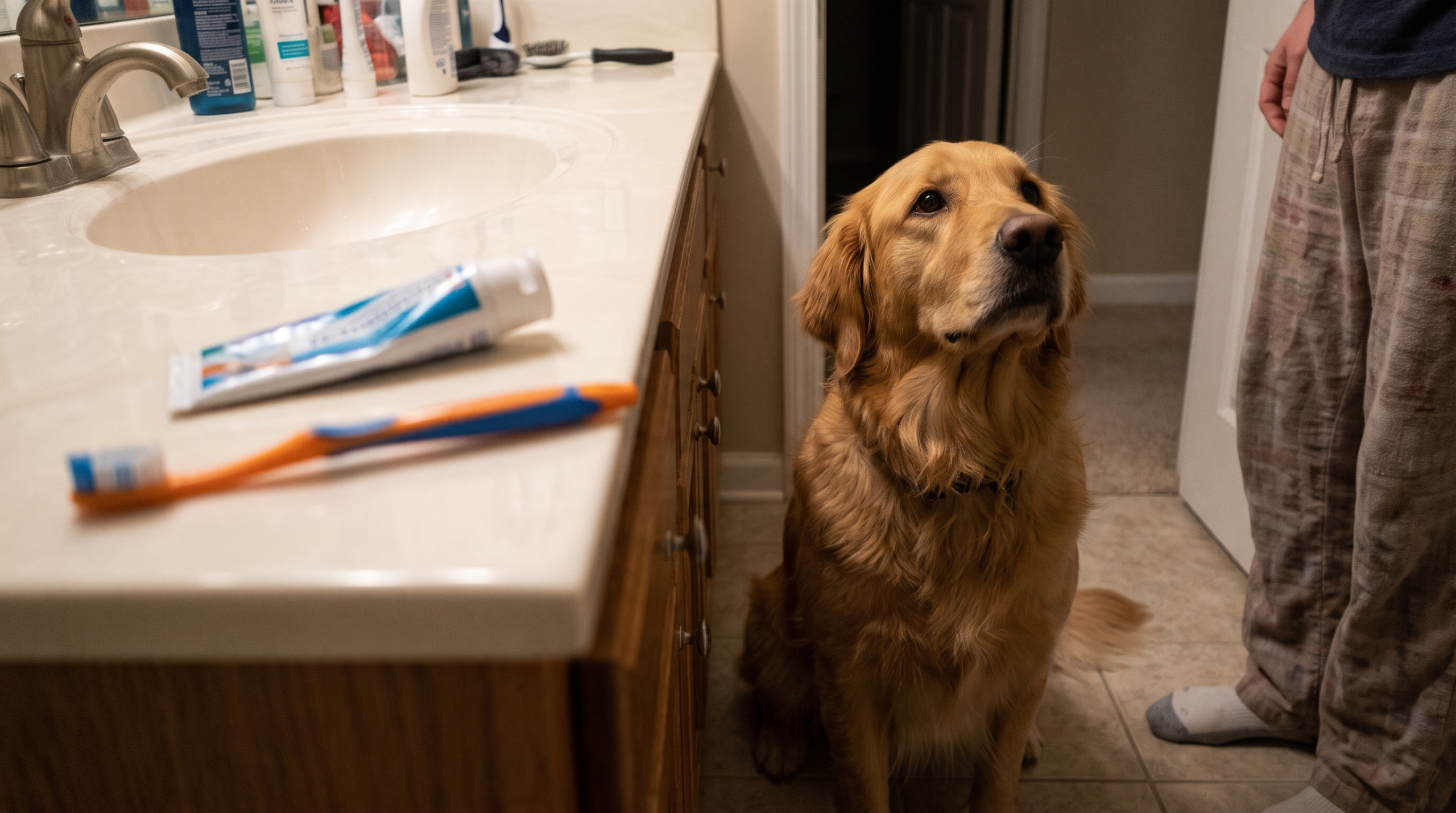
My Experience With Max: Building a Toothbrushing Routine
When we first brought Max home, we decided to start introducing toothbrushing on his very first night with us.
In the beginning, it was pure chaos. Max treated the toothbrush like a new chew toy, and his oversized tongue kept getting in the way every time I tried to reach his back teeth.
For the first couple of weeks, "brushing" really just meant letting him lick poultry-flavoured toothpaste off the bristles while I gently rubbed his gums for a few seconds.
We did not force it. We kept the sessions short, stayed consistent every night before bed and gave him plenty of praise.
Gradually, things became easier. Now, the moment I grab my own toothbrush at night and say, "Max, time to brush your teeth!", his tail starts thumping against the floor.
He trots right over, sits down patiently and leans his snout into the brush, practically doing half the work himself just to get to that toothpaste.
What started as a few awkward ten-second sessions has turned into one of my favourite five-minute nighttime routines.
My experience with Max showed me how patience and consistency can help introduce a new habit. Every dog adjusts differently, so owners should allow their pets to progress at a comfortable pace rather than expecting immediate cooperation.
Step-by-Step Toothbrushing Instructions
1. Check Your Dog's Mouth First
Before introducing a toothbrush, gently lift the lips and look at the visible teeth and gums.
Look for redness, swelling, bleeding, damaged teeth or visible discomfort. If your dog flinches, pulls away repeatedly or reacts painfully when the mouth is touched, arrange a veterinary examination before starting.
Brushing an already painful or inflamed mouth may make the experience worse.
2. Choose a Quiet Place and Consistent Time
Choose a calm environment where your dog feels comfortable. Try to use the same location and time each day so brushing gradually becomes familiar.
Some owners find that brushing before bedtime works well because it is easy to connect with an existing daily routine.
3. Get Your Dog Comfortable With Mouth Handling
Begin by gently touching the dog's cheeks and muzzle. Lift the lips briefly and reward calm cooperation.
Once your dog accepts this comfortably, run a clean finger along the outside of the teeth and gums. A gauze-wrapped finger can also help introduce the sensation of gentle contact.
UC Davis recommends practising this gradually, praising the dog during and after each session.
4. Introduce Dog-Specific Toothpaste
Choose a toothpaste formulated specifically for dogs.
Allow your dog to smell and taste a small amount from your finger. Once the dog accepts the flavour, gently introduce the paste around the outside of the teeth and gumline.
Some pet toothpastes are available in flavours such as poultry, which may help make the experience more appealing.
Never use human toothpaste. Dogs generally swallow toothpaste rather than spitting it out, and human formulations may contain ingredients that are unsuitable for them.
5. Introduce a Suitable Toothbrush
Once your dog is comfortable with the toothpaste, introduce a soft-bristled dog toothbrush or an appropriately sized finger brush.
Allow the dog to inspect and lick the brush before using it. Press a small amount of toothpaste into the bristles so it is not immediately licked off.
Start with only a few teeth. There is no need to complete the entire mouth during the first session.
6. Brush the Outer Surfaces Gently
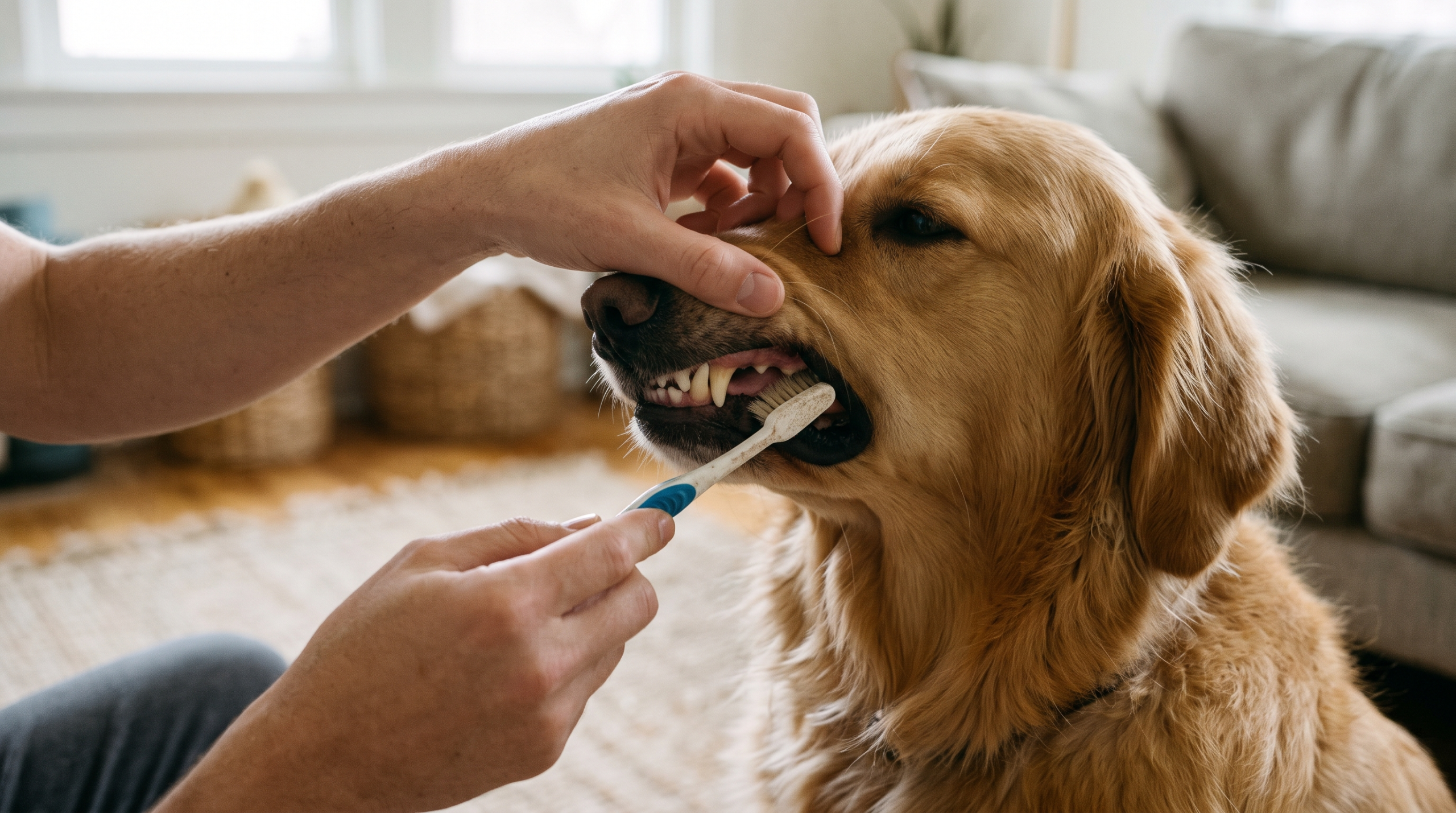
Lift the dog's lip gently while keeping the jaw relaxed and closed.
Position the toothbrush at approximately a 45-degree angle towards the gumline. Use small, gentle circular movements along the outside surfaces of the teeth.
Begin with the teeth your dog accepts most easily. Pay particular attention to the larger cheek teeth towards the back of the mouth, while avoiding any area that appears sore.
UC Davis provides a similar technique in its Dental Home Care Instructions.
7. Gradually Include More Teeth
As your dog becomes comfortable, gradually increase the number of teeth brushed.
Work towards cleaning all accessible teeth, including the back cheek teeth. Keep sessions short enough that your dog remains relaxed.
Some dogs may accept a full brushing routine quite quickly, while others need more time. Allow the dog's response to guide the pace.
8. Finish With a Positive Experience
End each session with something your dog enjoys, such as praise, a suitable treat, a favourite toy or a short play session.
Rewarding calm behaviour and small steps is an example of positive reinforcement. For more information, read PetStory's guide to positive reinforcement and clicker training.
If your dog resists, return to the last stage it accepted comfortably and try again later. Repeated resistance may also indicate discomfort, so discuss it with a veterinarian.
Never force the mouth open or continue brushing if your dog yelps, freezes, shows signs of pain or becomes distressed.
Choosing the Right Dog Dental Care Products
The right dental products can make home oral hygiene easier. However, not every product marketed for dental health offers the same benefits.
A soft toothbrush and dog-specific toothpaste should form the foundation of a home brushing routine. Other products can provide additional support when selected appropriately.
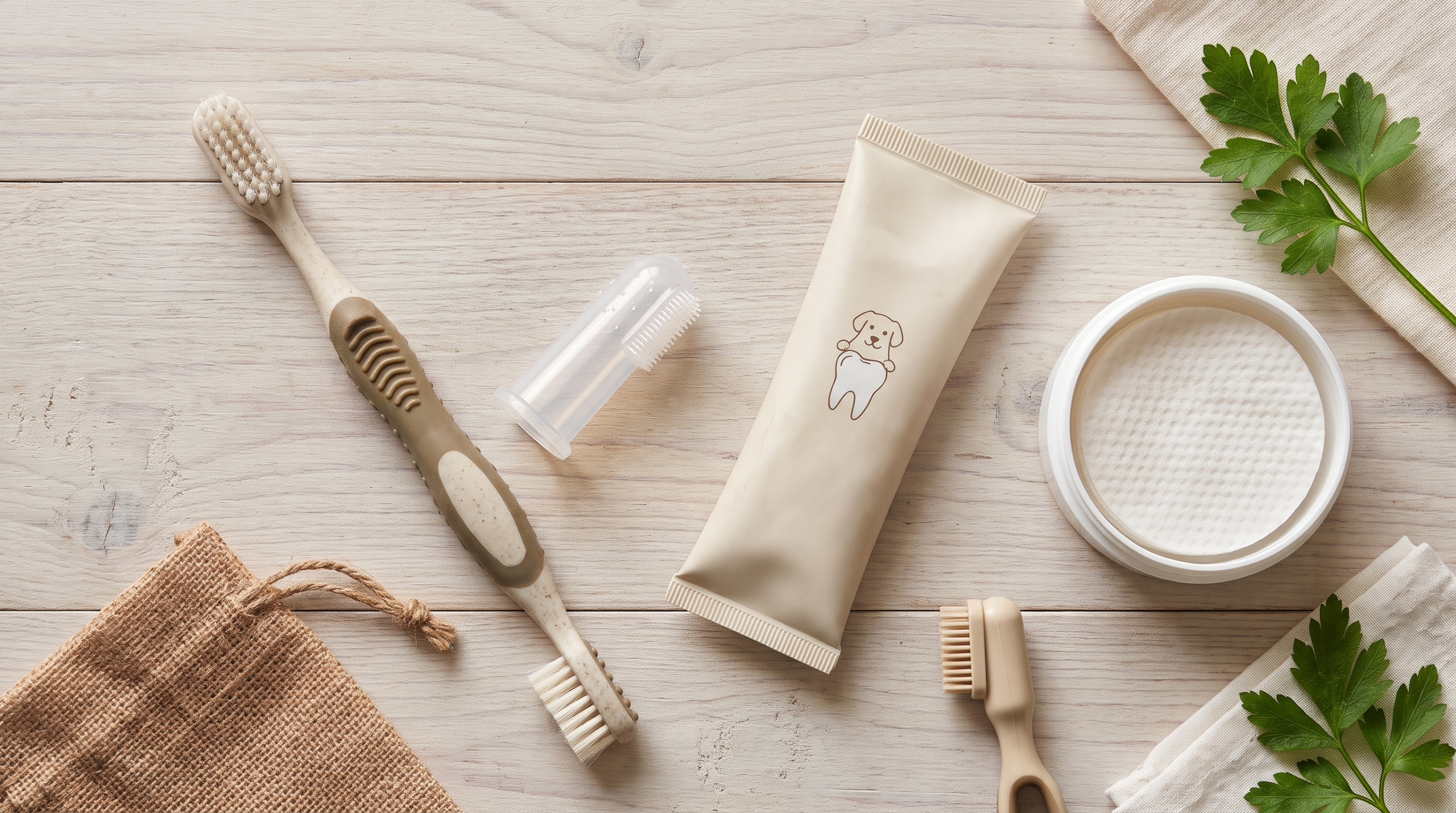
| Dental Product | Main Purpose | Important Consideration |
|---|---|---|
| Dog toothbrush | Removes plaque through brushing | Choose soft bristles and a suitable size |
| Finger brush | Helps introduce toothbrushing | May be less effective for reaching back teeth |
| Dog toothpaste | Makes brushing easier and supports oral hygiene | Must be formulated specifically for pets |
| Dental wipes | Help clean accessible tooth surfaces | Effectiveness varies between products |
| Dental chews | May help reduce plaque or tartar | Choose suitable sizes and supervise chewing |
| Dental diets | Specially formulated to support oral health | Different from ordinary dry dog food |
| Water additives and oral gels | Supplement a home dental routine | Do not replace brushing |
Understanding the VOHC Seal of Acceptance
The Veterinary Oral Health Council (VOHC) maintains a list of dental products that have met its established standards for plaque control, tartar control or both.
The VOHC Seal of Acceptance can help owners identify products supported by submitted evidence for specific dental-health claims. However, the seal does not mean that a product prevents every form of dental disease or replaces professional treatment.
Owners should check the current VOHC Accepted Products list before choosing a dental chew, diet, wipe, toothpaste or water additive.
The accepted-products list includes different categories, and the claim attached to each product matters. For example, a product accepted for tartar control should not automatically be described as having demonstrated plaque control.
Choosing Toothpaste and Brushes
Dog-specific toothbrushes are available in different shapes and sizes. A soft-bristled brush with a comfortable handle can provide good control when cleaning the outer surfaces of the teeth.
Finger brushes may be useful for dogs that are initially uncomfortable with a conventional toothbrush. However, they may not reach every part of the mouth as easily.
Pet toothpaste is formulated for animals and is available in different flavours. Choose a product intended for dogs and follow its usage instructions.
Human toothpaste should never be used. Some human formulations contain xylitol, a sweetener that is toxic to dogs and can cause dangerously low blood sugar and liver injury. The US Food and Drug Administration explains this risk in its Xylitol Toxicity guidance.
If a dog swallows toothpaste containing xylitol, contact a veterinarian or emergency animal clinic immediately. Do not wait for symptoms to appear.
Do Dental Chews and Dental Treats Actually Work?
Certain dental chews and treats can help reduce plaque or tartar when they are specifically designed for oral hygiene and have supporting evidence.
Their effectiveness depends on the product, its design and how it is used. Ordinary dog treats should not automatically be considered dental products.
The VOHC list is a useful starting point because it identifies products that have met standards for specific plaque or tartar control claims.
When choosing a dental chew, consider the following:
- Correct size: Select a product appropriate for your dog's body weight and chewing habits.
- Supervision: Watch your dog while chewing to reduce the risk of choking or swallowing large pieces.
- Calorie content: Dental treats contribute to daily calorie intake and should be included in the overall feeding plan.
- Material and hardness: Avoid products that are excessively hard and may damage teeth.
- Individual suitability: Dogs with existing dental problems or special dietary requirements may need a different option.
Dental chews should support brushing rather than replace it. Some products may be useful for dogs that are still learning to accept a toothbrush, but they do not provide the same cleaning coverage as brushing the accessible tooth surfaces.
What Should Dog Owners Avoid During Dental Care?
Knowing what not to use is just as important as choosing the right toothbrush or dental chew.
Human Toothpaste
Human toothpaste is not formulated for dogs. Dogs swallow toothpaste rather than spitting it out, so ingredients intended for human oral care may be unsuitable.
Some human toothpastes contain xylitol, which can cause severe poisoning in dogs. Always use toothpaste specifically formulated for dogs and store human dental products safely out of reach. The FDA's guidance on xylitol explains why products containing this sweetener must be kept away from dogs.
Household Cleaning Products
Household cleaners, disinfectants and other cleaning chemicals should never be used inside a dog's mouth.
Only use oral-care products specifically designed for dogs and recommended for their intended purpose.
Scraping Tartar at Home
Do not attempt to remove hardened tartar using sharp dental instruments or household tools.
Scraping can injure the gums and does not address the disease developing below the gumline. Professional veterinary cleaning is needed to examine and treat established dental disease properly.
Extremely Hard Bones, Antlers and Chews
Bones, antlers, hooves and very hard manufactured toys can wear down or fracture teeth.
UC Davis describes a practical fingernail test: as a general guide, if a fingernail cannot make an indentation in a chew or toy, it may be too hard for a dog to chew safely. This is only a screening guide, not a guarantee that an item is safe. See the UC Davis Dental Home Care Instructions for further guidance.
Cornell also advises caution with hard chewing objects because some may cause dental fractures or gastrointestinal damage. Choose appropriately designed products and ask a veterinarian about suitable options for your dog's chewing habits.
Assuming Ordinary Dry Food Cleans Teeth
Regular dry dog food does not automatically prevent dental disease.
Specially formulated dental diets can help reduce plaque or tartar, but these are different from ordinary kibble. VCA Canada's veterinary guidance explains that ordinary dry food alone should not be relied on to improve oral health.
Relying Only on Dental Chews or Water Additives
Dental chews, water additives, oral gels and sprays may provide supplementary benefits. However, they should not be treated as complete replacements for regular toothbrushing or veterinary dental examinations.
Ignoring Changes in the Mouth
Persistent bad breath, bleeding gums, difficulty chewing and visible tartar should not be dismissed as normal signs of ageing.
A veterinary examination can determine whether the dog needs professional cleaning or treatment.
Professional Dog Dental Cleaning: When Is It Necessary?
Home brushing helps control plaque, but it cannot remove established tartar or treat advanced periodontal disease.
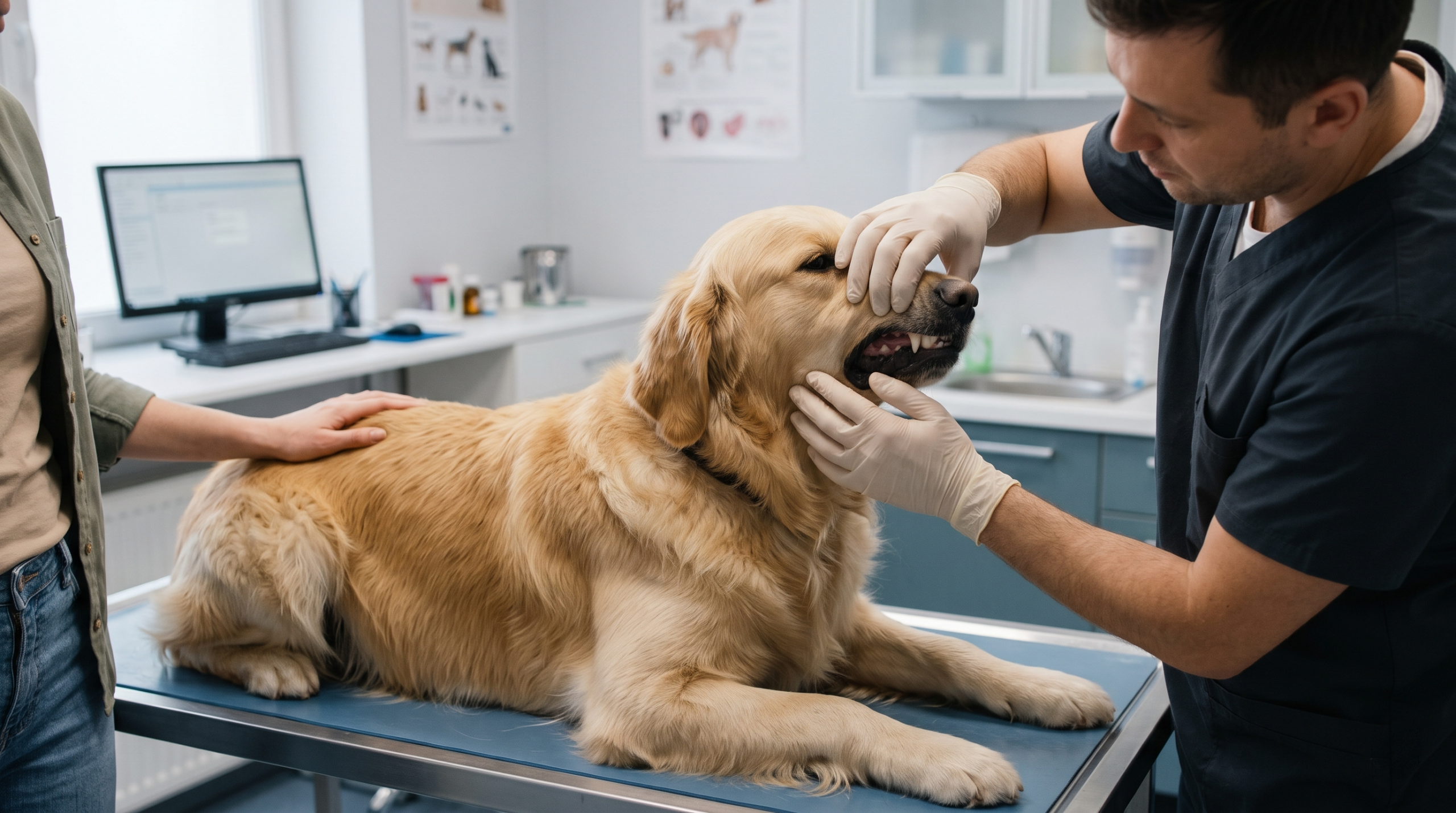
A professional dental examination allows a veterinarian to assess the condition of the teeth, gums and supporting structures and determine whether treatment is required.
What Happens During a Professional Dental Cleaning?
A comprehensive veterinary dental procedure generally involves several stages:
1. Preliminary Examination
The veterinarian reviews the dog's medical history and performs a physical and oral examination. Depending on the dog's health and the planned procedure, pre-anaesthetic blood tests or other assessments may be recommended.
2. General Anaesthesia
General anaesthesia allows the veterinary team to carry out a detailed oral examination and dental treatment while the dog remains still and protected.
The team uses appropriate monitoring and airway protection during the procedure.
3. Dental Radiographs
Dental X-rays help identify problems that cannot be seen by looking at the visible crown of a tooth. They can reveal issues involving the roots, surrounding bone and structures below the gumline.
4. Scaling and Cleaning
The veterinary team removes plaque and tartar from the tooth surfaces, including areas above and below the gumline.
5. Polishing and Periodontal Assessment
After scaling, the teeth are polished and assessed for damage, gum pockets and other signs of periodontal disease.
6. Additional Treatment When Required
Some teeth may need further treatment or extraction if they are severely damaged, loose or affected by advanced disease.
Why Is Anaesthesia Necessary?
A comprehensive dental procedure requires the dog to remain still while the veterinary team examines the entire mouth, takes dental radiographs, cleans below the gumline and treats any disease discovered.
The American Veterinary Dental College (AVDC) position statement on anaesthesia-free dentistry explains that cleaning visible tooth surfaces without anaesthesia is not a substitute for comprehensive veterinary dental treatment because it cannot adequately examine or treat areas below the gumline.
Anaesthesia involves individual risks, but the veterinary team assesses the dog's health and uses appropriate preparation and monitoring to manage them. AAHA's explanation of dental anaesthesia provides further information about the procedure and its safety measures.
There is no single professional-cleaning schedule that is right for every dog. The veterinarian determines when treatment is needed based on the dog's oral examination, dental history, age, breed and individual health.
Dental Care for Puppies, Adult Dogs and Senior Dogs
Dental care should be introduced at an appropriate stage of a dog's development. The approach may differ depending on whether the dog is still teething, has permanent teeth or is an older adult.
Puppies
Puppies can gradually become comfortable with gentle face and muzzle handling while they are young.
However, regular home oral-hygiene training should be introduced with attention to the development of the teeth. AAHA's guidance on preventing periodontal disease recommends starting home oral-hygiene training when permanent teeth have erupted. Puppies actively losing their baby teeth may experience discomfort, so owners should avoid creating negative experiences during this period.
The AAHA guidance also explains why retained baby teeth and dental-development problems should be checked by a veterinarian.
Once the permanent teeth have emerged and the puppy is comfortable, owners can gradually introduce a soft toothbrush and dog-specific toothpaste.
Adult Dogs
Adult dogs benefit from a consistent home dental-care routine.
Daily brushing, suitable dental products and regular veterinary examinations help monitor oral health and reduce plaque accumulation.
Dogs that have never experienced brushing may need more time to accept the process. Begin gradually, reward calm behaviour and avoid forcing the mouth open.
Senior Dogs
Older dogs may have accumulated plaque, tartar or periodontal damage over many years. Regular oral examinations are particularly important because age-related dental problems may affect comfort and eating habits.
Senior dogs should not automatically be considered too old for professional dental treatment. AAHA's senior-care guidance explains that advanced age alone is not a contraindication to general anaesthesia. The veterinarian should assess each dog's health, medical history and individual anaesthetic risks before recommending a procedure.
How Often Should You Brush Your Dog's Teeth?
Daily brushing is the preferred routine for maintaining a dog's oral hygiene.
AAHA recommends daily brushing because plaque accumulates continuously and needs regular removal. Cornell also identifies daily brushing with veterinary toothpaste as the foundation of effective home dental care.
The AVMA acknowledges that although daily brushing is best, brushing several times a week can still be effective when daily brushing is not possible.
For owners introducing the routine for the first time, it is reasonable to begin with short sessions and a few teeth. Gradually increase the number of teeth brushed and work towards cleaning all accessible teeth every day.
Consistency matters more than trying to complete a long brushing session while a dog is uncomfortable.
Creating a Simple Daily Dog Dental Care Routine
A practical routine can make dental hygiene easier to maintain.
Daily Dental Care
- Choose a consistent time for brushing.
- Use a soft-bristled dog toothbrush and pet-safe toothpaste.
- Brush the accessible tooth surfaces gently.
- Reward your dog after the session.
- Use suitable supplementary dental products if recommended by your veterinarian.
Regular Monitoring
Look at your dog's mouth periodically for visible tartar, gum redness, damaged teeth or changes in breath.
Pay attention to changes in chewing, eating habits or behaviour. These may indicate that the dog needs an oral examination.
Veterinary Examinations
Arrange regular dental checks as part of routine veterinary care. The AVMA recommends that a dog's teeth and gums be examined at least once a year, although individual dogs may need more frequent assessments.
A home dental routine can help maintain oral hygiene, but it does not guarantee that professional cleaning or treatment will never be necessary.
Frequently Asked Questions
1. How often should I brush my dog's teeth?
Daily brushing is the recommended routine. It helps remove plaque before it hardens into tartar. If daily brushing is difficult at first, begin with shorter sessions several times a week and gradually work towards a daily routine.
2. Can I use human toothpaste on my dog?
No. Human toothpaste is not formulated for dogs, who generally swallow it rather than spitting it out. Some products also contain xylitol, which is toxic to dogs. Always use toothpaste specifically designed for pets.
3. What happens if I never brush my dog's teeth?
Without regular plaque control, plaque can harden into tartar and contribute to gum inflammation and periodontal disease. Advanced disease can damage the structures supporting the teeth and may cause pain, loose teeth or tooth loss.
4. Are dental chews enough to keep a dog's teeth clean?
Dental chews can help reduce plaque or tartar when they are appropriately designed and supported by evidence. However, they should supplement rather than replace brushing and veterinary dental examinations.
5. Can dry dog food clean a dog's teeth?
Ordinary dry dog food should not be considered a substitute for dental care. Specially formulated dental diets may help control plaque or tartar, but their effects depend on the product and how it is used.
6. At what age should I start brushing my puppy's teeth?
Start by helping your puppy become comfortable with gentle face and muzzle handling. AAHA recommends beginning home oral-hygiene training when permanent teeth have erupted. Ask your veterinarian for advice about the right time to begin brushing, especially during teething.
7. Can I remove tartar from my dog's teeth at home?
No. Toothbrushing helps remove soft plaque but does not effectively remove established tartar. Hardened calculus generally requires professional veterinary cleaning. Do not try to scrape it off using household tools or sharp instruments.
8. How do I know if my dog needs a professional dental cleaning?
Bad breath, visible tartar, red or bleeding gums, drooling, chewing difficulties and loose teeth are reasons to arrange a veterinary examination. A veterinarian can assess the teeth and determine whether professional cleaning or further treatment is needed.
Veterinary and Animal-Care References
The following veterinary organisations, universities and professional resources provide further information about canine dental disease, home oral hygiene and veterinary dental treatment.
- World Small Animal Veterinary Association (WSAVA): Global Dental Guidelines — international veterinary guidance on oral and dental disease, prevention, diagnosis and treatment, including the updated 2026 guideline edition.
- American Veterinary Medical Association (AVMA): Pet Dental Care — signs of dental disease, home care and professional veterinary examinations.
- American Animal Hospital Association (AAHA): 2019 Dental Care Guidelines for Dogs and Cats — veterinary recommendations for dental prevention, treatment and home oral hygiene.
- AAHA: Recommending Home Oral Hygiene and Products — daily brushing, plaque control and dental-product considerations.
- Cornell University College of Veterinary Medicine: Dental Disease and Home Dental Care — plaque, tartar, warning signs and home-care options.
- Cornell University College of Veterinary Medicine: Periodontal Disease — periodontal disease progression, diagnosis and professional treatment.
- UC Davis School of Veterinary Medicine: Dental Home Care Instructions — practical guidance on introducing and performing toothbrushing.
- Veterinary Oral Health Council (VOHC): Accepted Products — current products accepted for specific plaque or tartar control claims.
- US Food and Drug Administration (FDA): Paws Off! Xylitol Is Toxic to Dogs — information about xylitol exposure and poisoning risks.
- American Veterinary Dental College (AVDC): Dental Scaling Without Anesthesia — the limitations of non-anaesthetic dental scaling.
- AAHA: Do Pets Need Anesthesia for Dental Care? — reasons for anaesthesia during comprehensive dental procedures and related safety measures.
- VCA Canada: Dogs, Nutrition and Periodontal Disease — the relationship between nutrition, ordinary dry food and dental health.
- AAHA: Anesthetic and Surgical Considerations for Senior Pets — individual anaesthetic assessment and considerations for older dogs.
Conclusion: Making Dog Dental Care a Consistent Habit
Good dog dental care does not have to begin with a perfect brushing routine. It starts with helping a dog become comfortable with gentle mouth handling and gradually introducing the right toothbrush and toothpaste.
Daily brushing, appropriate dental products and regular veterinary examinations all contribute to better oral hygiene. Paying attention to changes in breath, gums, chewing habits and behaviour can also help owners recognise possible problems earlier.
Max's experience is a reminder that building a new habit can take patience. Those first few awkward seconds can gradually become a familiar part of the day.
Start gently, stay consistent and work towards daily brushing. A comfortable dog and a healthy mouth are worth the effort.
Ready to Learn More?
Explore more practical advice in PetStory's Dog Health & Nutrition section, including guidance on everyday care, nutrition and supporting your dog's long-term wellbeing.
About the Author
Irfan Hyder is the editor of PetStory.org, an independent publication covering pet care, adoption, nutrition and behaviour. He has spent around 8 years caring for pets at home, including his Golden Retriever, Max, his Persian cat, Luna, and pet birds, and writes alongside veterinary and reputable sources.