


Table of Contents
Bringing a budgie into your family introduces a world of cheerful chirps, bright colors, and playful antics. These tiny parrots pack a massive amount of personality into a very small package. But to truly see your feathered friend thrive, you need to provide more than just a place to sleep.
A bird’s cage is their entire universe when you are not around. It serves as their dining room, playground, and safe sanctuary. Understanding how to care for budgies properly starts with building an environment that caters to their physical and mental needs.
If you want to master the perfect budgie cage setup, you are in the right place. This guide will walk you through everything you need to know to create a healthy, stimulating, and comfortable home for your new companion. We will cover choosing the right cage, selecting the best accessories, finding the perfect spot in your house, and keeping everything sparkling clean.
Choosing the Right Cage for Your Budgie
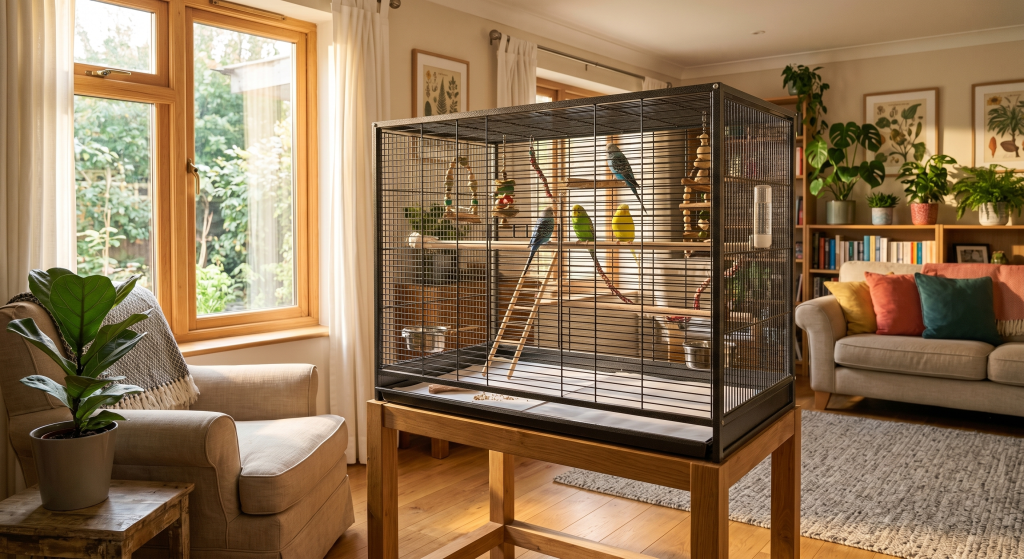
The foundation of excellent budgie care begins with the enclosure itself. Budgies are incredibly active birds. They do not just climb; they love to fly horizontally from perch to perch. Giving them enough space to stretch their wings is crucial for their physical health and happiness.
Many beginners make the common mistake of buying a tall, narrow cage. While these look elegant sitting in a corner, they severely restrict a budgie’s natural flight pattern. I remember buying my first cage based purely on how it looked in the pet store. It was shaped like a tall cylinder. I quickly realized my bird could only climb up and down, looking frustrated when trying to flutter his wings. I swapped it for a wide flight cage the very next week, and his energy levels completely transformed!
Tips for selecting the best cage:
- Prioritize width over height: Look for a cage that is at least 18 inches deep, 18 inches tall, and 24 inches wide for a single budgie. If you plan to house two birds, you will need to go even larger.
- Check the bar spacing: Budgies are escape artists with remarkably tiny heads. Ensure the gaps between the bars are no larger than half an inch. Anything wider poses a risk of your bird getting their head stuck.
- Look for horizontal bars: Budgies love to climb the sides of their home. Horizontal bars make this much easier for their little feet to grip.
When you provide a spacious, wide cage, you give your pet the gift of exercise. The benefit is a highly active, physically fit bird that is much less prone to obesity and joint issues.

Essential Accessories for a Budgie Cage
Once you have the right enclosure, it is time to furnish it. The items you place inside directly impact your bird’s foot health, digestion, and overall comfort.
A frequent pitfall for new owners is relying entirely on the smooth plastic or wooden dowel perches that come free with the cage. These uniform perches force the bird’s feet into the exact same position all day long. Over time, this causes painful sores on the bottom of their feet, a condition known as bumblefoot. I learned this the hard way when a rescue budgie came to me with red, swollen feet from sitting on a single plastic rod for years. Switching to varied textures healed his feet within a few months.
Must-have accessories for a healthy setup:
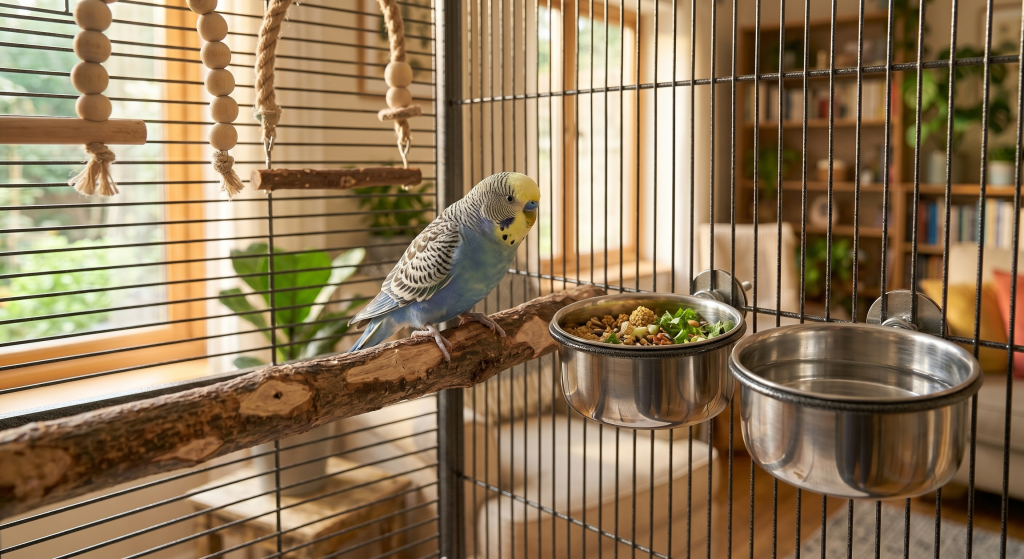
- Natural wood perches: Swap plastic dowels for varying sizes of natural, bird-safe wood branches (like apple, eucalyptus, or manzanita). The uneven texture exercises their feet and naturally files down their nails.
- Stainless steel bowls: Choose stainless steel or high-quality ceramic over plastic bowls. Plastic harbors bacteria in microscopic scratches and is much harder to keep fully sanitary.
- Cuttlebone and mineral block: Attach these to the inside of the cage. They provide essential calcium for bone health and give your bird a safe place to scrape and naturally trim their beak.
By upgrading their accessories, you closely mimic their natural environment in the wild. This prevents painful medical conditions and keeps your budgie comfortable throughout the day.
Ideal Placement of the Cage in Your Home
Where you place the cage is just as crucial as what you put inside it. Budgies are flock animals by nature. In the wild, they survive by staying close to their family. If you tuck their cage away in a quiet, isolated spare bedroom, your bird will feel lonely, stressed, and disconnected from their new human flock.
However, you also want to avoid environments that are too chaotic. Finding the perfect spot requires a delicate balance between social interaction and a sense of security.
Actionable placement tips:
- Join the family: Place the cage in a lively room, like a family room or living room. They will love watching you read, watch TV, or relax on the couch.
- Find a secure wall: Position the cage against at least one solid wall. This gives the bird a sense of security, so they do not feel exposed to potential predators from all sides.
- Watch the temperature: Keep the cage away from drafty windows, direct blazing sunlight, and air conditioning vents. Sudden temperature drops can make a small bird very sick.
A crucial safety warning: Never place a bird cage in or near your kitchen. When overheated, non-stick cookware coated with Teflon releases toxic fumes that are instantly fatal to birds, a fact confirmed by veterinary sources like the VCA Animal Hospitals. Keeping them in a safe, social area ensures they feel like a valued member of your family, leading to a much friendlier and happier pet.
Creating a Stimulating Environment for Your Budgie
Budgies are remarkably intelligent little creatures. They need mental workouts just as much as they need physical exercise. If a budgie sits in an empty cage all day, they become bored and depressed. They might even start plucking their own feathers out of pure frustration.
A common beginner mistake is actually overcrowding the cage. Eager pet owners often buy a dozen toys and cram them all inside at once. This leaves the bird with no room to open their wings and move around comfortably. Another major mistake is adding mirrors. While it seems cute, budgies often think the reflection is a real bird. They can become obsessively attached to the mirror, aggressively guarding it and ignoring you entirely. I removed the mirror from my budgie’s cage, and within a week, he became much more interested in interacting with me and learning new tricks.
How to engage your budgie’s brain:
- Rotate their toys: Put three or four toys in the cage at a time. Every week or two, swap them out for different ones to keep things fresh, exciting, and new.
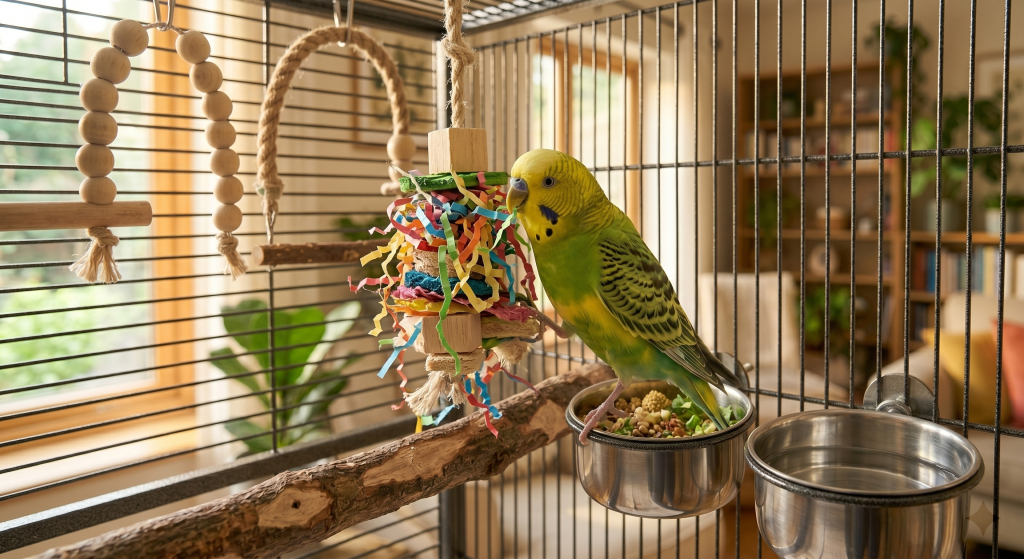
- Offer shredding opportunities: Budgies love to destroy things! Provide toys made of bird-safe paper, soft balsa wood, or woven palm leaves.
- Introduce foraging: Hide a few of their favorite seeds inside a folded piece of paper or a specialized foraging toy. This forces them to work for their treats, mimicking how they hunt for food in the wild.
A well-stimulated budgie is a quiet, content, and curious budgie. Providing proper enrichment is one of the most effective budgie care tips you can implement for a well-adjusted pet.
Cleaning and Maintenance Tips for a Healthy Budgie Home
Nobody really enjoys cleaning, but a dirty cage is a fast track to respiratory infections and bacterial diseases. Budgies have incredibly sensitive respiratory systems, meaning hygiene must be a top priority in your home.
Many people make the critical mistake of using standard household cleaners to wipe down the cage. Aerosols, bleach, and scented multi-surface sprays leave behind toxic residue and invisible fumes that can severely harm your bird.
Establish a simple, safe cleaning routine:
- Daily tasks: Change the paper liner at the bottom of the cage to remove droppings. Empty, wash, and refill their water and food bowls with hot, soapy water to prevent slime and bacteria buildup.
- Weekly tasks: Take everything out of the cage. Wipe down the bars and the floor grate using a bird-safe cleaner. A simple mixture of equal parts white vinegar and warm water works perfectly, cuts through grime, and is completely safe for birds.
- Monthly tasks: Do a deep clean. Take the cage outside or into the shower and scrub it thoroughly with a stiff brush. Inspect all toys and replace anything that is dangerously frayed or broken.
When you stick to a regular cleaning schedule, the task takes only a few minutes a day. The benefit is a fresh-smelling home for you and a vibrant, disease-free environment for your feathered friend.
Ready to Build Your Budgie’s Dream Home?
Setting up a budgie’s cage might seem like a lot of work at first, but it is deeply rewarding. By choosing a spacious flight cage, providing natural wood perches, keeping them in a social area, and rotating fun toys, you lay the groundwork for a long and joyful relationship. Your budgie relies entirely on you to create a space where they feel secure, stimulated, and loved.
We hope these budgie care tips help you feel confident as you welcome your new feathered friend into your life. Remember, a perfect home equals a perfect companion!