


Table of Contents
Thinking about getting a shelled pet? You might see a tiny, shelled creature in a pet store and think, “I want that turtle!” But what if it’s a tortoise? This is a common mix-up. While both belong to the same reptile family, their needs are very different, and confusing them can lead to serious care mistakes.
Understanding the “turtle vs. tortoise” distinction is crucial before choosing. Bringing a reptile into your home is a major commitment, and you need to know what you’re signing up for.
This guide will break down the differences between these animals, covering their physical traits, habitats, diets, and lifespans. By the end, you’ll feel confident in deciding which shelled friend is the right fit for your home and lifestyle.


Key Differences Between Turtles and Tortoises
At first glance, any animal with a hard shell might look like a turtle. However, a closer look reveals major anatomical differences based on where they live.
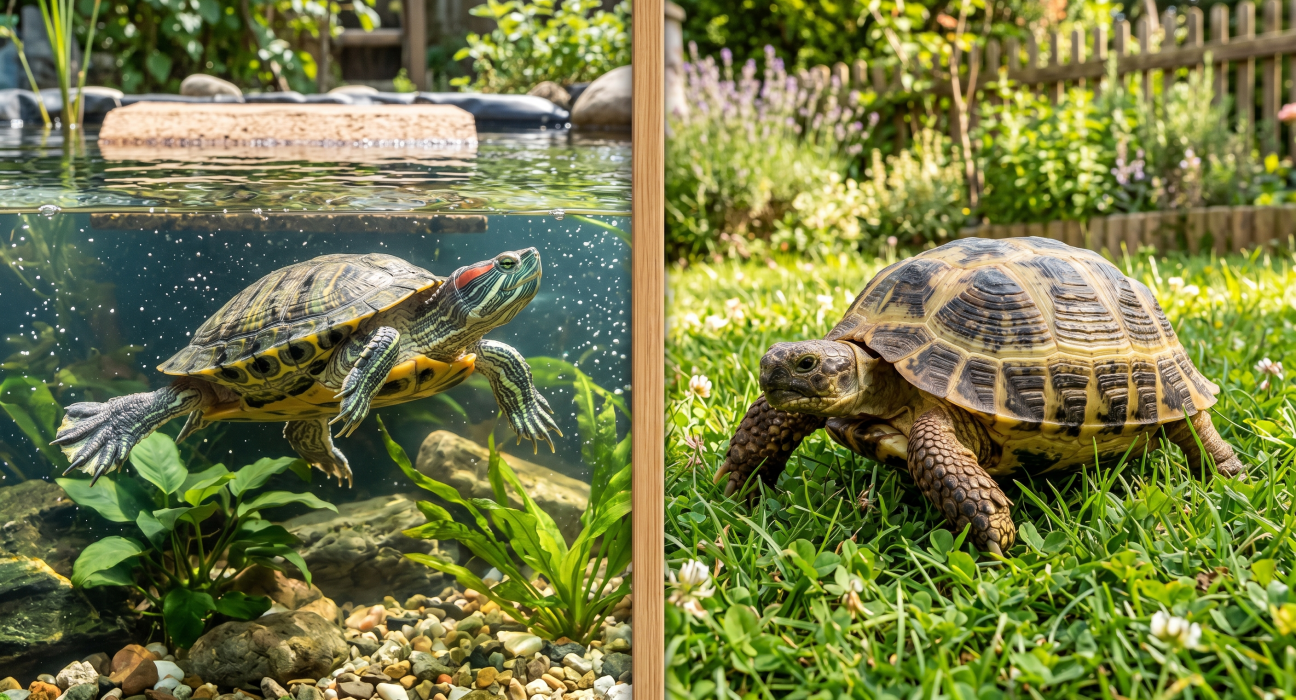
Turtles are primarily aquatic or semi-aquatic, spending most of their lives in or near water. Because of this, they have streamlined, flatter shells that help them glide through the water. Instead of feet, many turtles have webbed toes or flippers.
Tortoises, on the other hand, are strictly land-dwellers and cannot swim. Placing a tortoise in deep water is dangerous, as its heavy body will sink. Tortoises have large, heavy, dome-shaped shells and sturdy, elephant-like legs built for carrying their weight and digging burrows.
Common Misconception: Many people believe that turtles and tortoises can share the same habitat. This is false. Putting a tortoise in a turtle’s aquatic tank can be fatal, while keeping an aquatic turtle on dry land will cause severe dehydration.
Lifestyle and Habitat Requirements
Before bringing a pet turtle or tortoise home, it’s crucial to evaluate your space and ability to meet their specific needs. Proper care depends on creating an environment that mimics their natural world. Since turtles and tortoises have vastly different requirements, understanding these distinctions is the first step. Replicating their native habitat is the key to ensuring they lead long, healthy lives.
Setting Up a Turtle Tank
Aquatic turtles, like the popular Red-Eared Slider, need large water setups. A small plastic bowl won’t do. As they grow, they require massive glass aquariums—a general rule is 10 gallons of water for every inch of shell length.
Turtles are also messy eaters, so you’ll need a powerful water filter to keep their tank clean. Additionally, they require a dry basking dock with UVB and heat lamps so they can climb out to warm up and absorb vital nutrients.
Creating a Tortoise Enclosure
Tortoises need plenty of dry floor space to roam and dig. Glass aquariums can cause them stress because they don’t understand transparent barriers and may pace against the glass.
Instead, indoor tortoises do well in custom wooden “tortoise tables.” These open-top enclosures must have proper heating, UVB lighting, and a safe substrate like topsoil for digging. If you live in a warm climate, many larger tortoise species can thrive in secure, predator-proof outdoor pens.

Diet and Feeding Needs
Feeding time is an interactive part of reptile ownership, but turtles and tortoises have completely different menus.
Turtles are generally omnivores, eating both meat and plants. A healthy diet consists of high-quality commercial aquatic pellets, live insects like crickets or earthworms, and occasional leafy greens. Turtles also eat underwater, which can make feeding a splashy event.
Tortoises are strict herbivores whose digestive systems are designed for high-fiber vegetation. A healthy tortoise diet includes safe weeds, grasses, dark leafy greens, and hay. Feeding a tortoise protein or sugary fruits can cause severe health problems. For expert guidance on species-specific diets, trusted resources like the San Diego Zoo Wildlife Alliance offer excellent nutritional information.
Pro Tip: Both turtles and tortoises need calcium supplements. Dusting their food with a reptile calcium powder ensures their bones and shells stay strong.
Lifespan and Long-Term Commitment
Reptiles are not short-term pets. Before bringing one home, you must consider the timeline.
Most pet turtles live for 20 to 40 years with proper care. You will likely care for this animal through multiple major life stages.
Tortoises take long-term commitment to another level. Depending on the species, a tortoise can live for 50 to 100 years. Some larger species, like the Sulcata tortoise, often outlive their owners. Tortoise ownership can require generational planning, and many owners include their pets in their wills to ensure continued care.
The Association of Reptile and Amphibian Veterinarians (ARAV) recommends finding an exotic vet early to maintain your pet’s long-term health. Regular checkups can help catch potential issues before they become serious.

Which Pet is Right for You?
Turtles and tortoises both make fascinating companions, but their needs are very different. The best choice depends on your lifestyle, living space, and what you’re looking for in a pet. To make the right decision, consider whether you’d prefer a land-dwelling grazer or an active aquatic swimmer.
A turtle might be the right pet if you:
- Enjoy the look of an active, aquatic aquarium.
- Don’t mind regular water changes and filter maintenance.
- Like watching an active swimmer.
- Live in an apartment or home without a secure backyard.
A tortoise might be the right pet if you:
- Prefer a quieter, slower-paced companion.
- Have plenty of floor space for a large indoor table or a secure outdoor area.
- Enjoy preparing fresh salads and foraging for safe plants.
- Are prepared for a lifelong (and potentially multi-generational) commitment.
Imagine sipping your morning coffee while your tortoise grazes on dandelions, or coming home to see your turtle splashing at the glass, begging for a treat. Both scenarios offer a rewarding bond, provided you meet their specific needs.
Take the Next Step in Reptile Care
Choosing between a turtle and a tortoise is just the start. Take time to evaluate your daily routine, budget, and available space. Rushing into pet ownership never benefits the animal, but careful planning can lead to decades of joy.
Are you leaning toward an active turtle or a gentle tortoise? Share this article with your family to help make the decision. For more expert how-to guides and comprehensive reptile care advice, explore the rest of our resources here on PetStory.org.