

Choosing food for a dog involves more than selecting a familiar brand or a recipe with an appealing name. Pet food packages display ingredient lists, nutrient percentages, feeding directions, and statements about the life stages a product is designed to support. These details provide useful information, but they can be difficult to interpret without understanding what each section means.
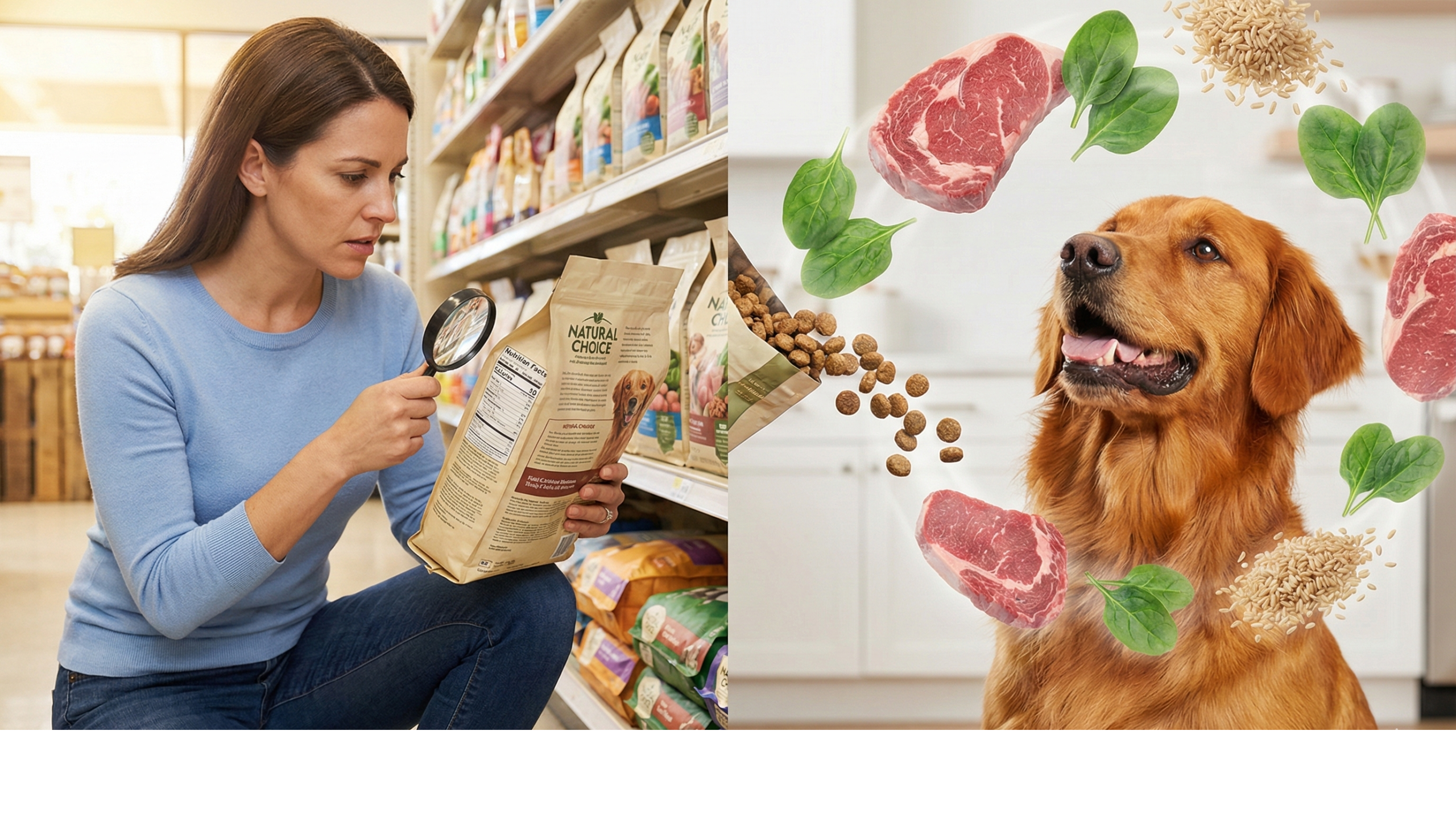
Learning how to read dog food labels helps owners compare products more confidently. It also makes it easier to distinguish nutritional information from marketing language and identify questions worth asking a veterinarian or pet food manufacturer. The ingredient list is one part of the picture; the nutritional adequacy statement, calorie content, and manufacturer's expertise also matter.
This guide explains the main sections of a dog food label, including protein sources, carbohydrates, fats, guaranteed analysis, and nutritional adequacy. It also covers practical checks that can help owners evaluate a food in relation to their dog's age, activity level, and individual nutritional needs. For a broader discussion of choosing a balanced diet, see our guide to how to choose the healthiest dog food.
This guide uses published pet food label guidance and nutritional resources from the Association of American Feed Control Officials (AAFCO), the World Small Animal Veterinary Association (WSAVA), and the US Food and Drug Administration (FDA). It explains how to interpret common label sections and compare the information provided by manufacturers. It is educational content, not an individual veterinary assessment or a substitute for professional nutritional advice.
Table of Contents
- 1. Understanding the Dog Food Ingredient List
- 2. Choosing and Evaluating Protein Sources
- 3. Evaluating Carbohydrates and Grains
- 4. Understanding Fats and Fat Sources
- 5. Understanding the Guaranteed Analysis
- 6. Comparing Nutrients on a Dry Matter Basis
- 7. Nutritional Adequacy Statements and Life Stages
- 8. Checking Calories and Feeding Directions
- 9. Evaluating the Dog Food Manufacturer
- 10. Dog Food Label Checklist
- 11. Frequently Asked Questions
- 12. Veterinary and Nutrition References
Understanding the Dog Food Ingredient List
The ingredient statement identifies the ingredients used to make a dog food. In the United States, ingredients are generally listed in descending order by weight, based on their weight when added to the formulation. This means the first ingredient contributes more weight than the ingredients listed after it at that stage of production.
However, the order does not reveal the exact percentage of each ingredient or the amount of a nutrient that the finished food provides. Ingredients with different moisture levels can also be difficult to compare by position alone. For example, fresh chicken contains substantial water, while chicken meal is a concentrated rendered ingredient with much of its moisture removed. Cooking further changes the moisture content of the finished product.
For this reason, the first ingredient should not be treated as a complete measure of food quality. Consider the full ingredient list alongside the guaranteed analysis and nutritional adequacy statement. The AAFCO guide to reading pet food labels explains how ingredients and other required label sections are presented.
Choosing and Evaluating Protein Sources
Protein supplies amino acids that dogs use for muscle maintenance, tissue repair, enzymes, hormones, and other essential functions. A dog food may obtain protein from animal ingredients, plant ingredients, or a combination of sources. The nutritional value of the complete formulation depends on its amino acid profile, digestibility, nutrient balance, and suitability for the intended life stage.
Named animal ingredients can help owners understand which species are represented in a recipe. Examples include:
- Chicken, beef, lamb, or salmon: These identify specific animal ingredients. Fresh meat ingredients also contribute moisture to a formulation.
- Chicken meal or lamb meal: These are rendered ingredients made by processing animal tissues and removing much of their moisture and fat. A properly sourced, named meat meal can provide concentrated protein and other nutrients.
- Fish meal: This can provide concentrated protein and may contribute fatty acids, depending on the fish species and processing method.
- Egg products: These can supply highly digestible protein and a range of essential nutrients.
Animal by-products also deserve a more careful interpretation than their name may suggest. Depending on the ingredient definition and source, they can include nutrient-rich organs and other animal tissues. Some organs provide vitamins and minerals as well as protein. A named, clearly described ingredient is useful information, but the presence of a by-product does not automatically establish whether a complete diet is nutritionally suitable.
Evaluating Carbohydrates and Grains
Carbohydrates provide energy and can contribute dietary fibre, which supports normal digestive function. Ingredients such as rice, oats, barley, corn, potatoes, peas, and other plant foods may appear in dog food formulations. Their role depends on the recipe and how the ingredients are processed.
Dogs can digest properly processed carbohydrates, and grains are not automatically unnecessary fillers. The nutritional contribution of an ingredient depends on its nutrient composition, processing, digestibility, and the balance of the finished food.
Wholesome Grains and Alternative Carbohydrate Sources
Common grain ingredients include:
- Rice: A digestible carbohydrate source used in many dry and wet dog food recipes.
- Oats: Provide carbohydrates and fibre, along with small amounts of protein and other nutrients.
- Barley: Supplies carbohydrates and dietary fibre.
- Corn: Provides energy and can contribute protein, fatty acids, and other nutrients when appropriately processed and included in a balanced formulation.
- Wheat: Supplies carbohydrates and protein and is used in a range of pet food recipes.
- Potatoes and other vegetables: Can provide starch, fibre, and other nutrients depending on the ingredient and its preparation.
Corn, wheat, and soy are not automatically low-quality ingredients or harmful to every dog. Food allergies can occur, but an ingredient should not be identified as an allergen for an individual dog without considering its clinical history and appropriate veterinary evaluation. Dogs with suspected food sensitivities may need a veterinarian-guided elimination diet.
Understanding Grain-Free Diets
Grain-free dog foods are formulated without traditional cereal grains. They often use alternative carbohydrate ingredients such as peas, lentils, chickpeas, potatoes, or tapioca. These ingredients still contribute carbohydrates, so grain-free does not necessarily mean low-carbohydrate.
Grain-free food is not automatically more nutritious than a grain-inclusive formula. The choice should be based on the dog's nutritional requirements and any specific medical needs rather than the absence of grains alone.
The US Food and Drug Administration has investigated reports of dilated cardiomyopathy (DCM) in dogs eating certain diets, including some diets containing high proportions of peas, lentils, and other pulses. The investigation has not established a simple cause-and-effect relationship applicable to every grain-free food. Owners considering a diet change should discuss the dog's nutritional needs with a veterinarian, particularly when selecting a food with an unusual ingredient profile.
For most dogs, the important question is whether the complete diet supplies appropriate nutrients in suitable amounts. A grain-free label by itself does not answer that question.
Understanding Fats and Fat Sources
Dietary fats are an important energy source and help dogs absorb fat-soluble vitamins, including vitamins A, D, E, and K. They also provide essential fatty acids that contribute to normal skin function, coat condition, cell membranes, and other physiological processes.
Dog food labels may list several fat ingredients. Examples include:
- Chicken fat: A concentrated source of energy and fatty acids.
- Fish oil: May provide long-chain omega-3 fatty acids such as EPA and DHA, depending on its source and composition.
- Salmon oil: A named fish oil that can contribute omega-3 fatty acids.
- Flaxseed: Provides plant-based fat and alpha-linolenic acid, an omega-3 fatty acid.
- Vegetable oils: Different oils provide different fatty acid profiles, so the specific source matters.
Broad terms such as animal fat provide less information about the precise source than a named fat ingredient. However, the name alone does not establish the finished food's fatty acid balance or overall quality. Consider the complete formulation and any nutrient information supplied by the manufacturer.
Dogs require suitable amounts of fat, but the ideal level varies with age, activity, body condition, and health. A veterinarian can help determine whether a particular fat level or fatty acid profile is appropriate for an individual dog.
Understanding the Guaranteed Analysis
The guaranteed analysis lists certain nutrient percentages in a pet food. In the United States, the basic guarantees generally include minimum crude protein and crude fat, along with maximum crude fibre and moisture. Some labels also provide additional nutrient guarantees.
The word "crude" refers to the analytical method used to measure a nutrient category. It does not describe whether an ingredient or nutrient is good or poor quality.
| Label Component | What It Tells You |
|---|---|
| Crude protein | The minimum percentage of protein measured in the food. It does not identify protein digestibility or amino acid balance. |
| Crude fat | The minimum percentage of fat guaranteed in the product. Fat contributes energy and essential fatty acids. |
| Crude fibre | The maximum percentage of crude fibre. This is one measure of fibre and does not represent every type of dietary fibre. |
| Moisture | The maximum percentage of water in the food. Wet foods generally contain more moisture than dry kibble. |
These figures are useful for understanding the product, but they do not provide a complete nutritional assessment. Protein and fat guarantees are minimums, while fibre and moisture guarantees are maximums. Actual nutrient values can differ from the guaranteed figures within the permitted limits.
It is also important to remember that the guaranteed analysis does not show every nutrient required to evaluate a diet. It does not independently establish amino acid balance, vitamin and mineral adequacy, or digestibility. A higher crude protein percentage does not automatically make one food better than another.
Comparing Nutrients on a Dry Matter Basis
Wet and dry dog foods contain different amounts of water. This makes a direct comparison of their guaranteed analysis percentages difficult. A dry matter comparison removes the moisture component so that the nutrient proportions can be compared on a more consistent basis.
To estimate a nutrient's dry matter percentage, use this formula:
For example, imagine a food with a guaranteed minimum of 10% crude protein and a maximum of 75% moisture. Using those label figures, the estimated dry matter protein calculation is:
This is an illustrative calculation using guaranteed figures, not a laboratory measurement of the food's exact protein content. For a meaningful comparison, use actual or typical nutrient values supplied by the manufacturer when available and account for the limits of guaranteed analysis figures.
Dry matter calculations are particularly useful when comparing canned food with kibble. They should still be considered alongside calories, nutritional adequacy, and the dog's individual requirements.
Nutritional Adequacy Statements and Life Stages
The nutritional adequacy statement is one of the most important parts of a dog food label. It indicates whether the product is intended to provide complete and balanced nutrition for a particular life stage, or whether it is intended only for intermittent or supplemental feeding.
In the United States, look for a statement referring to the AAFCO Dog Food Nutrient Profiles or an AAFCO feeding test. A label may use wording similar to:
There are two common ways a product can substantiate its nutritional adequacy:
- Formulated to meet nutrient profiles: The manufacturer formulates the food to meet the relevant nutrient requirements for the stated life stage.
- Animal feeding tests: The food has been evaluated through feeding tests conducted using established AAFCO procedures for the stated life stage.
These are different approaches to substantiating nutritional adequacy. A feeding-test statement does not mean that every dog will respond identically, and a formulation statement does not provide all the information about a manufacturer's research or quality-control practices.
Understanding Dog Food Life Stages
| Life Stage | What the Label Means |
|---|---|
| Growth | Designed to support growing puppies. Some products also include gestation and lactation when the statement specifies those stages. |
| Adult Maintenance | Formulated to meet the nutritional requirements of adult dogs that are no longer growing. |
| All Life Stages | Formulated to meet requirements across the life stages covered by the applicable nutrient profile. Check the specific statement, including any provisions for growth. |
Large-size dogs have additional nutritional considerations during growth. When choosing puppy food for a dog expected to reach a large adult size, check that the nutritional adequacy statement specifically addresses growth, including the needs of large-size dogs where applicable. A veterinarian can help assess the most appropriate diet and feeding plan.
Products labelled for intermittent or supplemental feeding are not intended to serve as the sole source of nutrition unless a veterinarian has advised their use for a specific purpose. Treats and toppers often fall into this category. Their role should be considered within the dog's overall diet.
AAFCO provides nutritional model standards and label guidance in the United States, but it does not individually approve, certify, or endorse pet food products. Read its official label-reading guidance to understand the wording used on packages.
Checking Calories and Feeding Directions
Calories help owners understand how much energy a food provides. A package may list calorie content in kilocalories per kilogram and per familiar serving, such as a cup or can. This information is useful when comparing foods and estimating daily portions.
Two foods with similar protein and fat guarantees can have different calorie densities. A dog eating a more energy-dense food may need a smaller measured portion to receive a similar amount of energy.
Feeding directions usually provide a starting point based on the dog's body weight or life stage. They are general guidelines rather than an exact prescription for every individual animal.
- Check the calorie content per kilogram and per cup or can.
- Read the feeding guide for the correct life stage and body-weight range.
- Measure portions consistently instead of estimating by eye.
- Consider treats and additional food when assessing total daily calorie intake.
- Monitor body condition and adjust portions with veterinary guidance when needed.
Age, activity, reproductive status, body condition, and health can all affect energy requirements. Puppies, highly active dogs, older dogs, and dogs managing certain medical conditions may need different feeding plans. A veterinarian can help determine an appropriate daily calorie target.
Evaluating the Dog Food Manufacturer
The ingredient list and guaranteed analysis provide useful information, but they do not reveal everything about how a food is developed and manufactured. The company responsible for the product can provide additional details about formulation, testing, quality control, and nutritional research.
The World Small Animal Veterinary Association (WSAVA) Global Nutrition Committee recommends considering several questions when evaluating pet food manufacturers:
- Nutrition expertise: Does the company employ a qualified animal nutritionist, such as a specialist with advanced training in animal nutrition?
- Formulation responsibility: Who develops the recipes, and what qualifications and experience do they have?
- Quality-control procedures: Does the company assess incoming ingredients, finished products, and manufacturing processes?
- Research and testing: Does the manufacturer conduct or support nutritional research, digestibility work, or feeding studies?
- Product information: Can the company provide clear answers about nutrient levels, calorie content, and manufacturing practices?
These questions help owners look beyond front-of-package claims and understand the systems behind a product. A manufacturer that communicates clearly about its nutritional expertise and quality-control procedures provides useful information for comparing foods.
For a practical framework, consult the WSAVA Global Nutrition Committee's pet food selection guidelines.
Dog Food Label Checklist
Use this checklist when comparing products in a shop or reviewing a food online. It brings the main label sections together and provides a consistent way to assess the information available.
| What to Check | What to Look For |
|---|---|
| Product identity | Confirm that the food is specifically intended for dogs and check the product name and format. |
| Ingredient statement | Review the complete list, including named protein sources, fats, grains, and other ingredients. |
| Guaranteed analysis | Compare protein, fat, fibre, and moisture while remembering that these are guaranteed minimums or maximums. |
| Nutritional adequacy | Check whether the food is complete and balanced for the dog's life stage. |
| Calorie content | Review kilocalories per kilogram and per serving to help manage daily energy intake. |
| Feeding directions | Check the recommended starting amount and adjust with professional guidance when appropriate. |
| Manufacturer details | Look for identifiable contact information and ask about formulation expertise and quality-control practices. |
| Suitability | Consider age, body condition, activity, sensitivities, and any veterinary dietary recommendations. |
Frequently Asked Questions
What is the most important part of a dog food label?
The nutritional adequacy statement is particularly important because it identifies whether the food is intended to provide complete and balanced nutrition for a stated life stage. Owners should also review the ingredient list, guaranteed analysis, calorie content, and feeding directions to understand the product more fully.
Does the first ingredient determine dog food quality?
No. Ingredients are generally listed by weight when they are added to the formulation, and their moisture content can affect their position. The first ingredient does not reveal the exact nutrient contribution or overall nutritional quality of the finished food. Consider the complete formulation and nutritional adequacy statement.
Are meat meals suitable ingredients in dog food?
Named meat meals, such as chicken meal or lamb meal, can provide concentrated protein and other nutrients. Their presence does not automatically indicate poor quality. The overall formulation, ingredient sourcing, processing, and finished-food nutritional adequacy are also relevant.
Is grain-free dog food always better?
No. Grain-free diets are not automatically more nutritious than grain-inclusive foods. They may use ingredients such as peas, lentils, or potatoes in place of grains. The appropriate choice depends on the dog's individual needs and the nutritional suitability of the complete diet. Discuss specific dietary concerns with a veterinarian.
What does complete and balanced dog food mean?
Complete and balanced food is formulated to provide the nutrients required for the life stage stated on the label. In the United States, nutritional adequacy may be substantiated through formulation to meet AAFCO nutrient profiles or through feeding tests conducted using established AAFCO procedures.
How can owners compare wet and dry dog food?
Wet and dry foods contain different amounts of moisture, so their guaranteed analysis percentages should not be compared directly. A dry matter calculation can help compare nutrient proportions after removing water. Calorie content and the manufacturer's typical nutrient values are also useful when evaluating different formats.
Should dogs eat food labelled for all life stages?
Food labelled for all life stages is formulated to meet the applicable nutritional requirements across the life stages specified by its adequacy statement. Owners should check the exact wording, especially for growing puppies expected to become large-size dogs, and seek veterinary guidance when selecting a diet.
Veterinary and Nutrition References
The following professional resources provide additional information about pet food labels, nutritional adequacy, and food selection.
- Association of American Feed Control Officials (AAFCO): Reading Pet Food Labels — explains ingredient statements, guaranteed analysis, nutritional adequacy, and label information.
- World Small Animal Veterinary Association (WSAVA): Guidelines on Selecting Pet Foods — provides questions to consider when evaluating pet food manufacturers and nutrition information.
- U.S. Food and Drug Administration (FDA): Animal and Veterinary — provides information about animal food safety, regulation, and pet food-related updates.
A Final Word
Understanding how to read dog food labels gives owners a practical way to compare products and make informed feeding decisions. The ingredient statement shows which ingredients are included, while the guaranteed analysis provides selected nutrient percentages. The nutritional adequacy statement identifies the life stage for which a food is intended, and calorie information helps guide portion planning.
No single ingredient or marketing phrase can establish whether a food is the right choice for every dog. A balanced assessment considers the complete formulation, manufacturer information, the dog's age and activity level, and any individual health requirements. For dogs with specific nutritional or medical needs, a veterinarian can help identify an appropriate diet.
Explore More Dog Nutrition Guides
Understanding labels is one part of choosing a suitable diet. Read our guide on how to choose the healthiest dog food for a broader look at balanced nutrition and food selection.
About the Author
Irfan Hyder is the editor of PetStory.org, an independent publication covering pet care, adoption, nutrition and behaviour. He has spent around 8 years caring for pets at home, including his Golden Retriever, Max, his Persian cat, Luna, and pet birds, and writes alongside veterinary and reputable sources. Read more about Irfan.