

Table of Contents
Every dog owner has stood in a pet store aisle—or scrolled through an overwhelming online catalog—staring at dozens of bags and cans of dog food, wondering whether the difference between a $15 bag and a $65 bag is real or just clever marketing. The honest answer is this: sometimes it is marketing, and sometimes it is the difference between a dog who merely survives and one who truly thrives.
What goes into a dog’s bowl every single day is one of the most important health decisions most owners make for their pets. More than the occasional treat, more than the brand of shampoo, and more than the choice of toy, food is the foundation. It affects energy levels, coat quality, digestive health, immune function, joint strength, and longevity in ways that build over time. Getting it right matters more than many people realize—until something goes wrong.
This guide cuts through the noise to explain what dogs actually need nutritionally, which brands consistently deliver quality, and how to make a change without upsetting a sensitive stomach.
Why Quality Dog Food Matters

The difference between adequate dog food and genuinely high-quality dog food is not just philosophical. It shows up in clear, measurable ways throughout a dog’s life.
What high-quality dog food produces:
- Sustained energy levels that do not spike and crash because of high-glycemic filler ingredients like corn syrup or low-grade grain derivatives
- A coat that reflects internal health—glossy, full, and with minimal shedding, rather than dull, brittle, or paired with chronic skin irritation
- Consistent, well-formed stools that indicate efficient nutrient absorption rather than loose, high-volume output that suggests much of the food passed through undigested
- Healthy body weight is maintained without constant portion anxiety, because nutrient-dense food satisfies at lower volumes than filler-heavy alternatives
- A stronger immune response over time, with a lower incidence of chronic ear infections, yeast overgrowth, and inflammatory conditions often seen in dogs fed poor-quality diets for years
- Joint and skeletal integrity is supported by proper mineral ratios and the presence of compounds such as glucosamine and omega-3 fatty acids
The opposite is also true, and it is worth stating clearly. Diets built primarily on cheap protein meals, artificial preservatives, and excessive carbohydrate fillers can contribute to obesity, chronic inflammation, accelerated aging, and a range of conditions—from skin disorders to digestive disease to certain cancers—that veterinarians disproportionately see in dogs with a poor nutritional foundation.
The American Veterinary Medical Association consistently emphasizes that nutrition is a cornerstone of preventive veterinary care, not an afterthought. That perspective has helped drive significant changes in how the pet food industry is evaluated and regulated.
Key Nutrients Every Dog Needs

Understanding what dogs truly need nutritionally—rather than what marketing language suggests they need—is the foundation of making smart food choices. Dogs are omnivores with a strong evolutionary lean toward protein, and their nutritional needs reflect that.
Protein
Protein is the non-negotiable centerpiece of canine nutrition. It supports muscle maintenance and development, immune function, enzyme production, and hormone regulation. The quality of protein matters just as much as the quantity. Whole, named meat sources such as chicken, beef, salmon, lamb, and turkey provide complete amino acid profiles in far more bioavailable forms than vague ingredients like “meat meal” or unnamed “animal by-products.”
What to look for: A named whole protein source as the first ingredient. Ideally, there should be multiple protein sources throughout the ingredient list. A guaranteed analysis should show at least 18% crude protein for adult dogs, with higher levels for puppies and active working dogs.
Healthy Fats
Fats are the most energy-dense macronutrient in a dog’s diet and do much more than provide calories. Omega-3 fatty acids from fish oil, flaxseed, or salmon support skin and coat health, reduce systemic inflammation, and contribute to cognitive function. Omega-6 fatty acids support cellular integrity and immune response.
What to look for: Named fat sources such as chicken fat, salmon oil, or flaxseed. Adult dogs generally need a minimum of 5% crude fat. For puppies, look for formulas that specifically mention DHA, which supports brain development.
Carbohydrates
Dogs do not require carbohydrates in the same way they require protein and fat, but digestible carbohydrate sources—such as sweet potato, brown rice, peas, and oats—can provide accessible energy and dietary fiber that supports healthy digestion. The concern lies in excessive, low-quality carbohydrate fillers that displace protein and offer little nutritional value.
What to look for: Whole-food carbohydrate sources rather than corn syrup, white rice flour, or unspecified grain fragments. Carbohydrates should support the diet, not make up most of it.
Vitamins and Minerals
A complete and balanced dog food, as defined by Association of American Feed Control Officials (AAFCO) standards, must meet established minimums for essential vitamins and minerals, including calcium, phosphorus, zinc, iron, and vitamins A, D, E, and B-complex. These micronutrients support bone density, neurological function, vision, immune response, and hundreds of metabolic processes.
What to look for: The AAFCO nutritional adequacy statement on the packaging, confirming that the food meets established standards for the dog’s life stage.
Water
Water is not an ingredient in dry food, but it is still essential to mention. Hydration is a critical part of nutrition. Dogs eating only dry kibble take in far less moisture than dogs eating wet or raw food, which may contribute to urinary tract issues and kidney stress over time. Fresh water should always be available, and even partially incorporating wet food can meaningfully increase total moisture intake.
Top Dog Food Brands for Optimal Health

The following brands have earned consistent respect from veterinary nutritionists, independent reviewers, and dog owners based on ingredient quality, nutritional completeness, manufacturing transparency, and safety records.
1. Orijen
Best for: Protein-forward diets, biologically appropriate nutrition
Orijen’s core philosophy is “biologically appropriate” nutrition—diets designed to reflect what a dog’s physiology evolved to process, with exceptionally high protein content from multiple whole meat sources. A typical Orijen formula contains 85% poultry, fish, or red meat ingredients alongside 15% fruits, vegetables, and botanicals, with no grain or plant protein concentrates. Its sourcing is highly localized, and manufacturing is handled in-house, giving the brand unusual control over ingredient quality. It is expensive, but its nutritional density can mean smaller serving sizes compared with cheaper alternatives.
2. Taste of the Wild
Best for: Grain-free nutrition at accessible price points
Taste of the Wild offers grain-free formulas built around novel proteins such as bison, venison, salmon, and wild boar, which can appeal to dogs with common protein sensitivities. The brand uses roasted meats rather than lower-quality rendered fillers, improving both palatability and digestibility. It meets AAFCO standards across its range and has maintained a strong safety record. For owners seeking grain-free nutrition without Orijen’s price point, it is a solid middle-ground option.
3. Hill’s Science Diet
Best for: Veterinary-recommended nutrition, life-stage-specific formulas
Hill’s Science Diet is one of the most frequently recommended brands in conventional veterinary practice, backed by decades of feeding trials and nutritional research from its team of veterinary nutritionists. Its formulas are highly specific to life stage and lifestyle, including puppy, adult, senior, large breed, small breed, and weight management options. Its therapeutic line, Hill’s Prescription Diet, is also widely used for conditions such as kidney disease, urinary issues, and obesity. It may not be the most exciting brand on the shelf, but its consistency and research base are hard to match.
4. Wellness CORE
Best for: High-protein grain-free formulas with whole-food ingredients
Wellness CORE offers high-protein, grain-free formulas built around a clean ingredient philosophy. The brand avoids artificial preservatives, colors, and flavors, as well as corn, wheat, and soy. Its protein levels are genuinely high—often between 34% and 38% crude protein—and usually come from whole deboned meats as primary ingredients. It also offers a “RawRev” line that blends freeze-dried raw pieces into kibble, providing a middle ground between raw feeding and standard dry food.
5. Blue Buffalo
Best for: Mainstream accessibility with above-average ingredients
Blue Buffalo fills a useful middle ground between budget and premium. It is widely available, moderately priced, and often offers better ingredient quality than many mass-market competitors. Its signature “LifeSource Bits”—small, dark kibble pieces containing a concentrated blend of vitamins, minerals, and antioxidants—is a distinctive feature, though nutritional consistency can vary across product lines. The Wilderness line offers higher-protein, grain-free options, while the Life Protection Formula provides more traditional balanced nutrition with whole grains.
6. Merrick
Best for: Whole-food ingredients, Texas-sourced proteins, and both grain-free and grain-inclusive options
Merrick sources its proteins from American farms and prepares its products in its own Texas facility, offering meaningful supply-chain transparency. Its grain-free lines use sweet potatoes and peas as digestible carbohydrate sources, while the Classic line includes whole grains for owners who prefer them. Merrick’s wet food selection is especially strong, featuring chunked whole meat in gravy rather than the heavily processed pâté texture common in lower-quality canned foods.
7. Royal Canin
Best for: Breed-specific and size-specific precision nutrition
Royal Canin stands out for its specificity. The brand creates formulas not only for life stages but also for particular breeds—such as Labrador Retrievers, French Bulldogs, German Shepherds, and Dachshunds—as well as size categories with genuinely different nutritional profiles. A large-breed puppy formula designed for controlled bone growth is meaningfully different from a small-breed adult formula designed for dental health and calorie density. For owners of breeds with well-documented nutritional needs, Royal Canin’s investment in research-driven formulation is difficult to match.
How to Choose the Right Food for Your Dog

The best dog food in the world is not necessarily the best dog food for your dog. The right choice depends on the individual animal’s age, size, breed, activity level, and health profile.
Age:
- Puppies need higher protein and fat levels, increased calcium and phosphorus for skeletal development, and DHA for brain growth. Feeding adult food during rapid growth phases can create nutritional deficiencies with lasting consequences.
- Adult dogs—typically ages 1 to 7, depending on breed—need maintenance nutrition matched to their activity level. A working Border Collie and a sedentary apartment Bulldog do not have the same caloric needs.
- Senior dogs—usually 7 years and older for most breeds, and earlier for giant breeds—often benefit from fewer calories for weight control, more joint-supporting nutrients, and, in some cases, reduced phosphorus to help support kidney health.
Size and breed:
- Large and giant breeds face a higher risk of developmental orthopedic disease if calcium and phosphorus ratios are off during puppyhood. In adulthood, they are also at greater risk for bloat, or gastric dilatation-volvulus, which should influence both food choice and feeding practices.
- Small breeds have higher metabolic rates per pound of body weight, may need more calorie-dense formulas in smaller kibble sizes, and often have different dental health concerns.
Health conditions:
Dogs with existing health conditions—such as kidney disease, diabetes, food allergies, inflammatory bowel disease, obesity, or urinary tract issues—often need veterinary therapeutic diets that are specifically formulated and clinically validated. Even high-quality over-the-counter food is not a substitute for therapeutic nutrition in medically managed cases.
Reading the label:
- The ingredient list is arranged from highest to lowest by weight, so the first five ingredients tell you a great deal about the food
- Look for the AAFCO adequacy statement confirming the food is “complete and balanced” for the dog’s life stage
- Be cautious with phrases like “natural flavor” and unnamed “meat by-products”—they are vague terms, not indicators of quality
- Guaranteed analysis figures show minimums and maximums, not exact amounts. A crude protein level of 28% tells you the floor, not the precise content.
Tips for Transitioning to a New Dog Food
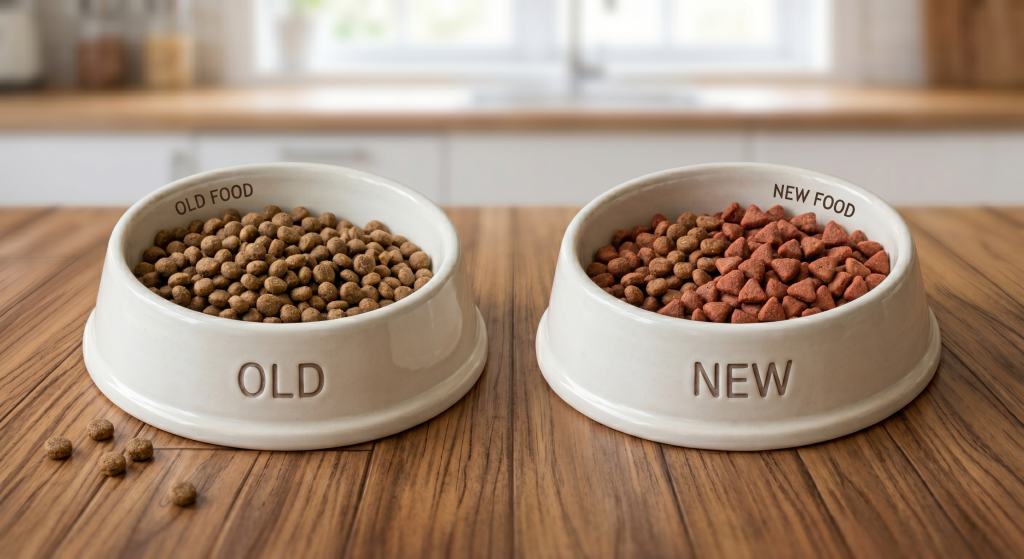
Even the best dog food in the world can cause digestive upset if it is introduced too quickly to a dog used to a different diet. The gastrointestinal microbiome adjusts over time, and sudden changes can disrupt that balance, leading to loose stools, gas, vomiting, and a dog that associates the new food with feeling unwell.
The standard transition protocol:
- Days 1–2: 75% old food, 25% new food
- Days 3–4: 50% old food, 50% new food
- Days 5–6: 25% old food, 75% new food
- Day 7 onward: 100% new food
For dogs with sensitive stomachs, extend the transition to 14 days and move more gradually through each ratio before advancing.
Additional transition tips:
- Add a probiotic supplement during the transition period to support microbiome adjustment. Products such as Purina Pro Plan FortiFlora or Zesty Paws Probiotic Bites are widely available and commonly recommended by veterinarians.
- Monitor stool consistency daily. Mild softening can be normal during transition, but persistent diarrhea beyond day three may mean you need to slow the process.
- If vomiting occurs more than once during the transition, return to the previous food ratio and move forward more slowly.
- Introduce wet food separately from kibble changes so you can isolate the cause if digestive issues develop.
- Keep fresh water available at all times, especially when transitioning to a higher-protein diet that may increase hydration needs.
A Final Word
A dog that eats well is not necessarily a dog whose owner spends the most money on food. It is a dog whose owner understands that animal’s specific needs, reads labels with informed skepticism, chooses a brand whose ingredient philosophy aligns with those needs, and makes changes thoughtfully rather than reactively.
The brands listed here represent genuine quality at a range of price points. None is perfect for every dog. Still, all are meaningfully better starting points than many of the mass-market options that fill the bottom shelves of big-box pet stores. Over a lifetime of daily meals, that difference can add up to a healthier, happier, longer-lived animal.
Explore more expert pet nutrition guides, brand comparisons, and veterinarian-approved feeding advice at PetStory.org. A better bowl starts with better information.
