Table of Contents
A sparkling clean bird cage filled with happy chirps brings a smile to any pet owner’s face. Birds are naturally clean creatures, spending hours each day preening their feathers. They deserve a living space that reflects this preference for cleanliness, as a well-maintained habitat directly influences their health, mood, and lifespan.
For new bird owners, learning how to clean a cage properly can feel overwhelming. Between seed hulls, feathers, and droppings, the mess accumulates quickly. This guide will walk you through the best bird cage cleaning tips to keep your avian companion thriving. We’ll break down manageable daily chores and thorough weekly tasks, identify which cleaning products are safe for sensitive avian respiratory systems, and highlight which dangerous chemicals to avoid.
Why a Clean Cage is Essential for Your Bird
Birds have highly sensitive respiratory and immune systems. A dirty cage is a breeding ground for harmful bacteria, mold, and fungi. When droppings and old food sit at the bottom of a cage, they can develop mold, especially in warm or humid environments. As noted by veterinary experts, breathing in these spores can lead to severe respiratory infections.
A clean cage also prevents pests. Ants, fruit flies, and rodents are drawn to rotting fruit and seeds left on the cage floor. Furthermore, a tidy environment reduces stress for your bird. Birds confined to messy, foul-smelling spaces often show signs of anxiety, such as feather plucking or aggression.
When I first brought home my cockatiel, I made the mistake of waiting until the cage looked dirty to clean it. By then, harmful ammonia odors were present, and my bird seemed lethargic. Once I established a proactive cleaning schedule, his energy returned.
Key benefits of a spotless cage:
- Disease prevention: Eliminates bacteria and mold that cause avian illnesses.
- Better air quality: Reduces dust and dander, protecting your bird’s sensitive lungs.
- Mental well-being: A clean space promotes a relaxed, happy, and active pet.
Daily Cleaning Routine: Small Steps, Big Impact
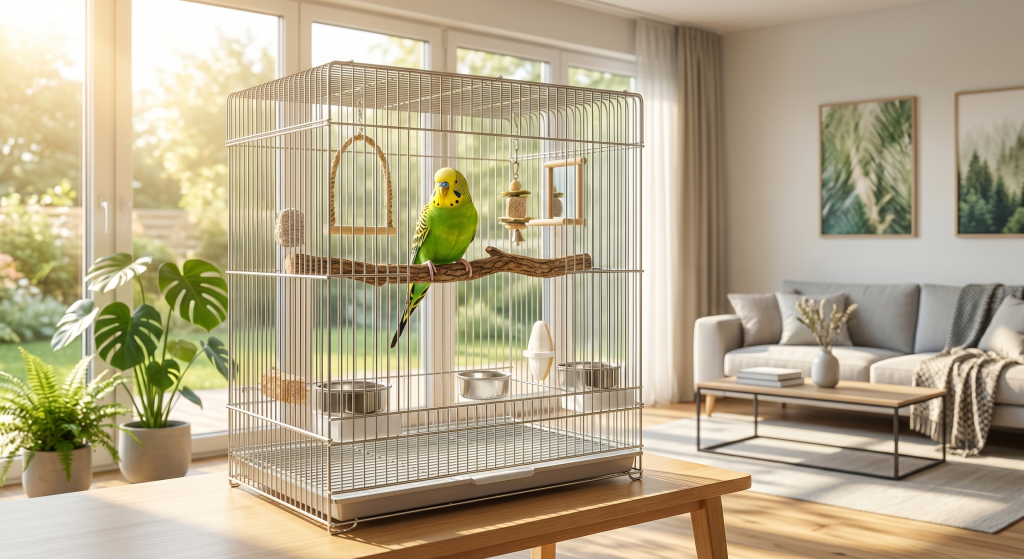
The secret to a pristine cage is tackling small messes every day. A consistent daily routine takes less than ten minutes but makes your weekly deep clean much easier.
Start by changing the cage liner. Whether you use specialized cage paper, newspaper, or paper towels, removing yesterday’s mess gets rid of most droppings and seed hulls. Next, empty and wash the food and water bowls with hot, soapy water to prevent the slimy biofilm that often forms. Another crucial daily task is removing uneaten fresh food like fruits and vegetables, which spoil quickly and can attract pests.
Daily Routine:
- Replace the liner: Remove the soiled paper and lay down a fresh sheet.
- Wash the bowls: Clean food and water dishes, ensuring they are dry before refilling.
- Wipe the grates: Use a damp paper towel to wipe the bottom grate where droppings often catch.
- Sweep the perimeter: Quickly sweep or vacuum the floor around the cage to manage scattered seeds and feathers.
A common mistake is simply topping off the water bowl instead of washing it. Bacteria multiply rapidly in stagnant water, so always wash and dry the bowls daily.
Weekly Deep Cleaning: What You Need to Know
While daily spot checks handle surface messes, a weekly deep clean sanitizes the entire habitat. Choose a specific day for this task to make it a habit.
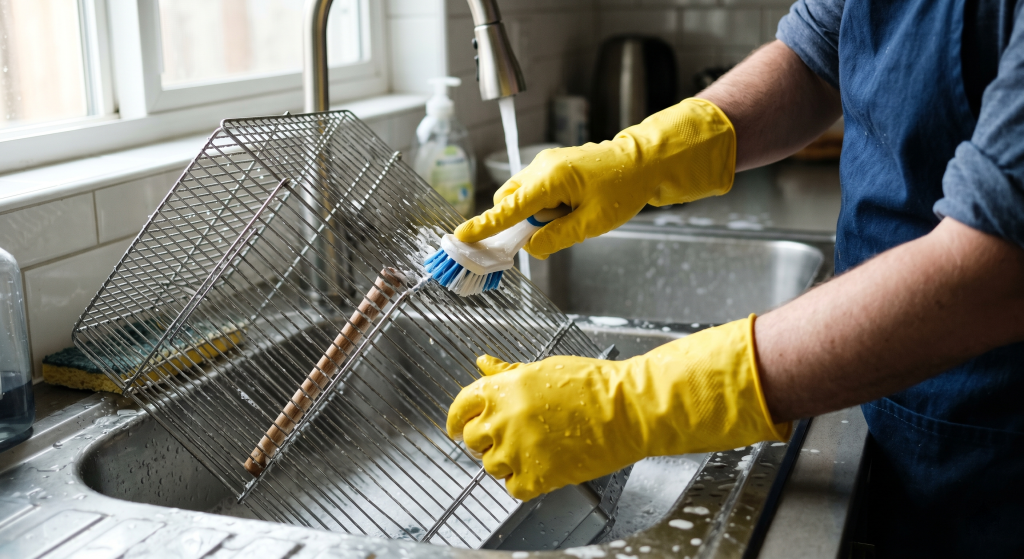
First, move your bird to a secure travel carrier or play stand in another room. This protects them from cleaning fumes and reduces stress. Take all toys, perches, and swings out of the cage. Take the empty cage and bottom tray outside or into a shower. Use hot water and a bird-safe cleaner to scrub every bar, corner, and crevice. Rinse everything thoroughly and dry it completely before reassembling.
Tips for a successful weekly clean:
- Scrub the perches: Use a stiff brush to scrape dried droppings off wooden perches. Avoid soaking them, as they can grow mold.
- Rotate the toys: Wash plastic and acrylic toys. While they dry, introduce a different set of clean toys to keep your bird mentally stimulated.
- Dry completely: Never put your bird back into a wet cage. Moisture encourages bacterial growth.
Safe Cleaning Products for Bird Cages
Choosing the right cleaning agents is critical. Birds’ efficient respiratory systems absorb toxic fumes much faster than those of mammals.
Never use household bleach, aerosol sprays, pine-scented cleaners, or ammonia-based products near your bird. The ASPCA warns that fumes from these common items can be fatal. Even “all-natural” products can contain essential oils that irritate an avian respiratory tract.
The safest cleaner is a simple mixture of equal parts white vinegar and hot water. This solution cuts through dried droppings and neutralizes odors. The mild vinegar scent dissipates quickly once dry.
Safe cleaning alternatives:
- White vinegar solution: Mix one part white vinegar with one part water in a spray bottle.
- Baking soda: For stubborn messes, sprinkle baking soda and scrub with a damp sponge.
- Grapefruit seed extract: A few drops mixed with water creates a bird-safe antibacterial spray.
- Commercial bird-safe cleaners: Look for enzymatic cleaners specifically made for avian use.
I learned that using a rough sponge on acrylic cage panels causes permanent scratches that trap dirt. Always use a soft microfiber cloth or a non-abrasive sponge.
Tips for Maintaining a Hygienic Bird Environment
Maintaining a hygienic environment involves managing the space around the cage. To contain the mess from birds tossing seeds and feathers, consider installing a seed guard or cage skirt. Placing a large, easy-to-wipe mat under the cage also protects your flooring.
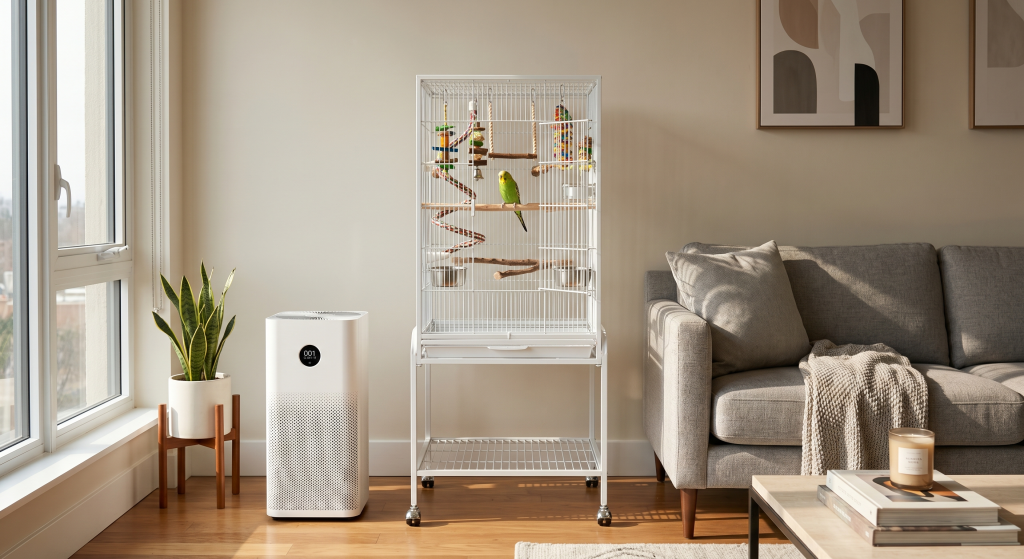
Air quality is another major factor. Birds produce dander and “feather dust,” so a high-quality HEPA air purifier in the same room can help pull these particles from the air, keeping your home fresh and protecting everyone’s lungs.
Extra hygiene tips:
- Strategic cage placement: Keep the cage away from kitchen fumes and drafty windows.
- Offer regular baths: Provide a shallow dish of water or gently mist your bird with a spray bottle. A clean bird contributes to a cleaner cage.
- Wash your hands: As recommended by the CDC, always wash your hands before and after handling your bird or their cage to prevent spreading bacteria.
Keep Your Bird Thriving With a Clean Home
Establishing a solid cleaning routine is one of the best things you can do for your bird. By breaking chores into daily and weekly tasks, the process becomes manageable. Always prioritize safety by using gentle, bird-safe cleaners like vinegar and water.
A hygienic environment prevents illness, reduces stress, and allows your pet’s vibrant personality to shine. When you remove the mess, you make room for more playtime, more singing, and a stronger bond with your feathered companion.