
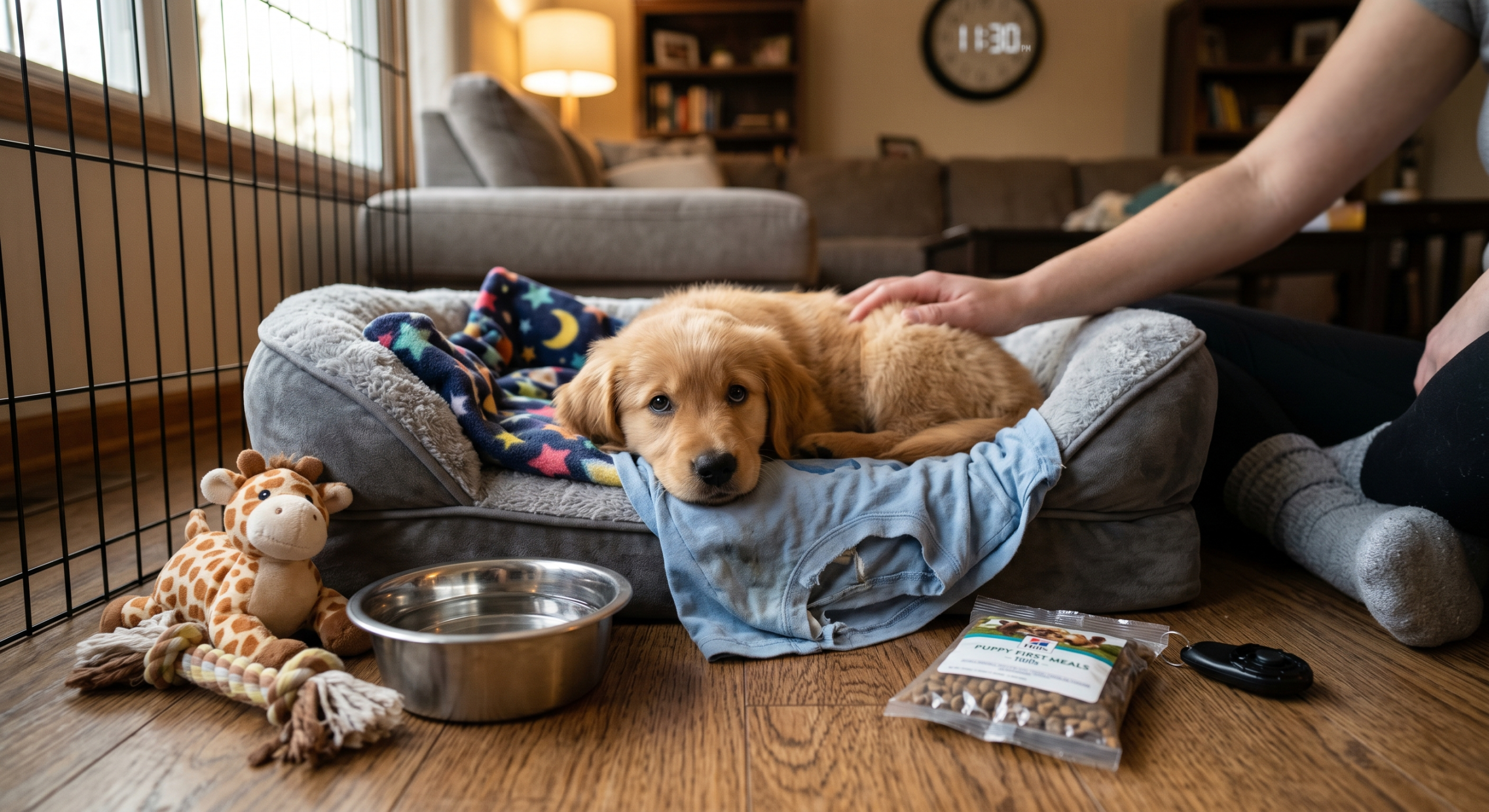
Bringing a new puppy home is one of the happiest moments a dog owner can have, and one of the most overwhelming. The excitement is real, but so is the reality check that arrives soon after the puppy does: the chewing, the whining, the first puddle, and a "calm introduction" that quickly turns into chaos.
Think about the day from your puppy's side. One day they are surrounded by their mother, their littermates and every smell they know. The next, they are in a strange place with new people, new sounds and nothing familiar in sight. Keeping that in mind makes every decision in the first day easier.
This guide walks you through the first 24 hours with a new puppy step by step: preparing your home, the homecoming, the first afternoon, the first night and the morning after. You will also find a simple first-week plan, a puppy development timeline for weeks 8 to 16, and answers to the questions new owners ask most.
Caring for a dog brings valuable lessons in patience, consistency and the importance of everyday routines. Max, my Golden Retriever, is a meaningful part of my pet-care experience and has deepened my appreciation for the bond that develops through daily walks, playtime and companionship. These everyday interactions highlight how much young dogs benefit from gentle guidance, positive reinforcement and a routine that balances exercise with rest. For new puppy owners, creating a safe, supportive environment and building healthy habits from the beginning can help a puppy grow into a confident, well-adjusted companion.
Table of Contents
Preparing for Your Puppy's Arrival
The most underrated part of a good first day happens before the puppy arrives. A prepared home lets you focus on the puppy instead of scrambling for supplies at 11 pm.
Puppy-Proofing the Home
Puppies explore with their mouths. Before the puppy comes home, check every room from about six inches off the floor:
- Cords and cables: Secure or cover them. A puppy can chew through a live wire in seconds.
- Houseplants: Move or remove anything toxic. The ASPCA keeps a searchable list of plants that are toxic to dogs, which is worth checking before the puppy arrives.
- Small objects: Coins, hair ties, children's toys and remote-control batteries should be out of reach.
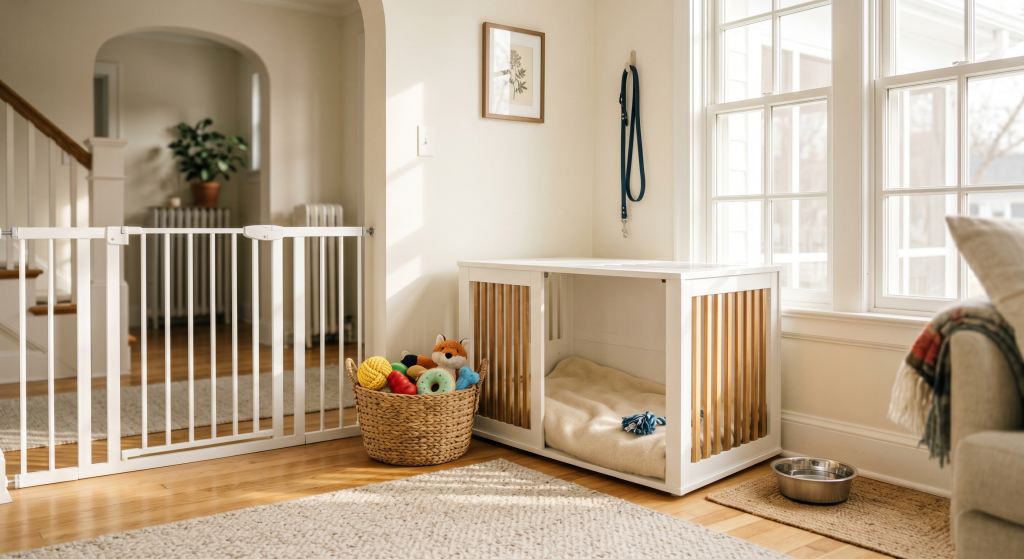
- Boundaries: Put up baby gates to create a small "puppy zone". A defined space is kind, because it gives a young dog a manageable area to learn instead of an overwhelming house.
The Essential Supply List
You do not need a dozen gadgets. These are the items that actually make the first days easier:
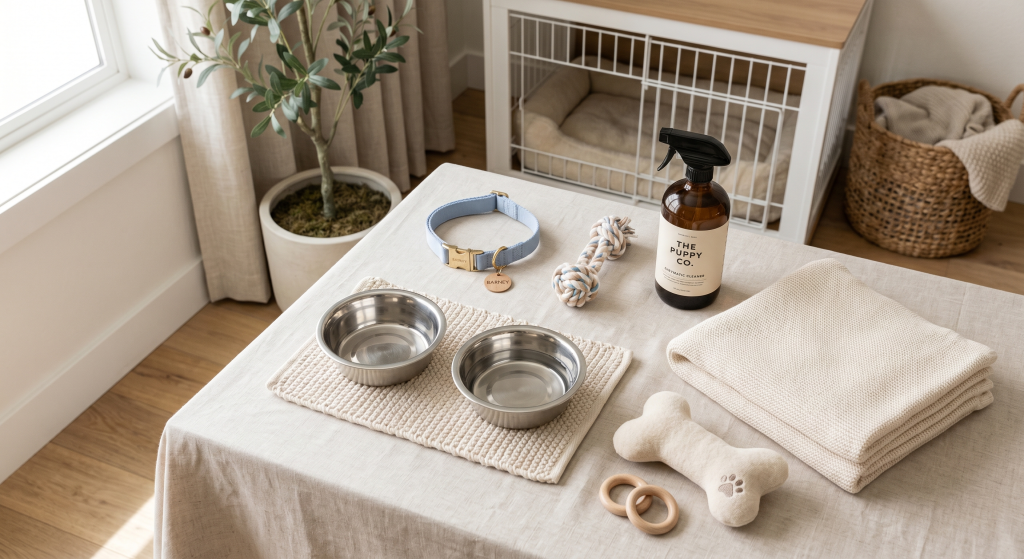
- A crate of the right size: Big enough for the puppy to stand, turn around and lie down, but not so big that one end becomes a bathroom. A crate with a divider grows with your puppy.
- The same puppy food the breeder or shelter was using: You can change it later, gradually.
- Stainless steel or ceramic bowls for food and water.
- A collar with an ID tag and a standard 6-foot leash: A fixed-length leash gives you more control than a retractable one.
- An enzymatic cleaner: Regular household cleaners do not fully remove the odor markers that tell a puppy a spot has been used before. Enzymatic cleaners do.
- A stuffable chew toy: A rubber toy you can fill with puppy-safe food keeps a puppy busy and soothes sore gums. Check the label of anything you stuff it with, because some peanut butters contain xylitol, which is toxic to dogs.
Comfort items matter too. A soft blanket that smells like the puppy's mother or littermates (many breeders will provide one if you ask) can help on the first night. A worn T-shirt of yours in the crate does a similar job, and some owners use a soft toy with a heartbeat sound.
The Homecoming: Setting the Right Tone
The arrival matters more than most new owners expect. The instinct is to invite family and friends and film everything. Resist it. Keep the first day deliberately quiet, with one or two calm adults and no visitors, parties or neighborhood children.
First Stop: The Potty Spot
Before the puppy goes inside, take them straight to the spot you have chosen for bathroom breaks. Keep the leash on, stay calm and give them a few minutes to sniff. If they go, offer quiet praise and a small treat. If they don't, that is fine. Bring them back to the same spot every thirty to forty-five minutes through the day. This habit, started in the first five minutes, is the foundation of house training.
Introducing the New Home
Once inside, let the puppy explore their zone at their own pace, with the leash trailing loosely. Don't carry them from room to room or show them the whole house at once. Let them sniff and investigate. The goal of the first hours is simple: the puppy should start to learn that this new place is safe.
Loud noises, sudden movements and too much handling work against that goal. If you have children, talk to them before the puppy arrives: calm voices, gentle hands and no chasing.
Introducing the Crate
Don't wait until bedtime to introduce the crate. Start within the first hour. Leave the door open, toss a few treats inside and let the puppy investigate freely. Feeding a meal just at the crate entrance builds a positive association without forcing anything. Never use the crate as punishment and never push the puppy inside. Every good experience with the crate in the afternoon makes the first night easier.
The First Afternoon: Building a Routine
Dogs do best with a predictable day. When a puppy knows when food, outside time and rest are coming, they tend to be calmer and more settled than a puppy in an unpredictable household.
Feeding Schedule
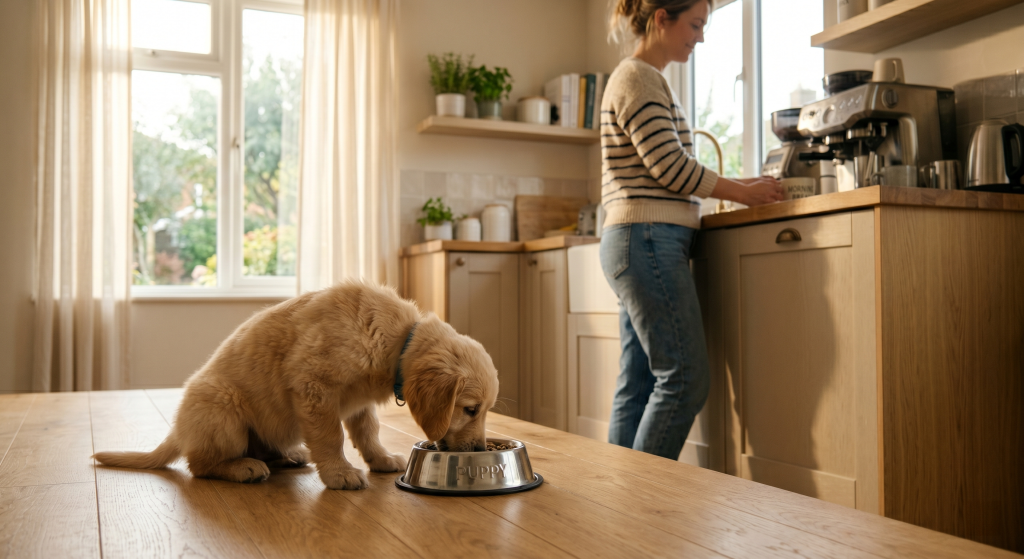
Young puppies usually need three to four small meals a day. A puppy often needs to go outside within fifteen to thirty minutes of eating, so fixed meal times also make house training easier to plan.
Ask the breeder or shelter what the puppy has been eating and when, and keep the same food and schedule for at least the first week. Changing both the home and the diet at once is a common cause of an upset stomach. When you do switch foods, mix the old and new gradually over about 7 to 10 days. If you are still choosing a food, our guide on how to read dog food labels will help you compare ingredients.
Play, Exploration and Rest
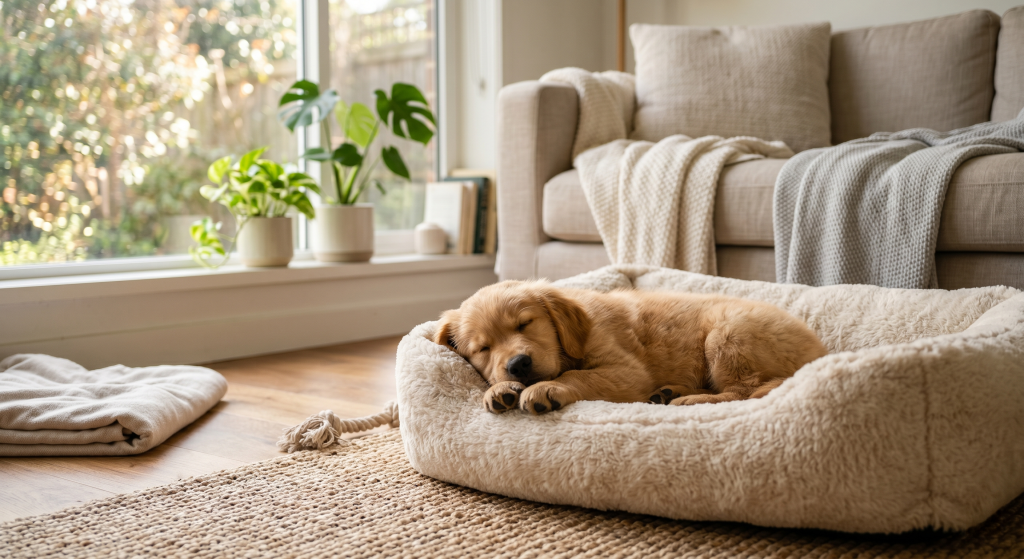
A young puppy's energy comes in bursts. Fifteen to twenty minutes of play is often followed by a nap of an hour or two. Puppies sleep a lot, often 16 to 20 hours a day, and an overtired puppy becomes nippy, wired and hard to manage. A handy rule of thumb many trainers use is about one hour awake for every two hours of sleep for very young puppies. Enforcing naps in the crate is one of the easiest ways to get a calmer puppy.
Play with toys, not hands. Puppies "mouth" because that is how they play with littermates. If your puppy bites your hands or ankles, say "ouch" calmly, stop the game for a few seconds, then offer a chew toy instead. The American Kennel Club guide to the first things to teach a puppy include more detail on bite inhibition and early play boundaries.
During rest periods, practice short crate sessions with the door closed. Start with two to three minutes, stay visible and praise calmly when the puppy settles. These short sessions build the crate comfort you will need at night.
The First Potty Pattern
By the end of the afternoon, a rough pattern should appear: outside right after waking, outside fifteen to thirty minutes after eating, outside after active play, and outside before bed. Accidents will happen. Clean them with an enzymatic cleaner and move on. Scolding a puppy, especially for an accident that happened minutes earlier, only damages trust.
If it helps, keep the puppy on a leash attached to you while indoors so you can spot early signs like sniffing in circles and rush outside. When the puppy goes in the right place, praise and give a treat within a few seconds. For a longer house-training plan, Blue Cross for Pets has a clear guide to toilet training puppies.
Children and the New Puppy
If children live in your home, set simple rules early: stroke the puppy's back or chest instead of grabbing the face or ears, no picking the puppy up without an adult, no disturbing the puppy while sleeping or eating, and keep small toys off the floor, since a teething puppy can't tell a toy from a chew. Calm, supervised interactions keep the puppy secure and help prevent accidental nips.
Surviving the First Night With a New Puppy
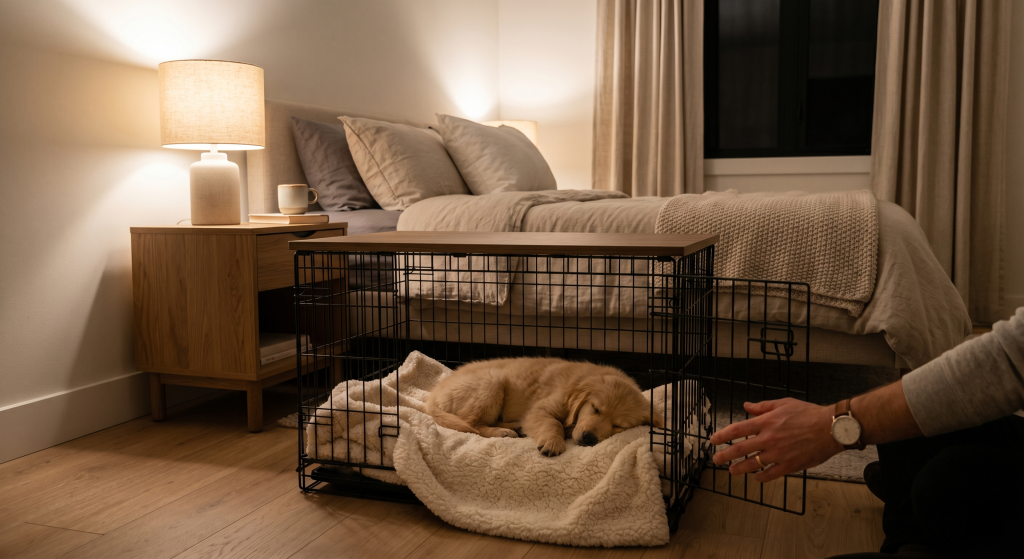
The first night is usually the hardest part of the first 24 hours. A puppy who has always slept with littermates is now alone in a dark, quiet space for the first time. Crying is not bad behavior. It is a normal reaction to a strange situation.
Crate Placement
For the first few nights, keep the crate in your bedroom, close enough that the puppy can hear and smell you but not on the bed. This isn't spoiling. A puppy who can hear a familiar person breathing usually settles faster than one isolated in a distant room. Over the following weeks, you can move the crate a little at a time toward its permanent spot.
The Bedtime Routine
- Last meal early. Feed dinner a few hours before bed so the puppy has time to digest and go out.
- Water in moderation. Some trainers suggest picking up the water bowl about two hours before bed. Young puppies shouldn't go thirsty for long, so ask your vet what suits your puppy's age and breed.
- Potty right before the crate. Stay outside long enough for a real chance to go, not just a quick stop.
- Settle them calmly. Place the puppy in the crate with a safe chew toy. Keep the room dim and quiet, and skip long goodnights, which can make bedtime feel like an event.
- Optional comfort. A ticking clock wrapped in a towel near the crate, or a warm (not hot) water bottle in a thick blanket, helps some puppies. Skip the bottle if your puppy chews things, and keep both out of reach of teeth.
Handling Nighttime Crying
When the crying starts, wait about thirty seconds. Many puppies whimper briefly and then settle. Rushing in at the first sound can teach a puppy that crying brings attention. If it continues:
- Check for a real need. If it has been two hours or more since the last bathroom trip, assume they need to go. Take them out on a leash, keep it quiet and boring, then straight back to the crate. No play, no chatting.
- If they have just been out: stay calm, speak softly from beside the crate, and don't take them out to play. Most puppies settle within a few nights.
- Know when something is wrong. If your puppy seems frantic, pants heavily, drools, vomits, hurts themselves trying to escape, or cries nonstop for hours across several nights, talk to your vet or a trainer. Some puppies need a slower introduction to the crate.
Nighttime Potty Breaks
Puppies under about twelve weeks usually can't hold their bladder all night. Expect one or two night trips in the first weeks. Set an alarm instead of waiting for crying, so you reward the quiet puppy and avoid teaching them that crying gets them out. As the bladder develops, the night trips shorten and then stop. Many puppies sleep through the night by around sixteen weeks, though some take longer.
The Next Morning
The first task of the morning is the same as the last of the night: outside, immediately, before coffee or phone. A puppy who wakes up, goes outside, and gets praised starts day two with a win, and that repetition is what makes house training stick.
Feed breakfast on schedule, refresh the water, and take a breath. The hardest day is behind you. It will not all be easy from here, but things get steadier as routines form.
Your Puppy's First Week: What to Do Next
The first 24 hours are the foundation. Here is a simple plan for the days that follow:
- Book a vet visit. Ideally in the first few days (many breeders and shelters ask for a check within about 72 hours). Your vet can check your puppy's health, set the vaccination schedule and advise on deworming and parasite prevention.
- Keep the food steady. Stay on the same food for the first week. When you're ready to change, compare options in our guide to the best dog food brands.
- Start gentle socialization. Early, positive experiences matter, but your puppy's immune system is still developing. Until your vet confirms vaccinations are complete (often around 16 weeks), avoid dog parks and areas used by unknown dogs. The American Veterinary Medical Association (AVMA) and your vet can advise on safe, controlled socialization with fully vaccinated dogs. A private, fenced yard is fine for outdoor time right away.
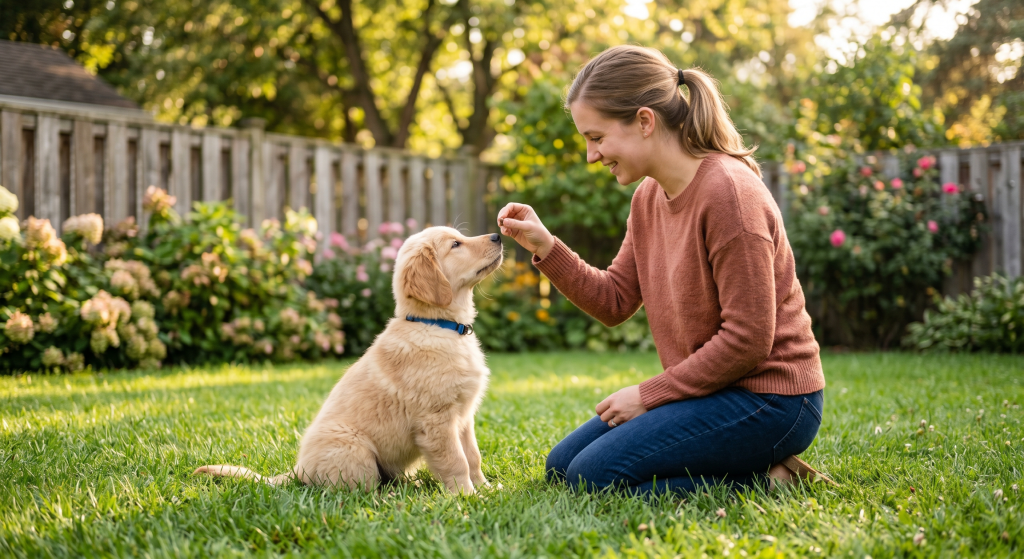
- Begin short training sessions. Teach their name, "sit" and "leave it" in two- to five-minute sessions using treats and praise. Read how positive reinforcement works better than punishment.
- Plan for chewing. Teething is coming. See our tips on stopping dogs from chewing furniture.
- Adopting a rescue puppy? Our guide to the 3-3-3 rule explains how a rescue dog adjusts over the first weeks and months.
Puppy Development Timeline: Weeks 8 to 16
Every puppy develops at their own pace, but this rough timeline helps you know what to expect:
| Age | What's happening | Your job |
|---|---|---|
| 8 to 10 weeks | Very sensitive to scary experiences. | Keep new experiences gentle and rewarding. Avoid loud, crowded places. |
| 10 to 12 weeks | Learning fast and testing boundaries. | Be consistent. If they bite, play pauses. Start name recognition and simple cues such as "sit". |
| 12 to 14 weeks | Teething often begins and gums feel sore. | Offer safe chew toys, including chilled rubber toys. Redirect chewing from shoes and furniture. |
| 14 to 16 weeks | More confident and more easily distracted. | Practice "come" on a leash with high-value treats. Keep socialization positive, as your vet advises. |
Household Hazards to Know About
Your kitchen and home contain things that are dangerous for puppies. Make sure the whole family knows these common ones:
- Grapes and raisins: Can cause kidney failure in dogs.
- Chocolate and caffeine: Dangerous, especially dark chocolate.
- Xylitol: A sweetener found in sugar-free gum, some peanut butters and toothpaste. It can be life-threatening even in small amounts.
- Onions and garlic: Can damage red blood cells.
If your puppy eats any of these, call your vet or an emergency animal clinic right away. Do not wait for symptoms.
Frequently Asked Questions
How do I stop my puppy from crying the first night?
You probably won't stop it completely, and that is normal. A puppy separated from littermates for the first time will be upset. Keep the crate in your bedroom, wait about thirty seconds before responding to see if the puppy settles, and take them out only for a real bathroom need rather than for comfort or play. If the crying is frantic or lasts for hours, talk to your vet or a trainer.
When can puppies sleep through the night?
Many puppies can sleep through the night without a bathroom break by around sixteen weeks of age, though this varies by individual and breed. In the first few weeks, expect one or two night trips, and set an alarm to take them out instead of waiting for crying.
Should my new puppy sleep in my bed the first night?
It is generally better to keep the crate in your bedroom rather than letting the puppy on the bed. Being close enough to see or hear you gives reassurance without creating a habit that can be hard to change later, especially for breeds that will grow large.
How often should a new puppy go outside?
Very often. Roughly every thirty to forty-five minutes while awake and active, plus right after waking, eating or playing. As a rough guide, a puppy can hold their bladder for about one hour for each month of age, plus one, while resting, so a two-month-old may manage about three hours between breaks at night.
Is it normal for a puppy not to eat on the first day?
A slightly reduced appetite on day one is common because the puppy is adjusting to a new environment. Keep offering meals on schedule. If your puppy refuses food for more than a day or seems lethargic, contact your veterinarian.
Why does my puppy bite my hands and ankles?
This is called puppy mouthing and it is normal. Puppies play with their littermates by biting. When it happens, say "ouch" calmly, stop playing for a few seconds, then offer a chew toy. Consistent responses teach them that biting ends the fun.
When can I start walking my puppy outside?
You can use your own private, fenced yard right away. Avoid public sidewalks, dog parks and areas shared by unknown dogs until your vet says it is safe, usually one to two weeks after the final round of puppy vaccinations (often around 16 weeks).
When should I take my new puppy to the vet?
Ideally within the first few days to the first week. Your vet can do a general health check, plan vaccinations and recommend deworming and parasite prevention. Some breeders and shelters ask for a vet check within about 72 hours.
How long does it take for a puppy to adjust to a new home?
Many puppies start to settle within a few days to a week, though full adjustment can take a few weeks as routines form. The first 24 hours set the tone, but patience over the following days matters just as much.
Keep Learning: Puppy Care Next Steps
Explore more in our Puppy Care and Training & Behavior sections, or read about why dogs bark at everything as your puppy grows.
About the Author
Irfan Hyder is the editor of PetStory.org, an independent publication covering pet care, adoption, nutrition and behaviour. He has spent around 8 years caring for pets at home, including his Golden Retriever, Max, his Persian cat, Luna, and pet birds, and writes alongside veterinary and reputable sources. Read more about Irfan.