
Table of Contents
Bringing a parrot into your home is like inviting a highly intelligent, winged toddler to live with you. These vibrant, clever creatures bring immense joy and companionship, but they also present unique challenges. Unlike cats or dogs, parrots are exotic pets with specific needs for their diet, environment, and social interaction.
If you’ve just brought home your first feathered friend or are considering one, you likely have questions. How do you keep them happy? What do they eat? Why do they sometimes scream at the television?
Proper care is essential because parrots can live for decades. Providing the right environment, nutrition, and mental stimulation results in a happy, healthy, and long-living pet. This beginner’s guide will walk you through everything you need to know about caring for parrots. We’ll help you avoid common mistakes, establish a healthy routine, and build a lifelong bond with your new companion.
Choosing the Right Parrot for You
Each parrot species has a unique personality, lifespan, and care requirements. Many beginners mistakenly choose a parrot based on looks, which can lead to a frustrating experience for both the bird and the owner.
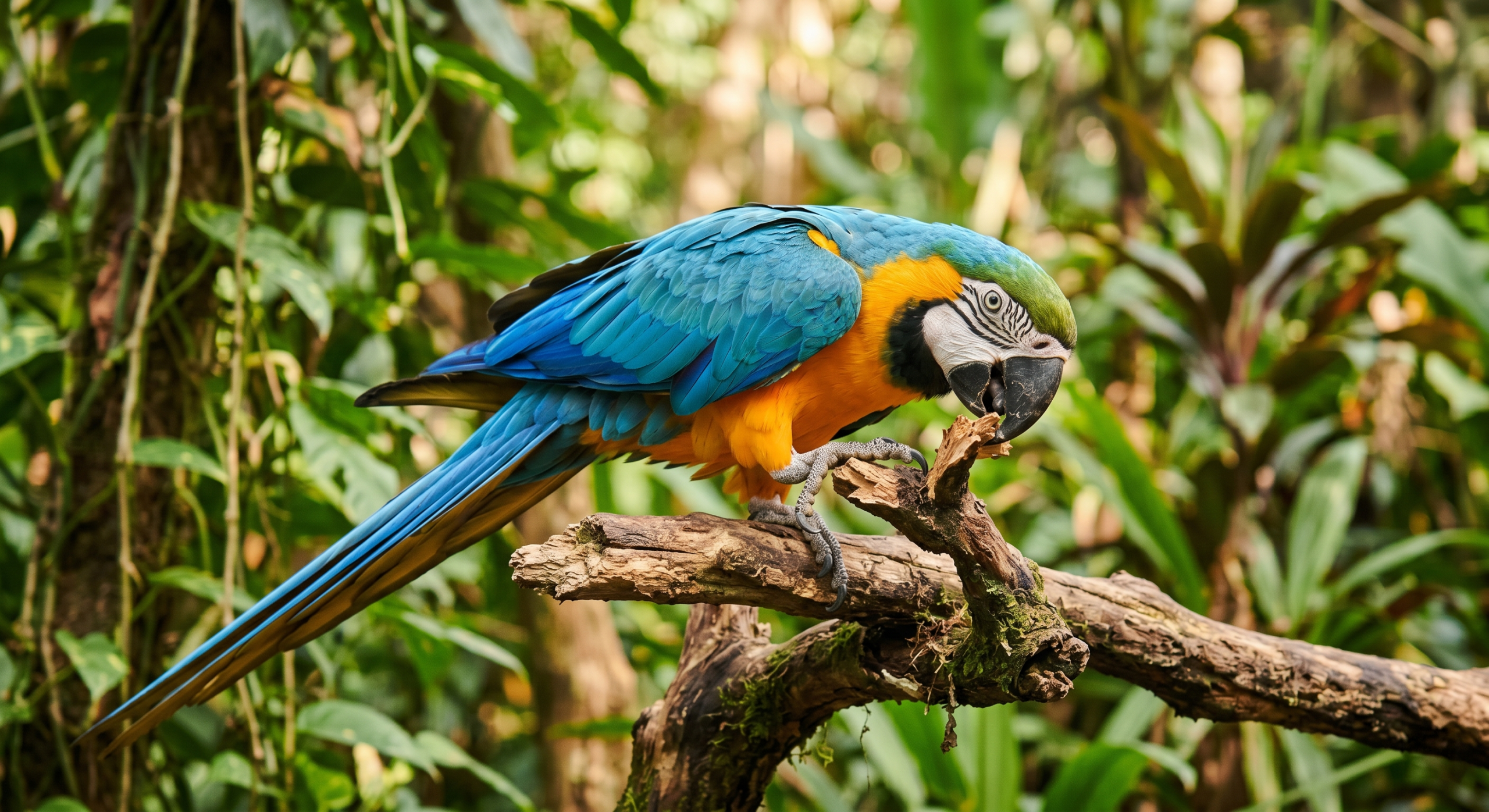
Before you start, honestly assess how much time, space, and noise you can tolerate. Large parrots like Macaws or Cockatoos require massive cages, extensive daily interaction, and can scream loud enough to rattle windows.
Tips for choosing your first parrot:
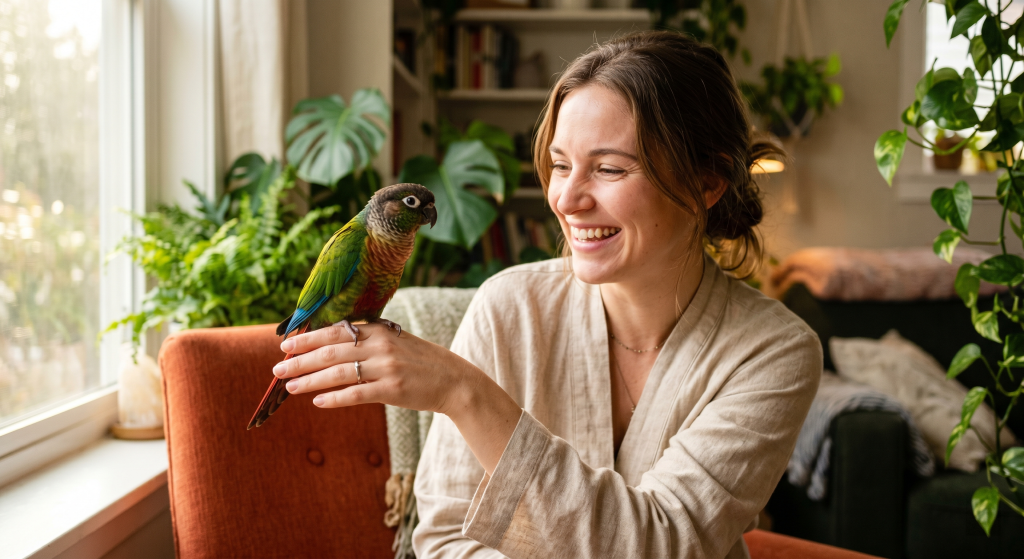
- Start small: Budgies, Cockatiels, and Green-cheeked Conures are excellent choices for first-time parrot owners. They are affectionate, relatively quiet, and easier to manage.
- Consider their lifespan: A Macaw can live up to 80 years, while a Cockatiel might live 15 to 20 years. Ensure you are ready for a long-term commitment.
- Do your research: Spend time with different species at an avian rescue or local breeder. Ask about their daily habits before making your choice.
Setting Up the Perfect Cage
Your parrot’s cage is its safe haven, bedroom, and playground. A common mistake new owners make is buying a cage that is too small. A cramped environment can lead to stress, feather plucking, and aggression.
Actionable cage setup tips:
- Go big: Buy the largest cage you can afford and fit in your home. The bird must be able to fully extend and flap its wings without touching the sides.
- Mind the bar spacing: Ensure the gaps between the bars are small enough that your bird cannot get its head stuck. This is a major safety hazard.
- Vary the perches: Include natural wood perches of varying thicknesses to mimic tree branches and keep their feet healthy. Avoid smooth plastic perches or sandpaper covers.
- Location matters: Place the cage in a lively part of the house, like the living room, so your parrot feels like part of the family. Keep it away from drafts, heating vents, and direct sunlight.
Important Warning: Never place a bird cage in or near the kitchen. Fumes from heated non-stick pans (like Teflon) are highly toxic and can be fatal to birds within minutes.
Essential Diet and Nutrition Tips
One of the most vital aspects of parrot care is their diet. A persistent myth is that parrots only need seeds. In reality, an all-seed diet is like a human eating only fast food; it leads to obesity, fatty liver disease, and a shortened lifespan.
Building a balanced parrot diet:
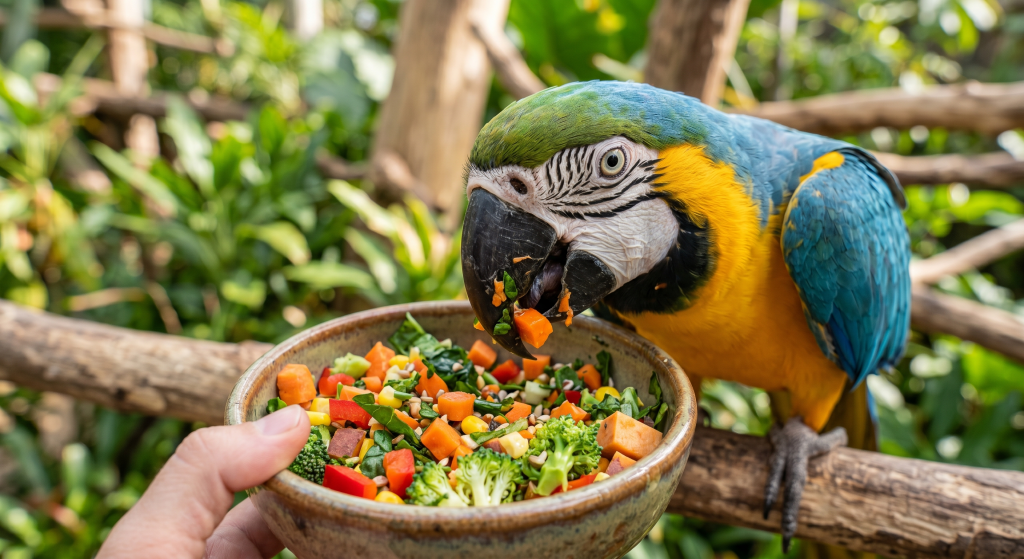
- High-quality pellets: These should make up 60% to 70% of your bird’s diet, providing complete and balanced nutrition.
- Fresh vegetables: Offer dark leafy greens, carrots, broccoli, and bell peppers daily.
- Fruits in moderation: Apples, berries, and melons are great treats, but they are high in sugar. Limit fruit to a few small pieces a day.
- Healthy seeds and nuts: Reserve seeds and nuts (like almonds or walnuts) for training treats to make them highly motivating.
Crucial warning: Never feed your parrot avocado, chocolate, caffeine, alcohol, onions, or fruit pits. These foods are highly toxic. For comprehensive guidance on safe foods, the [Association of Avian Veterinarians (AAV)](https://www.aav.org/) offers excellent nutritional resources.
Parrot Grooming Basics
Parrots are good at keeping themselves clean, but they still need some help. Proper grooming keeps them comfortable and helps prevent injuries.
- Bathing: Most parrots love water. You can mist them with a spray bottle, offer a shallow dish for splashing, or bring them into the shower on a specialized perch. Regular baths keep their feathers healthy and reduce dust.
- Nail trims: Overgrown nails make it hard for a parrot to perch and can leave painful scratches. Ask your avian vet to show you how to safely clip the nails without hitting the quick (the blood vessel inside).
- Beak care: A healthy parrot rarely needs its beak trimmed. Provide plenty of wooden chew toys and cuttlebones to help them naturally wear it down.
Understanding Parrot Behavior and Communication
Parrots communicate through body language and vocalizations. Understanding these signals is a key part of caring for them. Many new owners think bites happen “out of nowhere,” but parrots almost always give a warning.
Key body language signs to watch:
- Eye pinning: When a parrot rapidly dilates and constricts its pupils, it means they are highly excited, curious, or angry. Proceed with caution.
- Fluffed feathers: A slightly fluffed parrot grinding its beak is relaxed. However, a bird that stays fluffed up all day might be sick.
- Lunging or biting: This usually happens when you ignore their “leave me alone” signals, like backing away or hissing.
When your parrot screams, don’t yell back. This sounds like you’re joining in, which reinforces the behavior. Instead, whisper or talk softly to calm them, and reward quiet, pleasant sounds.
Training and Socializing Your Parrot
A well-trained parrot is a joy to live with. Training provides mental stimulation and strengthens your bond. An intelligent but bored parrot can quickly become destructive or noisy.
Training advice for beginners:
- Use positive reinforcement: Never punish a bird. It destroys their trust. Instead, reward good behavior with praise and a favorite treat.
- Start with “Step Up”: This is the most important command. Teach your bird to willingly step onto your finger or a handheld perch when prompted.
- Socialize early and often: Introduce your parrot to different people, sights, and sounds safely. A poorly socialized bird often bonds to one person and becomes aggressive toward others.
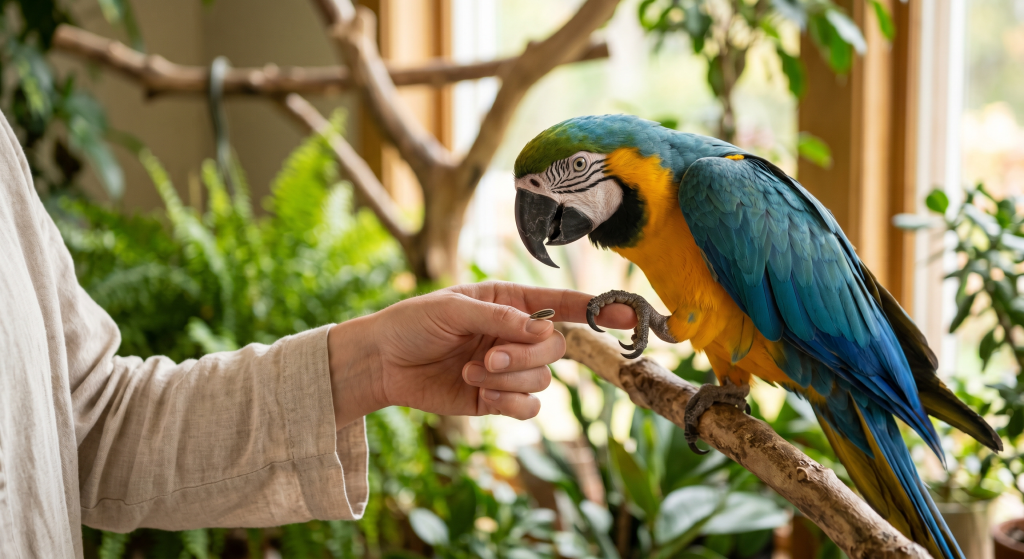
If your parrot seems fearful at first, move slowly. Sit near their cage and read out loud so they get used to your voice. Drop a treat into their bowl whenever you walk by. Earning a parrot’s trust takes time, but it’s worth it.
Common Health Issues and How to Prevent Them
In the wild, sick birds are easy prey, so pet parrots instinctively hide illness until it’s severe. As an owner, you must learn to spot subtle changes in their behavior.
Signs of a sick parrot include:
- Changes in droppings (color, consistency, frequency)
- Loss of appetite
- Sitting at the bottom of the cage
- Labored breathing, wheezing, or tail bobbing
- Unusual lethargy or sleeping on two feet instead of one
Prevention is your best tool: Ensure they have a large cage, a nutritious diet, and 10 to 12 hours of uninterrupted, dark sleep every night. Neglecting sleep is a common mistake that leads to cranky, aggressive birds with weakened immune systems.
Most importantly, find a certified avian veterinarian before you bring your parrot home. Regular annual check-ups can catch minor issues before they become emergencies. You can use the AAV’s Find a Vet tool to locate a qualified specialist near you.
Ready to Welcome Your Feathered Friend?
Owning a parrot is a huge commitment, but the reward of a loving and playful companion is unmatched. By providing a spacious cage, a balanced diet, and time for training, you can build a beautiful, trusting relationship with your bird.
We hope this beginner’s guide gives you the confidence to start your avian journey! Do you have any parrot care tips, or are you preparing to bring home your first bird?
Explore more guides, share this article, and join the conversation in the comments below!

