

Table of Contents
If you have ever watched your Great Dane, German Shepherd, or Labrador fold themselves onto a thin, undersized dog bed — only to end up half on the floor by morning — you already know the problem. Most standard dog beds are built for smaller dogs. They look fine on the shelf, but they simply do not provide what a large or giant breed dog actually needs.
Large dogs carry a lot of weight on their joints every single day. When they sleep on a bed that lacks proper support, those joints do not get the rest they need. Over time, that adds up. The right dog bed is not just about comfort — it directly affects your dog’s joint health, sleep quality, recovery from exercise, and long-term mobility.
This guide covers everything you need to know before buying. You will learn what to look for in a large dog bed, which bed types perform best in 2026, and how to match the right option to your dog’s specific situation.
Why Large Dogs Need a Different Kind of Bed
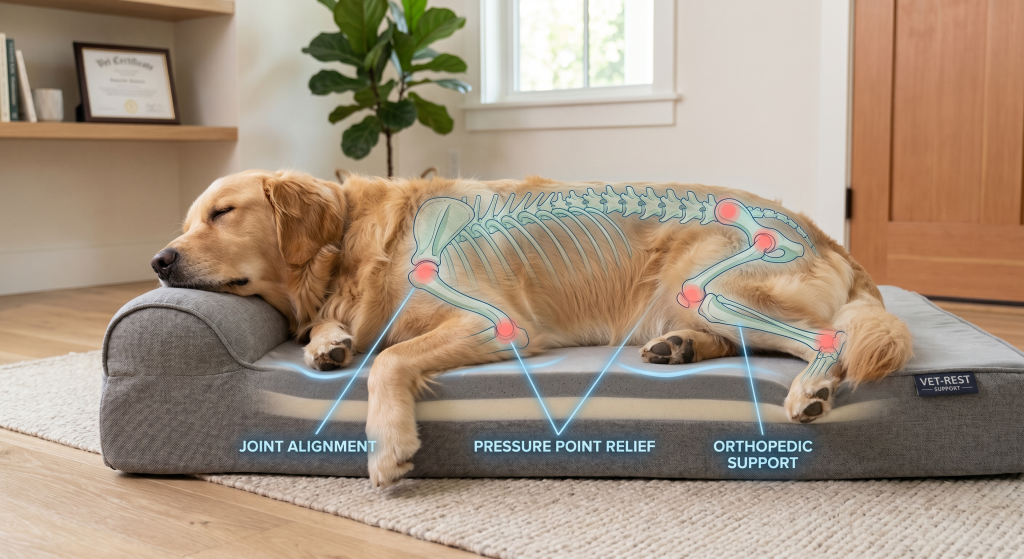
Large and giant breed dogs put significantly more pressure on their bodies than small dogs do. A 90-pound Rottweiler pressing down on a thin foam pad creates a very different set of stresses than a 15-pound terrier doing the same thing.
Joint Stress and Pressure Points
When a large dog lies on a hard surface or a bed with poor density, the heaviest parts of their body — the shoulders, hips, and elbows — sink down and press against firm material. This creates pressure points that restrict circulation and cause stiffness. You may notice your dog getting up slowly in the morning, limping after a long rest, or reluctantly changing positions during the night. These are signs the bed is not doing its job.
Hip Dysplasia and Orthopedic Risk
Hip dysplasia is one of the most common conditions in large breeds. According to the Orthopedic Foundation for Animals (OFA), breeds like German Shepherds, Golden Retrievers, and Saint Bernards show some of the highest rates of hip dysplasia among dogs. While genetics plays the biggest role, daily environmental factors — including where and how they sleep — influence how symptoms develop and progress.
A bed with proper orthopedic support helps distribute body weight evenly, reducing the stress placed on already vulnerable joints. For dogs already diagnosed with dysplasia or arthritis, the right bed can meaningfully improve day-to-day comfort and reduce morning stiffness.
Recovery and Long-Term Well-Being
Sleep is when your dog’s body repairs muscle tissue, regulates hormones, and consolidates energy. A bed that disrupts their sleep or causes discomfort shortens those recovery windows. For active working dogs or large breeds that exercise heavily, poor sleep directly impacts performance and mood. For older dogs, it impacts their entire quality of life.
A good bed is a long-term investment in your dog’s health — not just a place for them to sit.
What to Look for in a Dog Bed for Large Breeds
When you start shopping, the sheer number of options can feel overwhelming. Here is what actually matters when evaluating dog beds for big dogs.
Size and Weight Capacity
This sounds obvious, but many owners underestimate just how much room a large dog needs. Measure your dog from nose to tail while stretched out, then add at least 10–12 inches. The bed should comfortably accommodate their full body without legs hanging off the edge. Always check the manufacturer’s listed weight capacity and choose a bed rated well above your dog’s actual weight to ensure durability.
Foam Density and Orthopedic Support
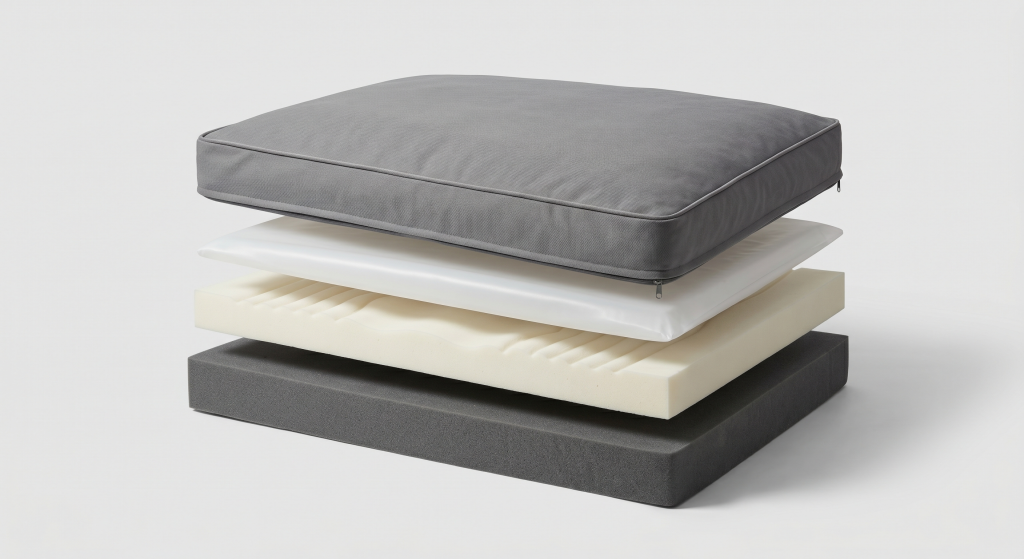
Not all foam is equal. Cheap memory foam compresses quickly under a large dog’s weight and loses its support within weeks. Look for high-density foam — ideally 1.8 lbs per cubic foot or higher. True orthopedic beds for large breeds often use a layered foam construction: a firm base for structural support topped with a softer comfort layer. Avoid beds that only advertise “memory foam” without specifying density.
Waterproof and Washable Covers
Large dogs drool. They track in mud. They have accidents, especially as seniors. A bed without a waterproof liner will absorb moisture, develop odors, and become a hygiene problem fast. Look for beds with a waterproof inner liner and a removable, machine-washable outer cover. Washing the cover regularly extends the bed’s lifespan and keeps your home fresh.
Chew Resistance
Some large dogs — especially younger ones — chew their beds out of boredom or anxiety. A chewed bed is a wasted purchase and a potential safety hazard if the dog ingests foam material. Look for beds marketed as chew-resistant with reinforced stitching and tough ballistic nylon or canvas exteriors.
Non-Slip Base
Large dogs launching themselves onto a bed can send it sliding across the floor. A non-slip rubber base keeps the bed in place, which matters especially for senior dogs with mobility challenges. It also prevents the bed from bunching up against walls or furniture over time.
Temperature Regulation
Some large breeds like Huskies and Saint Bernards run warm and sleep better on cooler surfaces. Others, like older dogs or short-haired breeds, prefer warmth. Look for beds with breathable foam or gel-infused foam for dogs that overheat, and insulated or fleece-topped options for dogs that get cold easily.
Best Dog Bed Types for Large Dogs in 2026
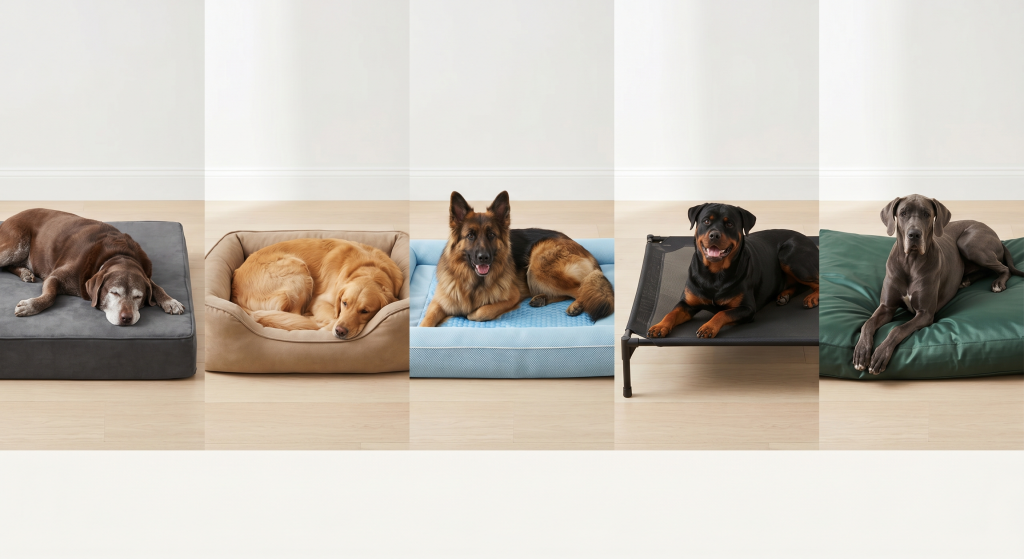
Orthopedic Foam Beds
Best for: Senior dogs, dogs with joint conditions, post-surgery recovery, and large breeds prone to dysplasia.
Orthopedic foam beds are the gold standard for joint support. They distribute body weight evenly, prevent pressure point buildup, and maintain their shape long-term when built with high-density foam.
Top recommendation: Big Barker 7″ Orthopedic Dog Bed
Big Barker is one of the most trusted names in large breed orthopedic beds, and for good reason. Their 7-inch foam construction uses three distinct layers of American-made therapeutic foam. The company backs it with a 10-year guarantee against flattening — unusual in this category. Independent research published on their site shows measurable improvements in joint pain and mobility in large-breed dogs. It is one of the best dog beds for large dogs currently available.
Bolster Beds
Best for: Dogs that like to rest their head or chin on an edge, breeds that curl up or lean while sleeping.
Bolster beds feature raised edges on one or more sides. The border gives dogs a place to prop their head and creates a sense of enclosure that many dogs find calming.
Top recommendation: Furhaven Orthopedic Sofa-Style Dog Bed (Jumbo Plus)
Furhaven’s sofa-style bed combines an orthopedic foam base with cushioned bolster sides. The cover is machine-washable, and the foam base meets the density needed for large breeds. It is a strong mid-range option for owners wanting joint support with the added security of bolster edges.
Cooling Beds
Best for: Dogs that overheat, high-energy working dogs, warm climates, and double-coated breeds.
Cooling beds use gel-infused foam, breathable mesh surfaces, or water-activated cooling materials to regulate body temperature during rest.
Top recommendation: Sealy Quad Layer Cooling Gel Dog Bed
Built with a gel-infused top layer specifically designed to pull heat away from the body, the Sealy Quad Layer handles large breed weight well thanks to its four-layer foam system. It is a practical choice for large dogs who frequently pant during rest or prefer cooler surfaces.
Elevated Cots
Best for: Dogs used for outdoor activities, dogs in warm or humid environments, and dogs that prefer firm surfaces.
Elevated cots lift the dog off the ground entirely, promoting air circulation underneath the body and keeping the sleeping surface cooler and drier.
Top recommendation: Kuranda Chew-Proof Dog Bed (Large/X-Large)
Kuranda’s elevated cots are built to last. The aluminum frame and PVC-coated fabric resist chewing, hold up to 200+ pounds, and can be used indoors or outdoors. They are a top choice among professional dog trainers and kennel operators. The elevated design is particularly practical for muddy outdoor environments.
Waterproof Beds
Best for: Senior dogs managing incontinence, dogs recovering from surgery, and homes with young puppies in training.
Waterproof beds prioritize hygiene without sacrificing comfort. The best options use orthopedic foam beneath a fully sealed waterproof covering.
Top recommendation: PetFusion Ultimate Dog Bed (Large/X-Large)
PetFusion uses CertiPUR-US certified solid memory foam and wraps it in a water-resistant outer cover with a hidden zipper. The cover is machine-washable, and the foam itself resists moisture penetration. This bed hits the sweet spot between genuine orthopedic support and practical waterproofing at a reasonable price point.
Quick Comparison Table
| Bed Type | Best For | Key Feature | Example Product |
|---|---|---|---|
| Orthopedic Foam | Seniors, joint conditions | Multi-layer density foam | Big Barker 7″ |
| Bolster | Chin-resters, curlers | Raised supportive edges | Furhaven Sofa-Style |
| Cooling | Warm climates, active dogs | Gel foam, breathable mesh | Sealy Quad Layer |
| Elevated Cot | Outdoor use, chewers | Airflow, chew-proof frame | Kuranda Aluminum Cot |
| Waterproof | Incontinent or recovering dogs | Sealed, washable cover | PetFusion Ultimate |
How to Choose the Right Bed Based on Your Dog’s Needs
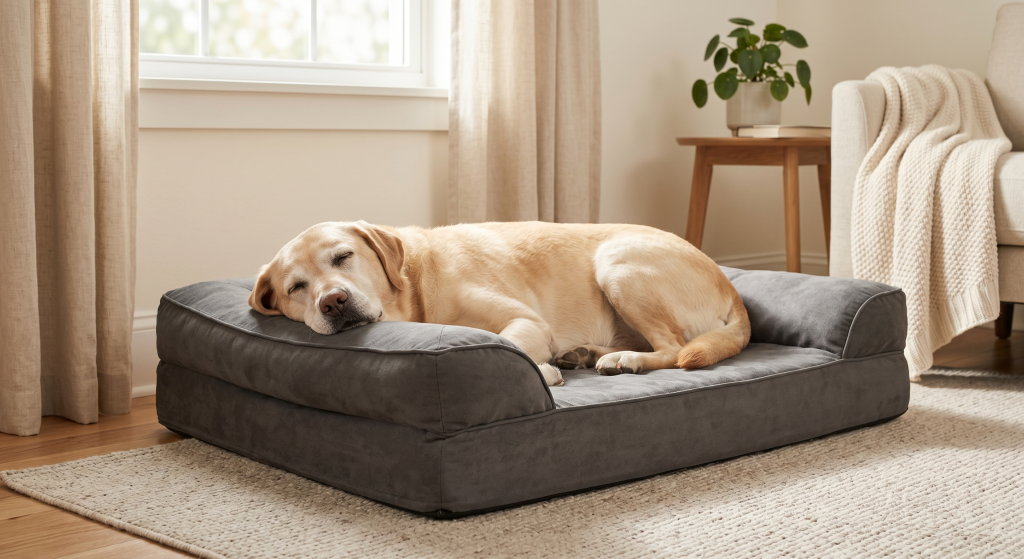
There is no universal best option. The right choice depends on your specific dog. Here is how to narrow it down based on what matters most.
Senior Dogs With Arthritis or Joint Pain
Prioritize an orthopedic foam bed with high-density layered foam. Look for beds with low entry points — a high bolster edge can make it hard for arthritic dogs to step in and out. The American College of Veterinary Surgeons recommends consistent supportive rest surfaces as part of managing chronic joint conditions in dogs. Pair the bed with easy floor access and consider placing it in a warm area away from drafts.
Active Working Dogs or Young Large Breeds
Durability and temperature regulation are your priorities here. Young, high-energy dogs need beds that bounce back after heavy, repeated use. An elevated cot or a cooling orthopedic bed works well. If your dog chews out of boredom or frustration, go with a reinforced chew-resistant option like the Kuranda.
Dogs Recovering from Surgery or Injury
Waterproof and orthopedic support are both critical. Post-surgical dogs may have limited mobility, so low profiles and non-slip bases matter greatly. Your veterinarian may provide specific recommendations — always follow their guidance. You can also ask them about certified canine rehabilitation practitioners through the Canine Rehabilitation Institute for tailored recovery support.
Indoor vs. Outdoor Use
For indoor-only beds, prioritize foam quality and washability. For dogs that split time between indoors and outdoors, consider elevated cots for outdoor use and a separate foam bed for inside. Outdoor beds must resist moisture, UV exposure, and dirt.
Budget Considerations
| Budget Range | What to Expect |
|---|---|
| Under $60 | Basic foam, limited durability, fewer washable options |
| $60–$120 | Decent orthopedic support, washable covers, adequate density |
| $120–$200 | High-density foam, waterproofing, certified materials |
| $200+ | Premium multi-layer orthopedic beds with long-term guarantees |
A higher upfront cost usually means a much longer lifespan. A $180 bed lasting four years is a better value than a $50 bed replaced every six months.
Extra Tips for Getting Your Large Dog to Actually Use Their Bed
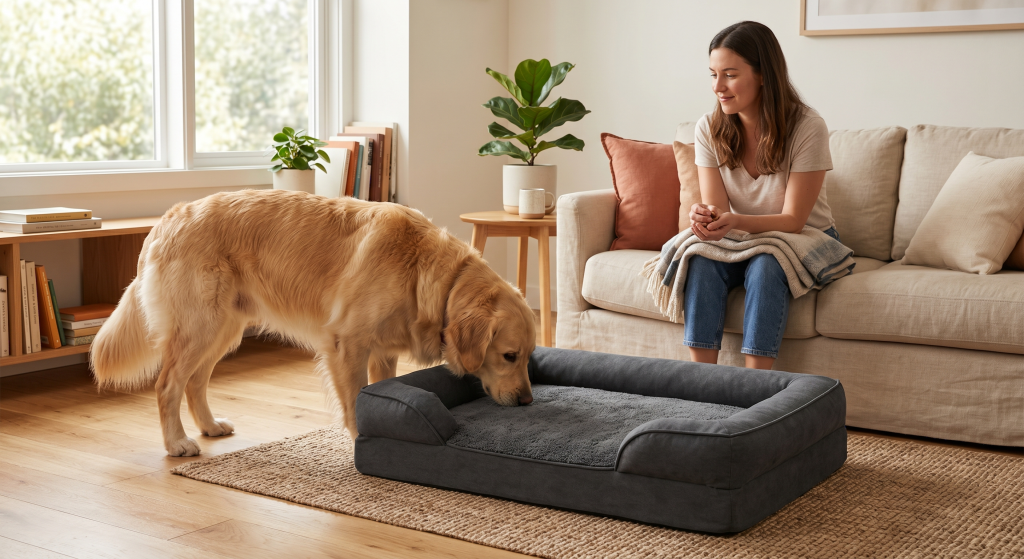
You have done the research, bought a quality bed, and set it up in the perfect spot. Then your dog ignores it completely and sleeps on the cold tile floor.
This happens often with large breeds. Here is how to fix it.
Place the Bed Strategically
Dogs choose sleeping spots based on temperature, visibility, and proximity to their people. Put the new bed in an area where your dog already likes to rest. Avoid high-traffic hallways or isolated rooms. A quiet corner in the living room near where you spend your evenings is usually ideal. Large dogs want to see the room and feel connected to the household without being stepped on.
Add a Familiar Scent
Place one of your worn T-shirts or your dog’s favorite blanket on top of the new bed for the first week. Familiar scent signals safety. It tells your dog the new object belongs to the family and is a safe place to relax. This simple step dramatically speeds up acceptance.
Use Positive Reinforcement
Do not force your dog onto the bed. Instead, lead them toward it, reward them with a high-value treat the moment they sniff it, and praise them enthusiastically. Repeat this multiple times a day. When they voluntarily step onto the bed, give an even bigger reward. Gradually build up to rewarding them for lying down fully on the bed. This approach, endorsed by certified positive reinforcement trainers at organizations like the Association of Professional Dog Trainers (APDT), works far better than coaxing or forcing.
Make the Bed the Best Spot in the Room
Feed your dog treats on the bed. Give belly rubs there. Let them chew a favorite toy while resting on it. The more positive experiences you create on the bed, the more your dog associates it with good things. If they have a favorite toy, place it on the bed at night.
If Your Dog Still Refuses
Check that the bed is not too hot, too small, or too soft. Large dogs sometimes reject overly plush beds in favor of firmer surfaces. Try the elevated cot option — many large dogs prefer the firm, cool mesh surface over foam. Also consider moving the bed to a different location before investing in a completely new product.
The Right Bed Makes a Real Difference
Every large dog deserves a place to sleep that genuinely supports their body. The right bed reduces joint pain, improves sleep quality, and contributes to a healthier, longer life — especially for breeds already predisposed to orthopedic issues.
Take your dog’s age, health, and sleeping habits seriously when choosing. Spend a little more on quality foam and durable construction. And give your dog the time they need to settle into their new sleeping spot.
When you get it right, you will notice the difference in how they move in the morning.
Ready to explore more expert advice on large breed care, product recommendations, and everything you need to keep your dog healthy and happy? Visit PetStory.org for in-depth reviews, buying guides, and trusted dog care resources — all written with your pet’s well-being in mind.