
Table of Contents
Bringing a parrot into your home means welcoming a vibrant, intelligent, and often loud new family member. These birds aren’t just decorations; they have the emotional and intellectual capacity of a young child and require active engagement, affection, and a central role in your daily life.
Learning how to care for a parrot is about more than filling a seed bowl. When you prioritize your parrot’s happiness, you build a rewarding, interactive relationship. A content, well-cared-for bird experiences less stress, leading to a stronger bond with you and a longer lifespan.
Whether you have a cheeky Budgerigar, a cuddly Conure, or a brilliant African Grey, this guide covers what you need to know to give your feathered friend the best life possible.
Creating the Perfect Environment
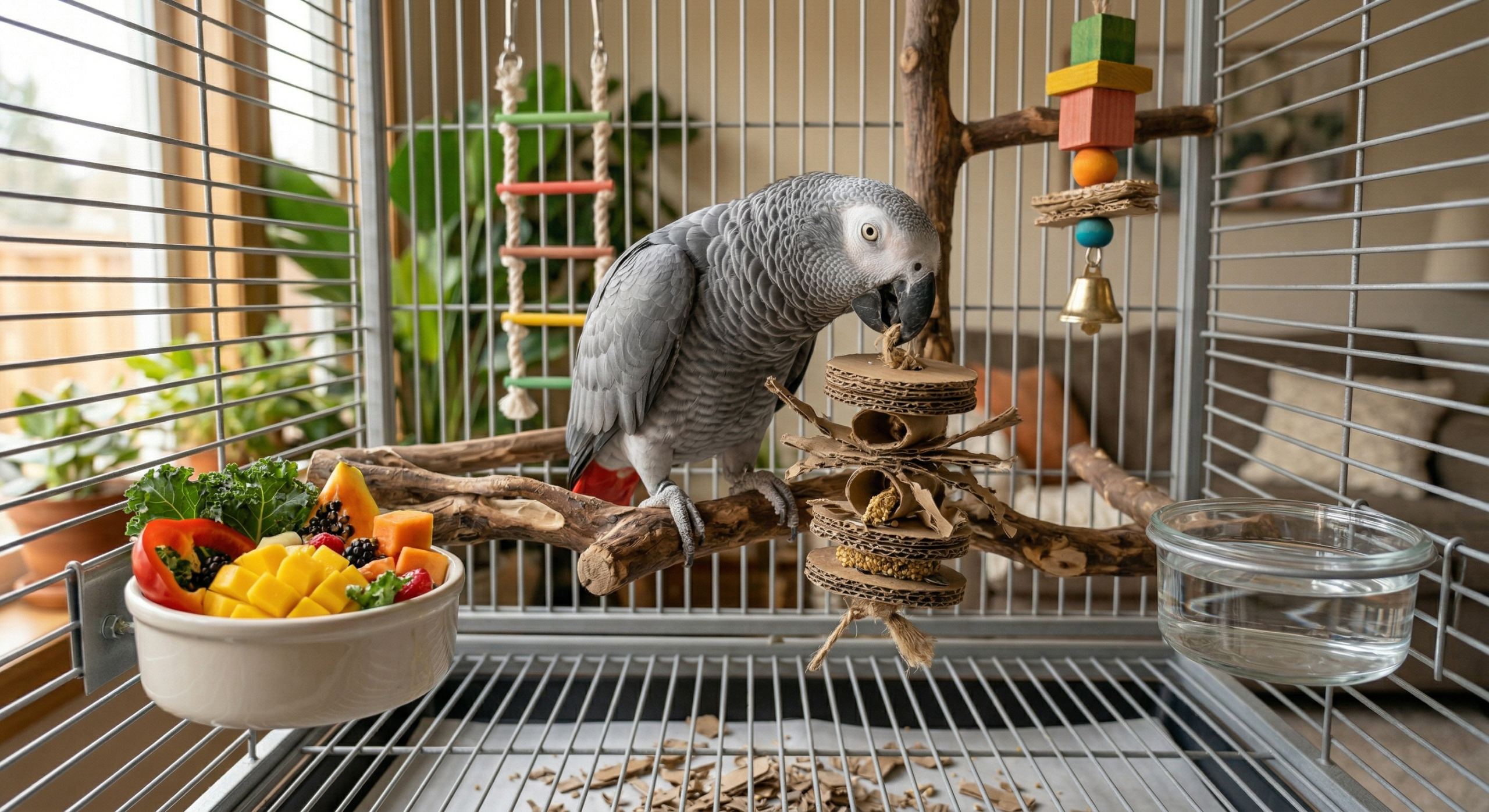
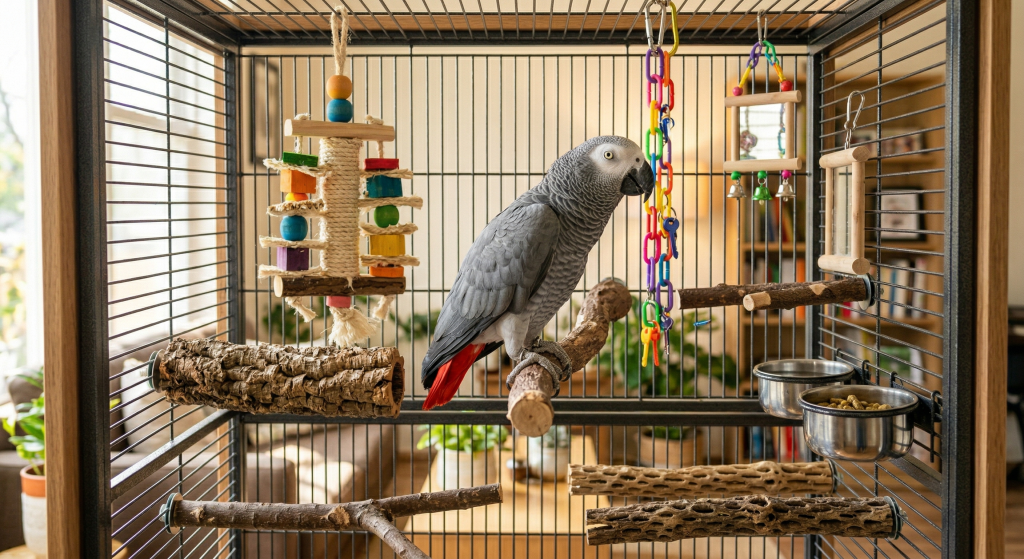
Your parrot’s cage is its sanctuary—a safe space, dining room, and bedroom all rolled into one. Since your bird will spend a lot of time there, setting it up correctly is crucial for its long-term happiness and well-being. A well-designed habitat should provide security, mental stimulation, and encourage natural behaviors.
- Size Matters: Buy the largest cage you can afford and fit in your home. Your bird needs enough space to flap its wings fully without hitting the bars or toys.
- Proper Placement: Parrots are flock animals and want to be where the action is. Place the cage in a lively area, like a living room, but away from the center of the chaos. Keep it away from drafty windows, direct sunlight, and the kitchen. Fumes from non-stick pans are highly toxic to birds and can be fatal.
- Smart Setup: Replace the uniform plastic dowels that come with most cages. Provide natural wood perches of varying thicknesses to exercise your parrot’s feet and help prevent arthritis.
- Hygiene: A clean environment prevents respiratory infections. Change the cage liner daily, wash food and water bowls every morning, and deep clean the cage bars and grates weekly.
Providing a Balanced Diet
A healthy diet is essential for your bird to thrive. For decades, pet stores promoted all-seed diets, but we now know that feeding a parrot only seeds is like feeding a human only fast food. It can lead to obesity, fatty liver disease, and a shortened lifespan.
A balanced avian diet should consist of:
- High-Quality Pellets: This should make up 60% to 70% of their daily intake. Pellets are formulated with essential vitamins and minerals, preventing the bird from only picking out its favorite bits.
- Fresh Vegetables: Offer a daily mix of dark leafy greens, carrots, broccoli, and bell peppers.
- Fresh Fruits: Treat fruits like nature’s candy. Apples (without seeds), berries, and melon are great options, but their high sugar content means they should only be a small part of the diet.
- Seeds and Nuts: Reserve these for training rewards and special treats.
Foods to Avoid: Never feed your parrot chocolate, avocado, caffeine, alcohol, onions, garlic, or salty human snacks. If you suspect your bird has ingested something dangerous, contact the ASPCA Animal Poison Control Center immediately.
Establish a reliable feeding schedule. Offering fresh vegetables in the morning and pellets in the evening can mimic their natural foraging instincts.
Mental and Physical Stimulation
Parrots are incredibly smart and bored easily. A bored parrot can become a stressed parrot, which may lead to destructive behaviors like screaming or feather plucking. Integrating enrichment into their daily routine is essential.
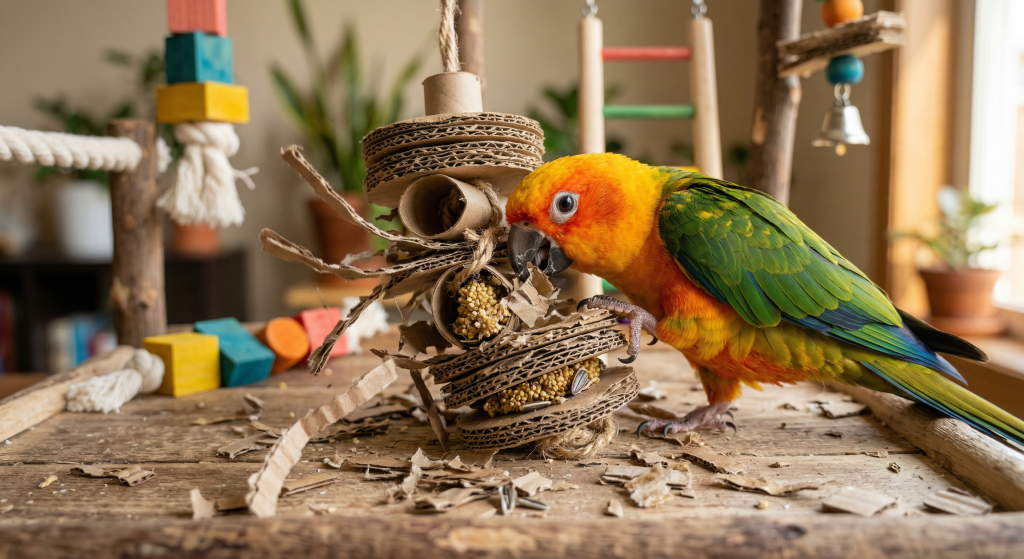
- Toys and Puzzles: Rotate toys weekly to keep their environment exciting. Provide a mix of shredding toys, climbing ropes, and durable acrylic puzzles.
- Foraging Activities: In the wild, birds spend hours searching for food. Replicate this by wrapping a favorite nut in dye-free paper and stuffing it into a toilet paper tube. Let them destroy the tube to get their prize.
- Out-of-Cage Time: Your bird needs several hours of supervised out-of-cage play daily for exercise. A sturdy wooden play stand is a great place for them to hang out with you.
Building a Strong Bond
Earning a parrot’s trust is a gradual process that requires time and patience. Unlike domesticated animals such as dogs and cats, parrots retain many of their wild instincts. Building a bond with them is about showing you are a safe, reliable member of their flock. The reward for your effort is an affectionate and intelligent companion for life.
- Quality Time: For timid birds, simply sitting near their cage and talking or reading aloud can work wonders.
- Positive Reinforcement Training: Teach your bird basic commands like “step up.” Keep training sessions short (5-10 minutes) and always end on a positive note with a high-value treat.
- Learn Their Language: Parrots communicate through body language. If a bird’s pupils are rapidly shrinking and expanding (“pinning”), its feathers are puffed, and it’s backing away, it feels threatened or overexcited. Respecting these boundaries helps you avoid bites and builds trust.
Health and Wellness
Birds are prey animals and hide illness as a survival instinct. By the time a parrot looks sick, it has likely been unwell for a while.
Preventative care is key. Schedule annual check-ups with a certified avian veterinarian to monitor your bird’s weight, check for parasites, and ensure its diet is appropriate. Sites like PetMD offer resources for understanding symptoms of avian illnesses.
Keep up with basic grooming. Pet birds often need professional nail and beak trims. Parrots also produce a lot of dander, so offer a shallow bowl of water for bathing or gently mist them a few times a week to keep their feathers and skin healthy.
Finally, always provide fresh, clean water daily. Wash the bowl with soap to prevent a slimy biofilm from forming.
Conclusion
Keeping your feathered friend happy and healthy is an ongoing, rewarding journey. It requires a commitment to a proper diet, a safe environment, and plenty of mental stimulation. By investing time and love into understanding your bird’s unique personality, you’ll gain a loyal and entertaining companion.
Always remember that sudden changes in behavior or eating habits warrant an immediate trip to an avian vet. Don’t hesitate to seek professional advice for your pet’s health.
Are you looking to expand your flock or learn about specific breeds? Check out our guide on the Top 10 Parrot Species That Make Great Pets or dive into our Complete Bird Care Guide for more expert tips at petstory.org
