

Table of Contents
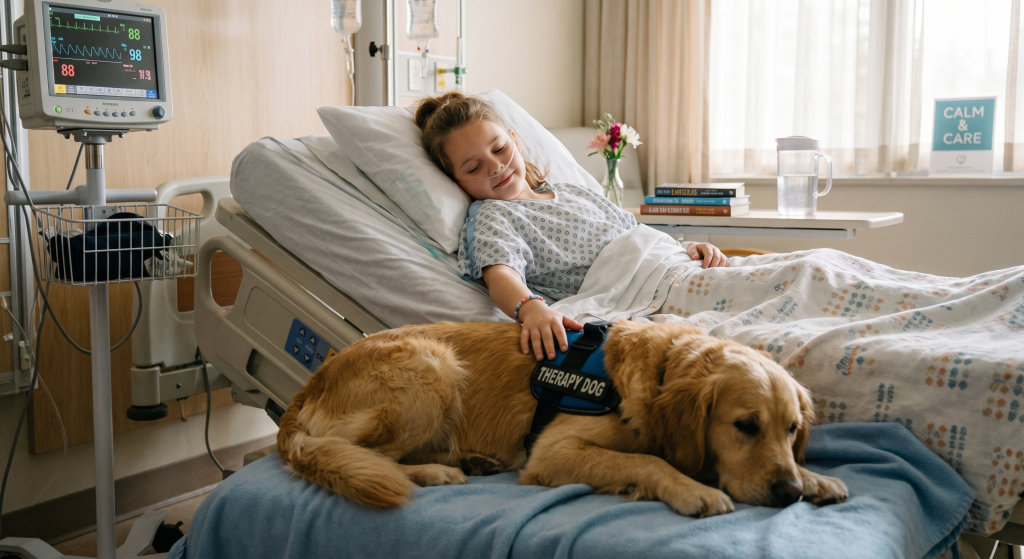
On a Tuesday morning in a pediatric oncology ward in Seattle, a nine-year-old named Marcus hadn’t spoken to anyone in three days. The chemotherapy had been brutal, the fear had settled deep, and the adults around him—however loving—couldn’t quite reach him through it. Then a golden retriever named Biscuit walked in, climbed carefully onto the edge of the bed, and rested his chin on Marcus’s knee. Within minutes, Marcus was talking. Not about his illness or his fear, but about Biscuit. He wanted to know whether Biscuit liked peanut butter and whether he had a favorite toy.
That conversation, unremarkable on the surface, marked the beginning of Marcus’s re-engagement with the world around him. His nurses noticed the shift. His mother wept quietly in the hallway. And Biscuit, his tail moving in a slow, steady arc, simply did what therapy animals do: he showed up without agenda and made connection possible.
This is the unique gift of therapy animals. They carry no clinical authority, no professional distance, and no expectations. They arrive with warmth and presence, asking for nothing beyond the moment. In that simplicity, they often accomplish what even the most sophisticated medical and psychological interventions sometimes cannot.
What Are Therapy Animals?
The term “therapy animal” is often misunderstood and frequently confused with service animals or emotional support animals in ways that blur important distinctions. Understanding what therapy animals are—and are not—matters both for appreciating their role and for navigating the programs that train and certify them.
Therapy animals are animals trained to provide comfort, affection, and companionship to people in institutional or community settings—including hospitals, schools, nursing homes, libraries, disaster relief sites, courthouses, and rehabilitation centers. They visit with handlers, usually their owners, and interact with multiple people rather than being assigned to a single individual.
How therapy animals differ from other assistance animals:
- Service animals are trained to perform specific tasks for a single person with a disability—guiding someone who is blind, alerting someone with epilepsy to an oncoming seizure, or retrieving objects for someone with limited mobility. They are protected under the Americans with Disabilities Act and have broad public access rights.
- Emotional support animals provide comfort to a specific individual through their presence, but they are not trained for specific tasks and do not have the same public access rights as service animals.
- Therapy animals serve the public in specific settings, working with many different people, and are certified through organizations that evaluate both the animal’s temperament and the handler’s ability to manage visits safely and effectively.
Which animals can become therapy animals?
Dogs are by far the most common therapy animals, but the designation extends much further. Therapy cats, rabbits, guinea pigs, miniature horses, llamas, and even birds have been certified and placed in therapeutic settings. The determining factor is temperament—a calm, sociable, and resilient disposition that allows the animal to remain relaxed in unfamiliar environments and around unfamiliar people, including those who may move unpredictably, speak loudly, or approach with strong emotion.
The certification process varies by organization, but it generally includes evaluating the animal’s obedience, social behavior, and response to stress, along with handler training on how to manage visits, recognize signs of fatigue, and maintain appropriate boundaries. Pet Partners, one of the largest and most respected therapy animal organizations in North America, maintains a rigorous evaluation process that has become something of an industry standard.
The Science Behind Animal-Assisted Therapy
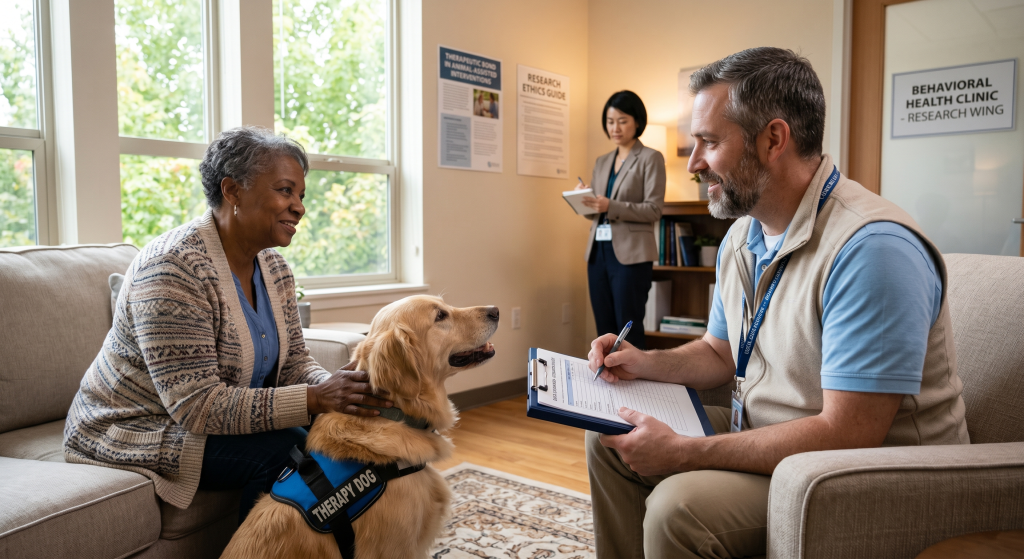
The comfort people feel around therapy animals is not merely sentimental. It is physiological, measurable, and increasingly well documented. The science of animal-assisted therapy (AAT) has matured significantly over the past two decades, moving from anecdotal observations to controlled research with reproducible findings.
What happens in the body during animal interaction:
- Cortisol decreases. Cortisol is the body’s primary stress hormone, and multiple studies have documented significant reductions in cortisol levels after even brief interactions with therapy animals. Lower cortisol can translate into reduced anxiety, improved immune function, and better cardiovascular outcomes.
- Oxytocin increases. Often called the “bonding hormone,” oxytocin is released during positive social contact, and animal interaction can trigger its release just as reliably as human connection does. This neurochemical response helps explain the feelings of warmth, trust, and safety that therapy animal visits often produce.
- Blood pressure and heart rate stabilize. The cardiovascular benefits of animal interaction are among the most consistently replicated findings in the field, with implications for both acute stress response and long-term heart health.
- Pain perception shifts. Research conducted in hospital settings has found that patients who received therapy animal visits reported lower pain scores and required less pain medication than control groups—a finding with significant implications for pediatric and post-surgical care.
A landmark study published in the journal Frontiers in Psychology found that even ten minutes of interaction with therapy dogs produced measurable reductions in stress biomarkers among college students during exam periods—results strong enough to help drive the now-widespread adoption of therapy dog programs on university campuses across North America.
The American Kennel Club provides a comprehensive overview of the research supporting therapy animal programs, including citations from peer-reviewed studies that continue to expand as the field matures.
Animal-assisted therapy versus animal-assisted activity:
A useful distinction within the field separates structured animal-assisted therapy (AAT)—goal-directed interventions facilitated by a trained health professional, in which the animal is used as a deliberate therapeutic tool—from animal-assisted activity (AAA), the broader category of visits that provide comfort and engagement without specific clinical goals. Both have demonstrated value; the distinction matters mainly for research design and clinical integration.
Real-Life Stories of Therapy Animals in Action
Research provides the framework. Stories give it weight.
In hospitals: At Children’s Hospital Colorado, a therapy dog program called PEAK (Prescription for Emotional Animal Kindness) has been integrated into the care of patients with chronic and life-threatening illnesses. Handlers and their certified dogs visit regularly, and clinical staff have documented improvements in patient cooperation with treatment, reductions in reported pain, and measurable decreases in the length of stay for certain patient groups. For children undergoing painful procedures, the presence of a therapy dog has even been shown in some cases to reduce the need for sedation—a finding that has reshaped how some pediatric facilities approach procedural preparation.
In schools: The Reading Education Assistance Dogs (READ) program pairs certified therapy dogs with children who struggle with literacy. The insight behind the program is elegant: children who feel judged or embarrassed reading aloud to adults or peers can read freely to dogs, who listen without correction, impatience, or visible reaction to mistakes. The result is more reading practice, improved fluency, and—perhaps most importantly—a shift in children’s relationship to reading itself, from an experience of possible failure to one of simple pleasure.
In disaster response: Following Hurricane Katrina, the 9/11 attacks, and the Sandy Hook shooting, therapy animal teams were deployed to provide comfort to survivors, first responders, and community members processing acute trauma. The particular value of therapy animals in disaster settings lies in their ability to reach people who are not yet ready for structured psychological support—people who need a transitional form of comfort that can open the door to deeper help. Organizations like the American Red Cross have incorporated therapy animal teams into their disaster mental health response protocols, reflecting how consistently the evidence supports their value.
In correctional facilities: Some of the most striking outcomes in therapy animal research have emerged from prison programs that pair incarcerated individuals with animals—typically dogs being trained for service work or shelter dogs awaiting adoption. Participants in these programs have shown measurable reductions in aggression, improved emotional regulation, higher rates of participation in rehabilitation programming, and lower recidivism rates after release. Caring for a vulnerable animal, it turns out, helps develop qualities—patience, attentiveness, and gentleness—that transfer meaningfully into human relationships and social reintegration.
How Therapy Animals Help Different Communities

The reach of therapy animal programs extends across virtually every population experiencing stress, isolation, or diminished well-being.
Children and adolescents:
- Reduced anxiety around medical procedures
- Improved engagement and attendance in school-based programs
- Support for children with autism spectrum disorder, where animals provide sensory regulation and social scaffolding without the unpredictability of human interaction
- Trauma-processing support for children in foster care and crisis settings
Older adults:
Loneliness among older adults—especially those in residential care—carries measurable health consequences comparable to smoking fifteen cigarettes a day, according to research cited by the National Institute on Aging. Therapy animal visits address this isolation directly by providing physical touch, novelty, and a natural spark for conversation in settings where social engagement can become rare. For individuals living with dementia, animal visits have been shown to reduce agitation, increase verbal engagement, and improve mood in ways that often last beyond the visit itself.
Veterans and active military:
The combination of trauma, hypervigilance, and social withdrawal that often characterizes PTSD responds with particular consistency to animal-assisted intervention. Therapy dogs provide grounding—a physical, present, non-threatening focus that can interrupt trauma loops—while also creating social bridges where isolation has taken hold. Organizations like Pets for Patriots work at the intersection of veteran welfare and animal welfare, recognizing that the relationship can benefit both.
Individuals in crisis:
Courthouse therapy dog programs, now operating in jurisdictions across the United States and Canada, have transformed the experience of child witnesses and trauma survivors who must testify in legal proceedings. The presence of a certified therapy dog during testimony has been shown to reduce physiological stress markers, improve coherence, and lessen the secondary trauma that legal processes can otherwise produce.
How to Get Involved with Therapy Animal Programs

For animal owners whose pets have the right temperament, therapy animal work is one of the most meaningful forms of volunteering available—for the handler, for the animal, and for the people they visit.
Step 1: Assess your animal’s temperament honestly
Not every friendly animal is suited to therapy work. The requirements go beyond basic sociability. A therapy animal must remain calm and nonreactive in genuinely unpredictable environments—around medical equipment, sudden movements, strong smells, loud sounds, and people whose behavior may be erratic. An honest assessment of whether a particular animal truly enjoys and remains settled in these conditions is the essential first step. Taking a beloved but anxious pet into stressful environments for the sake of helping others is neither kind to the animal nor fair to the people being visited.
Step 2: Complete basic obedience training
Before pursuing therapy animal certification, basic obedience—reliable sit, stay, down, leave it, and loose-leash walking—is essential. This is the foundation on which more specialized therapy training is built.
Step 3: Research certification organizations
Several reputable organizations offer evaluation and certification for therapy animal teams:
- Pet Partners (petpartners.org) — one of the most widely recognized certifying bodies, with teams active across North America and a strong handler training curriculum
- Therapy Dogs International (tdi-dog.org) — focused specifically on dogs, with an extensive network of certified teams
- Alliance of Therapy Dogs (therapydogs.com) — another well-established organization with active chapters across the United States
- Love on a Leash (loveonaleash.org) — particularly strong in hospital and healthcare settings
Step 4: Complete handler training
Certification is a team evaluation—both the animal and the handler are assessed. Handler training covers visit etiquette, infection-control protocols, how to recognize signs of animal stress, how to manage challenging interactions, and the ethical considerations involved in working in sensitive institutional environments.
Step 5: Connect with local facilities
Once certified, the next step is to reach out to local hospitals, schools, libraries, nursing homes, and veterans’ organizations to express interest in setting up a regular visit schedule. Many facilities actively seek certified therapy animal teams and welcome the opportunity.
Step 6: Maintain certification and monitor your animal
Certifications require periodic renewal. More importantly, paying close attention to the animal’s enjoyment of the work is one of a handler’s most important ongoing responsibilities. Animals that show signs of stress, fatigue, or declining enthusiasm for visits deserve to retire from the work with the same care and respect they brought to it.
A Final Word
The dog who rested his chin on Marcus’s knee knew nothing about cortisol, oxytocin, or evidence-based intervention protocols. He knew only that a small person was hurting and that closeness and warmth were what the moment required. That instinct—ancient, uncomplicated, and extraordinarily effective—is what therapy animals bring to every room they enter.
Science validates what anyone who has ever been comforted by an animal already knows: this connection matters. It heals. It reaches places that nothing else quite can.
If the idea of contributing to that work—with a well-suited animal and a willingness to show up regularly for people who need exactly what a calm, loving animal can provide—resonates with you, the path forward is clearer than it may seem.
Explore therapy animal resources, share a story about an animal that changed a life, or find local programs at PetStory.org. The work is waiting, and so are the people who need it.
