
Table of Contents
Waking up to the bright, melodious song of a canary is one of the greatest joys of bird ownership. These tiny, vibrant companions bring immense life and energy into any home. But did you know that the quality of your canary’s song directly ties to what they eat? A well-fed bird is an active, vocal, and brightly colored bird.
Many new pet parents assume that a simple box of birdseed from the grocery store is all their new friend needs. Unfortunately, this common misconception can lead to nutritional deficiencies, dull feathers, and a silent bird. Understanding how to care for canaries means learning how to properly fuel their tiny bodies.
This guide will walk you through the very best food for canaries, helping you craft a balanced, delicious menu. We will explore the great seed versus pellet debate, highlight the best fresh produce, and identify dangerous foods to avoid. By the end of this article, you will have all the essential canary diet tips you need to keep your feathered friend singing happily for years to come.
Understanding a Canary’s Nutritional Needs
A canary’s body works in overdrive. Because they have incredibly fast metabolisms, they require a constant, high-quality energy source to stay healthy. In the wild, canaries spend their days foraging for a diverse mix of seeds, vegetation, and the occasional insect. Replicating this diverse nutritional profile at home is the secret to a thriving pet.
To keep your canary in peak condition, its diet must include a balance of carbohydrates, proteins, healthy fats, vitamins, and minerals. Carbohydrates and fats provide the rapid energy they need to flit around their cage. Protein is absolutely vital for feather growth, especially during their yearly molting phase. Meanwhile, vitamins and minerals support their immune system, keeping illnesses at bay.
A common mistake beginners make is feeding their canary a singular, monotonous diet. I remember when I brought my first canary home; I gave him nothing but a generic seed mix for the first few months. He was sluggish, and his beautiful yellow feathers started looking remarkably dull. Once I diversified his meals and introduced the right nutrients, his energy skyrocketed, and he started singing complex melodies again.
Benefits of meeting their nutritional needs:
- Vibrant plumage: Proper vitamins (especially Vitamin A) bring out the bright yellows, oranges, and reds in their feathers.
- Consistent singing: A healthy, energetic bird feels comfortable enough to vocalize and establish their territory through song.
- Longer lifespan: A balanced diet prevents common health issues like obesity, fatty liver disease, and respiratory problems.
Seeds vs. Pellets: What’s Best?
The foundation of your bird’s diet will largely consist of either seeds, pellets, or a strategic mix of both. Walk down any pet store aisle, and you will see dozens of options. So, which one is actually the best food for canaries? The answer requires a bit of balance.
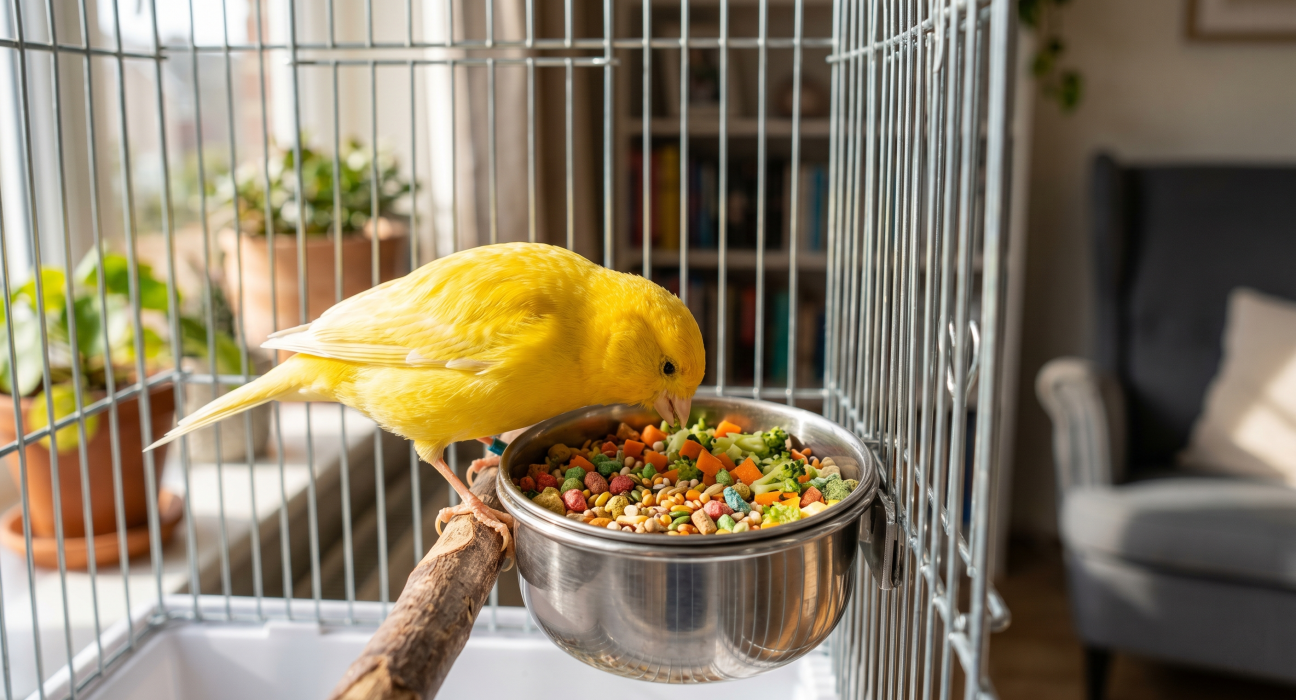
Seeds are the traditional choice and what canaries naturally eat in the wild. They love cracking open the hulls, which provides excellent mental stimulation. However, commercial seed diets are often heavily weighted with millet and sunflower seeds. These are high in fat and low in essential vitamins. As noted by veterinary experts, if a canary eats only seeds, it will often pick out its favorites and leave the healthier bits behind, leading to nutritional gaps.
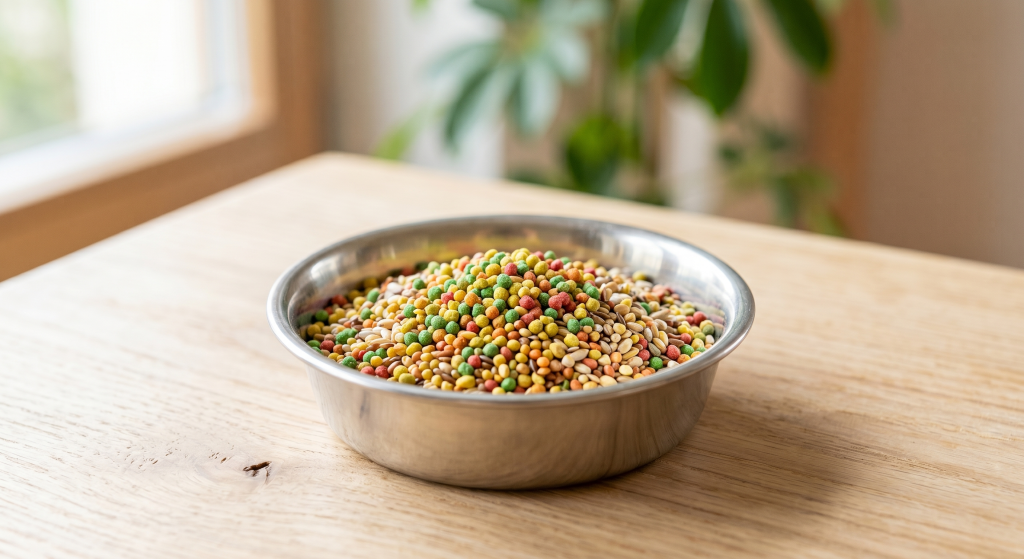
Pellets, on the other hand, are nutritionally complete. Every single bite contains the exact same ratio of vitamins, minerals, and proteins. This completely eliminates the issue of picky eating. The downside? Many canaries do not recognize pellets as food at first, making the transition a bit tricky.
Tips for transitioning and balancing seeds and pellets:
- Aim for a mix: Many avian vets recommend a diet consisting of 70% high-quality pellets and 30% seed mix to provide the best of both worlds.
- Introduce slowly: Never switch your bird’s food overnight. Mix a small amount of pellets into their regular seeds, gradually increasing the pellet ratio over several weeks.
- Try different sizes: Canaries have tiny beaks. Make sure you purchase a micro-sized pellet specifically formulated for finches and canaries.
- Moisten the pellets: If your bird refuses to try them, slightly moisten the pellets with a drop of warm water or natural apple juice to make them more enticing.
Fresh Fruits and Vegetables for Canaries
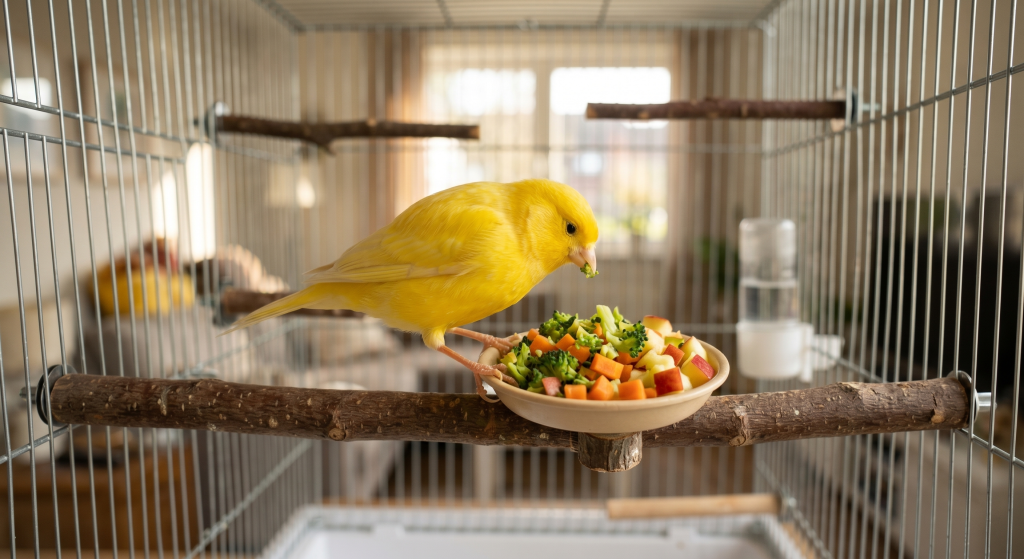
While a good base mix is vital, fresh produce is where your bird gets their essential, natural vitamins. Fresh fruits and vegetables should make up roughly 20% to 25% of your canary’s daily intake. They provide vital hydration, iron, calcium, and antioxidants that dry foods simply cannot offer.
Many owners skip fresh foods because they worry about making a mess in the cage. While chopped veggies do require daily cleanup, the health benefits far outweigh the minor inconvenience. I used to just wedge a whole leaf of lettuce between the cage bars, only for my bird to ignore it. Once I learned to chop the greens into tiny, beak-sized pieces, he started gobbling them up instantly!
The best fresh foods for your canary include:
- Leafy greens: Spinach, kale, dandelion greens, and Swiss chard are packed with calcium and vitamins.
- Cruciferous veggies: Broccoli florets (finely chopped) and cauliflower are massive hits and highly nutritious.
- Orange vegetables: Sweet potatoes (cooked and mashed) and carrots (grated) are incredible sources of Vitamin A.
- Fruits (in moderation): Apples (no seeds), berries, melons, and bananas make excellent sweet treats.
Actionable tips for feeding fresh produce:
- Wash everything thoroughly: Always wash fruits and vegetables to remove harmful pesticides before offering them to your bird.
- Chop it up: Canaries do not have hooked beaks to tear into large chunks of food. Dice produce into very fine pieces to make eating easy and enjoyable.
- Remove uneaten food promptly: Fresh food spoils quickly. Remove any untouched fruits or vegetables after a few hours to prevent bacterial growth in the cage.
Treats and Foods to Avoid
Treats are a fantastic way to bond with your bird and offer mental enrichment. However, human food is radically different from bird food. What we consider a healthy snack can sometimes be highly toxic to a small avian body. Knowing exactly what to avoid is a critical part of how to care for canaries safely.
A major pitfall for enthusiastic bird owners is sharing a bit of their own dinner. Foods cooked in butter, salt, or oil can cause severe digestive upset and long-term kidney damage. Furthermore, relying too heavily on store-bought honey seed sticks can cause rapid weight gain. These sticks are essentially bird junk food—fine for a rare occasion, but terrible for daily consumption.
Toxic foods you must never feed your canary:
- Avocado: According to the Merck Veterinary Manual, all parts of the avocado plant contain persin, a toxin that is highly fatal to birds.
- Chocolate and caffeine: These elevate a bird’s heart rate to dangerous, life-threatening levels.
- Fruit pits and apple seeds: These contain trace amounts of cyanide, which a tiny canary cannot process.
- Onions and garlic: These can cause severe anemia and weakness in your pet.
Healthy treat alternatives:
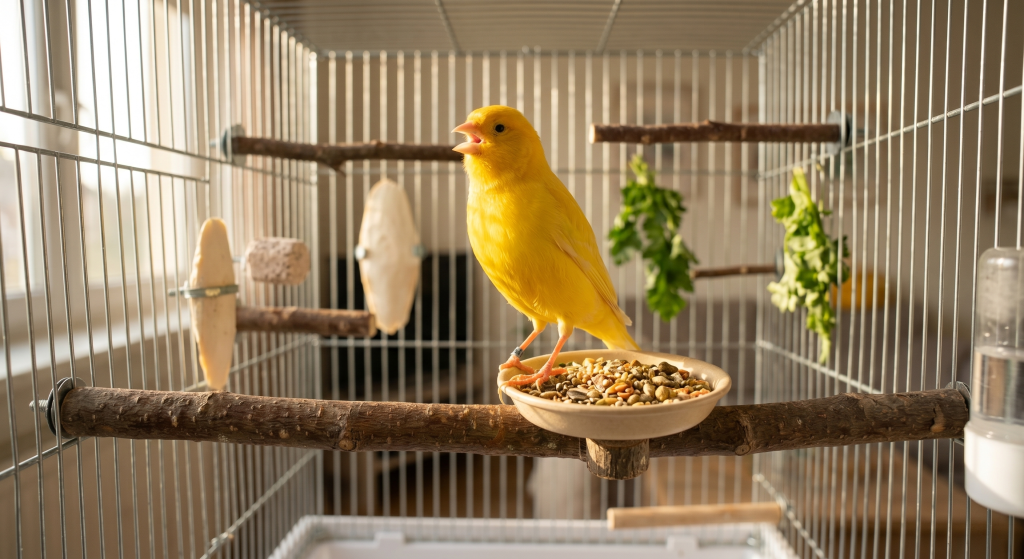
- Spray millet: This is a fantastic, natural treat. However, limit it to one small sprig per week to prevent obesity.
- Egg food: Hard-boiled eggs (mashed with the shell included for calcium) provide an excellent protein boost, especially during molting season.
- Sprouted seeds: Soaking and sprouting regular bird seeds unlocks massive amounts of nutrients and creates a highly digestible, healthy snack.
Tips for Encouraging a Healthy Eating Routine
Canaries are creatures of habit. They thrive on routine and feel most secure when they know exactly what to expect from their environment. Establishing a solid feeding schedule not only prevents overeating but also builds trust between you and your pet.
When establishing a routine, observe your bird’s natural rhythms. Canaries are highly active first thing in the morning and right before the sun goes down. These are the optimal times to offer fresh foods and replenish their main bowls.
Steps to build a great feeding routine:
- Serve breakfast fresh: Offer their daily portion of finely chopped fruits and vegetables first thing in the morning when they are hungriest.
- Monitor portion sizes: A canary only needs about one to two teaspoons of their seed or pellet mix per day. Overfilling the bowl encourages them to pick out only the fatty seeds and leave the rest.
- Refresh water daily: Diet is not just about food. Canaries need constant access to clean, fresh water. Wash the water bowl daily to prevent a slimy biofilm from forming.
- Clean up before dusk: Remove any remaining fresh foods in the late afternoon. You can offer a tiny pinch of seeds or a quick treat before they go to sleep.
By sticking to a consistent schedule, you eliminate the stress of uncertainty for your bird. The result is a relaxed, healthy canary who feels comfortable enough to fill your home with beautiful music.
Keep Your Canary Singing for Years to Come
Providing the right diet is one of the most impactful ways you can show love to your pet bird. By moving beyond basic seed mixes and incorporating nutrient-dense pellets, fresh greens, and safe treats, you set the stage for a long, healthy life.
Remember, the best food for a canary is all about variety and balance. It may take patience to transition a stubborn bird to a healthier diet, but the reward of a vibrant, singing companion is well worth the effort. Implement these diet tips today and watch your feathered friend’s energy transform.