
Table of Contents
Bringing a gerbil home means welcoming a tiny whirlwind of energy and personality. These small, social rodents are incredibly active, and watching them is one of the biggest joys of pet ownership. But as you watch your new companions, you might find yourself puzzled by some of their quirky habits.
If you’ve ever wondered why your gerbil is vigorously kicking bedding or drumming its back feet, you’re not alone. Understanding how gerbils interact with the world is the first step to becoming a better pet parent. When you can decode their body language, you can build a stronger bond and create a habitat that meets their needs.
Let’s explore five common gerbil behaviors, what they mean, and how you can support your pet’s natural instincts.
Digging and Burrowing
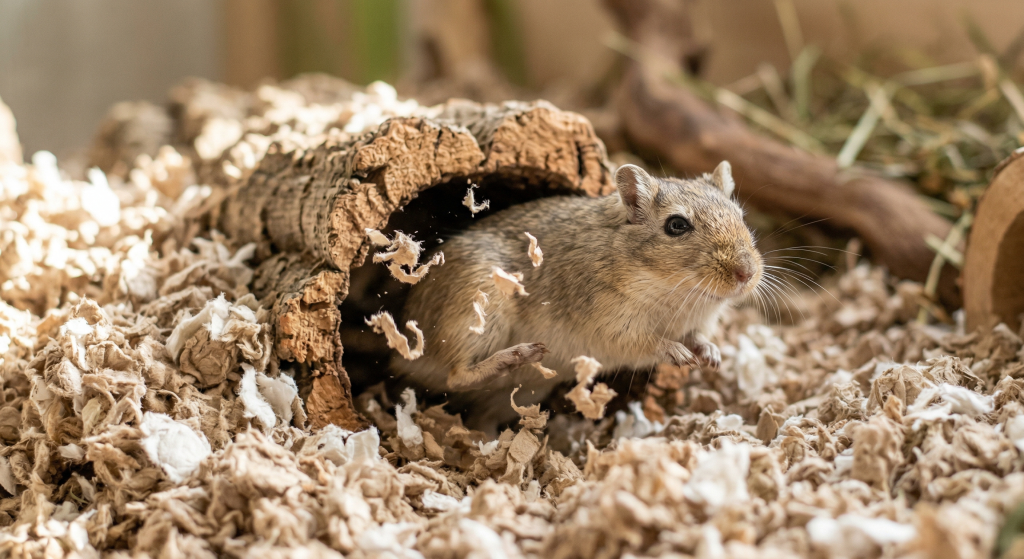
If there’s one thing gerbils love, it’s digging. You’ll often see them scratching at the corners of their cage or tunneling through their bedding. Sometimes, they even try to dig through the glass walls of their enclosure.
This determination comes from their wild origins. Wild Mongolian gerbils live in the harsh climates of the Asian steppes. To survive extreme temperatures and hide from predators, they construct deep underground burrows. Even though your pet gerbil is safe in a climate-controlled room, that hardwired instinct remains. They dig because it makes them feel secure and comfortable.
How to support this behavior:
- Provide deep bedding: Give your gerbils at least 8 to 10 inches of high-quality bedding so they can construct tunnels.
- Mix materials: A blend of paper-based bedding and soft meadow hay holds a tunnel’s shape better than standard wood shavings alone.
- Upgrade their space: If your current cage doesn’t allow for deep bedding, consider a tank that supports their tunneling habits.
Thumping
One of the most surprising sounds a new gerbil owner might hear is a rapid, rhythmic drumming from the cage. This behavior, known as “thumping,” occurs when a gerbil pounds both back feet against the ground in quick succession.
Thumping is a primary form of communication. In the wild, gerbils use this drumming sound to warn their colony of approaching danger. The vibration travels well underground, alerting sleeping family members to take cover.
If your pet gerbil is thumping, it’s usually trying to tell you—or its cage mates—that it’s startled. A sudden loud noise or a fast movement can trigger a thumping session. Because gerbils are so social, if one starts thumping, others often join in.
Occasionally, gerbils also thump when they are excited, such as when a favorite treat is offered or during mating rituals. However, context is key. If they look tense and are hiding while thumping, they are likely scared.
How to handle thumping:
- Speak softly to reassure them.
- Avoid making sudden movements near their cage.
- Dim the lights and let them settle down on their own.
Grooming
Watch a gerbil long enough, and you’ll see it engage in an adorable “washing” routine. They will sit up, lick their paws, and scrub their faces, ears, and whiskers.
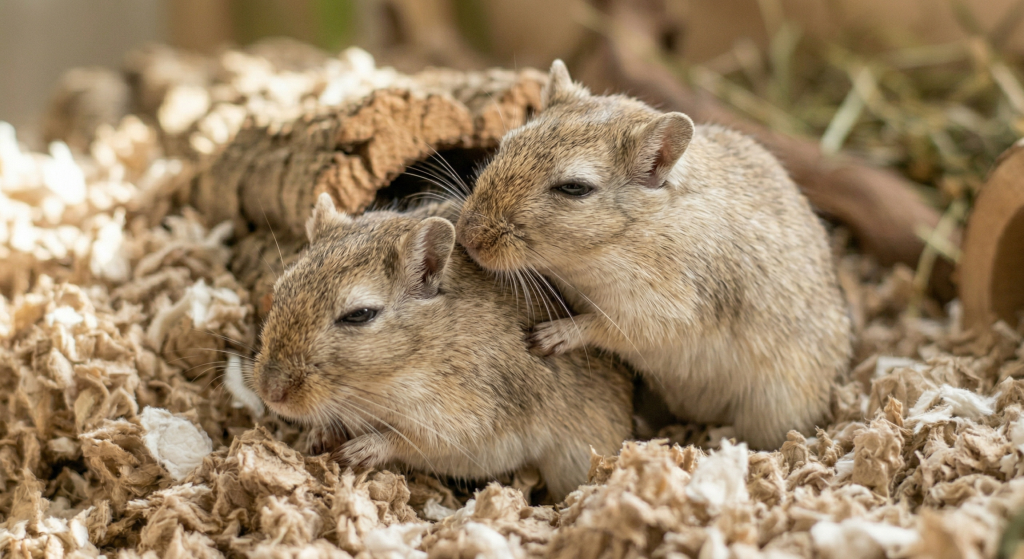
Self-grooming is how gerbils keep themselves clean. They are fastidious animals who dislike feeling dirty. However, grooming is also a social activity. If you keep a pair or group of gerbils (which you always should), you will frequently witness them grooming each other.
When gerbils groom one another, they are engaging in a vital bonding activity that reinforces their social hierarchy and builds trust. It is a sign of a healthy, relaxed group. If a gerbil ever tries to gently nibble or groom your fingers, take it as a compliment! It means they see you as a trusted member of their family.
Constant Chewing
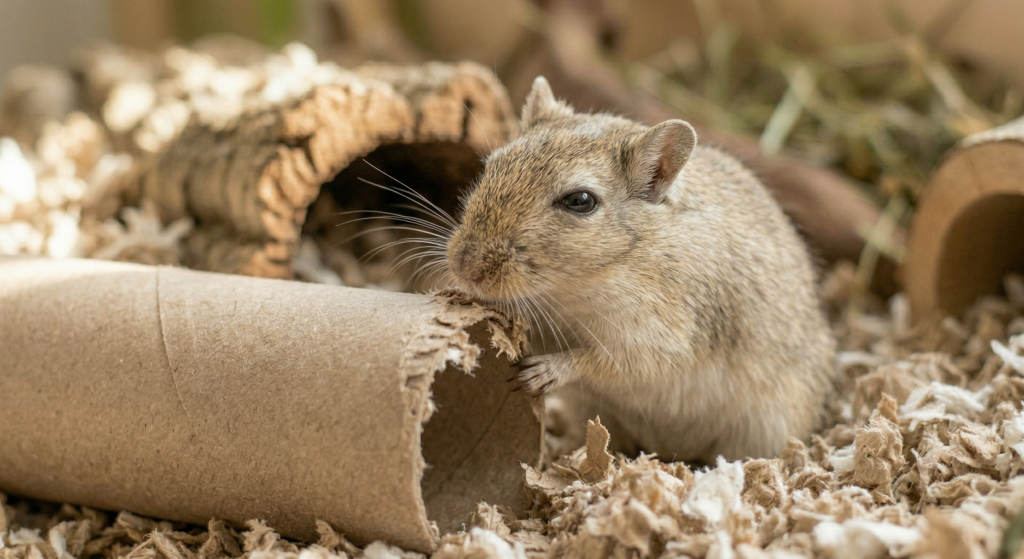
You provide a new wooden toy, and within days, it’s completely destroyed. Chewing is a universal rodent behavior, and gerbils take it to a new level. They gnaw on wood, cardboard, and, unfortunately, plastic cage components if given the chance.
This constant destruction serves a critical medical purpose. Like all rodents, a gerbil’s front teeth never stop growing. Without tough materials to chew on, their teeth can become overgrown, leading to a painful and dangerous condition called malocclusion. Overgrown teeth prevent a gerbil from eating and require immediate veterinary care. Therefore, chewing isn’t a behavioral problem; it’s a mandatory health requirement.
Safe chew toys to provide:
- Thick cardboard tubes from paper towels or toilet paper rolls.
- Untreated applewood or willow sticks.
- Woven grass mats and balls.
Always avoid soft plastics, as swallowed pieces can cause fatal intestinal blockages. The ASPCA Animal Poison Control Center offers comprehensive lists of safe materials.
Standing Up (The “Meerkat Pose”)
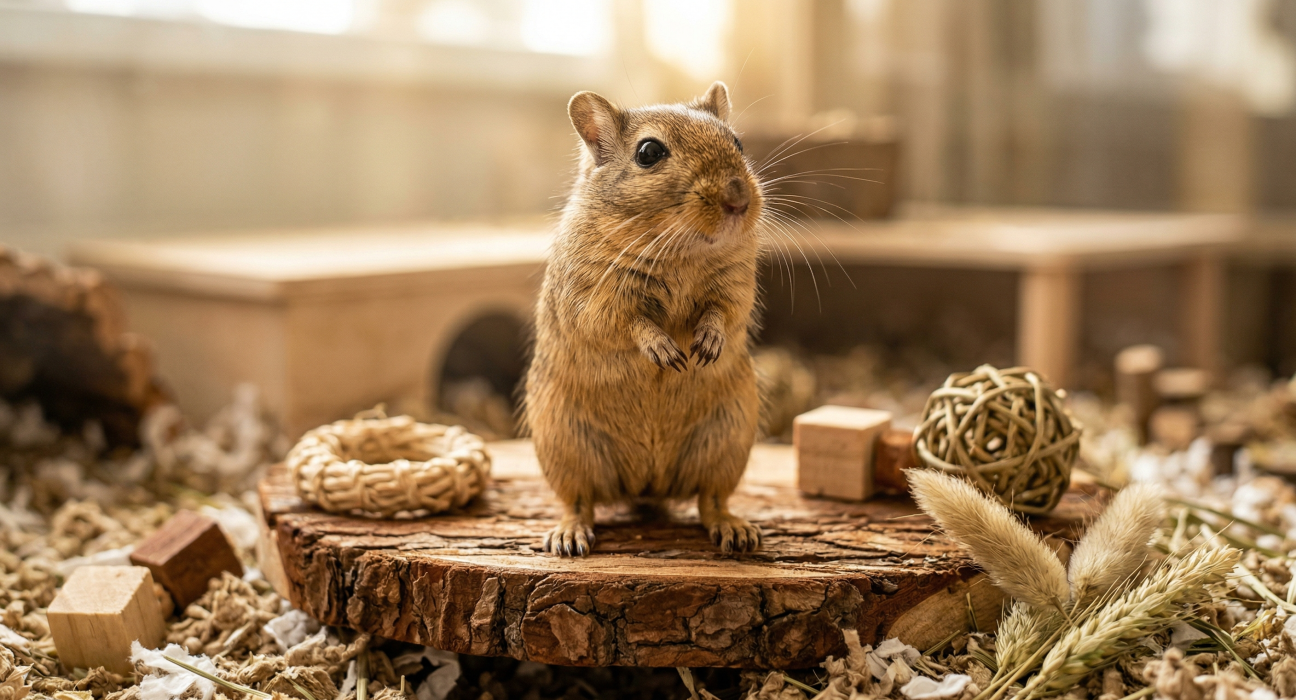
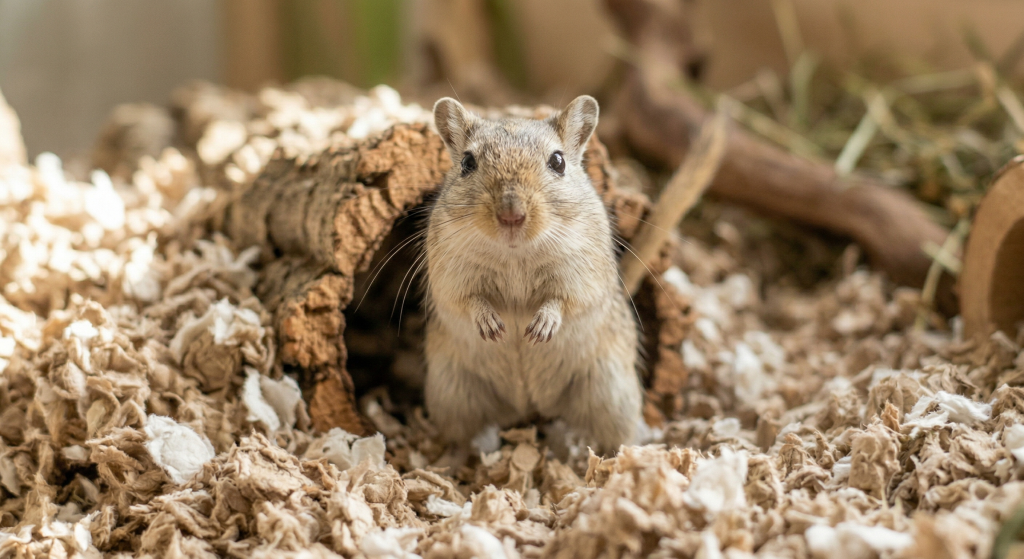
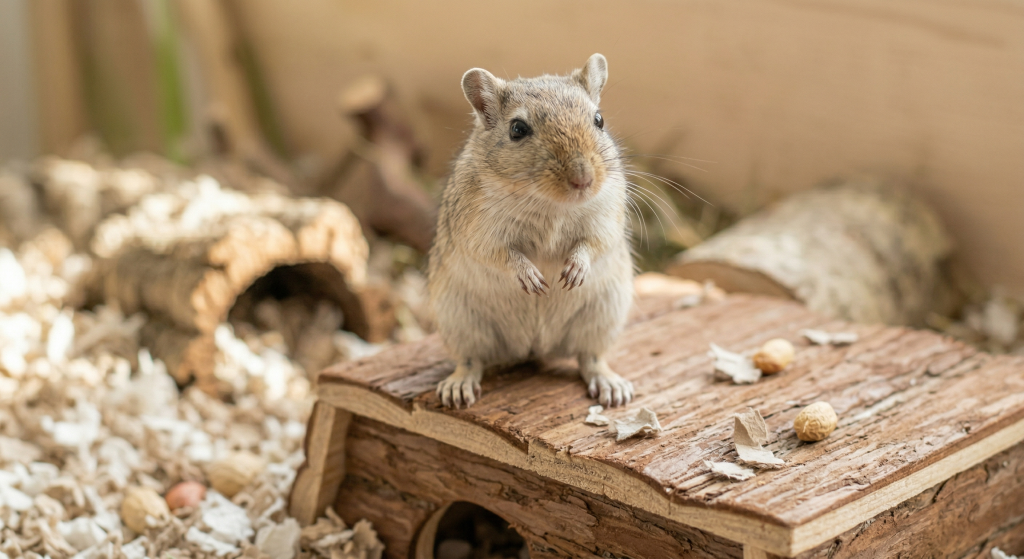
Few things are more endearing than a gerbil standing tall on its hind legs with its paws tucked against its chest. Often called the “meerkat pose,” this behavior is a sign of alertness and curiosity.
Gerbils have excellent hearing and a strong sense of smell, but their eyesight is better at detecting motion than fine details. When a gerbil stands up, it’s trying to get a better vantage point to survey its surroundings. If you walk into the room and your gerbil pops into this pose, it’s checking to see who is there.
You can use this moment to interact with your pet. When they are standing up and observing you, try offering a small, healthy snack. It’s a great way to reward their curiosity and build a trusting relationship. For safe snack ideas, consult our Gerbil Diet and Nutrition Guide.
Final Thoughts
Paying attention to your gerbil’s behavior transforms you from a caretaker into a true companion. When you understand why they dig, thump, and chew, you can tailor their environment to match their instincts. A stimulated, understood gerbil is a happy one.
Remember that you know your pet best. If you notice sudden changes in their routine—such as a gerbil who stops chewing or hides constantly—it could be a sign of illness. Never hesitate to consult an exotic animal veterinarian. Reputable resources like PetMD also provide veterinary-reviewed guides for small pet health.
For more tips and comprehensive guides on small animal care, continue exploring petstory.org.