
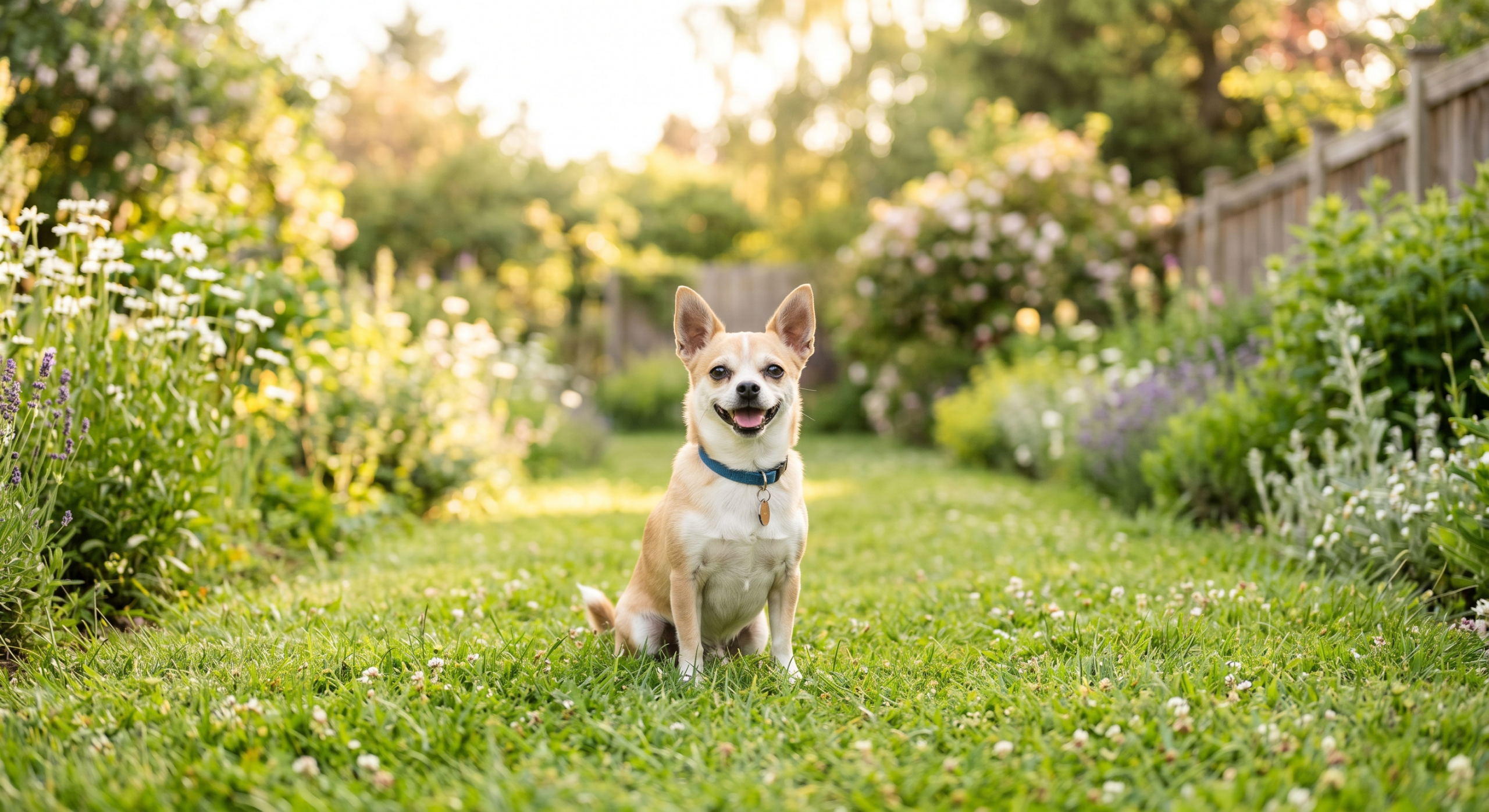
The dog breeds with the longest lifespans are best identified through population research rather than broad lifespan ranges repeated across breed guides. Some breeds have higher median life expectancy estimates than others, but the numbers depend on the population studied and the method used to calculate them.
A major Dogs Trust study examined data from 584,734 dogs in the UK, including 284,734 deaths, and reported life expectancy estimates for 155 breeds. A separate study by the Royal Veterinary College (RVC), through its VetCompass programme, calculated life expectancy at birth using veterinary records from a different sample. Both studies offer useful evidence, but their results should not be combined as though they measure exactly the same thing.
Understanding how these studies work helps explain why breed, body size and facial structure are associated with differences in canine longevity. It also puts everyday care into perspective: nutrition, body condition, appropriate exercise and veterinary support can contribute to a dog's wellbeing, even though no routine can guarantee a particular number of years.
Table of Contents
- Why Do Some Dog Breeds Live Longer Than Others?
- Dog Breeds With the Longest Lifespans: Dogs Trust Findings
- What RVC Research Adds to the Picture
- The Role of Body Size and Face Shape
- Genetics and Breed-Specific Health Considerations
- How Nutrition, Weight, Exercise and Veterinary Care Matter
- Practical Ways to Support a Longer, Healthier Life
- Frequently Asked Questions
- Conclusion
Why Do Some Dog Breeds Live Longer Than Others?
There is no single explanation for why one dog breed tends to live longer than another. Canine longevity reflects a combination of inherited characteristics, body size, physical structure and health conditions that occur more frequently in some breeds.
The Dogs Trust study examined several factors associated with lifespan, including breed, parental lineage, body size, facial shape and sex. Its findings show that population-level life expectancy differs across breeds and groups. They do not mean that any one characteristic determines how long an individual dog will live.
Genetics and breeding history can influence the health risks a dog inherits. The way a breed has been developed may affect genetic diversity, the frequency of inherited conditions and physical features that influence health. Dogs Trust notes that breeding practices focused heavily on particular appearances or traits can contribute to hereditary disease and conformation-related problems.
Daily care also matters. Maintaining an appropriate body condition, providing a nutritionally complete diet, offering suitable activity and arranging preventive veterinary care can support health throughout a dog's life. These measures cannot remove every inherited risk, but they give owners practical ways to care for their dogs.
Dog Breeds With the Longest Lifespans: Dogs Trust Findings
The Dogs Trust research used records from 18 charities and other organisations and included more than half a million dogs in the UK. The dataset contained 584,734 dogs, including 284,734 deceased dogs. The researchers reported median life expectancy estimates for 155 breeds and crossbred dogs.
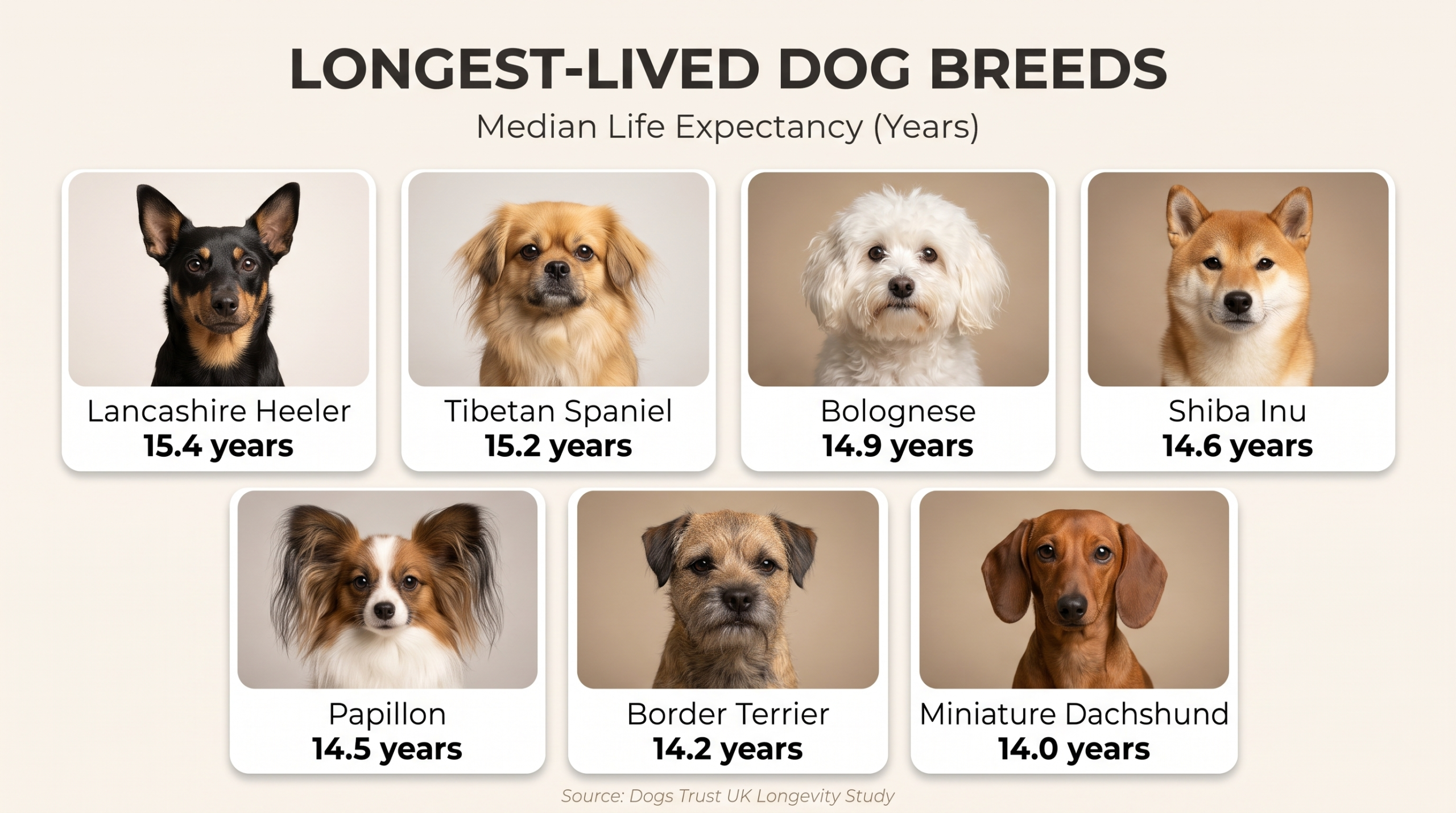
The following seven breeds appear in the Dogs Trust longevity infographic among the highest median estimates reported in the study:
| Breed | Median Life Expectancy |
|---|---|
| Lancashire Heeler | 15.4 years |
| Tibetan Spaniel | 15.2 years |
| Bolognese | 14.9 years |
| Shiba Inu | 14.6 years |
| Papillon | 14.5 years |
| Border Terrier | 14.2 years |
| Miniature Dachshund | 14.0 years |
These values are medians, not averages. A median is the midpoint of the observed lifespan distribution: half of the dogs in the measured population lived longer than that estimate and half lived less. It does not predict the lifespan of a particular puppy or adult dog.
The Dogs Trust results also require geographic context. The researchers explain that the findings describe the UK canine population and may not apply in the same way to other countries, where breed populations, veterinary access and breeding practices can differ. The study identifies patterns and associations; it does not establish the direct cause of every lifespan difference.
Taken together, these findings provide a research-based way to compare dog breeds with the longest lifespans, rather than relying on broad age ranges that may not reflect the populations studied.
For the methodology and the full breed dataset, see the Dogs Trust longevity research, its complete median life expectancy table for 155 breeds and the original Scientific Reports study.
What RVC Research Adds to the Picture
The Royal Veterinary College's VetCompass programme provides a second research-based view of canine lifespan. Its study analysed a random sample of 30,563 dogs that died between January 2016 and July 2020, covering 18 breeds and crossbred dogs. Researchers used veterinary records to develop life tables and estimate life expectancy at birth.
The RVC study estimated overall life expectancy at birth for UK companion dogs at approximately 11.23 years. Among the breeds included, Jack Russell Terriers had the highest estimate, followed by Yorkshire Terriers and Border Collies.
| Breed or Group | Life Expectancy at Birth |
|---|---|
| Jack Russell Terrier | 12.72 years |
| Yorkshire Terrier | 12.54 years |
| Border Collie | 12.10 years |
| Springer Spaniel | 11.92 years |
| Crossbred dogs | 11.82 years |
| Labrador Retriever | 11.77 years |
The RVC figures should not be placed in the same ranking as the Dogs Trust median estimates. Dogs Trust reports median life expectancy from its multi-source UK dataset, whereas RVC calculated life expectancy at birth from a separate veterinary-record sample using life-table methods. The studies also differ in their sample composition and observation periods.
For example, the RVC study estimated life expectancy at birth for French Bulldogs at 4.53 years, while the Dogs Trust study reported a median estimate of 9.8 years for the breed. The difference illustrates why readers should check the measure and dataset behind a lifespan statistic rather than selecting one figure as universally correct.
Read the RVC VetCompass research summary or the full Scientific Reports paper for its methods and breed-level life tables.
The Role of Body Size and Face Shape
Body size is one of the clearest patterns in the Dogs Trust research. Within its UK dataset, small-sized breeds had a median life expectancy of 12.7 years, medium-sized breeds 12.5 years and large-sized breeds 11.9 years. The study also found that large-sized dogs had a 20% increased risk of a shortened lifespan compared with small-sized dogs.

This is a population-level relationship, not a rule for every dog. It does not mean that every small dog will outlive every large dog, or that body size alone determines an individual dog's future. The study's size categories also should not be converted into universal lifespan ranges for toy, small, medium, large and giant dogs.
Facial structure was another factor associated with lifespan. Dogs with brachycephalic, or flat-faced, skull shapes had a 40% increased risk of a shorter lifespan compared with dogs with more typical skull shapes in the Dogs Trust analysis. The study reported median estimates of 9.8 years for French Bulldogs, 13.1 years for Border Collies and 13.2 years for Golden Retrievers.
These findings help explain why prospective owners may wish to consider a breed's physical structure and known health needs as well as its appearance, temperament and activity level. They are not individual predictions, but they provide useful context when comparing breeds.
Genetics and Breed-Specific Health Considerations
A dog's inherited characteristics can influence its susceptibility to certain health conditions. Some breeds have a higher likelihood of particular inherited disorders, while others have physical traits that may affect normal function or comfort.
Selective breeding can shape a breed's appearance and temperament, but breeding practices that narrow genetic diversity or prioritise specific physical features can also increase the frequency of inherited conditions and conformation-related problems. Dogs Trust discusses these issues in its research background and found that ancestral lineage was associated with differences in breed lifespan.
That does not mean every dog in a breed will develop a particular condition, or that a breed described as active, ancient or traditionally used for work is automatically healthier. It is more useful to understand the health considerations relevant to the individual breed and ask breeders or rescue organisations about available health information.
For a puppy, a responsible breeder should be willing to discuss relevant screening for the parents and provide appropriate health-test documentation. For an adopted dog, existing veterinary records and a health assessment can help identify conditions that may need monitoring.
Breed-related risk is useful information, not a prediction of what will happen to an individual dog. Regular veterinary care and attention to changes in appetite, breathing, movement, behaviour or energy help owners respond to the dog's actual needs.

How Nutrition, Weight, Exercise and Veterinary Care Matter
Breed and genetics influence the risks a dog may face, but everyday care also contributes to health and quality of life. Maintaining a suitable body condition, choosing an appropriate diet and adjusting activity to the dog's needs are practical parts of responsible care.
Maintaining a Healthy Body Condition
A long-term study involving 48 Labrador Retrievers provides useful evidence about the relationship between food intake, body condition and lifespan. Researchers paired dogs from the same litters and assigned one dog in each pair to a control-fed group and the other to a diet-restricted group. The restricted group received 25% less food under the study's controlled feeding protocol.

The diet-restricted dogs lived a median of 1.8 years longer than the control-fed dogs. The researchers also reported a later onset of some age-related conditions. This finding is important, but it came from a small, controlled study of Labrador Retrievers and should not be interpreted as a feeding prescription for all dogs. The two-decade findings are summarised in the published review, Diet Restriction and Ageing in the Dog.
Owners should not reduce a dog's food by 25% based on this study. Calorie needs vary with age, body condition, activity, health and individual metabolism. A veterinarian can help assess body condition and recommend an appropriate daily intake. The original research, Effects of Diet Restriction on Life Span and Age-Related Changes in Dogs, provides details of the Labrador study.
Choosing Suitable Nutrition
A suitable diet should provide complete and balanced nutrition for the dog's life stage and individual health needs. Puppies, adult dogs and senior dogs may have different nutritional requirements, while some dogs need a diet selected with veterinary guidance.
The first ingredient listed on a food label is not, by itself, a reliable measure of overall nutritional quality. The WSAVA Global Nutrition Toolkit recommends considering who formulates the food, the manufacturer's nutritional expertise, quality-control procedures, nutritional adequacy and whether the diet is appropriate for the individual animal.
Food labels also provide information about nutritional adequacy, calorie content and the life stage for which a product is intended. For a practical explanation of these details, see PetStory's guide to reading dog food labels.
Treats should be included in the dog's overall calorie intake. WSAVA's guidance recommends that treats make up less than 10% of a dog's daily calories, while also advising owners to ask their veterinary team about a suitable quantity for the individual dog. See the WSAVA guide to feeding treats for further details.
For broader feeding information, explore the PetStory Dog Nutrition resources.
Providing Appropriate Exercise and Mental Stimulation
Regular activity can help dogs maintain muscle, mobility and a healthy body condition. The right amount and type of exercise depend on age, breed, physical condition and any medical limitations.
Puppies need opportunities for play and exploration that suit their stage of development. Adult dogs generally benefit from consistent walks, play and other activities suited to their energy and ability. Senior dogs may need shorter outings, gentler movement or changes to their routine as mobility and stamina change.
Mental activity is also valuable. Training, scent games, food puzzles and calm opportunities to explore provide enrichment and encourage engagement. Exercise should be adapted rather than treated as a fixed target for every dog. A veterinarian can help adjust activity when a dog has joint problems, heart conditions, breathing difficulties or other health concerns.
Keeping Preventive Veterinary Care Consistent
Regular veterinary examinations give the care team opportunities to review weight, dental health, mobility and general condition. The American Animal Hospital Association recommends a veterinary examination at least once a year for all pets, while noting that some animals need more frequent visits depending on age, breed, health and environment.

For senior dogs, AAHA recommends examinations every six months to help identify and monitor age-related health changes. Owners should discuss the appropriate schedule with their veterinarian, especially when a dog has an ongoing condition or breed-related health considerations. See the AAHA guidance on veterinary visit frequency and its senior-pet care recommendations.
Dental care is another part of routine health maintenance. Regular tooth brushing, when introduced gradually and done with suitable products, can help manage plaque. Veterinary dental assessments can identify problems that need professional attention. PetStory's guide to dog dental care at home explains practical ways to support everyday oral hygiene.
Practical Ways to Support a Longer, Healthier Life
No routine can guarantee a particular lifespan, but consistent care can support a dog's health and comfort through each life stage. These habits provide a practical starting point:
- Monitor body condition. Check your dog's weight and body shape regularly. Ask the veterinary team to assess body condition and recommend an appropriate feeding amount.
- Choose a nutritionally suitable diet. Select a complete and balanced food for the dog's life stage and health needs. Review major diet changes with a veterinarian.
- Keep activity appropriate. Provide regular physical exercise and mental enrichment, adjusting the routine as your dog ages or develops health limitations.
- Maintain preventive care. Follow veterinary recommendations for examinations, vaccinations, parasite prevention and any breed-relevant health screening.
- Look after dental health. Brush your dog's teeth when possible and arrange veterinary dental assessments as recommended.
- Pay attention to changes. Changes in appetite, breathing, movement, sleep, behaviour or energy can indicate a health concern. Discuss persistent or sudden changes with a veterinarian.
A consistent daily routine can make these habits easier to maintain. PetStory's guide to a daily dog care routine offers additional practical ideas for organising everyday care.
For readers considering an older companion, PetStory's guide to adopting a senior dog explains the benefits and practical considerations involved in giving a senior dog a home.
Frequently Asked Questions
1. Which dog breed has the longest median lifespan in the Dogs Trust study?
The Lancashire Heeler had the highest median life expectancy estimate in the Dogs Trust UK study at 15.4 years. The Tibetan Spaniel followed at 15.2 years. These are population estimates and do not predict how long an individual dog will live.
2. Do small dogs generally live longer than large dogs?
The Dogs Trust study found median life expectancy estimates of 12.7 years for small-sized breeds, 12.5 years for medium-sized breeds and 11.9 years for large-sized breeds. This describes a population pattern, not a guarantee for every dog.
3. Are Dogs Trust and RVC dog lifespan figures directly comparable?
No. Dogs Trust reports median life expectancy estimates from a large UK dataset, while the RVC study calculates life expectancy at birth using life-table methods and a separate veterinary-record sample. The figures should be described separately rather than combined into one ranking.
4. Can maintaining a healthy weight help a dog live longer?
A long-term controlled study of 48 Labrador Retrievers found that the diet-restricted group lived a median of 1.8 years longer than the control-fed group. The result supports the importance of healthy body condition, but it is not a recommendation to restrict every dog's food by the same amount. Ask a veterinarian to assess your dog's individual calorie needs.
5. Does the Dogs Trust study show that Chihuahuas live 15 to 18 years?
No. The Dogs Trust UK breed table reports a median life expectancy of 11.8 years for Chihuahuas in its dataset. Other sources may report different ranges because they use different populations, methods and measures. A population estimate should not be treated as an individual dog's expected lifespan.
Conclusion
Research provides a more useful picture of canine longevity than broad lifespan ranges presented without a source. The Dogs Trust and RVC studies show how estimates vary by breed and how body size and facial structure are associated with differences in lifespan. Their findings also demonstrate why median life expectancy and life expectancy at birth should not be treated as interchangeable measures.
For readers comparing dog breeds with the longest lifespans, the most useful approach is to consider breed-level estimates alongside the research methods and populations behind them.
A dog's breed can offer useful context, but it cannot determine an individual future. Suitable nutrition, healthy body condition, appropriate activity, dental care and regular veterinary support all contribute to wellbeing. The most useful care plan is one that reflects the dog's own age, health, needs and circumstances.
Sources and Further Reading
The following research papers and veterinary resources provide further information on canine longevity, nutrition and preventive care:
- Dogs Trust: Longevity of UK Dog Breeds - Study background, population findings and breed-level longevity results.
- Dogs Trust: Median Life Expectancy Table for 155 Breeds - Breed estimates, confidence intervals and sample counts.
- Scientific Reports: Longevity of Companion Dog Breeds - Original Dogs Trust research publication.
- RVC VetCompass: Remaining Life Expectancy of Dogs - Summary of the RVC life-table study.
- Scientific Reports: Life Tables of Annual Life Expectancy and Mortality for Companion Dogs in the United Kingdom - Original RVC VetCompass research paper.
- Journal of the American Veterinary Medical Association: Effects of Diet Restriction on Life Span and Age-Related Changes in Dogs - Original controlled lifetime feeding study involving Labrador Retrievers.
- Diet Restriction and Ageing in the Dog: Major Observations over Two Decades - Review summarising the longer-term findings, including the median lifespan difference.
- WSAVA: Guidelines on Selecting Pet Foods - Questions about formulation, quality control and nutritional adequacy.
- WSAVA: Feeding Treats to Your Dog - Guidance on treats, calorie intake and healthy weight.
- AAHA: Frequency of Veterinary Visits - Guidance on routine veterinary examinations.
- AAHA: Supporting Your Senior Pet - Veterinary care recommendations for older dogs and cats.
About the Author
Irfan Hyder is the editor of PetStory.org, an independent publication covering pet care, adoption, nutrition and behaviour. He has spent around 8 years caring for pets at home, including his Golden Retriever, Max, his Persian cat, Luna, and pet birds, and writes alongside veterinary and reputable sources.
Explore More Dog Breed Guides
Explore PetStory's dog breed resources for more information on breed characteristics, health considerations and responsible dog ownership.