
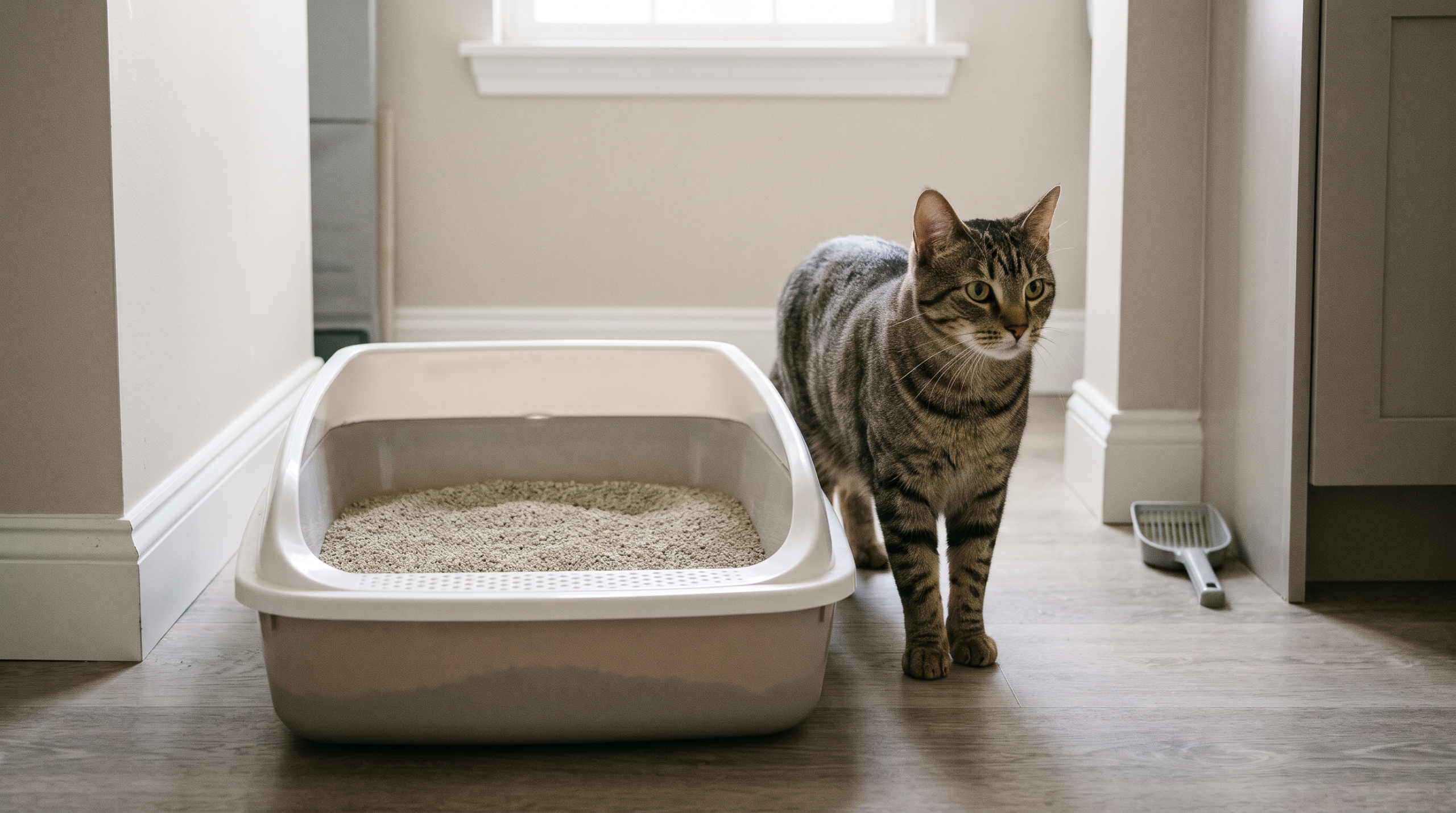
A cat that suddenly starts peeing on the carpet, leaving faeces beside the litter box or avoiding its usual toilet can leave an owner wondering what has changed. The first reaction is often to replace the litter, move the box or try a different cleaning product.
Sometimes one of those changes helps. But litter box problems can also be a sign of pain, urinary disease, digestive trouble or stress. A cat may continue using the box occasionally while avoiding it at other times, which makes the underlying issue harder to recognise.
The important thing is to avoid assuming that the cat is being difficult or has simply developed a bad habit. Medical problems should be considered first, followed by the litter box itself, the surrounding environment and any recent changes at home.
Table of Contents
- When Is a Cat's Litter Box Problem a Medical Emergency?
- Common Signs of Litter Box Problems in Cats
- Medical Reasons Why Cats Stop Using the Litter Box
- Urine Spraying vs. Urinating Outside the Litter Box
- Litter Box Setup Problems That Can Cause Avoidance
- Choosing the Right Cat Litter
- Stress, Anxiety and Multi-Cat Household Conflicts
- How to Solve Cat Litter Box Problems: A Step-by-Step Approach
- How to Clean Cat Urine and Prevent Repeat Accidents
- Litter Box Problems in Kittens and Senior Cats
- When Should You Consult a Veterinary Behaviour Specialist?
- Frequently Asked Questions
- Veterinary and Animal-Care References
- Conclusion
When Is a Cat's Litter Box Problem a Medical Emergency?
Some changes in litter-box behaviour can wait for a scheduled veterinary appointment, but difficulty passing urine is different.
A cat with a urinary obstruction may repeatedly enter the litter box, squat or strain, and leave without producing a normal amount of urine. Owners sometimes mistake this for constipation because the cat appears to be pushing without success.
Other warning signs include crying while attempting to urinate, frequent licking around the genital area, blood in the urine and increasing restlessness. As the condition progresses, a cat may become lethargic, vomit or show obvious distress.
A urethral obstruction occurs when urine cannot pass normally through the urethra, the tube that carries urine out of the body. It is more common in male cats because their urethra is longer and narrower. However, suspected obstruction in any cat needs immediate veterinary attention.
Cornell University's veterinary explanation of FLUTD and urethral obstruction identifies this as a true medical emergency. Do not wait to see whether the cat improves, and do not try to treat the problem by changing its food, encouraging it to drink or giving home remedies.
Blood in the urine, repeated painful urination or a sudden change in toileting habits also deserves prompt veterinary assessment, even when the cat is still passing some urine.
Common Signs of Litter Box Problems in Cats
Not every cat with a litter-box problem completely stops using its usual toilet. Sometimes the changes are subtle, and owners may notice them only after finding repeated accidents around the house.
Common signs include:
- Urinating on carpets, bedding, furniture or other household surfaces.
- Defecating beside the litter box or in another room.
- Using the litter box for urination but choosing another place to defecate, or the other way around.
- Visiting the litter box repeatedly without producing much urine or faeces.
- Entering the box and leaving without eliminating.
- Scratching the floor or surrounding area instead of using the litter.
- Spraying small amounts of urine on walls, doors or furniture.
- Spending longer than usual trying to find a suitable place to eliminate.
It helps to pay attention to whether the problem involves urine, faeces or both. A cat with painful urination may show a very different pattern from one experiencing constipation or an aversion to the litter itself.
Make a note of where the accidents occur, how often they happen and whether anything changed shortly before the problem began. These details can help a veterinarian investigate the cause. Cornell's guide to feline house-soiling explains why medical conditions, litter-box aversion and location preferences all need to be considered.
Medical Reasons Why Cats Stop Using the Litter Box
A cat that previously used its litter box reliably may begin avoiding it when elimination becomes uncomfortable or difficult. Sometimes the cat starts associating the box with the pain it experienced during an earlier episode.
Medical problems can also increase the frequency of urination or defecation, leaving a cat unable to reach the box in time. The AAFP and ISFM house-soiling guidelines recommend considering medical conditions alongside marking behaviour and environmental or social causes.
Urinary Conditions
Feline lower urinary tract disease (FLUTD) is a general term covering several conditions that affect a cat's bladder and urethra. It is not one specific disease.
Affected cats may urinate more frequently, strain, cry while urinating, pass blood or begin eliminating outside the litter box. Possible causes include:
- Feline idiopathic cystitis (FIC): Bladder inflammation associated with urinary discomfort. The word idiopathic means that no specific underlying cause has been identified after appropriate investigation.
- Urinary stones: Mineral formations that develop in the urinary tract and may irritate the bladder or obstruct urine flow.
- Urinary tract infections: Bacterial infections can cause painful or frequent urination. Their likelihood varies with the individual cat and its health.
- Urethral plugs or obstruction: Material or other problems can block the urethra and prevent normal urine flow.
FIC is a common diagnosis in cats with lower urinary tract signs, but it should not be assumed without investigating other possible causes. There is no single test that confirms FIC; veterinarians make the diagnosis after evaluating the cat and ruling out identifiable conditions. Cornell's FLUTD guidance describes the different conditions that can produce these signs and why examination and urine testing may be needed.
Kidney disease, diabetes mellitus and hyperthyroidism can also affect litter-box habits. These conditions may increase thirst and urine production, meaning the cat needs to urinate more often and the litter box may become dirty more quickly.
Food also contributes to a cat's overall water intake. Wet food generally contains more moisture than dry food, although the right diet depends on the cat's health and individual needs. A dietary change cannot treat a urinary blockage or replace veterinary care. For a general comparison of food moisture and feeding options, see PetStory's cat feeding guide to wet and dry food.
Digestive and Bowel Conditions
A litter-box problem involving faeces may be connected to constipation, diarrhoea or another digestive condition.
A constipated cat may visit the box repeatedly, strain and produce only small amounts of hard stool. Diarrhoea can create urgency, making it difficult to reach the litter box in time.
Other possible causes include intestinal parasites, gastrointestinal inflammation, rectal problems and conditions that make passing stool painful. A cat that associates the litter box with painful defecation may begin choosing another location. This behaviour does not necessarily mean the digestive problem has disappeared; the underlying discomfort may still be present.
Veterinary investigations can include a physical examination, faecal testing and other diagnostic procedures based on the cat's symptoms. Cornell's house-soiling guidance also identifies digestive conditions that cause painful or urgent defecation as possible contributors.
Pain and Mobility Problems
Getting into a litter box requires a cat to climb over the edge, turn around, squat and move comfortably. Arthritis, joint pain or weakness can make these movements difficult.
A senior cat that previously used a high-sided box without trouble may begin avoiding it because stepping over the entrance hurts. A box placed upstairs may also become inconvenient if climbing stairs has become uncomfortable.
Vision problems and age-related changes can create additional difficulties, particularly when the litter box is located in a dim or unfamiliar area.
For an older cat, litter-box avoidance should not automatically be dismissed as an inevitable part of ageing. The AAFP and ISFM house-soiling guidelines recommend considering orthopaedic and neurological problems during the veterinary assessment.
Urine Spraying vs. Urinating Outside the Litter Box
Finding urine on furniture or walls does not always mean a cat has stopped using its litter box. Some cats spray urine to leave scent marks, while others urinate outside the box because they need to eliminate but avoid their usual toilet.
These behaviours can look similar at first, but there are some useful differences.
| Feature | Urine Spraying or Marking | Urinating Outside the Box |
|---|---|---|
| Typical posture | Usually standing, with the tail raised or twitching. Some cats may mark while squatting. | Usually squatting. |
| Common surface | Often vertical surfaces such as walls, doors or furniture. | Usually horizontal surfaces such as floors, carpets or bedding. |
| Urine amount | Often a small amount. | Often a normal bladder-emptying amount. |
| Possible purpose | Scent communication and territorial marking. | Emptying the bladder away from the usual toilet. |
| Possible triggers | Social tension, unfamiliar cats or changes in the environment. | Medical discomfort, box aversion, litter preference, access or stress. |
A spraying cat may continue using the litter box normally for ordinary urination while leaving small deposits elsewhere. In contrast, a cat that has developed a litter-box aversion may avoid its regular toilet more consistently.
These are typical patterns, not definitive diagnostic rules. Some cats mark horizontal surfaces, and medical problems can occur alongside marking behaviour. The MSD Veterinary Manual's comparison of urine marking and undesirable toileting explains the differences in posture, urine volume and location. A veterinary examination is still important before concluding that urine outside the box is purely behavioural.
Litter Box Setup Problems That Can Cause Avoidance
Sometimes the problem is not the cat's health but something about the toilet itself. A box that is too small, difficult to access, poorly placed or rarely cleaned may become an unattractive place to eliminate.
Number of Litter Boxes
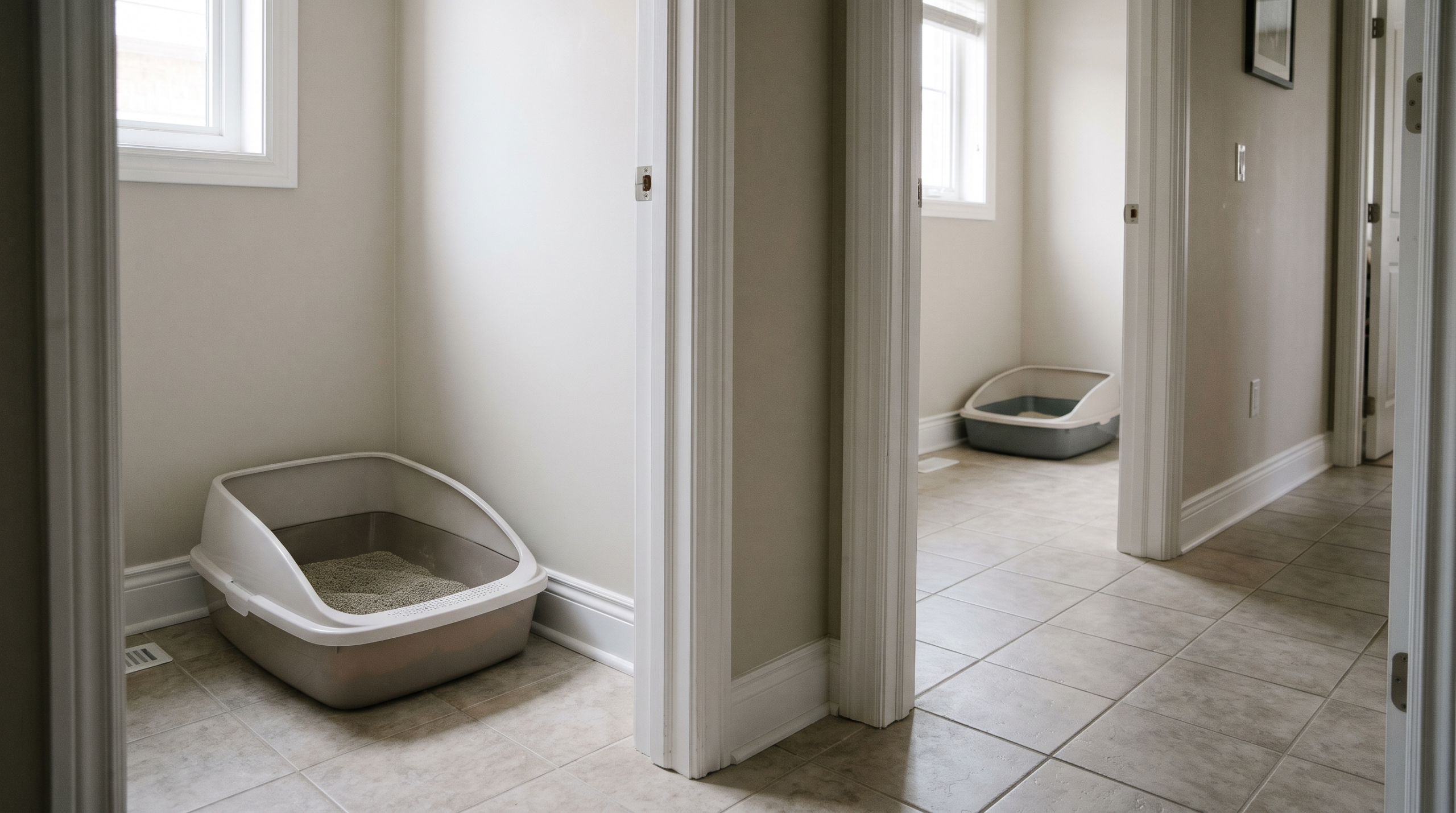
A commonly recommended guideline is one litter box for each cat, plus one additional box. For example, a household with two cats would generally start with three litter boxes. A single-cat household can also benefit from having two boxes in separate locations.
The number alone is not enough. Boxes should be placed in different accessible locations rather than grouped together in one corner. In some multi-cat homes, cats belong to separate social groups that do not comfortably share resources. The 2021 AAHA/AAFP Feline Life Stage Guidelines recommend considering the number of cats and their social groups when planning litter-box access. Ohio State University's litter-box guidance also discusses practical placement and maintenance.
Choosing the Right Litter Box Size
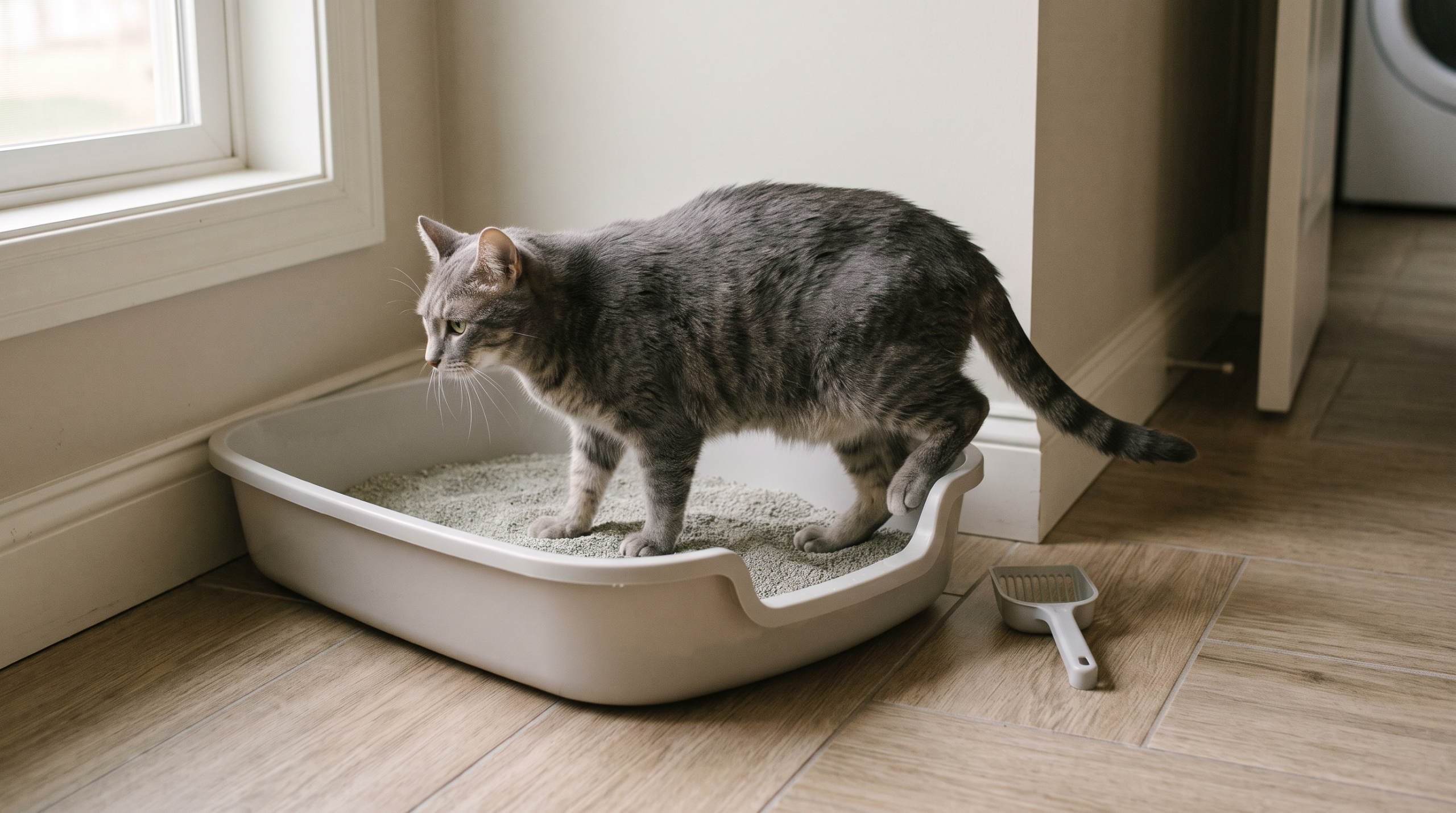
A cat needs enough room to turn around, dig, squat and cover its waste without constantly touching the sides.
The AAFP/ISFM house-soiling guidelines recommend a rectangular litter box approximately 1.5 times the cat's length, measured from the nose to the base of the tail. The guidelines note that many commercially available boxes are smaller than this recommendation.
A large storage container with an appropriately lowered entrance can sometimes provide more useful space than a small purpose-made litter tray. The important thing is that the sides remain safe and accessible for the individual cat. The AAFP and ISFM guidelines explain the recommended dimensions and possible alternatives.
Covered vs. Uncovered Litter Boxes
Some owners prefer covered boxes because they contain scattered litter and keep the contents out of sight. Cats, however, may have different preferences.
Many cats use uncovered boxes readily because they provide room to move, allow smells to escape and make it easier to see the surroundings. Some cats still accept covered boxes, provided they are large enough and kept clean. Rather than assuming that one design suits every cat, observe which option your cat uses more comfortably. Cornell's litter-box recommendations discuss the preferences commonly seen in cats.
Accessibility and Entry Height
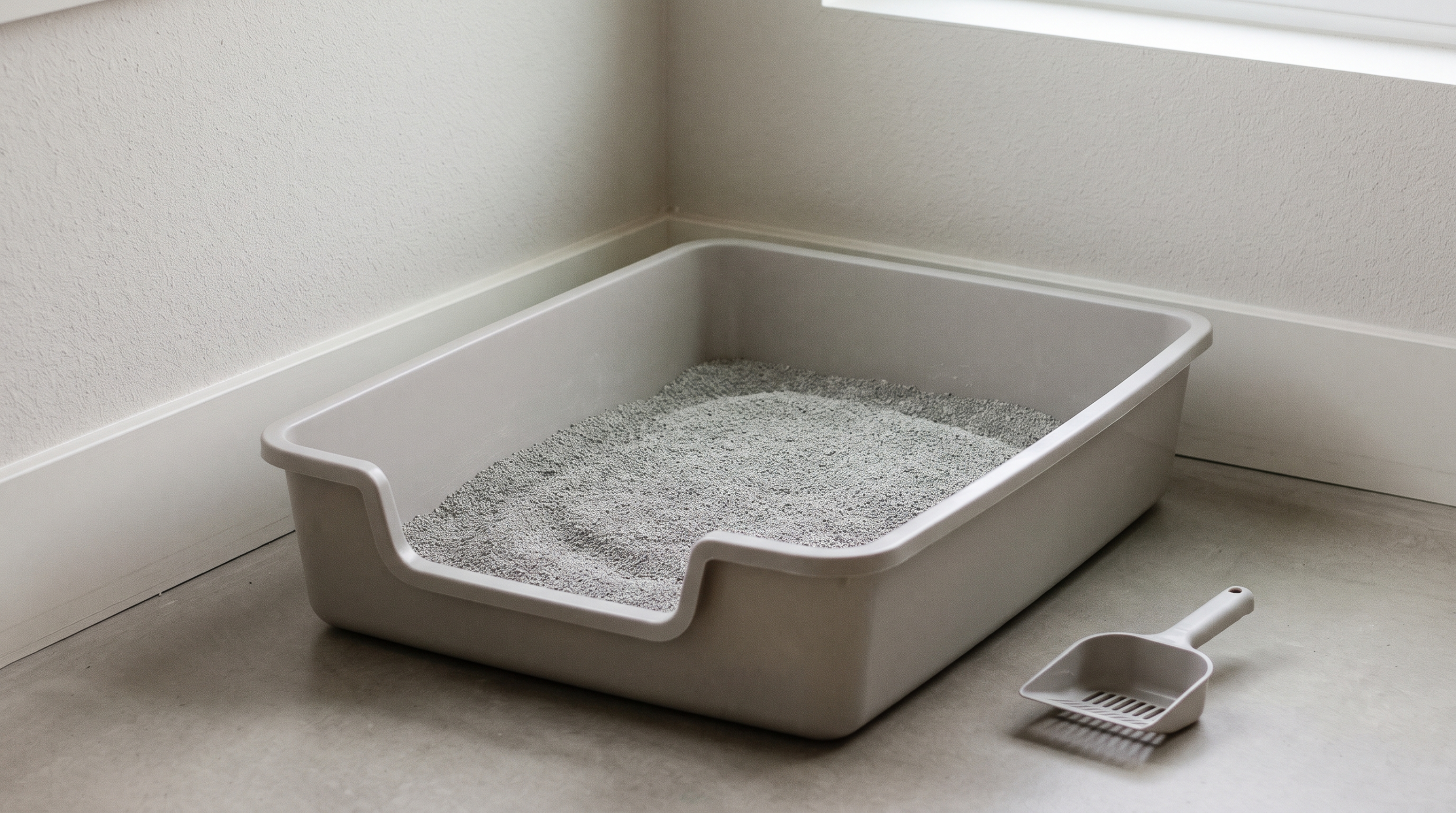
Kittens, senior cats and cats with joint problems may struggle with high-sided litter boxes. A low-entry tray can make getting in and out much easier. Some designs have higher sides around the remaining edges to contain litter while keeping the entrance low.
The 2022 ISFM/AAFP Cat Friendly Veterinary Environment Guidelines recommend appropriately sized trays with low sides or a low entry to make access easier for cats that are unwell or have mobility difficulties.
Litter Box Location
Cats generally benefit from a quiet, accessible place where they can use the litter box without being startled or interrupted. Avoid locations beside washing machines, dryers, noisy appliances or busy doorways. A box should not be placed where another animal can corner the cat or block its way out.
Keep litter boxes away from food and water bowls. In a multi-storey home, provide access on different floors, especially when an older or less mobile cat is unable to manage stairs comfortably.
If the usual litter-box area is tucked behind furniture or inside a tight space, try a more open location that still gives the cat some privacy. When bringing a newly adopted cat home, setting up a quiet room with an accessible litter box, familiar supplies and a comfortable hiding place can make the transition easier. Our guide to preparing your home for a newly adopted cat explains how to arrange these essentials.
Choosing the Right Cat Litter
A litter box can be the correct size and in a suitable location but still be avoided because the cat dislikes the litter inside it.
Cats use their paws to investigate and interact with litter. A change in texture, strong fragrance or unfamiliar material may be enough to make an established litter routine less appealing.
Many cats prefer fine-grained, unscented litter. Cornell University's house-soiling guidance recommends unscented, finer-textured litter as a useful starting point. The 2022 ISFM/AAFP guidelines also describe unscented clumping litter as generally preferred. Individual preferences still matter, so these recommendations are a starting point rather than a rule for every cat.
A few characteristics are worth considering:
- Scent: Strongly perfumed litter and deodorising products may discourage some cats. Unscented litter is often a sensible starting choice.
- Texture: Many cats accept fine, sand-like litter more readily than coarse pellets. Some cats with sore paws may find certain pellet materials uncomfortable.
- Clumping or non-clumping: Both are available, but clumping litter can make daily removal of urine deposits easier.
- Depth: A shallow layer is often preferred. Cornell suggests around one to two inches as a common starting point, although the cat's digging and burying habits can help guide adjustments.
- Consistency: A familiar litter may be more acceptable than a sudden switch to a new material or fragrance.
If you need to change litter, place a second box containing the new option alongside the familiar one. This allows the cat to choose rather than being forced to accept an unfamiliar material overnight. If you have recently adopted a cat, try to find out which litter and litter-box style it used before coming home. Our guide to questions to ask before adopting a rescue cat includes asking about a cat's previous preferences and daily needs.
Stress, Anxiety and Multi-Cat Household Conflicts
Cats are sensitive to changes in their surroundings. A move, new pet, new family member, renovation or change in everyday routine can affect how comfortable a cat feels at home.
Sometimes the trigger is less obvious. An outdoor cat appearing at the window may make an indoor cat feel that its territory is being challenged. A dog that frequently approaches the litter-box area may make the cat reluctant to use it.
Multi-cat households can be especially complicated. Two cats may appear to get along but still compete for access to important resources. One cat may wait near a doorway, follow another cat into the litter-box area or make it uncomfortable for the other to leave.
Providing separate litter boxes, food stations, water bowls, resting areas and hiding places can help reduce unnecessary competition. The ASPCA's guidance on litter-box problems discusses how household changes and conflict between cats can contribute to elimination problems. Cornell also identifies environmental stress as one factor associated with feline idiopathic cystitis.
My Experience With Luna: Giving a Rescued Cat Time to Settle In
When we brought Luna home, she was a rescued kitten my dad had found. During the first week, she stayed close to him and often whined for attention. She was still getting used to the people, sounds and routines of a new home.
During the second week, my dad established a predictable routine for her. He fed her three times a day at set times and arranged her initial veterinary checkups. As Luna became more familiar with the household and its daily rhythm, she gradually grew more active, playful and independent.
Luna did not have a litter-box problem, so this is not an example of solving house-soiling. It did remind me that settling into a new home can take time. A predictable routine and a comfortable environment can help a rescued cat feel more secure as it adjusts to unfamiliar surroundings.
A cat's body language can also offer clues about how comfortable it feels. A tucked tail may indicate fear or insecurity, while a puffed-up tail can signal that the cat feels frightened or defensive. These signs need to be read alongside the cat's overall posture and surroundings. PetStory's guide to understanding your cat's tail signals explains how to recognise some common cues.
Indoor cats also need opportunities for play, exploration and mental stimulation. Interactive toys, climbing areas and puzzle feeders can make daily life more engaging. For more practical ideas, read our guide to keeping your indoor cat happy without outdoor risks. Enrichment can support general wellbeing, although it does not replace veterinary assessment when litter-box problems occur.
How to Solve Cat Litter Box Problems: A Step-by-Step Approach
Once a problem starts, it is tempting to change everything at once. However, making several changes without understanding what is happening can make it difficult to tell which adjustment helps.
A more useful approach is to investigate the cause and work through the practical details.
1. Arrange a Veterinary Examination First
If a cat begins urinating or defecating outside the box, contact a veterinarian. Seek emergency care immediately for suspected urinary obstruction. Even when the cat appears otherwise normal, medical causes should be considered before assuming that the problem is behavioural.
2. Keep a Record of the Accidents
Note whether the cat is passing urine or faeces, where the accidents occur and how frequently they happen. Record any straining, changes in urine volume, unusual stool, appetite changes or increased thirst.
If several cats live in the home, try to identify which cat is responsible without frightening or disrupting them. A camera can sometimes help establish a pattern. Never delay emergency care to collect observations.
What to Record Before a Veterinary Visit
- Whether the accident involves urine, faeces or both.
- How frequently the cat visits the litter box and whether it strains or cries.
- Whether the cat passes a normal amount, only a few drops or nothing at all.
- Any blood in the urine, unusual stool or change in stool consistency.
- Changes in appetite, thirst, energy or general behaviour.
- Recent changes in litter type, box location, household routine or other pets.
These observations can help the veterinarian understand the pattern of the problem. Photographs of unusual urine deposits or stools may also be useful, but collecting them should never delay urgent veterinary care.
3. Review the Litter-Box Arrangement
Check whether there are enough boxes, whether they are large enough and whether each cat can reach them without passing another animal or navigating stairs. Consider adding a box in a different location if the existing one is difficult to access.
4. Reconsider the Litter Itself
Look at its texture, scent and depth. Has the brand changed recently? Is the cat reacting to a scented variety or a new pellet material? Offering two different litter options in separate trays can help reveal a preference.
5. Keep the Boxes Clean
Remove waste at least daily, and more often when needed. Wash the tray periodically with warm water and mild, unscented soap. Avoid strong fragrances or cleaning agents that leave an unpleasant smell. The 2021 AAHA/AAFP feline guidelines recommend regular cleaning and avoiding strong chemicals.
6. Clean Accident Areas Thoroughly
Use a suitable enzymatic cleaner on affected surfaces, following the label instructions. Ordinary household cleaning may remove visible stains without fully addressing lingering pet odours.
7. Reduce Household Tension
Provide separate resources in multi-cat homes and give each cat places to rest or retreat. Avoid forcing cats to share a single feeding or toileting area when they are uncomfortable with one another.
8. Follow Up if the Problem Continues
A litter-box problem may have more than one contributing cause. If veterinary treatment or environmental changes do not resolve it, return to the veterinarian and discuss whether further investigation or a behavioural referral is needed.
Punishing a cat, shouting or rubbing its nose in an accident does not teach it to use the litter box. These responses can increase fear and stress, making the problem worse. The AAHA/AAFP feline life-stage guidelines specifically advise against reprimanding cats for eliminating in unwanted locations or using the litter box as punishment.
How to Clean Cat Urine and Prevent Repeat Accidents
Once a cat has urinated outside its litter box, cleaning the area properly is important. A surface may look clean but still retain odour that attracts the cat back to the same spot.
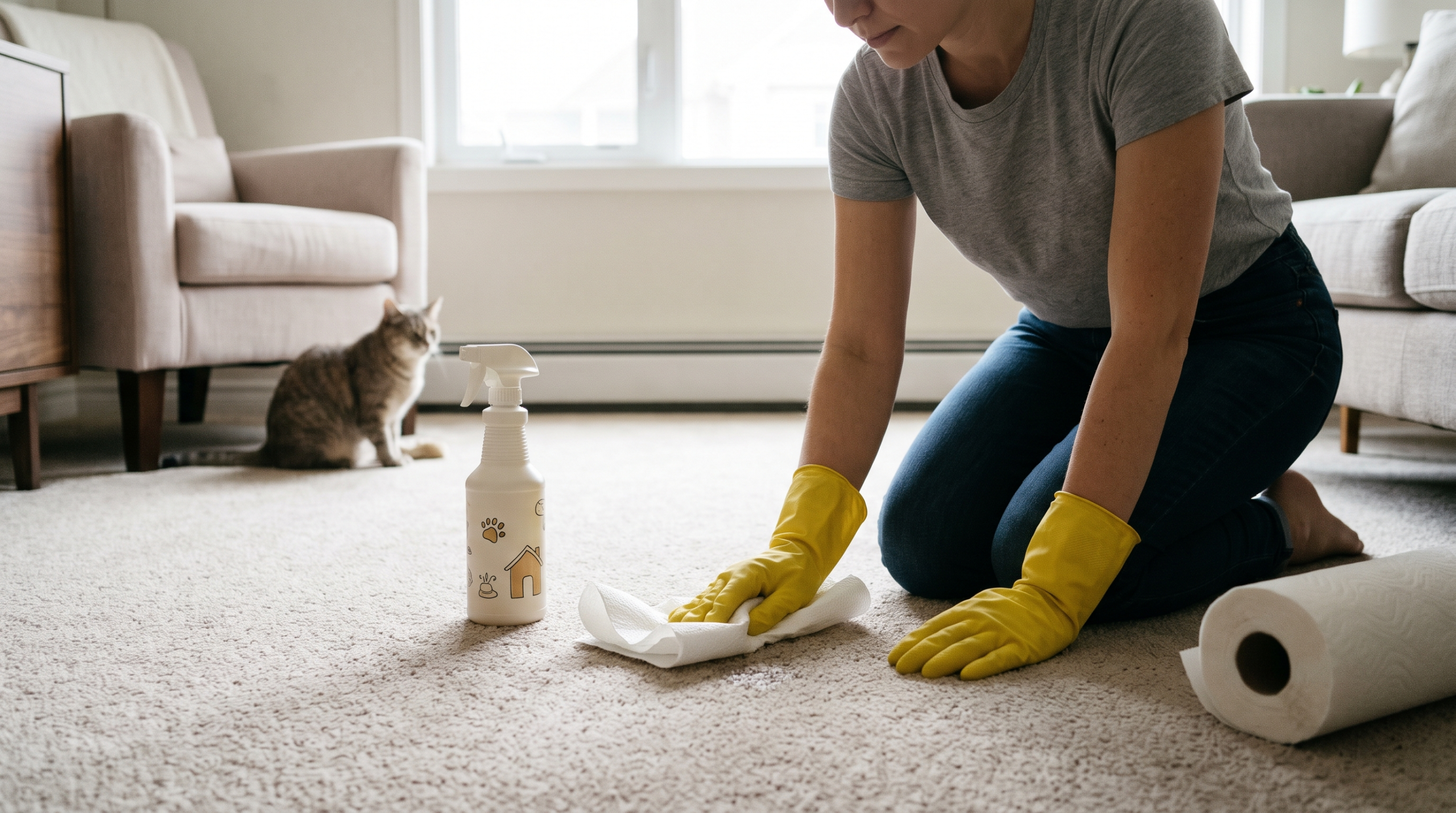
For fresh accidents, begin by blotting up as much urine as possible with absorbent paper towels or a clean cloth. Avoid rubbing, which can spread the affected area.
Use an enzymatic cleaner intended for pet urine and follow the manufacturer's instructions. Check that the product is suitable for the affected surface, particularly carpets, upholstery and delicate flooring.
Avoid ammonia-based products and strongly scented cleaners. The Ohio State University Indoor Pet Initiative's instructions for cleaning cat urine recommend blotting affected areas, using an appropriate cleaner and avoiding ammonia on carpets because its smell may attract a cat back to the area. The ASPCA also recommends enzymatic cleaners for accident areas. Never mix household cleaning chemicals.
If the cat repeatedly uses the same location, consider temporarily preventing access while the area is cleaned and dried. At the same time, provide an appealing, accessible litter box rather than relying on deterrents alone.
Litter Box Problems in Kittens and Senior Cats
Age can influence how easily a cat uses its litter box. A kitten learning where to eliminate has different needs from an older cat that has begun experiencing stiffness or other health changes.
Kittens
Kittens need litter boxes that are easy to enter and large enough to use comfortably as they grow. A low-sided tray can help a young kitten climb in and out without difficulty. Keep the box in an accessible location and use familiar litter where possible, particularly during the first days in a new home.
If a kitten has repeated accidents, diarrhoea, constipation, difficulty urinating or other signs of illness, arrange a veterinary examination rather than assuming it simply needs more training.
First-time kitten owners can also read our new kitten care guide, which covers early litter training, choosing an accessible box and building consistent daily habits.
Senior Cats
Older cats may need a few practical changes around the home. A low-entry litter box, an additional tray on the same floor as their favourite resting place and a clear route to the toilet can make a difference.
However, changes in toileting habits may also reflect kidney disease, diabetes, hyperthyroidism, arthritis or other age-related conditions. The AAHA/AAFP feline life-stage guidelines discuss how age, physical limitations and underlying medical conditions can affect a cat's ability to use its litter box comfortably.
When Should You Consult a Veterinary Behaviour Specialist?
Some cats continue avoiding the litter box even after a medical condition has been treated and the environment has been improved.
In these cases, an experienced veterinary behaviourist or veterinarian with feline behaviour expertise may help identify more complicated issues involving anxiety, urine marking, learned avoidance or conflict between household cats.
A behaviour assessment may consider the cat's daily routine, interactions with other animals, previous experiences with the litter box and the layout of the home. The MSD Veterinary Manual's discussion of feline behaviour problems explains how medical and behavioural factors may need to be considered together.
Medication or other behaviour treatments may be appropriate in selected cases, but they should be recommended by a veterinarian after an individual assessment. Products or supplements should not be treated as guaranteed solutions.
The goal is to make the cat feel comfortable using an appropriate toileting area again, rather than simply preventing it from eliminating in unwanted places.
Frequently Asked Questions
1. Why has my cat suddenly stopped using the litter box?
A sudden change may be related to urinary or digestive discomfort, another medical condition, an unpleasant litter-box experience, stress or a change in litter preference. Arrange a veterinary examination first, especially if the behaviour is new or accompanied by other symptoms. If the cat strains and passes little or no urine, seek emergency care immediately.
2. Why is my cat peeing outside the litter box but pooping inside?
The cat may be experiencing a urinary problem, discomfort while urinating, urine marking or a preference related to the location or type of litter box. A veterinary assessment can help distinguish medical causes from behavioural ones.
3. How many litter boxes should I have for two cats?
A common recommendation is three litter boxes for two cats: one per cat plus one additional box. They should be placed in separate, accessible locations rather than grouped together. If the cats belong to different social groups, they may need separate litter stations.
4. Do cats prefer covered or uncovered litter boxes?
Preferences differ. Many cats use uncovered boxes readily because they provide more room and allow odours to escape, while some accept covered boxes. Cleanliness, box size, location and ease of access may matter as much as the design.
5. What type of litter do most cats prefer?
Many cats prefer fine-textured, unscented litter, often with a shallow layer that allows digging and burying. However, individual preferences vary. Offering different options in separate boxes can help identify what your cat accepts.
6. Why is my cat spraying urine on walls and furniture?
Spraying is a form of scent marking and may occur in response to social tension, unfamiliar cats or environmental changes. Cats commonly stand with their tails raised and deposit small amounts of urine on vertical surfaces. Medical conditions should still be considered before assuming the behaviour is purely territorial.
7. Should I punish my cat for peeing outside the litter box?
No. Punishment can increase stress and make the problem more difficult to resolve. Focus on identifying the reason, arranging veterinary care when needed and making the litter-box environment more comfortable.
8. When should I take my cat to the vet for litter box problems?
Arrange a veterinary examination when your cat begins urinating or defecating outside its box, especially if the change is sudden or persistent. Repeated straining with little or no urine is an emergency and requires immediate veterinary attention.
Veterinary and Animal-Care References
The following veterinary organisations, universities and professional resources provide further information about feline urinary conditions, house-soiling behaviour, litter-box requirements and appropriate cleaning practices.
- Cornell University College of Veterinary Medicine: Feline Lower Urinary Tract Disease — urinary symptoms, feline idiopathic cystitis and urethral obstruction.
- Cornell University College of Veterinary Medicine: Feline Behavior Problems, House Soiling — medical causes, litter-box aversion, urine spraying, litter preferences and box location.
- AAFP and ISFM: Guidelines for Diagnosing and Solving House-Soiling Behavior in Cats — medical assessment, urine marking, litter-box dimensions and environmental management. Published in the Journal of Feline Medicine and Surgery in 2014; the online version includes corrections to the original publication.
- AAHA/AAFP: 2021 Feline Life Stage Guidelines — litter-box number, location, cleaning, accessibility and advice against punishment.
- ISFM/AAFP: 2022 Cat Friendly Veterinary Environment Guidelines — litter-box size, low-entry trays and litter preferences.
- Ohio State University Indoor Pet Initiative: Litter Boxes — box hygiene, size, type, litter substrate, location and number.
- Ohio State University Indoor Pet Initiative: How to Clean-Up Cat Urine — blotting, surface-specific cleaning and enzymatic products.
- ASPCA: Litter Box Problems — common causes, household conflict, litter preferences and cleaning accidents.
- MSD Veterinary Manual: Distinguishing Urine Marking From Undesirable Toileting in Cats — differences in posture, amount and location.
- MSD Veterinary Manual: Behavior Problems of Cats — veterinary assessment and behavioural considerations.
Conclusion: Helping Your Cat Return to the Litter Box
When a cat stops using its litter box, the most useful response is to find out what has changed rather than assuming it has developed a bad habit.
Start by considering the cat's health. Then look closely at the box itself, the litter, its location and the way different animals share the space. Small adjustments may improve an environment that has become uncomfortable, while medical problems may require proper diagnosis and treatment.
There is rarely one solution that suits every cat. A comfortable, accessible litter box, consistent cleaning and a home where the cat can use its resources without feeling threatened provide a good foundation.
Give the cat time, avoid punishment and work with a veterinarian when the problem does not improve. Understanding why the behaviour started is the best way to help it change.
Ready to Learn More?
Explore more practical advice in PetStory's Cat Behavior section, including guidance on feline communication, indoor enrichment and helping cats adjust to new homes.
About the Author
Irfan Hyder is the editor of PetStory.org, an independent publication covering pet care, adoption, nutrition and behaviour. He has spent around 8 years caring for pets at home, including his Golden Retriever, Max, his Persian cat, Luna, and pet birds, and writes alongside veterinary and reputable sources.