
You just signed the adoption papers. Your heart is racing, the carrier is buckled into the back seat, and somewhere between joy and nerves, one thought keeps circling: Is my home actually ready for this new cat?
That feeling is completely normal. Almost every adopter has stood in their living room wondering if they forgot something important. Here's the good news: a little planning goes a long way. When you know how to prepare your home for a newly adopted cat, you set the stage for a calmer arrival and a much smoother start together.
Over the next few minutes, we'll walk through everything step by step. You'll learn what to buy, how to build a safe space, how to cat-proof each room, and what those first days often look like after adoption. No overwhelm — just clear, friendly guidance from one cat lover to another.
Let's get your place ready.
In this article, you'll learn:
- How to create a stress-free safe room for the first days
- How to cat-proof your home room by room
- What the first week looks like and how to build trust over time
Table of Contents
- 1. Why Preparing Your Home Before Adoption Matters
- 2. How to Prepare Your Home for a Newly Adopted Cat: The Essentials
- 3. Create a Safe Space for the First Few Days
- 4. Setting Up the Litter Box the Right Way
- 5. Cat-Proofing Your Home Room by Room
- 6. Bringing Home a New Cat: What to Expect on Day One
- 7. The First Week With a Newly Adopted Cat
- 8. How to Help a Newly Adopted Cat Adjust
- 9. If You Have Kids, Other Cats, or Dogs
- 10. Common Mistakes New Cat Owners Should Avoid
- 11. Supplies Checklist Before Your Cat Comes Home
- 12. When to Call a Vet
- 13. Frequently Asked Questions
- 14. The Bottom Line
1. Why Preparing Your Home Before Adoption Matters
Cats are creatures of habit. They feel safest when their world is predictable, and a brand-new home is anything but that at first. Every smell, sound, and shadow is unfamiliar. A little prep work helps close that gap.
When you get things ready ahead of time, your cat walks into a space that already has food, a clean litter box, and a quiet corner to hide. That structure lowers stress in a big way. A calmer cat settles faster, eats sooner, and starts trusting you earlier.
There's a practical side too. Scrambling to buy litter at 9 p.m. while a scared cat hides behind your couch is nobody's idea of fun. Preparing for a rescue cat before the big day means you can focus on your new friend instead of your shopping list. It also protects your cat from hazards you might otherwise miss in the excitement.
Think of it this way: the effort you put in now pays off in comfort later — for both of you and your new companion.
2. How to Prepare Your Home for a Newly Adopted Cat: The Essentials
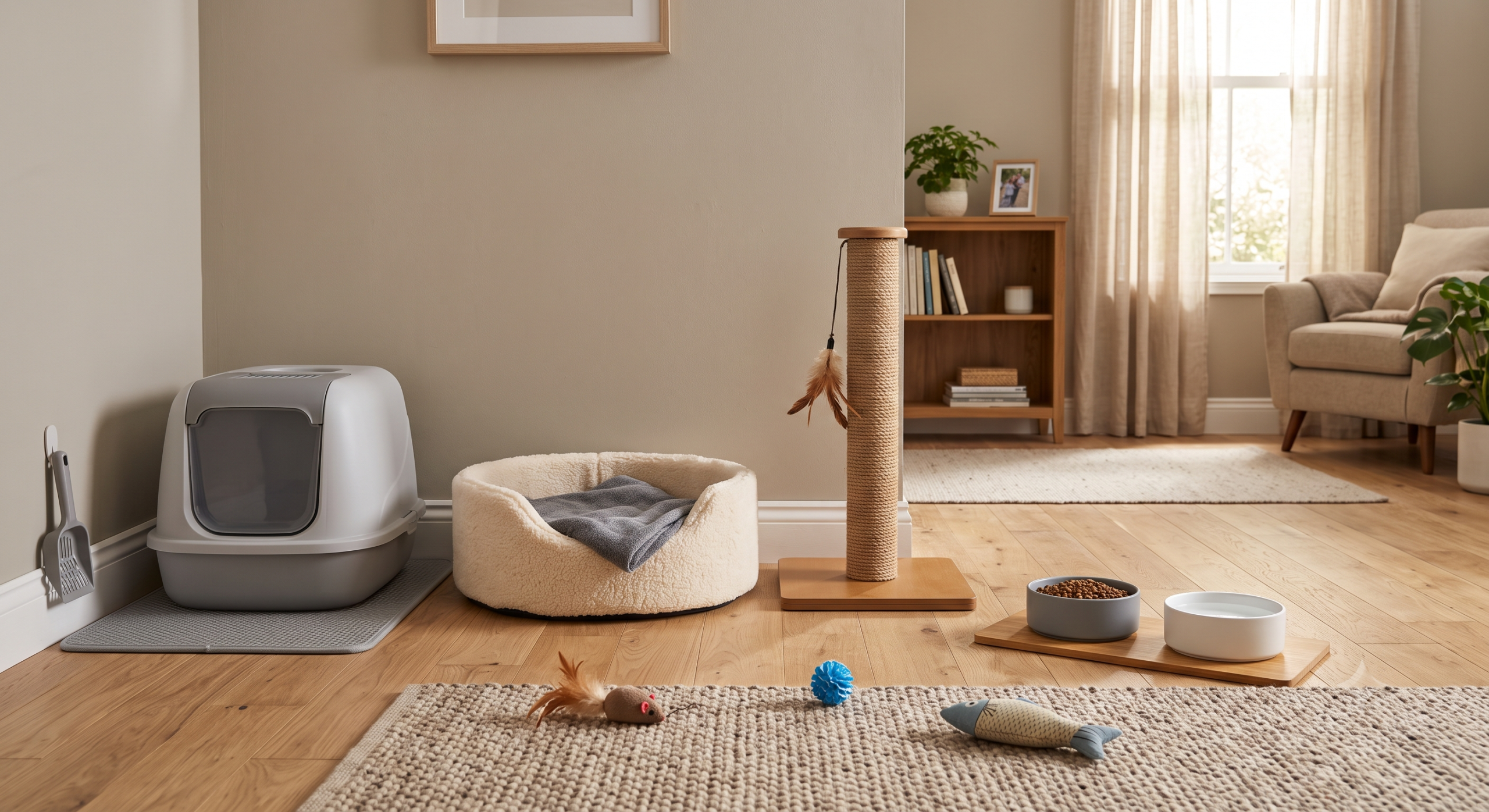
Before your cat comes home, gather the basics. You don't need anything fancy or expensive. You just need the right items in the right places.
Here's what to have ready:
- Food and water bowls. Shallow, sturdy dishes work best. Keep water a little away from food, since many cats prefer them separated.
- Litter box and litter. One box per cat, plus one extra, is the classic rule. If you can, use the same litter type the shelter used to help your cat adjust.
- A bed or quiet resting space. A soft bed, a folded blanket, or even a towel in a box will do. Many cats love cozy, enclosed spots.
- A scratching post or pad. Scratching is natural and healthy. Give your cat a proper outlet from day one, and your furniture will thank you.
- A carrier. You'll need it for the ride home and future vet visits. Leaving it out later, with a blanket inside, helps your cat see it as safe rather than scary.
- Toys. A few wand toys, small balls, or a crinkle mouse are great. Don't worry if your cat ignores them at first — that's common.
- Hiding spots. A cardboard box, a covered bed, or a spot under a chair gives your cat somewhere to feel invisible while adjusting.
- Familiar food. Ask the shelter or rescue what your cat has been eating. Starting with that same food prevents stomach upset during an already stressful week.
Once you have these, you're most of the way to a proper new cat checklist. Setting up for a newly adopted cat really can be this simple.
3. Create a Safe Space for the First Few Days
Here's something that surprises a lot of first-time adopters: giving a newly adopted cat the whole house right away often backfires. A big, open home can feel enormous and frightening. One small, quiet room feels manageable during the first few days.

Choosing the Right Room
Pick a low-traffic space — a spare bedroom, a home office, or even a large bathroom works. Avoid busy areas like the kitchen or the main hallway. You want somewhere your cat can be alone without constant footsteps and noise passing by.
What to Place in the Room
Stock the room with the essentials: food, water, a litter box (kept away from the food), a bed, a scratching post, a toy or two, and at least one hiding spot. The goal is a complete little world where your cat has everything they need within a few steps.
How Long the Cat May Need That Space
Some cats are ready to explore in a day or two. Others need a week or more. Let your cat's behavior guide you. When your cat is eating well, using the litter box, and coming out to greet you, you can start opening the door to the rest of the house — slowly, one room at a time.
During these first days with a newly adopted cat, patience is your best tool. There's no prize for rushing the process.
4. Setting Up the Litter Box the Right Way
The litter box deserves its own moment, because getting it right early prevents a lot of headaches later. A cat who feels comfortable with their bathroom setup is far less likely to have accidents around the house.
Start with placement. Put the box in a quiet, easy-to-reach spot — never right next to the food and water bowls. Cats instinctively keep those two areas separate, and crowding them together can lead to a cat who avoids the box entirely. Skip high-traffic corners and loud appliances too.
Then there's the covered-versus-uncovered question. Covered boxes trap odors and give some cats a sense of privacy, but others feel trapped inside them and prefer an open box where they can see their surroundings. If you're unsure, start with an uncovered box, since most cats accept it without fuss.
Keep it clean. Scoop at least once a day, and do a full litter change on a regular schedule. A dirty box is one of the most common reasons a newly adopted cat stops using it. For a nervous cat, a fresh, predictable box in a calm spot is a quiet act of kindness.
5. Cat-Proofing Your Home Room by Room
Cats are curious, athletic, and shockingly good at getting into trouble. A quick safety sweep keeps your cat safe and your home running smoothly.

Walk through your home and check for these common hazards:
- Electrical cords. Bundle them up or tuck them away. Some cats love to chew, and that's a serious risk.
- Toxic plants. Lilies, in particular, are extremely dangerous to cats. Research every plant you own and remove anything unsafe before your cat arrives.
- Open windows. Make sure screens are secure. A newly adopted cat can push through loose ones while chasing a bird.
- Balconies. Never assume your cat won't jump or fall. Keep balcony doors closed or netted.
- Cleaning products. Store bleach, detergents, and sprays behind closed cabinet doors where your cat cannot reach them.
- Small swallowable objects. Hair ties, rubber bands, string, and coins are tempting and dangerous. Pick them up before your cat explores.
- Unstable furniture. Anchor tall bookshelves and wobbly stands. A climbing cat can topple them.
- Washer and dryer. Cats love warm, dark spaces. Keep the doors shut and always check inside before running a load, especially during the first few days.
- Kitchen and bathroom hazards. Watch for hot stovetops, open toilet lids, and small gaps behind appliances where a cat could get stuck.
Do this once thoroughly, and daily upkeep becomes second nature when living with a cat.
6. Bringing Home a New Cat: What to Expect on Day One
The big day is here. Keep it calm and quiet. Skip the welcome party — a crowd of excited faces is overwhelming for a newly adopted cat.
Carry the carrier straight to the safe room and set it on the floor. Open the door, then step back. Don't reach in or pull your cat out. Let your cat come out on their own terms, even if that takes an hour.
Many cats bolt straight for the nearest hiding spot and stay there all evening. Some newly adopted cat behavior may include not eating, drinking, or using the litter box while you're watching. This is all normal. Your cat isn't rejecting you — they're just processing a huge change.
Sit quietly nearby, speak softly, and let your cat observe you. Then give your cat space. When bringing home a new cat, less really is more on the first day.
7. The First Week With a Newly Adopted Cat
Knowing what a typical first week looks like takes a lot of the worry out of the process. Every cat is different, but this rough timeline gives you a realistic idea of the pace.
Day 1: Hiding and Quiet Observation
Expect your cat to disappear under the bed, behind the couch, or into the back of a closet. Your cat may stay there for hours, only peeking out when the room goes silent. Don't coax your cat out. Just leave food, water, and a clean litter box within reach, and let your cat watch the world from their safe corner.
Days 2–3: Scent Familiarity and Cautious Exploring
Now curiosity starts to win. Your cat may creep out at night, sniff one corner of the room for what feels like ten full minutes, and then retreat. You might notice your cat only eats when the room is quiet and no one is looking. That's a great sign — it means your cat is getting comfortable enough to eat, even if they're still shy.
Days 4–7: Building Routines and First Signs of Play
By now, many cats start to relax into a rhythm. Your cat may eat more openly, greet you at feeding time, and bat at a toy or chase a wand for the first time. Some newly adopted cat behavior may include slow-blinking at you across the room. This is where trust really begins to take root. Keep your routine steady, and let each small step happen on your cat's schedule.
Remember, some adjustment periods move quickly in a couple of days, while others need several weeks. Both are perfectly normal.
8. How to Help a Newly Adopted Cat Adjust
Trust is built in small moments. Learn to read your cat's body language: a slow blink means comfort, while flattened ears or a puffed tail means "give me room."
Keep routines steady. Feed your cat at the same times, clean the litter box daily, and speak in a gentle voice. Predictability tells your cat they're safe.
Sit on the floor and let your cat approach you instead of the other way around. Offer a treat or dangle a toy, then wait. If your cat sniffs your hand and walks off, that's still progress. Don't take it personally if your cat ignores the expensive new toy and falls in love with the cardboard box it came in — that's classic cat behavior.
The more relaxed you stay, the safer your cat feels.
9. If You Have Kids, Other Cats, or Dogs
A home with kids or other pets needs a slower, more careful introduction. The safe room makes this much easier, because your cat has a retreat while everyone adjusts.
Introducing a New Cat to Children
Teach kids to stay calm and gentle. No chasing, no grabbing, and no loud squealing near the cat. Show them how to let the cat come to them, and always supervise early interactions. Short, positive visits work best.
Introducing a New Cat to Another Cat
Go slowly. Keep the cats separated at first and swap their scents by exchanging blankets. Next, let them sniff each other under a door. Then try brief, supervised meetings. Rushing this step often leads to lasting tension, especially when one cat is new to the home, so take your time.
Introducing a New Cat to a Dog
Keep your dog leashed for the first few meetings and reward calm behavior. Let the cat watch from a safe distance or an elevated perch. Never force them together, and always give your cat an easy escape route.
10. Common Mistakes New Cat Owners Should Avoid
Even loving adopters slip up sometimes. Here are the most common mistakes — and what to do instead when caring for a new cat.
- Giving too much space too soon. Better approach: Start with one safe room and expand gradually.
- Forcing affection. Better approach: Let your cat initiate contact. Petting a scared cat can set you back.
- Switching food abruptly. Better approach: Use the shelter's food, then transition your cat slowly over a week or two.
- Moving the litter box around. Better approach: Pick a quiet, accessible spot and keep it there so your cat always knows where to go.
- Expecting instant bonding. Better approach: Trust takes time. Celebrate small wins and let your relationship grow naturally.
11. Supplies Checklist Before Your Cat Comes Home
Save or screenshot this quick list before your trip to the store.

- Food and water bowls for your cat
- Litter box and litter (match the shelter's type if possible)
- Familiar food from the shelter or rescue
- A cozy bed or soft blanket
- Scratching post or pad
- A sturdy carrier
- A few toys
- At least one hiding spot (a box works great)
- Grooming basics like a brush and nail clippers
- Contact info for a local vet
Here's a simple table to tie it all together:
| Item/Area | Why It Matters | What to Prepare |
|---|---|---|
| Safe room | Helps reduce stress | Quiet room with litter, food, water, bed, hiding spot |
| Litter box | Supports early routine | Easy-to-access box in a quiet area |
| Food setup | Avoids stomach upset | Use familiar food at first if possible |
| Scratching area | Protects furniture and supports natural behavior | Scratching post or pad |
| Hazards | Prevents accidents | Remove cords, toxic plants, and small objects |
| Rest area | Builds security | Soft bed, blanket, or covered space |
12. When to Call a Vet
Some quiet, shy behavior is expected in the first days. Hiding, a smaller appetite, and cautious exploring are all part of normal adjustment for a newly adopted cat. It helps to know the difference between settling-in nerves and a real red flag.
Normal in the first few days:
- Hiding for long stretches
- Eating a little less than usual
- Staying quiet and reserved
- Exploring mostly at night
- Slow, cautious movements
Call a vet if you notice:
- No food for more than a day or two
- No litter box use within 24 hours
- Repeated vomiting or diarrhea
- Sneezing, coughing, or labored breathing
- Extreme lethargy or hiding paired with obvious pain
A quick check-in soon after adoption is always a smart idea, too. It gives you a baseline for your cat's health and a chance to ask any questions on your mind. When in doubt, reach out — that's what your vet is there for.
13. Frequently Asked Questions
How do you prepare your house for a newly adopted cat?
Set up one quiet safe room with food, water, a litter box, a bed, a scratching post, and a hiding spot. Then cat-proof the rest of your home by removing cords, toxic plants, and small objects. Have familiar food ready before your cat arrives.
Where should a new adopted cat sleep the first night?
Let your cat sleep in the safe room where they feel secure. Provide a soft bed or blanket and a hiding spot. Many cats tuck themselves away the first night, and that's completely normal.
How long should a new cat stay in one room?
It varies. Some cats adjust quickly after a day or two, while others need a week or more. Wait until your cat is eating well, using the litter box, and coming out to greet you before opening up the rest of the house.
What should not be done when bringing home a new cat?
Don't force affection, introduce them to a crowd, or give them full run of the house right away. Avoid switching their food abruptly. Let your cat set the pace and come to you when they're ready.
How can a newly adopted cat be helped to feel safe?
Keep routines steady, speak softly, and let your cat approach you instead of reaching for them. Offer a safe room with hiding spots and be patient. Predictability and calm interaction build trust over time.
14. The Bottom Line
Learning how to prepare your home for a newly adopted cat really comes down to one idea: thoughtful preparation creates comfort. A safe room, the right supplies, and a cat-proofed home give your cat the gentle landing they need.
Go slow and let your cat lead. Some transitions settle in days, others take weeks, and both are just fine. Every slow blink, every hesitant step out of the hiding spot, and every quiet moment together is a sign that trust is growing.
You've already done the most important thing by giving a cat a loving home. With a little planning and a lot of patience, those first days will turn into a lifetime of purrs, head bumps, and cozy afternoons. Welcome to cat parenthood — you've got this.
Ready for the Journey?
Take it one step at a time, check your supplies, and if you need more help, check out our full collection of Cat Care Guides. You're going to do great.
Disclaimer: This article is for informational purposes only and is not a substitute for professional veterinary advice. Always consult a licensed veterinarian about your pet's specific health needs.