

Walk down the aisle of any modern pet store, and you’ll be bombarded with bold marketing terms like "Ancestral," "Wolf-Diet," and, most notably, "Grain-Free." For years, the grain-free vs. grain-inclusive diet debate has been the subject of fierce arguments among pet owners, breeders, and even some veterinarians. Is grain truly the enemy of canine health, or have we been misled by extremely clever, multi-million dollar marketing campaigns?
Navigating these options can be incredibly overwhelming. As a responsible dog parent, you want to provide the absolute best nutrition for your furry family member. However, distinguishing between a grain-free vs. grain-inclusive diet based purely on scientific facts—rather than catchy labels—is difficult. In this comprehensive, deep-dive guide, we will look past the current trends, examine the actual veterinary nutritional science, and help you make a safe, informed choice for your dog.
Table of Contents
- 1. The Myth of the "Ancestral Diet"
- 2. What Exactly is a Grain-Free vs. Grain-Inclusive Diet?
- 3. The DCM Controversy: Taurine & Heart Health
- 4. The Undeniable Benefits of Whole Grains
- 5. How to Decode the Ingredient Label
- 6. Signs Your Dog Needs a Diet Change
- 7. How to Transition Safely
- Common Mistakes to Avoid
- Frequently Asked Questions (FAQ)
1. The Myth of the "Ancestral Diet"
The explosive rise of the grain-free vs. grain-inclusive diet debate was largely fueled by the romanticized idea that "dogs are wolves" and therefore shouldn't eat grains. While it is biologically true that domestic dogs share a common ancestor with wolves, thousands of years of domestication alongside humans have significantly altered their biology and digestive capabilities.
Unlike wild wolves, domestic dogs have evolved specifically to digest starch. Landmark genomic research published in the scientific journal Nature confirmed that dogs have multiple copies of the gene responsible for amylase production—the exact enzyme needed to break down dietary starches. Therefore, the argument that a grain-free vs. grain-inclusive diet choice should be based purely on "wolf-like" hunting instincts is scientifically flawed.
2. What Exactly is a Grain-Free vs. Grain-Inclusive Diet?
To understand the grain-free vs. grain-inclusive diet debate, you must look at carbohydrates. Dogs need energy, and kibble requires carbohydrates to bind the food into a crunchy shape.
A grain-inclusive diet uses traditional, complex whole grains like brown rice, oatmeal, barley, and sorghum. These are proven, easily digestible sources of energy. On the flip side, a grain-free diet removes all wheat, corn, rice, and oats. However, it does not remove the carbohydrates. Instead, it replaces those grains with legumes (peas, lentils, chickpeas) or potatoes. When pet owners compare a grain-free vs. grain-inclusive diet, they often mistakenly assume grain-free means "low-carb." In reality, they are simply swapping one carbohydrate source for another.
3. The DCM Controversy: Taurine & Heart Health
Perhaps the most critical, life-altering turn in the grain-free vs. grain-inclusive diet debate happened when the FDA began investigating a potential link between grain-free diets and Dilated Cardiomyopathy (DCM)—a severe and often fatal heart disease.
Veterinary researchers observed a sudden uptick in DCM in breeds that are not genetically prone to the disease (like Golden Retrievers and mixed breeds). The common denominator? The vast majority were eating boutique, grain-free diets high in legumes (peas and lentils). The leading scientific theory is that the high concentration of legumes in these grain-free foods interferes with a dog's ability to synthesize and absorb Taurine, an amino acid that is absolutely essential for maintaining strong heart muscle function.
4. The Undeniable Benefits of Whole Grains
Whole grains are often unfairly maligned by boutique pet food companies. In a balanced, high-quality grain-inclusive diet, ingredients like brown rice, oats, and barley are nutritional powerhouses. They provide excellent sources of essential B-vitamins, minerals, and antioxidants.
More importantly, they provide highly digestible fiber, which is crucial for firm stools and overall gut health. When considering the grain-free vs. grain-inclusive diet choice, remember that unless your dog has a medically diagnosed grain allergy, whole grains are a safe, healthy, and vet-approved source of energy.
| Feature | Grain-Free Diet | Grain-Inclusive Diet |
|---|---|---|
| Carb Source | Legumes (Peas, Lentils), Potatoes | Oats, Brown Rice, Barley, Sorghum |
| Fiber Content | Variable, sometimes causes loose stool | High, excellent for regular digestion |
| DCM Association | High correlation; Under FDA Investigation | None Known; Generally recognized as safe |
| Best For... | Dogs with rare, vet-diagnosed grain allergies | The vast majority of healthy, active dogs |
5. How to Decode the Ingredient Label
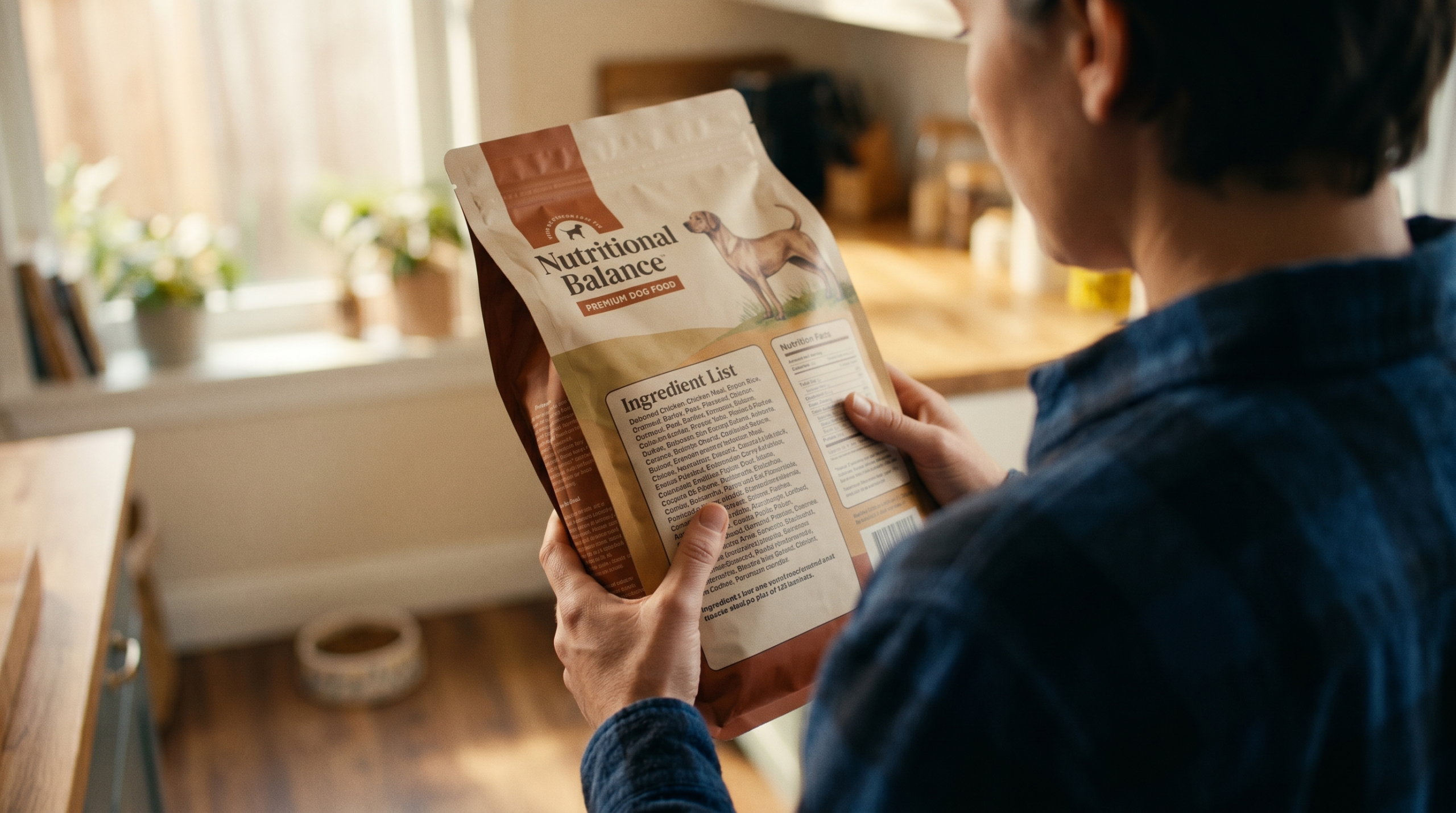
When navigating the grain-free vs. grain-inclusive diet aisle, you must know how to read past the marketing tricks. Pet food companies often use a tactic called "Ingredient Splitting."
Ingredients are listed by weight. A grain-free brand might list "Chicken" as the first ingredient, making it look protein-heavy. However, ingredients 2, 3, and 4 might be "Whole Peas," "Pea Flour," and "Pea Protein." If you were to combine all those pea ingredients together, "Peas" would actually weigh more than the chicken, making it the true main ingredient of the food. Always look for a named meat source (like Chicken, Salmon, or Beef Meal) in the top two ingredients, and be wary of legume-heavy ingredient splitting.
6. Signs Your Dog Needs a Diet Change
How do you know if your current grain-free vs. grain-inclusive diet is working? Your dog's body will tell you. If your dog is experiencing poor nutrition, you might notice:
- Dull, Flaky Coat: A lack of essential fatty acids or poor nutrient absorption will cause their coat to lose its shine and their skin to become dry and itchy.
- Chronic Ear Infections: While this can sometimes be an allergy, poor gut health from an unbalanced diet can lead to systemic yeast overgrowth, often presenting as dirty, smelly ears.
- Inconsistent Stools: If your dog constantly has loose stools or diarrhea, the fiber content in their current food is likely inadequate for their specific digestive tract.
- Lethargy: A diet that is too heavy in the wrong types of carbohydrates can lead to energy crashes and sluggish behavior.

7. How to Transition Safely
If you have evaluated the science behind the grain-free vs. grain-inclusive diet debate and decided to switch your dog's food, you must do it slowly. A sudden change in diet will shock their gastrointestinal tract, leading to vomiting or diarrhea.
Transition over 7 to 10 days. Start with 75% old food and 25% new food for the first few days. Then move to a 50/50 mix, and finally 75% new food before making the complete switch. Adding a pet-safe probiotic during this transition phase can also greatly help soothe their stomach.
Common Mistakes to Avoid
- Assuming All Grains are Bad: High-quality grains like oatmeal are completely different from cheap filler grains like heavily processed corn gluten.
- Self-Diagnosing Allergies: True grain allergies in dogs are statistically incredibly rare (less than 1%). If your dog is itching, they are much more likely to be allergic to the protein source (like chicken or beef) or environmental factors (dust, pollen).
- Ignoring the Vet: Never switch to a boutique diet for medical reasons without consulting a board-certified veterinary nutritionist.
Frequently Asked Questions (FAQ)
Is a grain-free vs. grain-inclusive diet choice the main cause of dog allergies?
No. It is a common misconception that grains cause allergies. According to veterinary dermatologists, the most common food allergens for dogs are actually dairy, beef, and chicken. Grain allergies are exceedingly rare.
Should I worry about the FDA's DCM warning?
Yes, you should stay informed. The FDA's investigation regarding the grain-free vs. grain-inclusive diet debate and its link to Dilated Cardiomyopathy is ongoing. Most veterinarians currently recommend avoiding grain-free diets high in peas, lentils, or potatoes unless strictly medically necessary.
What does "WSAVA Compliant" mean?
WSAVA stands for the World Small Animal Veterinary Association. Brands that are "WSAVA compliant" employ full-time, board-certified veterinary nutritionists, conduct rigorous peer-reviewed feeding trials, and own their own manufacturing plants to ensure the highest safety and nutritional standards.
Prioritize Your Dog's Health with Science
Deciding between a grain-free vs. grain-inclusive diet is one of the most important choices you will make as a pet parent. Always prioritize scientific research and your veterinarian's recommendation over flashy marketing labels. For more expert guides on canine health, behavior, and nutrition, continue exploring PetStory.org.