
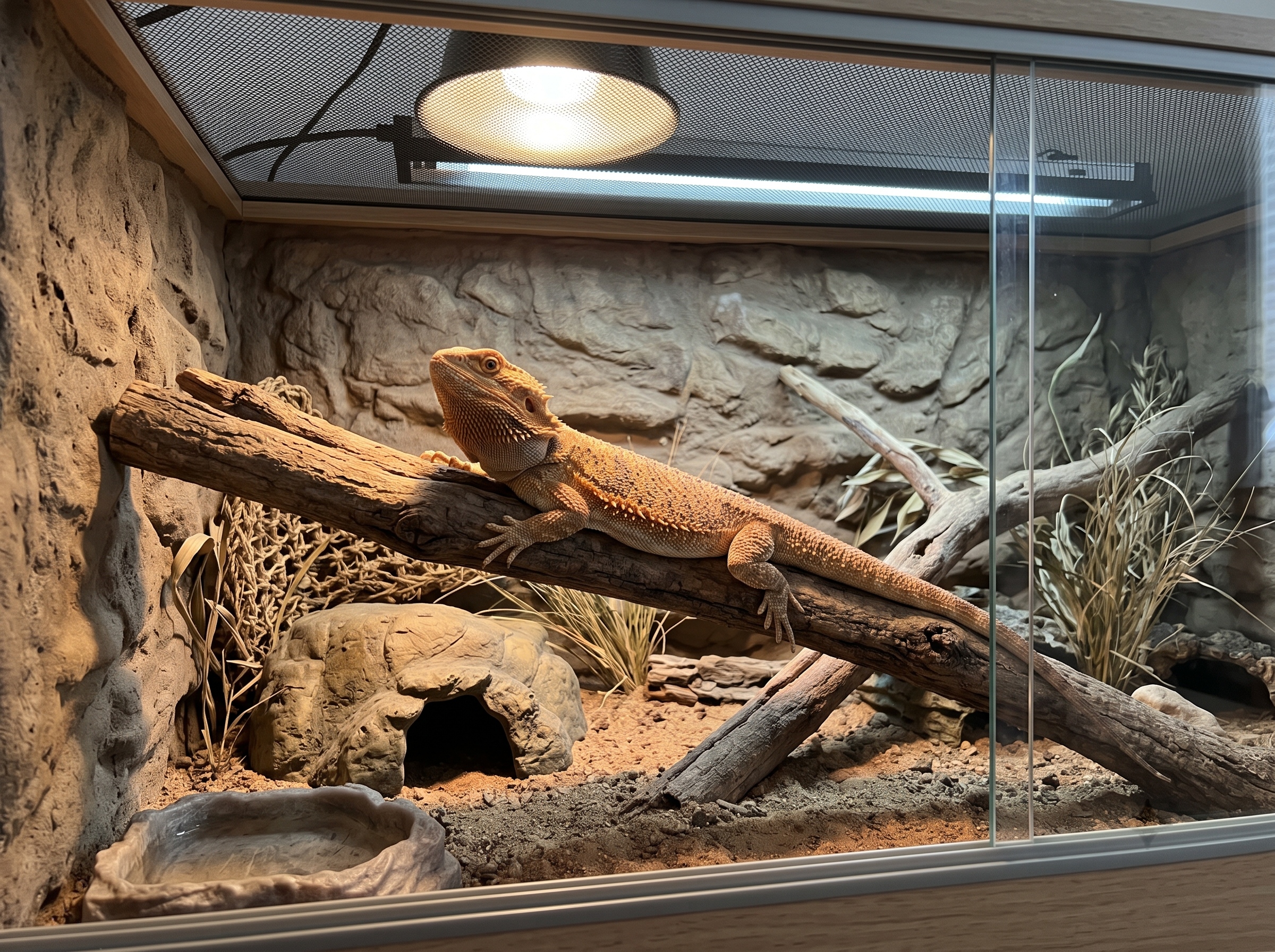
Bearded dragons are popular pet lizards because they are generally calm, curious, and relatively comfortable with gentle handling when properly socialized. However, keeping one healthy involves more than providing a tank and a bowl of insects. These reptiles depend on suitable temperatures, strong UVB lighting, a balanced diet, and an enclosure that allows them to move between warm and cool areas.
For beginners, understanding these requirements before bringing a bearded dragon home makes everyday care easier and helps prevent avoidable health problems. This comprehensive bearded dragon care guide explains how to create a suitable habitat, choose appropriate foods, manage lighting, and recognize when professional veterinary advice is needed.
In this article, you'll learn:
- How to set up the ideal habitat and thermal gradient
- Why UVB lighting is critical for bearded dragon care
- What to feed them at different life stages
- Common care mistakes and warning signs of illness
Table of Contents
- Understanding Bearded Dragons as Pets
- Setting Up a Suitable Bearded Dragon Habitat
- Temperature: Creating a Thermal Gradient
- Lighting: Why UVB Matters
- Diet: What Should They Eat?
- Hydration and Humidity
- Handling and Everyday Care
- Common Bearded Dragon Care Mistakes
- When to Contact an Exotic-Animal Veterinarian
- Daily and Weekly Care Checklist
- Frequently Asked Questions
Understanding Bearded Dragons as Pets
Bearded dragons, commonly known as beardies, are native to Australia. They are diurnal reptiles, meaning they are active during daylight hours. They spend time basking, exploring, climbing low branches, and searching for food.
With proper husbandry and dedicated bearded dragon care, a pet bearded dragon may live for around 7–10 years or longer, so bringing one home represents a long-term commitment. Adult dragons can also grow considerably larger than they appear as juveniles, making it important to plan for their adult size.
Although they are often recommended for first-time reptile keepers, they still have specialized environmental and nutritional needs. Their apparent hardiness should not be mistaken for an ability to thrive in an unsuitable enclosure.
Before adopting one, research the cost of the enclosure, heating equipment, UVB lighting, food, replacement bulbs, and veterinary care. It is also helpful to identify a veterinarian experienced in reptile or exotic-animal medicine.
Setting Up a Suitable Bearded Dragon Habitat
The enclosure is one of the most important parts of bearded dragon care. A suitable habitat should provide enough room for movement, a warm basking area, a cooler retreat, secure hiding places, and appropriate lighting.
Choosing the Right Enclosure Size
An adult bearded dragon needs a spacious enclosure that allows it to turn comfortably, walk, climb, bask, and move away from heat. An enclosure measuring approximately 120 × 60 × 60 cm (48 × 24 × 24 inches) is a commonly used starting point for adult housing, with larger enclosures offering additional room for movement and enrichment.
Planning for an adult-sized enclosure from the beginning can also avoid the expense of repeatedly upgrading a smaller habitat.
Choose a secure enclosure with good ventilation and enough height to position lighting safely. Front-opening doors can make feeding, cleaning, and routine interaction more convenient. Furthermore, bearded dragons are generally best housed individually. Keeping multiple dragons together can lead to competition, injuries, stress, and unequal access to food or basking areas.
Substrate, Hides, and Enrichment
Substrate is the material covering the enclosure floor. Beginners focusing on safe bearded dragon care can choose a solid, easy-to-clean surface such as suitable slate tile or another reptile-safe flooring option. Paper-based surfaces can also be useful, especially during quarantine or when monitoring a sick animal.
Loose substrates require careful consideration because accidentally swallowed material may contribute to digestive problems, particularly when husbandry is incorrect. Avoid gravel, wood chips, and materials that are dusty, sharp, chemically treated, or otherwise unsuitable for reptiles.
Provide at least one secure hide and additional shelter where space allows. A hide on the cooler side gives the dragon somewhere to retreat without remaining under the basking lamp. Sturdy branches, stable rocks, and low climbing structures encourage natural movement. All furniture should be secure and free from sharp edges. Rocks and branches must not wobble or collapse when the dragon climbs onto them.
Bearded Dragon Temperature: Creating a Thermal Gradient
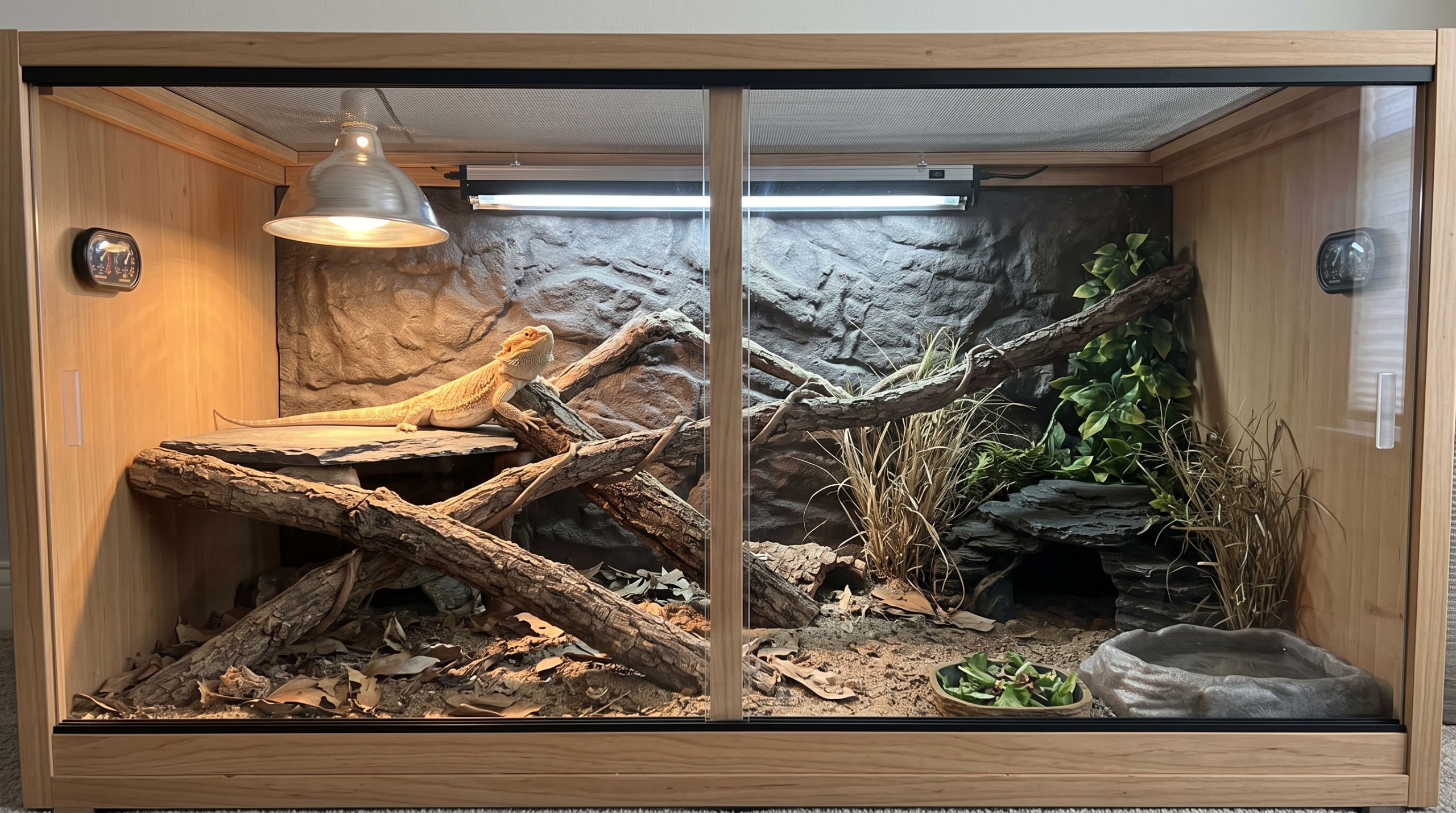
Bearded dragons are ectothermic, which means their bodies rely on external heat sources to regulate body temperature. A non-negotiable rule of bearded dragon care is that they need to move between warmer and cooler parts of the enclosure rather than remain at one uniform temperature.
Basking and Cool-Side Temperatures
A basking area provides concentrated heat for warming up and supporting normal activity and digestion. The cooler end allows the dragon to move away when it becomes too warm.
Veterinary care guides give somewhat different temperature ranges because recommendations depend on the age of the animal, the measurement method, and the exact part of the enclosure being measured. For this reason, basking surface temperature should not be confused with the temperature of the surrounding air.
Use a reliable digital thermometer to monitor enclosure temperatures and an infrared thermometer to measure the basking surface. Follow a reputable reptile veterinary guide and the heating equipment manufacturer's instructions when setting up the habitat.
The heat source should be positioned over one end of the enclosure to establish a gradient. The dragon must always have access to a cooler area. Never rely on touching the enclosure glass or holding a hand beneath a lamp to decide whether temperatures are suitable. Heat rocks and poorly controlled heating devices can cause burns.
At night, turn off visible basking and daylight lamps so the dragon can experience darkness. If the room becomes too cold, a suitable non-light-emitting heat source may be needed, controlled and monitored according to veterinary guidance.
Bearded Dragon Lighting: Why UVB Matters
Correct lighting is essential to health, making it a critical focus of bearded dragon care. Two separate requirements need attention: a heat-producing basking lamp and an appropriate UVB source.
UVB Lighting and Calcium Absorption
UVB exposure helps bearded dragons produce vitamin D3 in their skin. Vitamin D3 is important for absorbing and using calcium, which supports healthy bones and normal muscle function.
Without adequate UVB exposure, even a dragon receiving food and calcium supplements may develop serious problems, including metabolic bone disease.
A suitable reptile UVB fluorescent tube is generally a better choice than relying on an ordinary household bulb. Linear UVB fixtures can provide broader coverage than small screw-in bulbs, but the correct choice depends on the enclosure, reflector, lamp strength, mounting position, and distance from the basking area.
UVB output differs between products. Follow the manufacturer's distance recommendations and, where possible, use appropriate UV measurements to confirm that the basking zone receives suitable exposure. Glass and plastic block much of the useful UVB, so a lamp shining through a glass enclosure lid or window should not be considered an adequate UVB setup.
Daylight Schedule and Bulb Replacement
A consistent day-and-night schedule helps maintain a regular routine. Many care guides recommend approximately 10–14 hours of daytime lighting, adjusted to the enclosure setup and seasonal routine.
An automatic timer can make the schedule more consistent. Keep the enclosure dark at night rather than using red or blue decorative night lights.
UVB bulbs can continue producing visible light after their useful UVB output has declined. Replace them according to the manufacturer's schedule and the type of bulb being used. Do not judge their effectiveness by brightness alone.
Bearded Dragon Diet: What Should They Eat?
Bearded dragons are omnivores, meaning they eat both plant material and animal-based foods. Their nutritional needs change as they grow, so adapting their diet over time is a major part of bearded dragon care. The balance between vegetables and insects should be adjusted to the dragon's age, condition, and veterinary recommendations.
Feeding Juvenile Bearded Dragons
Young dragons are growing rapidly and generally require more appropriately sized feeder insects than adults. Suitable options may include gut-loaded crickets, dubia roaches where legally available, and black soldier fly larvae.
Offer fresh, finely chopped greens and suitable vegetables regularly, even while insects make up a substantial part of the diet. Choose insects that are appropriately sized for the dragon and purchase them from reputable suppliers. Feeders should be nutritious themselves, which is why gut-loading—feeding insects a nutritious diet before offering them to the reptile—is important. Remove uneaten insects after feeding, particularly if they could bite, disturb, or injure the dragon.
Feeding Adult Bearded Dragons
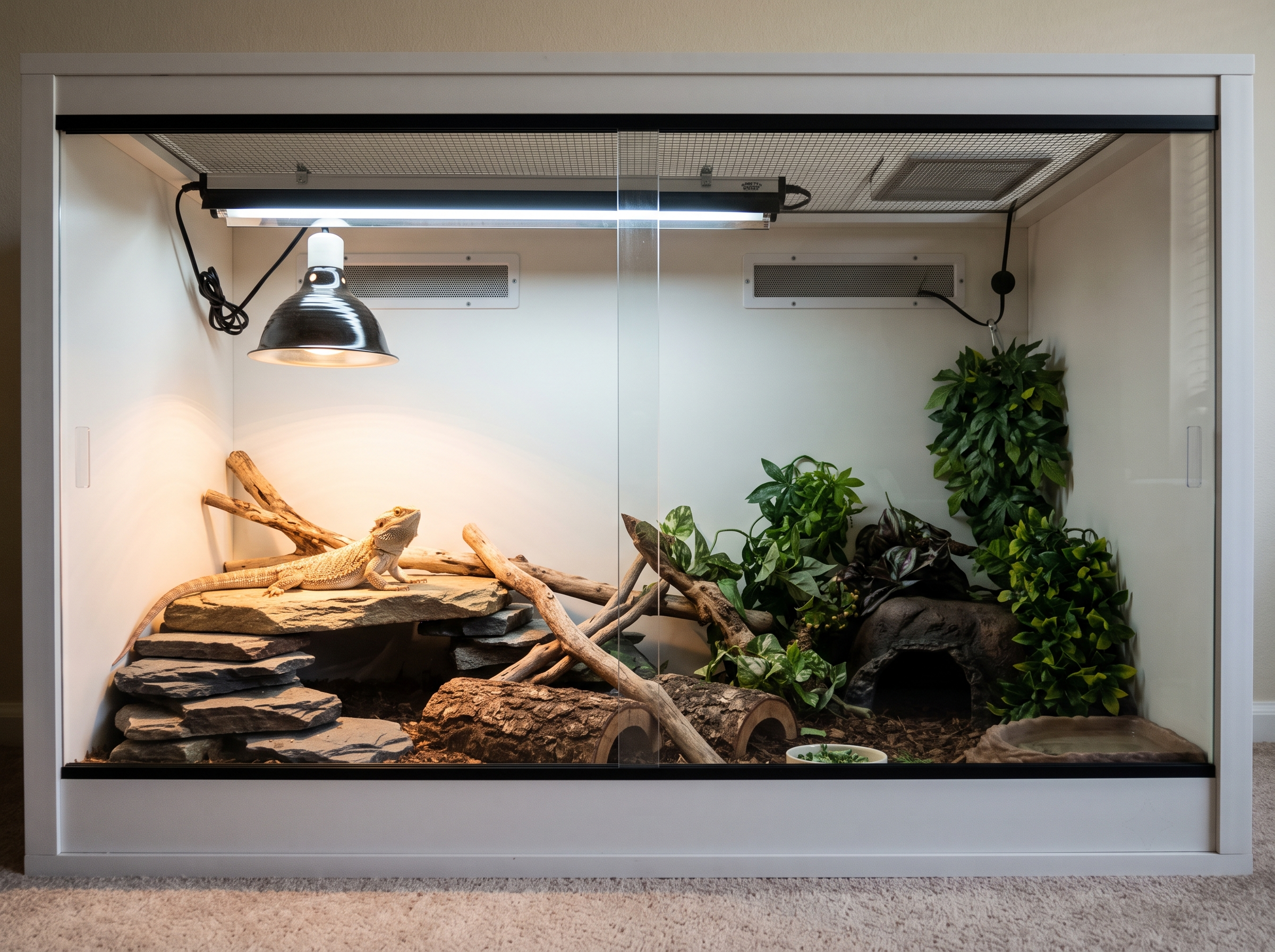
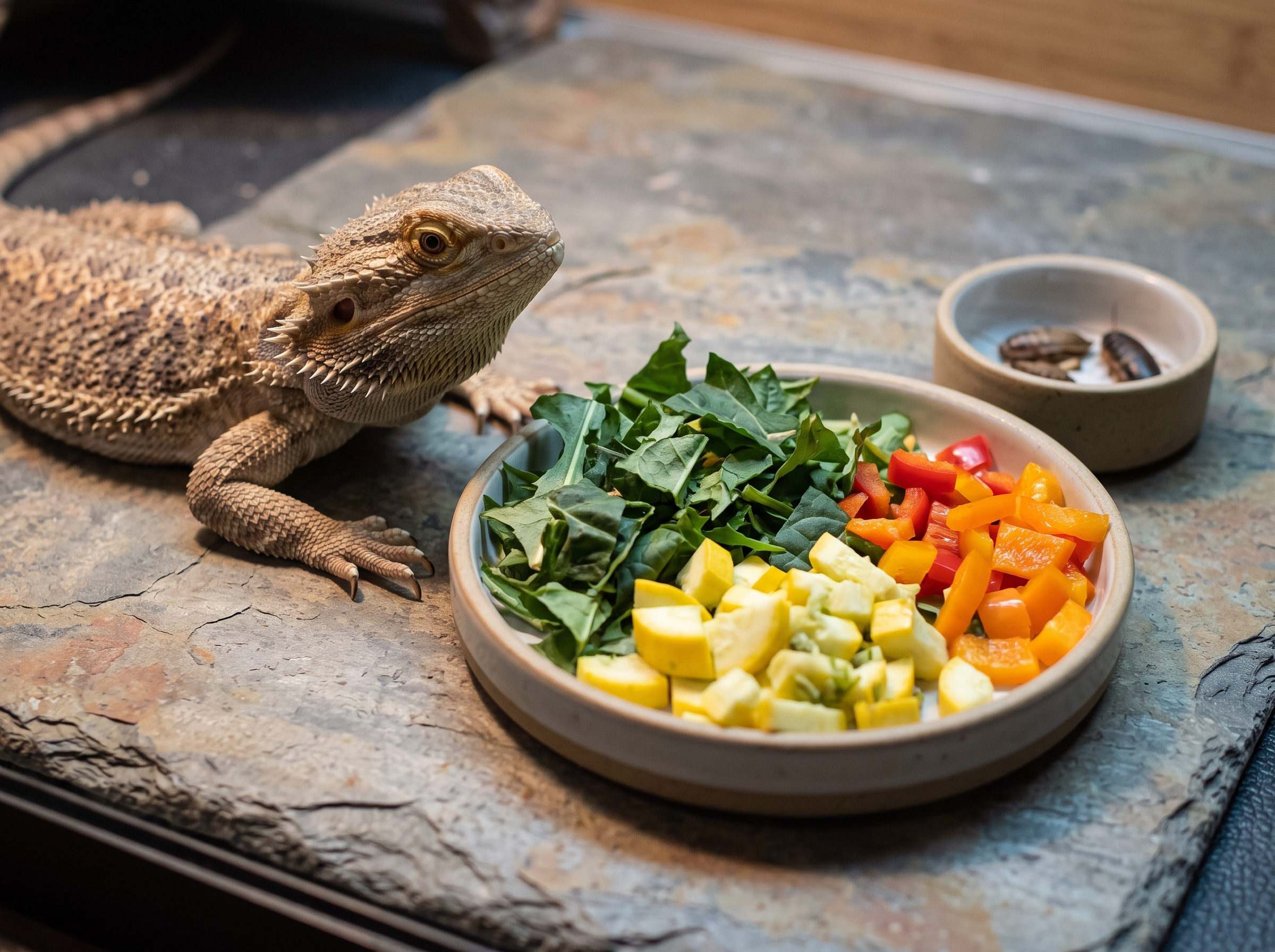
Adult dragons generally need a plant-focused diet with insects offered in more moderate amounts. Suitable leafy greens include collard greens, mustard greens, turnip greens, and dandelion greens. Vegetables such as squash and bell pepper can add variety.
Rotate appropriate foods rather than relying on a single vegetable every day. Wash produce thoroughly and cut it into manageable pieces. Fruit should generally be offered sparingly because it contains natural sugars and is not a substitute for nutritious leafy greens and vegetables.
Avoid feeding wild-caught insects because they may have been exposed to pesticides or other contaminants. Never offer fireflies, which are toxic to bearded dragons. Remove spoiled food promptly.
Calcium and Vitamin Supplements
Feeder insects do not always provide an appropriate calcium balance on their own. Reptile-specific supplements may therefore be necessary for optimal bearded dragon care.
The right supplement and frequency depend on age, diet, UVB exposure, and the product being used. Excessive supplementation can also cause problems, so avoid combining several products or inventing a dosing schedule without reliable guidance. A reptile-experienced veterinarian can help establish an appropriate feeding and supplementation plan for an individual dragon.
Hydration and Humidity
Fresh drinking water should be available in a clean, shallow dish. Replace the water daily and whenever it becomes contaminated with food, substrate, or waste.
Monitor enclosure humidity using a hygrometer. Bearded dragons generally need a relatively dry, well-ventilated habitat, but the appropriate humidity depends on the setup and local conditions. Avoid keeping the enclosure persistently damp or poorly ventilated.
Some dragons may not be seen drinking frequently, but that is not a reason to remove their water. Hydration also depends on the moisture available in suitable vegetables and other food. Do not force water into a dragon's mouth. If dehydration is suspected, seek advice from an experienced reptile veterinarian rather than relying on unverified home remedies.
Handling and Everyday Care
Bearded dragons may become comfortable with gentle handling, but individual temperaments differ. Give a newly adopted dragon time to settle into its enclosure before beginning frequent handling sessions.
Approach calmly and support the body with both hands, including all four feet where possible. Never lift a dragon by its tail or squeeze its body. Keep handling low over a secure surface to reduce the risk of injury if it struggles.
Children should interact with reptiles under adult supervision. Wash hands thoroughly after handling the dragon, its food, or enclosure equipment because reptiles can carry Salmonella even when they appear healthy.
Everyday bearded dragon care should include checking that lights and heating equipment work correctly, offering suitable food, replacing contaminated water, removing waste, and observing normal activity. Spot-clean the enclosure whenever needed. Periodically clean and disinfect the habitat and furnishings using products suitable for reptile enclosures, following label directions and ensuring everything is properly rinsed and dried before the dragon returns.
Common Bearded Dragon Care Mistakes
Several common mistakes can affect a dragon's health even when the owner provides food and a clean enclosure. Perfecting your bearded dragon care routine means avoiding these pitfalls:
- Insufficient UVB: A visible light does not necessarily provide the UVB needed for calcium metabolism.
- Incorrect temperatures: A basking area that is too hot or too cool can interfere with normal activity and digestion.
- A poor diet: Too few vegetables for adults, inappropriate feeder insects, or a lack of dietary variety can cause nutritional problems.
- An undersized enclosure: Limited space reduces opportunities to move, explore, and regulate body temperature.
- Unsafe substrate: Inappropriate loose materials, gravel, and wood chips may create avoidable risks.
- Incorrect supplementation: Too little or too much supplementation can be harmful.
- Ignoring changes in behavior: Persistent appetite changes, unusual movement, or abnormal droppings should not automatically be attributed to normal adjustment.
Correcting husbandry is important, but suspected illness should not be managed through equipment changes alone. Some conditions need examination and treatment by a qualified veterinarian.
When to Contact an Exotic-Animal Veterinarian
Arrange veterinary advice if a bearded dragon persistently refuses food, loses weight, becomes unusually inactive, has ongoing abnormal droppings, develops swelling, or shows changes in normal movement.
Tremors, weak or bowed limbs, a soft jaw, difficulty walking, breathing difficulties, bleeding, prolapse, or suspected egg-binding warrant prompt veterinary attention. Severe breathing problems, collapse, or major injuries should be treated as emergencies.
Keep a record of the dragon's weight, feeding habits, shedding, and bowel movements. These observations can help a veterinarian identify changes over time. A routine wellness examination with a reptile-experienced veterinarian is also a valuable part of preventative bearded dragon care, even when the dragon appears healthy. The veterinarian can advise on parasite screening, diet, supplementation, and the correct environmental conditions for the individual animal.
Daily and Weekly Bearded Dragon Care Checklist
Daily Checklist
- Check basking and cooler-zone temperatures.
- Confirm that daytime lighting and UVB equipment operate as intended.
- Provide fresh water and appropriate food.
- Remove waste and uneaten insects.
- Observe appetite, movement, and general behavior.
Weekly Checklist
- Inspect the enclosure, branches, hides, and fixtures for damage or instability.
- Clean and disinfect the water dish and other items as needed.
- Review food variety and check that supplements are used according to the established plan.
- Inspect the lighting equipment and check its replacement schedule.
Regularly
- Record body weight and note any sustained changes.
- Review UVB bulb replacement dates and manufacturer guidance.
- Arrange veterinary checks and seek advice when health changes occur.
A consistent routine makes it easier to notice small changes before they become more serious.
Frequently Asked Questions
Are bearded dragons good pets for beginners?
They can be suitable for beginners who are prepared to maintain correct temperatures, UVB lighting, nutrition, enclosure hygiene, and routine veterinary care.
How big should a bearded dragon's enclosure be?
An adult enclosure around 120 × 60 × 60 cm (48 × 24 × 24 inches) is a commonly used starting point. A larger enclosure can provide more room for movement and environmental enrichment.
Do bearded dragons need UVB lighting?
Yes. Appropriate UVB exposure supports vitamin D3 production and calcium metabolism. The lamp type, strength, and mounting distance must suit the enclosure.
What do bearded dragons eat?
They eat both plant material and insects. Young dragons generally require more insects, while adults typically need a diet dominated by leafy greens and vegetables.
Can bearded dragons live together?
Individual housing is generally the safer choice because cohabitation can lead to aggression, competition, stress, and injury.
How often should a bearded dragon visit a veterinarian?
Arrange a wellness examination with a reptile-experienced veterinarian and follow their recommendations for repeat examinations and parasite screening. Seek advice sooner if health changes occur.
Conclusion
Good bearded dragon care depends on getting the fundamentals right: a spacious and secure habitat, a measured temperature gradient, suitable UVB lighting, a varied age-appropriate diet, fresh water, and regular observation.
New owners do not need to master everything in a single day, but the enclosure and feeding plan should be researched and prepared before bringing a dragon home. Check equipment rather than guessing, use reliable veterinary guidance, and seek professional advice when health concerns arise.
With careful preparation and consistent attention, owners can provide a more suitable environment for their bearded dragons and support their long-term welfare.
Explore More Reptile Care Tips
For more advice on setting up enclosures and ensuring the health of your cold-blooded friends, check out our full range of Lizard Care Guides.
About the Author
Irfan Hyder is a dedicated pet care writer at PetStory.org, specializing in the husbandry and wellness of companion animals. He combines veterinary research with practical, hands-on experience to help pet parents create thriving environments for their reptiles. When he isn't writing about advanced bearded dragon care, he enjoys studying herpetology, optimizing terrarium designs, and sharing actionable advice with the pet community.