
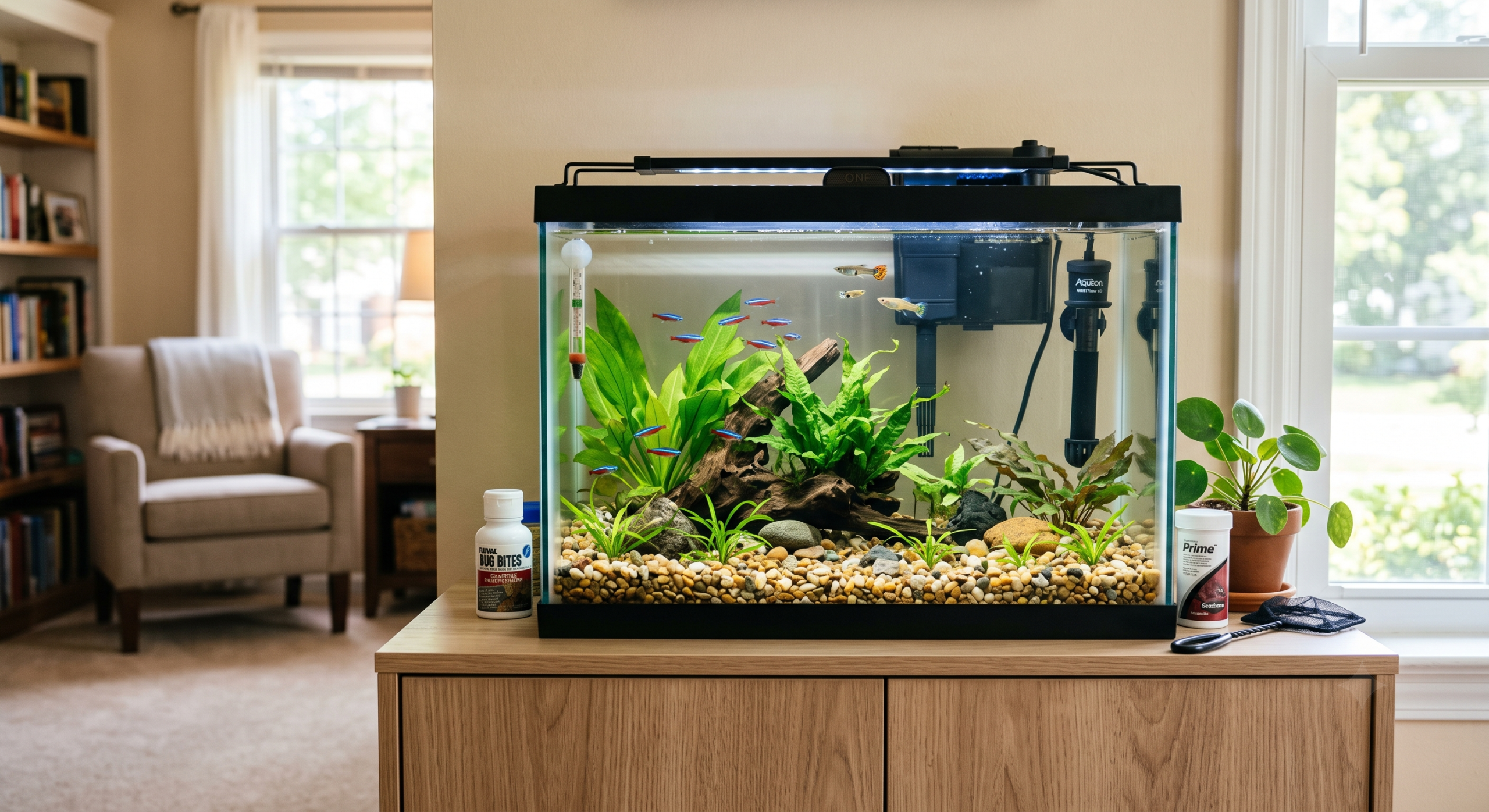
You brought home a shiny new tank, maybe a bag of gravel, and a head full of excitement. Then you set it all down on the counter and thought, "Okay… now what?" If that sounds familiar, you're in exactly the right place.
Setting up your first aquarium can feel like a lot. There's water chemistry, filters, something called "cycling," and a hundred forum posts telling you different things. Take a breath. It's far simpler than it looks once you know the order to do things in.
This guide walks you through how to set up a healthy fish tank from the very first step to the day your fish finally move in. We'll cover the gear you need, the setup process, why patience pays off, and the beginner mistakes that trip up almost everyone.
By the end, you'll feel confident, not overwhelmed. If you've been searching for how to set up a healthy fish tank in a simple, beginner-friendly way, you're in the right place. This guide is built to show you exactly how to set up a healthy fish tank without confusion.
In this article, you'll learn:
- The essential fish tank equipment you need before you start
- A clear, step-by-step process for how to set up a healthy fish tank as a beginner
- Why aquarium cycling protects your fish and how to do it right
Table of Contents
- 1. What You Need Before You Set Up a Healthy Fish Tank
- 2. How to Set Up a Healthy Fish Tank: Step-by-Step
- 3. Fish Tank Setup for Beginners: A Quick Comparison
- 4. Why Aquarium Cycling Matters So Much
- 5. Common Beginner Fish Tank Mistakes to Avoid
- 6. How to Keep a Healthy Fish Tank After Setup
- 7. Safety & Warning Signs
- 8. When to Take Action Fast
- 9. Your Quick Checklist Before Adding Fish
- 10. Frequently Asked Questions
- 11. The Bottom Line
1. What You Need Before You Set Up a Healthy Fish Tank
Before any water goes in, let's gather your supplies. Knowing how to set up a healthy fish tank starts with having the right gear on hand. Everything ready in one spot makes the whole process smoother and saves you a frantic mid-setup trip to the store.
If you want to learn how to set up a healthy fish tank properly, starting with reliable equipment makes a huge difference. The right supplies make how to set up a healthy fish tank much easier from day one.
Here's the fish tank equipment worth having on hand.
Tank
Bigger is actually easier for beginners. A larger volume of water stays more stable, which means fewer sudden swings in temperature or water quality. A 20-gallon tank is a friendlier starting point than a tiny 3-gallon bowl, even though the small ones look tempting.
Filter
Your filter is the heart of the system. It keeps water clear and, more importantly, houses the good bacteria that keep your fish safe. Pick one rated for your tank size or slightly larger. Hang-on-back filters are simple and popular for a first freshwater aquarium setup.
Heater
Most tropical fish need steady warmth, usually between 74°F and 80°F. A submersible heater with an adjustable dial keeps things stable. Match the wattage to your tank size, roughly 5 watts per gallon.
Substrate
This is the gravel or sand on the bottom. Beyond looking nice, it gives beneficial bacteria a place to live. Plan on about one pound of substrate per gallon for a standard gravel layer.
Water Conditioner
Tap water contains chlorine and chloramine, which are harmful to fish. A water conditioner (dechlorinator) neutralizes them instantly. Never skip this one.
Test Kit
A liquid test kit is your window into the water your fish breathe. It measures ammonia, nitrite, nitrate, and pH. Strips work in a pinch, but liquid kits are more accurate and worth the small extra cost.
Decorations and Hiding Spots
Plants, rocks, driftwood, and caves aren't just for looks. Fish feel safer with places to hide, and less stress means healthier fish. Live or silk plants are gentle on fins, unlike sharp plastic ones.
Lighting
A basic aquarium light supports live plants and lets you enjoy your fish. Keep it on a timer for around 8 hours a day to help control algae.
Fish Food
Buy quality food suited to the fish you plan to keep. You won't need it right away, but it's good to have ready.
2. How to Set Up a Healthy Fish Tank: Step-by-Step
Now for the fun part. Follow these steps in order, and don't rush the last one. Here's exactly how to set up a healthy fish tank the right way. If you've been wondering how to set up a healthy fish tank without missing anything important, these steps will keep you on track.

Step 1: Choose the Right Tank Location
Pick a sturdy, level surface that can hold the weight. Water is heavy, roughly 8 pounds per gallon, so a 20-gallon tank tops 160 pounds when full. Keep it away from direct sunlight, drafty windows, and heat vents. These cause algae blooms and temperature swings.
Step 2: Rinse the Tank, Substrate, and Decor
Give the tank a wipe with plain water, no soap ever. Soap residue is deadly to fish. Rinse your substrate in a bucket until the water runs mostly clear. This removes dust that would otherwise cloud your tank for days.
Step 3: Add Substrate and Decorations
Spread your gravel or sand across the bottom, sloping it slightly higher at the back for a nice look. Then arrange your plants, rocks, and caves. Play around until you like it — this is the creative part.
Step 4: Install Filter, Heater, and Equipment
Position your filter and heater according to the instructions. Don't plug anything in yet. Heaters especially need to be fully submerged in water before they're switched on, or they can crack.
Step 5: Fill With Water
Pour in dechlorinated water slowly. A neat trick: place a small plate or bowl on the substrate and pour onto it. This stops your gravel from blasting everywhere and keeps decorations in place.
Step 6: Add Water Conditioner
Add the correct dose of water conditioner based on your tank's volume. This neutralizes chlorine right away and makes the water safe. Give it a gentle stir.
Step 7: Start Equipment and Check Temperature
Now plug in your filter and heater. Let everything run and watch the thermometer over the next few hours. Adjust the heater until the temperature holds steady in your target range. A little patience here saves headaches later.
Step 8: Cycle the Tank Before Adding Fish
This is the step everyone wants to skip, and the one that matters most. One of the most critical parts of how to set up a healthy fish tank is growing beneficial bacteria before fish arrive. We'll cover exactly how to cycle a fish tank in the next section. For now, just know: no fish yet.
If you're serious about learning how to set up a healthy fish tank, this is the step where patience matters more than anything else. In fact, many successful beginners say this is the step that truly defines how to set up a healthy fish tank the right way.
3. Fish Tank Setup for Beginners: A Quick Comparison
Not sure what size to start with? Here's an honest look at common beginner options. Remember, a bigger tank is usually more forgiving — and choosing the right size is a key part of how to set up a healthy fish tank that lasts.
| Tank Size / Type | Best For | Pros | Cons |
|---|---|---|---|
| 5-gallon tank | A single betta or a few shrimp | Cheap, fits small spaces, easy to place | Water quality shifts fast, limited stocking, less stable |
| 10-gallon tank | Small schooling fish, first-timers on a budget | Affordable, widely available, decent starter size | Still swings quickly, easy to overstock |
| 20-gallon tank | Most beginners; a small community setup | Stable water, more fish options, forgiving of mistakes | Needs more space and a solid stand |
| 29–40 gallon tank | Growing community tanks and confident starters | Very stable, room to grow, rewarding | Heavier, pricier, more water to change |
| Nano planted tank | Aquascaping lovers, small fish or shrimp | Beautiful, compact, great for plants | Tricky chemistry, best after some experience |
If you have the room, a 20-gallon tank hits the sweet spot for a beginner aquarium setup. It gives your fish stability and gives you breathing room to learn. For many people, it's the easiest way to set up a healthy fish tank without constant stress. It's also one of the most beginner-friendly answers to how to set up a healthy fish tank successfully.
4. Why Aquarium Cycling Matters So Much
Here's the thing almost no pet store mentions when you're buying your first tank: fish produce waste, and that waste is toxic. Aquarium cycling is how your tank learns to handle it — and it's a step you simply can't skip if you want to know how to set up a healthy fish tank properly.
What Cycling Means
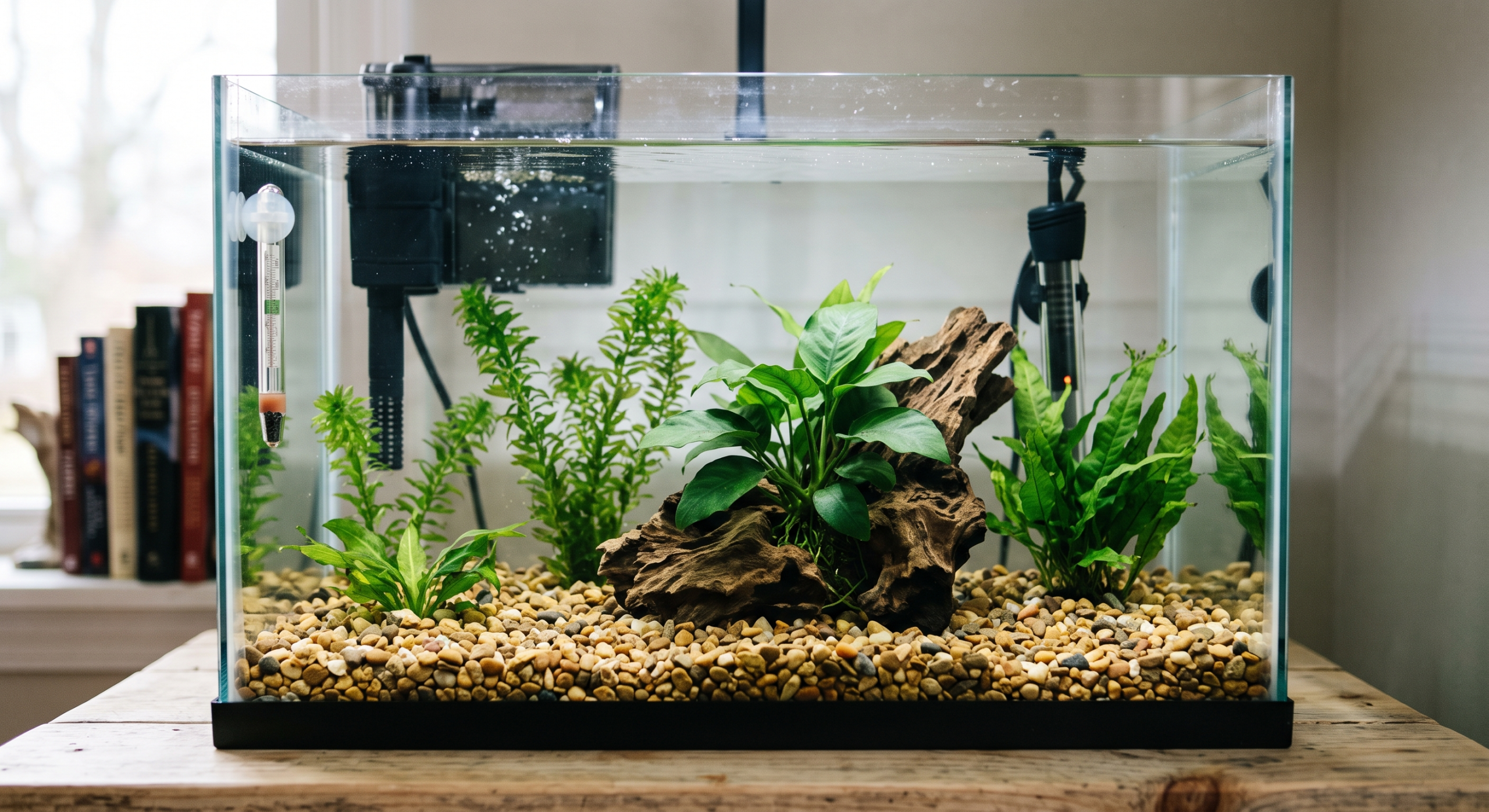
Cycling grows two types of helpful bacteria in your filter and substrate. The first turns toxic ammonia into nitrite (still toxic). The second turns nitrite into nitrate, which is far safer at low levels. This process is called the nitrogen cycle.
Think of it like building a tiny cleanup crew before your fish move in. Once the crew is working, your water stays safe. Understanding this is essential if you want to know how to set up a healthy fish tank that supports fish from day one. If you ignore cycling, you haven't really learned how to set up a healthy fish tank at all.
Why Adding Fish Too Soon Is Risky
Without those bacteria, ammonia builds up fast. Your fish essentially swim in their own toxins, which burns their gills and stresses their bodies. This is the sad story behind "new tank syndrome," where beginners lose fish within the first couple of weeks and never understand why.
Fishless Cycling vs Fish-In Cycling
You have two paths:
- Fishless cycling is the kinder method. You add a source of ammonia (like a bottled ammonia product or a pinch of fish food) to feed the bacteria, with no fish at risk. This is the recommended way.
- Fish-in cycling means cycling with fish already inside. It's harder on the fish and requires frequent water changes to keep toxins low. Only choose this if you already have fish and had no other option.
How Long Cycling Usually Takes
Most tanks cycle in about 2 to 6 weeks. You'll know it's done when your test kit reads zero ammonia, zero nitrite, and some nitrate. That combination means your cleanup crew is fully working and it's finally fish time.
5. Common Beginner Fish Tank Mistakes to Avoid
We've all made a few of these. No judgment, just better paths forward. Avoiding these pitfalls is a big part of how to set up a healthy fish tank that actually thrives.
- Choosing a tank that's too small. Better: Go as large as your space and budget allow. Bigger water is more stable.
- Adding fish too early. Better: Wait out the full cycle. Patience now prevents heartbreak later.
- Overfeeding. Better: Feed only what your fish eat in a minute or two, once or twice a day. Leftover food rots and spikes ammonia.
- Skipping the water test kit. Better: Test regularly, especially during cycling. Your eyes can't detect ammonia, but a test kit can.
- Cleaning everything too aggressively. Better: Never scrub your filter media with tap water. You'll wash away the good bacteria. Rinse it gently in old tank water instead.
- Mixing incompatible fish. Better: Research before you buy. Some fish nip fins, some need groups, and some simply don't get along.
Many beginners struggle because they rush the process. If you're trying to figure out how to set up a healthy fish tank, slowing down and avoiding these mistakes will help far more than buying extra gear. This is one of the biggest lessons behind how to set up a healthy fish tank in a way that actually works.
6. How to Keep a Healthy Fish Tank After Setup
Your tank is cycled and stocked. The good news? Ongoing care is mostly a light, steady rhythm rather than heavy work. Once you know how to set up a healthy fish tank, keeping it that way is much simpler than most beginners expect.
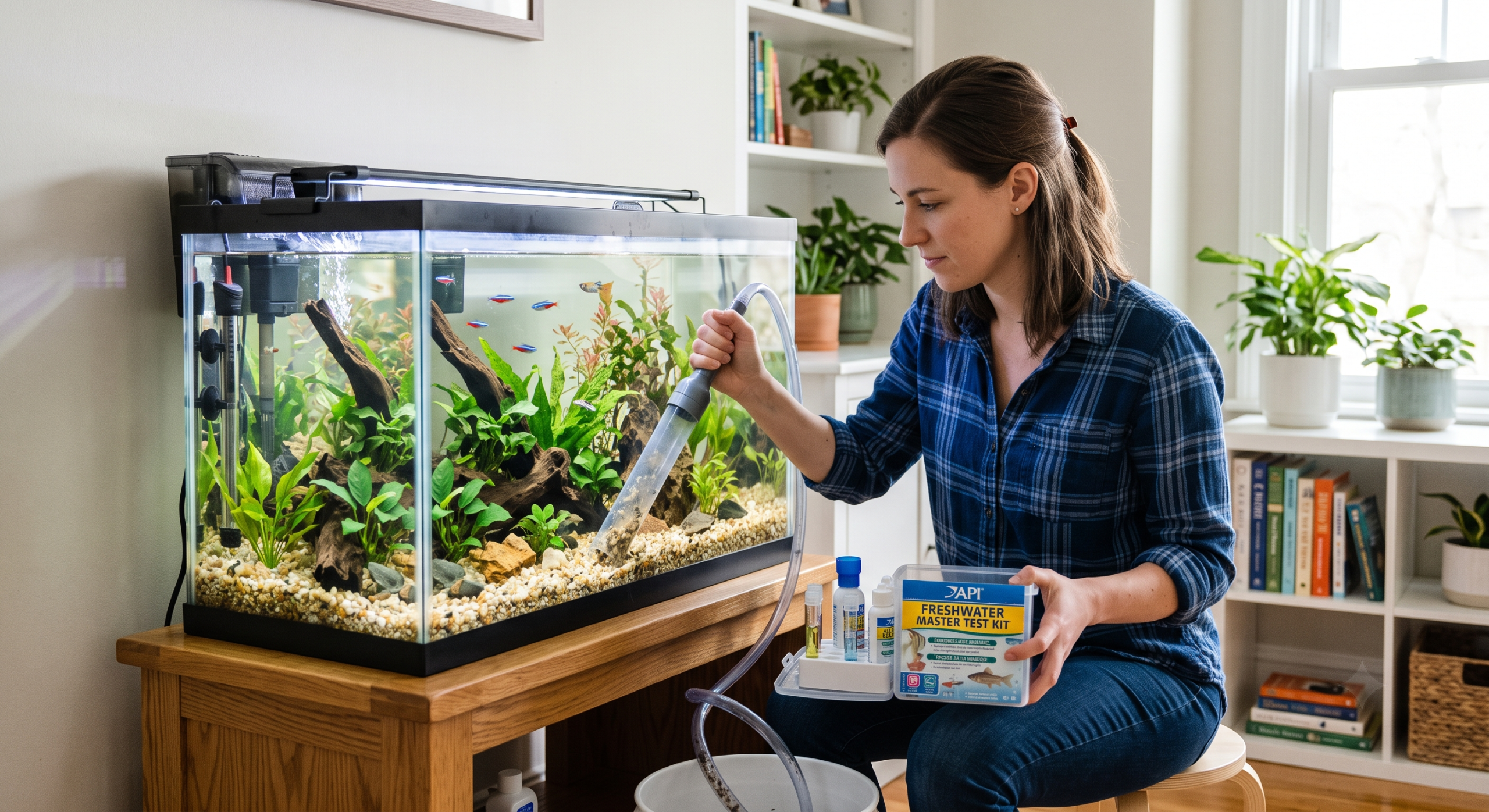
- Water changes. Swap out about 20–25% of the water each week. Always treat the fresh water with conditioner first and match the temperature closely.
- Testing water. Check your parameters weekly at first. Once your tank is settled, you can test less often, but keep an eye on nitrate levels.
- Filter care. Rinse filter media in old tank water every few weeks. Replace parts only when they're falling apart, and never all at once.
- Feeding basics. Small, regular meals beat one big feast. A fasting day now and then is perfectly healthy for most fish.
- Watching fish behavior. You'll learn your fish's normal quickly. Active, eating, and colorful is good. Hiding, gasping, or clamped fins is worth investigating.
- Cleaning algae and substrate. Use an algae scraper on the glass and a gravel siphon during water changes. A little algae is normal, not a failure.
That said, how to set up a healthy fish tank is only half the job. Good maintenance habits are what keep a healthy fish tank stable over the long term. Anyone learning how to set up a healthy fish tank should treat maintenance as part of the same process, not a separate task.
7. Safety & Warning Signs
Keep this quick reference handy. It'll help you tell the difference between "all good" and "act now." Learning how to set up a healthy fish tank also means knowing how to spot problems early.
✅ Safe practices
- Using dechlorinated water every time
- Testing before and after adding fish
- Doing regular, modest water changes
- Quarantining new fish when possible
⚠️ Unsafe practices
- Adding fish to an uncycled tank
- Using soap or household cleaners
- Overstocking or overfeeding
- Making big, sudden changes to temperature or water
🚩 Warning signs that need attention
- Cloudy or foul-smelling water
- Fish gasping at the surface
- White spots, torn fins, or unusual lethargy
- Sudden temperature swings
- Equipment that stops working (heater, filter)
8. When to Take Action Fast
Not every hiccup is a crisis. A little cloudiness in a brand-new tank is often just a harmless bacterial bloom that clears on its own. Keep monitoring and test your water.
But some things need quick action. If your fish are gasping at the surface, test the water immediately — an ammonia or nitrite spike is the likely cause. A large water change can bring toxins down fast while you sort out what happened.
If you spot white spots, ragged fins, or a fish that suddenly stops eating and hides, watch closely and consider moving it to a separate tank if you have one. Sick fish are easier to treat away from tankmates.
And if equipment fails, especially the heater in cold weather, address it right away to avoid a dangerous temperature drop. When something feels beyond your comfort level, reach out to an aquatic vet or a knowledgeable fish professional. There's no shame in asking — even experienced hobbyists do it.
Anyone learning how to set up a healthy fish tank should remember this: quick action during a real problem can protect the entire aquarium. Knowing how to set up a healthy fish tank also means knowing how to respond when something suddenly goes wrong.
9. Your Quick Checklist Before Adding Fish
Save this and run through it before those fish come home. It's one more simple way to make sure you've covered the basics of how to set up a healthy fish tank. A quick checklist like this can make how to set up a healthy fish tank feel much less overwhelming.
- ✅ Tank is on a level, sturdy, weight-safe surface
- ✅ Water is fully dechlorinated with conditioner
- ✅ Filter and heater are running smoothly
- ✅ Temperature is stable in your target range
- ✅ Test kit reads zero ammonia and zero nitrite
- ✅ Some nitrate is present (proof the cycle finished)
- ✅ You've researched that your chosen fish are compatible
10. Frequently Asked Questions
How long should I wait before adding fish to a new tank?
Plan to wait about 2 to 6 weeks, until your tank fully cycles. You'll know it's ready when your test kit shows zero ammonia, zero nitrite, and some nitrate. Waiting is the single best thing you can do for your fish.
Do I really need to cycle a fish tank before adding fish?
Yes, and it's the most important step. Cycling grows the bacteria that break down toxic waste. Without it, ammonia builds up and can quickly harm or kill your fish.
What is the best fish tank size for beginners?
A 20-gallon tank is a great starting point. The larger water volume stays more stable, which is far more forgiving while you're still learning. Smaller tanks look easier but are actually trickier to keep balanced.
How often should I clean a new fish tank?
Do a partial water change of about 20–25% each week, along with a light gravel vacuum. Avoid deep-cleaning the filter or replacing all the water at once, since that removes helpful bacteria. Gentle and consistent wins.
Can I set up a fish tank and add fish on the same day?
It's best not to. The tank needs time to cycle first, which takes weeks, not hours. Adding fish on day one exposes them to toxic water and is the top reason beginner fish don't survive.
11. The Bottom Line
Learning how to set up a healthy fish tank comes down to two things: doing the steps in the right order and giving your tank time to cycle before fish arrive. That's really the whole secret.
Yes, it takes a little patience up front. But the payoff is a stable, thriving aquarium and fish that actually live long, healthy lives — not a rushed setup that leaves you frustrated. You've already done the hardest part by learning how to set up a healthy fish tank the right way first.
Trust the process, test your water, and don't be afraid to ask for help along the way. A healthy aquarium is absolutely within your reach, and your future fish will be glad you took the time. Once you understand how to set up a healthy fish tank, everything else becomes much easier to manage. That's the real value of learning how to set up a healthy fish tank before bringing fish home.
Ready to Learn More?
Now that you know how to set up a healthy fish tank, check out our Fish & Aquatic Pets Guide to help you choose the best fish and keep them thriving!
Disclaimer: This article is for informational purposes only and is not a substitute for professional veterinary advice. Always consult a licensed veterinarian or qualified aquatic specialist about your fish's specific health needs.