
You picked out a name. You've watched a dozen bunny videos. And now the adoption date is circled on your calendar. Then it hits you — where is this little creature actually going to live, and what does it need on day one?
That mix of excitement and nerves is completely normal. Rabbits are wonderful companions, but they're not the low-effort "starter pet" they're often made out to be. They need space, the right food, a safe home, and a bit of patience while they settle in.
The good news? A little planning goes a long way. Get the setup right before your rabbit arrives, and those first days feel calm instead of chaotic.
This new rabbit checklist walks you through the supplies, the space, the food, and the small first-week moments that make a big difference. Let's break it down.
In this article, you'll learn:
- The exact supplies a first-time rabbit owner needs before adoption day
- How to build a comfortable, practical indoor rabbit setup
- What to expect (and what to avoid) during the first few days at home
Table of Contents
- 1. Why a New Rabbit Checklist Matters Before Adoption
- 2. New Rabbit Checklist: The Essential Supplies
- 3. Setting Up Your Rabbit's Living Space
- 4. Rabbit-Proofing Your Home Before Bringing Home a Rabbit
- 5. Food Setup and Feeding Basics for Day One
- 6. Bringing Home a Rabbit: What to Expect the First Few Days
- 7. Practical Tips for First-Time Rabbit Owners
- 8. Common Mistakes New Rabbit Owners Should Avoid
- 9. Safety & Warning Signs
- 10. When to See a Vet
- 11. Your Quick Checklist
- 12. Frequently Asked Questions
- 13. The Bottom Line
1. Why a New Rabbit Checklist Matters Before Adoption
Bringing home a rabbit without a plan usually leads to a frantic first day — a pet store run, a stressed bunny, and a cardboard box standing in for a proper home.
Preparing ahead flips that story. When the enclosure is built, the hay is stocked, and the room is safe, your rabbit steps into a settled environment. That reduces stress for the animal and for you.
Your new rabbit checklist also helps you sidestep the classic beginner mistakes: buying a cage that's far too small, skipping rabbit-proofing, or feeding the wrong things early on. A solid rabbit adoption checklist saves money, prevents accidents, and gives your rabbit a smoother start.
Think of it this way — the setup you build now shapes how confident and comfortable your rabbit feels for weeks to come, which is exactly why a new rabbit checklist matters so much. A reliable new rabbit checklist can make first-time ownership feel much more manageable.
2. New Rabbit Checklist: The Essential Supplies
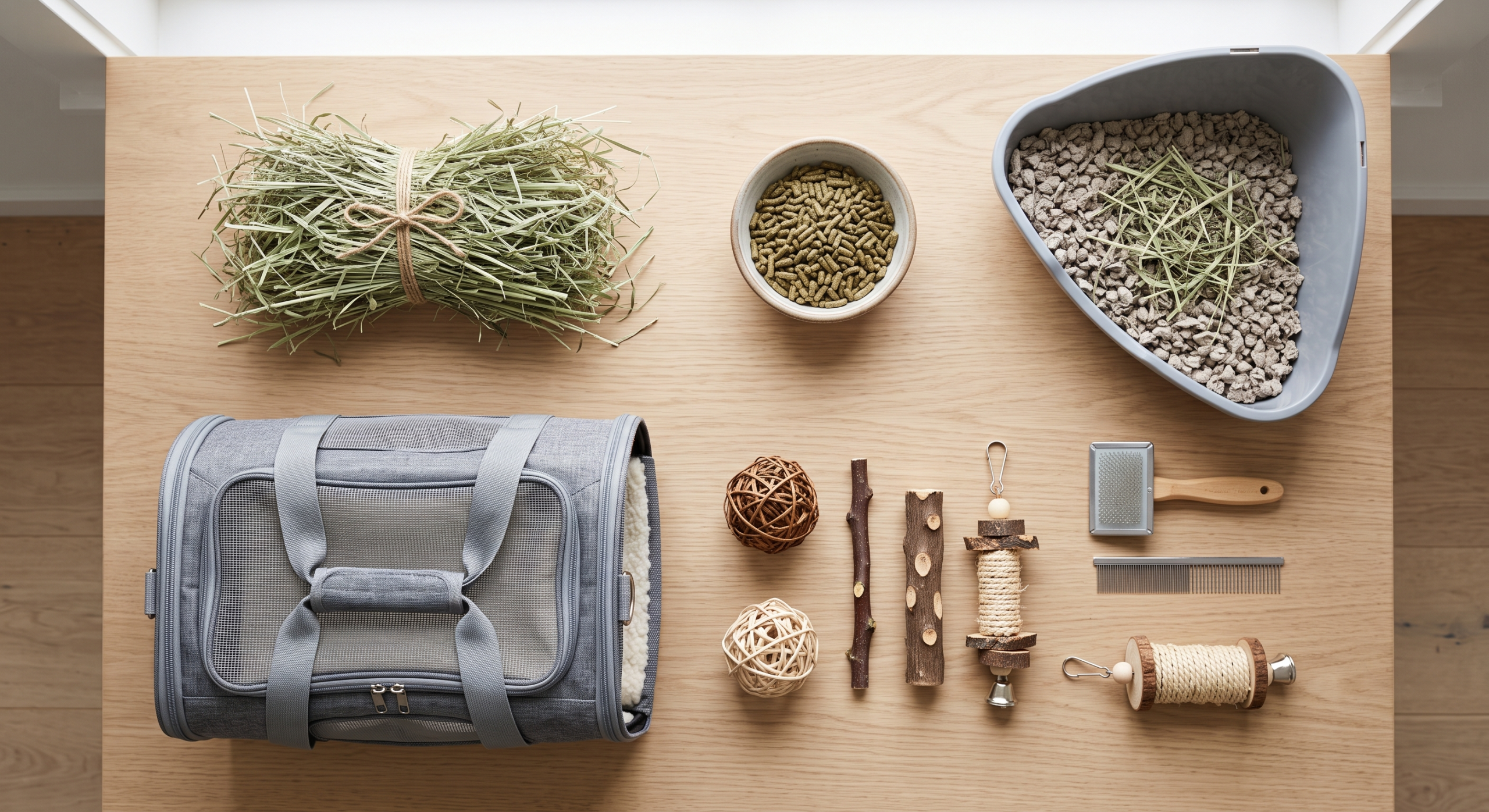
Here's your core rabbit supplies list. Gather everything on this new rabbit checklist before adoption day so nothing sends you scrambling later.
- Housing or enclosure — a spacious pen or exercise pen, not a tiny cage
- Exercise pen or safe roaming area — for daily movement outside the enclosure
- Hay feeder or rack — keeps hay clean and off the floor
- Food and water bowls — heavy ceramic bowls work well; a bottle can be a backup
- Rabbit pellets — plain, high-fiber pellets in small amounts
- Unlimited grass hay — Timothy or another grass hay, the star of the diet
- A fresh greens plan — leafy greens to introduce slowly over time
- Litter box and rabbit-safe litter — paper-based litter is a good, safe choice
- Hideout or resting area — a covered box or tunnel where your rabbit can retreat
- Chew toys — safe wood, willow, or cardboard items
- Grooming supplies — a soft brush and nail clippers
- Carrier — for the ride home and future vet visits
Buy the food your rabbit is already eating if the rescue or breeder tells you. Sudden diet swaps can upset a sensitive digestive system, so keep things consistent at first. A complete new rabbit checklist helps you get all of this ready before your rabbit even steps through the door. Using a detailed new rabbit checklist can also help you spot missing essentials before adoption day.
3. Setting Up Your Rabbit's Living Space
The first setup matters more than people think. A comfortable, clean space helps your rabbit relax and makes daily care easier for you.
Choosing the Right Enclosure
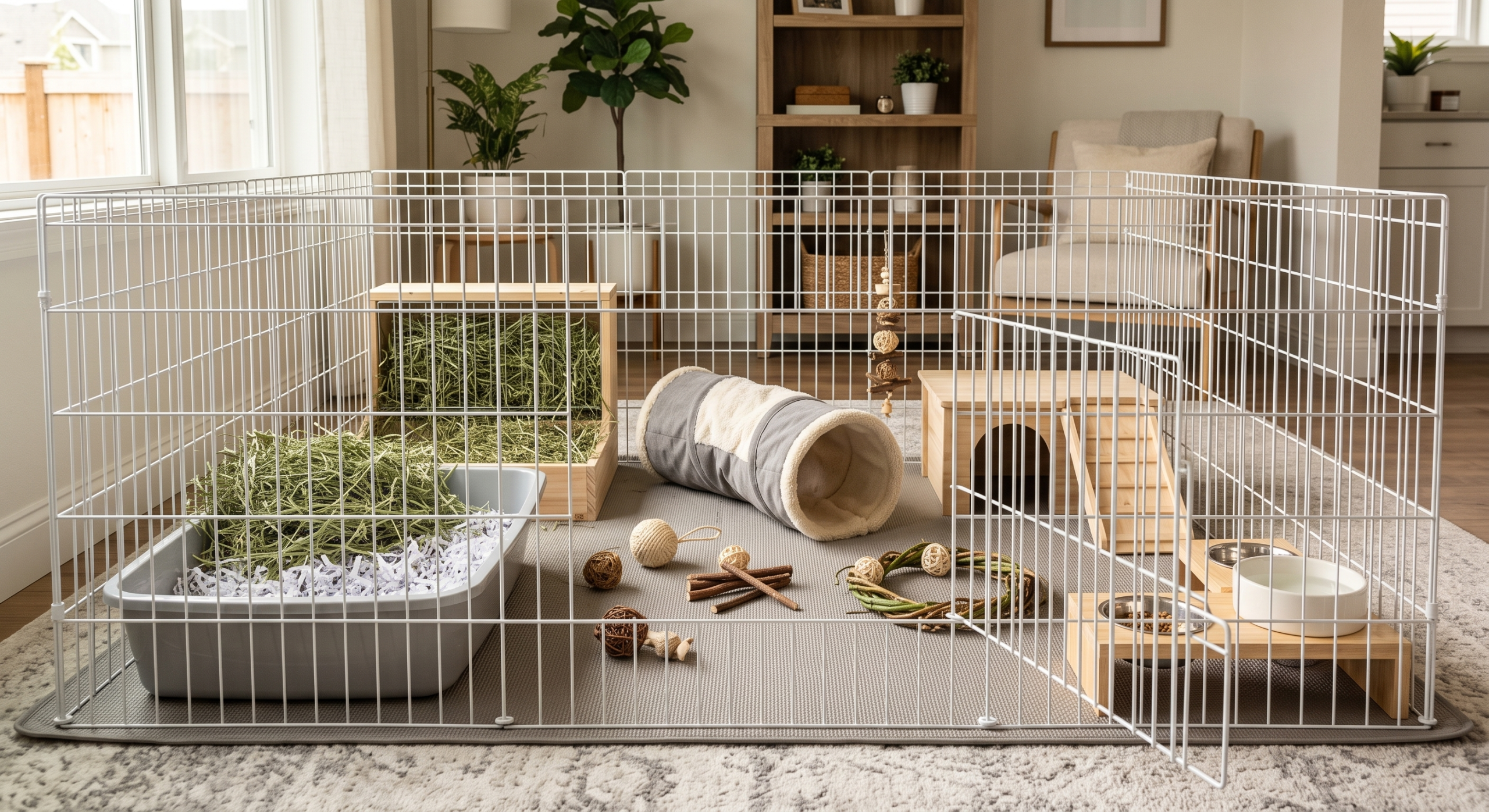
Skip the small pet-store cages. Rabbits need room to hop, stretch fully, and stand up on their back legs. A large exercise pen — or a pen connected to a rabbit-safe room — works far better than a cramped cage.
Welfare groups like the Rabbit Welfare Association & Fund stress that rabbits need space to move and behave naturally every single day. Bigger really is better here.
Indoor Rabbit Setup Basics
An indoor rabbit setup keeps your bunny safe from weather, predators, and temperature swings. Choose a room that isn't too hot, has decent airflow, and stays part of family life so your rabbit doesn't feel isolated.
Flooring matters too. Slippery tile or hardwood can be hard on rabbit feet, so add rugs, mats, or fleece for grip and comfort.
Where to Place Food, Hay, Litter Box, and Hideout
Rabbits love to munch hay while they use the litter box, so place the hay feeder right beside it. Tuck the litter box into a corner they already favor.
Keep the hideout in a quieter spot, away from the busiest foot traffic. Set water and pellet bowls nearby but not so close that hay and litter tumble in. A little trial and error is normal — many rabbits ignore a pricey bed and adopt a plain cardboard box instead. A thoughtful new rabbit checklist makes arranging this space much easier. A practical new rabbit checklist can help you set up the room in a calm, logical way.

4. Rabbit-Proofing Your Home Before Bringing Home a Rabbit
Rabbits explore with their teeth. Before your new friend arrives, walk through the space on their level and fix the hazards. This step is a key part of any new rabbit checklist — skip it and you'll find out why the hard way.
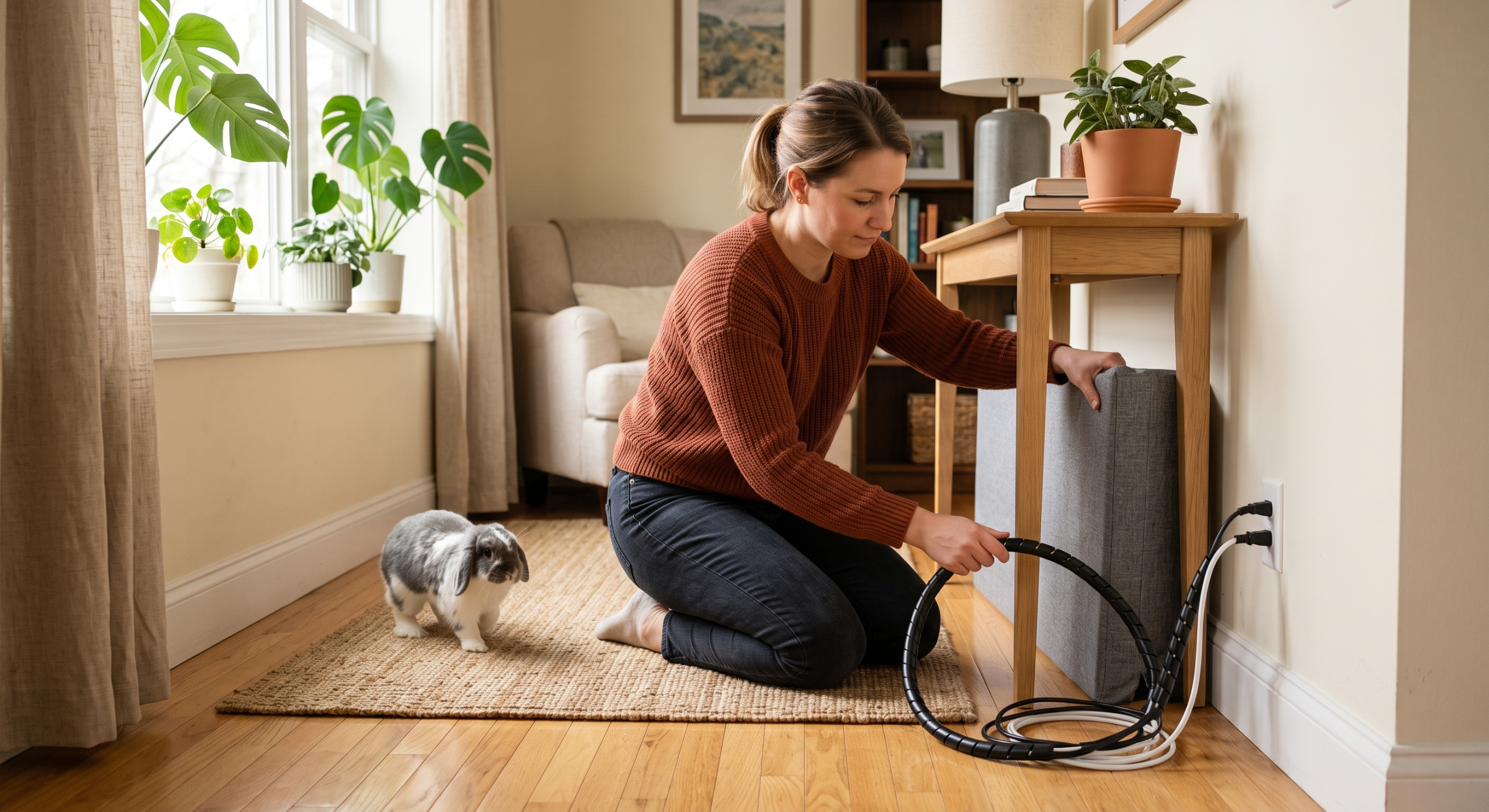
- Electrical cords — cover them with cord protectors or lift them out of reach; chewed cords are a serious shock risk
- Carpet and baseboards — block off tempting corners, since rabbits love to dig and gnaw
- Toxic houseplants — remove or relocate them; the ASPCA's list of toxic and non-toxic plants is a helpful reference
- Small swallowable objects — clear away rubber bands, coins, and stray bits from the floor
- Furniture gaps — block spaces where a rabbit could squeeze in and get stuck
- Cleaning products — store them fully out of reach
- Other pets — introduce dogs and cats slowly and always supervised
- Hot rooms or poor ventilation — rabbits overheat easily, so keep the space cool and airy
Rabbit-proofing isn't a one-time job. As your rabbit finds new corners to test, you'll keep adjusting. That's part of the fun, and it's another reason a new rabbit checklist should cover more than just supplies. A full new rabbit checklist should always include home safety checks.
5. Food Setup and Feeding Basics for Day One
Get the food right and you've handled one of the biggest pieces of rabbit care.
Unlimited grass hay is the foundation. It should always be available. Hay keeps the digestive system moving and helps wear down teeth that never stop growing. The House Rabbit Society and most rabbit-savvy vets agree hay is the single most important daily food.
Pellets in small amounts add nutrients, but they're a side dish, not the main meal. Follow the portion guidance on the package based on your rabbit's size, and don't overdo it.
Fresh, clean water should be available at all times. Many rabbits drink more from a heavy bowl than a bottle, so offering both can help.
Introduce greens slowly. Leafy greens are great, but add them gradually and one at a time so you can spot anything that doesn't agree with your rabbit. If you know what the rescue or breeder fed, stick with it at first and change things over a week or two.
Every rabbit is a little different, so check with a rabbit-savvy vet if you're unsure about amounts. Any practical new rabbit checklist should put food setup near the top of the list. A beginner-friendly new rabbit checklist should always prioritize hay, water, and a steady feeding routine.
6. Bringing Home a Rabbit: What to Expect the First Few Days
The ride home should be calm and quiet. Use a secure carrier, drive gently, and skip the loud music.
Once you're home, let your rabbit set the pace. Open the carrier inside the prepared enclosure and simply let them come out on their own. Don't reach in and pull them out.
During the first 24 to 72 hours, expect some hiding. A new rabbit may tuck into the hideout, thump, or barely touch the food while everything feels unfamiliar. This is normal settling-in behavior — and something every new rabbit checklist should prepare you for.
Keep noise low, limit handling, and let curious kids watch quietly. Do check that your rabbit is eating and leaving droppings — those are your best early signs that things are going well. Give it time, and confidence usually builds day by day. Keeping your new rabbit checklist close can help you stay organized during those first few days.
7. Practical Tips for First-Time Rabbit Owners
A few real-world situations tend to trip up new owners. Here's how to handle them calmly.
If Your Rabbit Seems Shy
Sit on the floor nearby and let them approach you. Offer a favorite green from your open hand. Trust grows on their timeline, not yours, so resist the urge to chase or grab.
If Your Rabbit Starts Chewing Everything
Chewing is natural, not naughty. Give plenty of safe chew toys, cardboard, and untreated wood to redirect the urge. Keep protecting cords and baseboards, and the chewing usually shifts toward the right targets.
If Your Rabbit Won't Use the Litter Box Right Away
Litter training takes patience. Place a little hay and a few of their droppings in the box to signal what it's for. Pop the box in the corner they naturally choose, and expect a few stray pellets while habits form.
8. Common Mistakes New Rabbit Owners Should Avoid
Even with a solid new rabbit checklist in hand, a few slip-ups are common. Here's what to watch out for:
- Buying a cage that's too small → Choose a spacious pen with room to hop and stand tall.
- Feeding too many pellets → Keep pellets to a small daily portion and let hay lead.
- Not offering enough hay → Keep unlimited grass hay available around the clock.
- Skipping rabbit-proofing → Secure cords, gaps, and plants before day one.
- Assuming rabbits are low-maintenance → Plan for daily care, cleaning, exercise, and enrichment.
- Forcing handling too soon → Let your rabbit come to you and build trust slowly.
Dodge these and you're already ahead of many first-time rabbit owners. A clear new rabbit checklist makes these mistakes easier to avoid. The right new rabbit checklist helps you catch problems before they turn into habits.
9. Safety & Warning Signs
Knowing what's fine and what's not helps you act fast when it counts.
- ✅ Safe practices
- Unlimited hay and fresh water available at all times
- A cool, well-ventilated indoor space
- Daily supervised time to move and explore
- Gentle, patient handling on your rabbit's terms
- ⚠️ Unsafe practices
- Housing a rabbit in a tiny cage all day
- Leaving cords, toxic plants, or cleaning products within reach
- Sudden diet changes
- Letting other pets interact unsupervised
🚩 Warning signs that need attention
- Not eating for several hours
- No droppings or a sudden drop in droppings
- Unusual lethargy or hiding beyond normal settling
- Trouble breathing
- Signs of a slowing gut, such as a bloated or hard belly
- Sudden refusal to move
A rabbit that stops eating or stops producing droppings can go downhill quickly. Treat these as urgent and contact a vet right away. A responsible new rabbit checklist should always include these warning signs. A smart new rabbit checklist doesn't just list supplies — it also helps you watch for red flags.
10. When to See a Vet
Some quiet, hidey behavior in the first days is just your rabbit adjusting. That part usually passes with patience.
But certain signs shouldn't wait. If your rabbit stops eating, stops passing droppings, seems unusually limp, or struggles to breathe, call a rabbit-savvy veterinarian promptly. Rabbits hide illness well, so changes can matter more than they look.
It's smart to find an experienced rabbit vet before you even bring your bunny home. The Association of Exotic Mammal Veterinarians can help you locate one. Booking a wellness check-up early gives you a trusted contact for questions and any surprises down the road. Adding this step to your new rabbit checklist can save a lot of stress later. Every practical new rabbit checklist should include a vet plan before adoption.
11. Your Quick Checklist
Use this new rabbit checklist as your final adoption day check-in. Save or screenshot it so it's ready when you need it.
- ✅ Spacious enclosure or exercise pen
- ✅ Unlimited grass hay + hay feeder
- ✅ Rabbit pellets (small daily portion)
- ✅ Fresh water in a heavy bowl
- ✅ Litter box + rabbit-safe litter
- ✅ Hideout or covered resting spot
- ✅ Safe chew toys and tunnels
- ✅ Grooming brush + nail clippers
- ✅ Secure carrier for the ride home
- ✅ Rabbit-proofed room (cords, gaps, plants)
| Item/Area | Why It Matters | What to Prepare |
|---|---|---|
| Enclosure | Gives your rabbit a safe base | Spacious pen or enclosure with room to stretch |
| Hay setup | Supports digestion and dental health | Unlimited grass hay in rack or feeder |
| Litter box | Helps with cleanliness and early habits | Rabbit-safe litter in a large litter box |
| Hideout | Helps reduce stress | Covered space or box for resting |
| Chew toys | Prevents boredom and destructive chewing | Safe chew toys and tunnels |
| Food setup | Supports a smooth transition | Hay, pellets, greens plan, fresh water |
| Rabbit-proofing | Prevents accidents | Cover cords, block gaps, remove toxic plants |
12. Frequently Asked Questions
What do you need before bringing a rabbit home?
You'll want a spacious enclosure, unlimited grass hay, a hay feeder, food and water bowls, rabbit pellets, a litter box with safe litter, a hideout, chew toys, grooming tools, and a carrier. Rabbit-proofing the room ahead of time is just as important as the supplies.
What is the best setup for a new pet rabbit?
The best setup is a roomy indoor space with a large pen or a rabbit-safe area to roam. Include unlimited hay, a litter box, a hideout, water, and chew toys, and keep the room cool and well ventilated. Space to move daily matters more than any single accessory.
Should a rabbit stay in a cage all day?
No. Rabbits need daily exercise and room to hop, stretch, and explore. A small cage all day can harm their health and happiness, so provide a spacious enclosure plus supervised time outside it every day.
How do you prepare your house for a rabbit?
Rabbit-proof by covering electrical cords, blocking furniture gaps, and removing toxic plants and cleaning products. Protect baseboards and carpet, clear away small swallowable objects, and plan safe, supervised introductions with any other pets.
How long does it take for a new rabbit to adjust?
Many rabbits start to relax within a few days, but full confidence can take several weeks. Some hiding and shyness early on is normal. Keep the environment calm, let your rabbit set the pace, and trust will build over time.
13. The Bottom Line
Bringing home a rabbit is a joyful step, and a little prep makes it so much smoother. When the space is ready, the hay is stocked, and the room is safe, your rabbit gets to start life with you feeling calm and secure.
Go easy on yourself, too. You won't get every detail perfect, and that's fine — your rabbit will show you what they love (probably that cardboard box). Returning to your new rabbit checklist before adoption day simply gives both of you a safer, calmer starting point.
Take it one step at a time, lean on a rabbit-savvy vet when you need to, and enjoy getting to know your new companion. The best part is just ahead. Keep this new rabbit checklist handy so you're not guessing once adoption day arrives. A strong new rabbit checklist can make the whole transition feel far less overwhelming.
Ready to Learn More?
Once your bunny settles in, explore our other Pet Care Guides to make sure you're providing the best life possible for your new furry friend!
This article is for informational purposes only and is not a substitute for professional veterinary advice. Always consult a licensed veterinarian about your pet's specific health needs.