
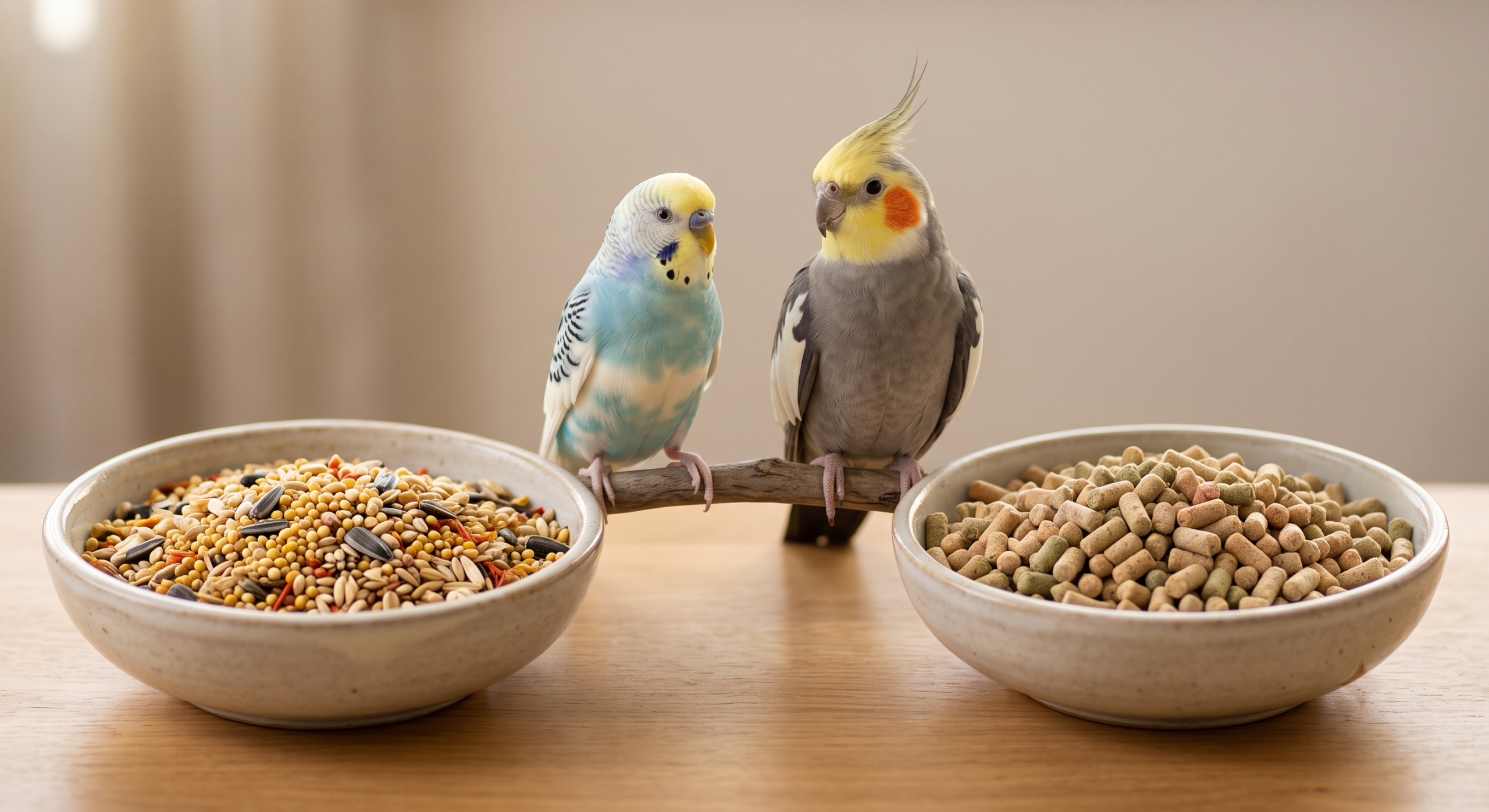
If you've spent any time researching what to feed your budgie or cockatiel, you've almost certainly run into this debate. Seeds or pellets? The bag of colorful seed mix at the pet store looks natural and appealing. The pellets look a bit like rabbit kibble. So which one is actually better for your pet bird?
The honest answer is: it depends — but not equally on both sides. There's a clear nutritional winner, and there are legitimate reasons why the other option still has a place in your pet bird's routine. I've dug into the research, consulted avian vet guidelines, and put together a thorough comparison so you can make the most informed decision for your feathered companion.
Let's start with what's actually inside each option.
Table of Contents
- What's Really in a Seed Mix?
- What's Really in Formulated Pellets?
- Head-to-Head: Seed Mix vs. Pellets at a Glance
- Why Most Avian Vets Recommend Pellets as the Base Diet
- Is Seed Mix Ever the Better Choice?
- Can You Use Both? How to Combine Seeds and Pellets Safely
- Common Mistakes Bird Owners Make With Either Option
- Frequently Asked Questions
- The Verdict: What Should You Actually Feed Your Pet Bird?
What's Really in a Seed Mix?
Walk into any pet store and you'll find seed mixes marketed for budgies, cockatiels, lovebirds, and other small parrots. They typically contain millet, canary grass seed, sunflower seeds, safflower seeds, and oats — ingredients that mirror what wild birds might forage for.
The nutritional reality is more complicated.
Seed mixes are high in fat and carbohydrates, particularly the sunflower and safflower seeds that many pet birds love most. According to VCA Animal Hospitals, seeds are deficient in many nutrients including vitamin A, vitamin D3, vitamin B12, calcium, and certain amino acids — all of which are critical for long-term health in pet birds.
Pros of seed mixes:
- Highly palatable — most pet birds eat them without hesitation
- Inexpensive and widely available
- Useful for foraging enrichment and mental stimulation
- Familiar texture for pet birds already raised on seeds
Cons of seed mixes:
- Nutritionally incomplete as a standalone diet
- High fat content can contribute to obesity and fatty liver disease
- Encourages selective eating — pet birds often pick out favorites and leave the rest
- Shorter shelf life once opened; oils in seeds can go rancid
The selective eating problem is particularly significant. A pet bird that picks out only millet or sunflower seeds from a mix isn't getting a balanced diet — it's getting a heavily skewed one.
What's Really in Formulated Pellets?
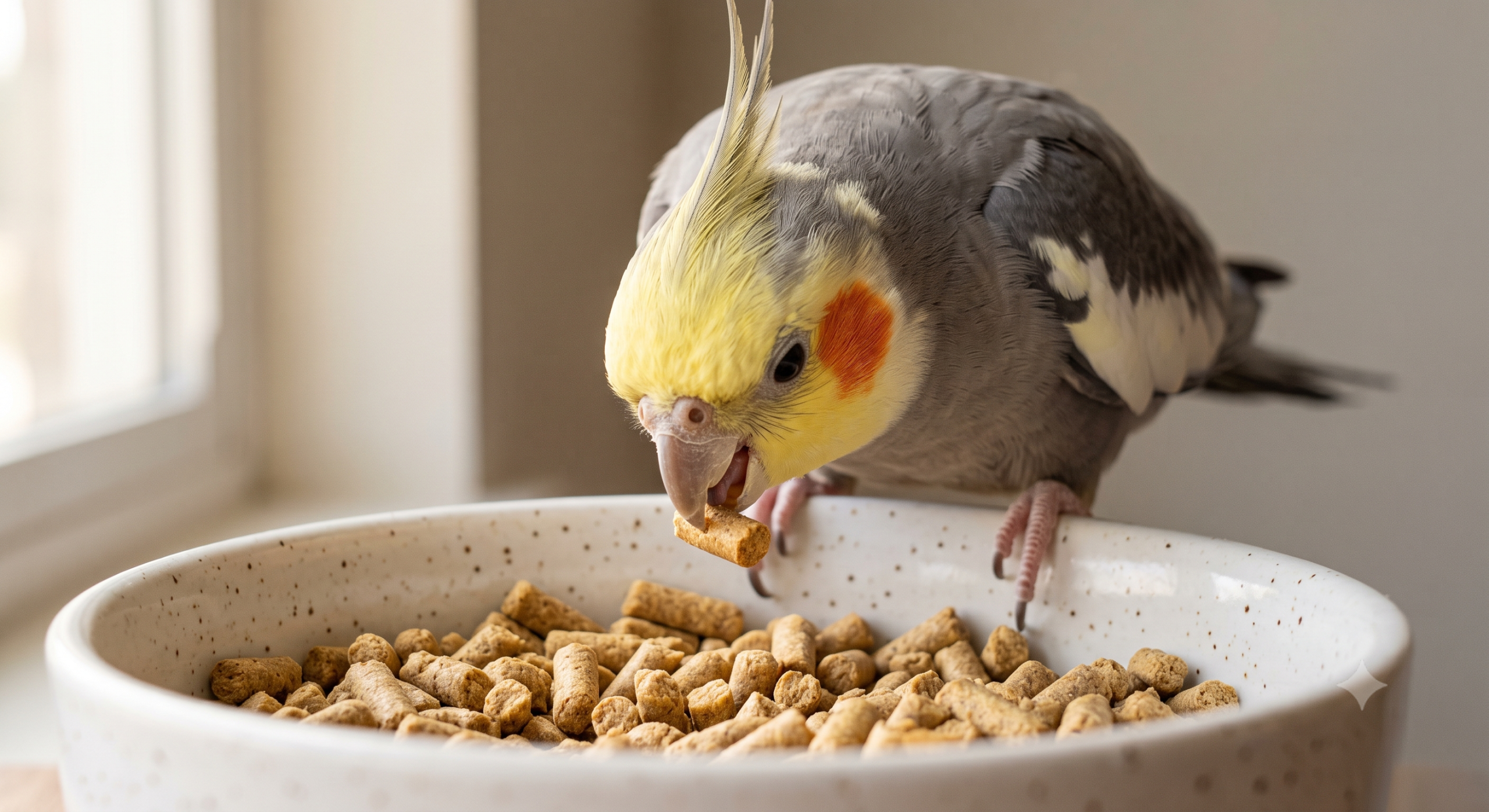
Formulated pellets (also called extruded or compressed pellets) are manufactured to contain a precise balance of nutrients in every bite. Brands like Harrison's Bird Foods, Zupreem, and Roudybush are among the most commonly recommended by avian vets for pet birds.
Each pellet delivers the same nutritional profile, which means your pet bird can't selectively eat around the nutrients it needs.
According to PetMD, a high-quality pelleted diet provides complete and balanced nutrition, including vitamins, minerals, protein, and carbohydrates in appropriate ratios for pet birds. This removes much of the guesswork involved in building a balanced diet from scratch.
Pros of formulated pellets:
- Nutritionally complete — no need to supplement most vitamins
- Eliminates selective eating
- Longer shelf life than seed mixes
- Easier to monitor how much your pet bird is actually consuming
Cons of formulated pellets:
- Many pet birds refuse them initially, especially those raised on seeds
- Less visually stimulating than a colorful seed mix
- Some pellets contain artificial colors or preservatives (check labels)
- Can feel monotonous without dietary variety alongside them
The transition from seeds to pellets is the most common challenge pet bird owners face — more on that shortly.
Head-to-Head: Seed Mix vs. Pellets at a Glance
| Factor | Seed Mix | Formulated Pellets |
|---|---|---|
| Nutrition Completeness | Incomplete — deficient in key vitamins and minerals | Complete — balanced in every bite |
| Cost | Lower upfront cost | Slightly higher, but better value per nutrient |
| Shelf Life | Shorter — oils can go rancid | Longer — more stable when stored correctly |
| Ease of Use | Simple to serve | Simple once bird accepts them |
| Risk of Selective Eating | High — birds pick favorites | Very low — uniform composition |
| Vet Recommendation | Supplement or enrichment | Primary base diet |
Why Most Avian Vets Recommend Pellets as the Base Diet
The consensus across avian veterinary organizations is consistent: pellets should form 60–80% of a pet bird's diet, with the remainder made up of fresh vegetables, fruits, and occasional treats.
The Association of Avian Veterinarians (AAV) has long advocated for formulated diets as the nutritional foundation for pet birds, citing the high rate of nutritional deficiency seen in seed-fed birds.
The most common health consequences of a seed-only diet in pet birds include:
- Vitamin A deficiency — linked to respiratory infections, feather problems, and poor immune function
- Hypocalcemia — calcium deficiency that can cause seizures and egg-binding in female birds
- Fatty liver disease — driven by excess fat from sunflower and safflower seeds
- Obesity — particularly in budgerigars and cockatiels on unrestricted seed diets
These aren't rare edge cases. VCA Animal Hospitals notes that nutritional disease is one of the most common health problems seen in pet birds, and that it is almost entirely preventable with a properly balanced diet.
The bottom line from avian vets: seeds are not inherently harmful, but they are harmful as a primary food source for pet birds.
Is Seed Mix Ever the Better Choice?
Fair question — and yes, there are genuine scenarios where seeds make more sense or serve an important role in a pet bird's routine.
- Breeding birds: Some avian breeders introduce higher-fat seed mixes during the breeding season to support increased energy demands. This is a targeted, time-limited use rather than an everyday approach.
- Picky eaters and transition periods: A pet bird that has eaten seeds its entire life may flatly refuse pellets at first. In this case, a gradual transition using seed mixes as a motivator can be more effective than going cold turkey.
- Foraging enrichment: Scattering seeds in a foraging toy or hiding them in paper cups gives pet birds mental stimulation. Used this way, seeds become enrichment rather than nutrition.
- Cost constraints: Pellets from premium brands can be pricier than basic seed mixes. If budget is a genuine barrier, a seed mix supplemented with fresh vegetables is still meaningfully better than seeds alone for pet birds.
- Outdoor or aviary birds: Free-flying aviary birds with higher activity levels may tolerate a higher seed component more effectively than sedentary cage birds.
The key distinction is intentionality. Seeds used deliberately, in the right context, for a specific purpose — that's responsible feeding. Seeds used because they're the default and the pet bird "seems to like them" — that's where health problems start.

Can You Use Both? How to Combine Seeds and Pellets Safely
Absolutely — and for many pet birds, a combination approach is both practical and nutritionally sound, provided pellets remain the primary component.
A balanced daily diet for a pet bird like a budgie or cockatiel might look like this:
- 60–70% formulated pellets (base nutrition)
- 20–30% fresh vegetables — leafy greens, carrots, bell peppers, cooked sweet potato
- 5–10% seeds or grains — used as treats or foraging enrichment
- Occasional fruit — offered in small amounts due to natural sugar content
How to transition a seed-fed pet bird to pellets:
- Start by offering pellets in the morning when your pet bird is hungriest
- Offer seeds later in the day as a secondary option
- Gradually reduce the seed portion over 2–4 weeks
- Never remove food entirely — always ensure your pet bird is eating something
- Monitor droppings closely during the transition; changes in consistency are normal but prolonged refusal is a red flag
Important: Always have your vet confirm your pet bird is eating adequately during a transition. Some birds, particularly older pet birds or those with health issues, need a slower, supervised approach.
Common Mistakes Bird Owners Make With Either Option
Even well-intentioned pet bird owners fall into a few predictable traps.
With seed mixes:
- Treating them as a complete diet — the most damaging mistake, and the most common
- Not rotating variety — single-species seed mixes (all millet, for example) are even more nutritionally limited
- Ignoring expiry dates — rancid seeds can cause digestive issues and nutrient degradation
- Offering too many sunflower seeds — highly palatable but high in fat; pet birds will preferentially eat these over everything else
With formulated pellets:
- Switching too quickly — an abrupt change can stress the pet bird and cause it to stop eating
- Buying pellets with artificial dyes — brightly colored pellets may appeal to owners, but the artificial coloring adds no nutritional value and some pet birds are sensitive to certain dyes
- Assuming pellets mean no fresh food — pellets cover the nutritional basics, but fresh vegetables still provide hydration, enrichment, and phytonutrients not found in processed food
- Not checking ingredient quality — not all pellets are equal; look for whole food ingredients and minimal fillers

Frequently Asked Questions
Are pellets safe for budgies and cockatiels specifically?
Yes. Formulated pellets from reputable brands like Harrison's, Roudybush, or Zupreem are designed for small pet birds including budgies, cockatiels, and lovebirds. Avian vets widely recommend them as the dietary foundation for these species. Choose pellets sized appropriately for small pet birds.
How long does it take to transition a pet bird from seeds to pellets?
Most pet birds adapt within 2–6 weeks when the transition is gradual. Some older or more stubborn individuals may take longer. The key is patience and consistency — never rush a pet bird that isn't eating, and always consult an avian vet if you're concerned about food intake during the switch.
Can a pet bird survive on seeds alone?
Technically, yes — many pet birds do. But "surviving" is not the same as thriving. Pet birds on seed-only diets are significantly more likely to develop nutritional deficiencies, fatty liver disease, and obesity, all of which reduce lifespan and quality of life. VCA Animal Hospitals identifies seed-only diets as a leading contributor to preventable illness in pet birds.
Do I need to give my pet bird vitamin supplements if they eat pellets?
Generally, no. One of the main advantages of a formulated pelleted diet is that it removes the need for most vitamin supplements. In fact, over-supplementing a pet bird already on pellets can cause vitamin toxicity. Always check with your avian vet before adding any supplements.
What vegetables should I offer my pet bird alongside pellets?
Dark leafy greens like kale, spinach, and romaine lettuce are excellent choices. Carrots, cooked sweet potato, bell peppers, and broccoli are also well-tolerated by most pet birds. Avoid avocado, onion, garlic, and anything containing caffeine or alcohol — these are toxic to pet birds.
Are organic pellets worth the extra cost?
Organic pellets (such as Harrison's Organic Bird Foods) avoid synthetic pesticides and artificial additives. Whether the premium cost is justified depends on your priorities and budget. For most pet birds, a high-quality conventional pellet is nutritionally equivalent. That said, if your pet bird has known sensitivities or you prefer a cleaner ingredient list, organic options are a legitimate choice.
The Verdict: What Should You Actually Feed Your Pet Bird?
After weighing everything up, the answer is straightforward — pellets first, seeds second.
Formulated pellets provide what a seed mix fundamentally cannot: complete, consistent nutrition in every single bite. For pet birds like budgies, cockatiels, and lovebirds living primarily in cages, this matters enormously. They're not flying miles a day burning off excess fat. They're relying on you to get their diet right.
That doesn't mean seeds are the enemy. Used thoughtfully — as foraging enrichment, transitional tools, or occasional treats — they have a place in a pet bird's healthy routine. The problem has never been seeds themselves. It's been treating them as a complete solution when they aren't.
If your pet bird currently eats a seed-heavy diet, it's not too late to change course. A gradual transition to pellets, supported by fresh vegetables and the occasional seed-based treat, can meaningfully improve your pet bird's long-term health. Talk to an avian vet if you're unsure where to start — they can tailor a feeding plan to your specific bird's age, weight, and health history.
Explore More Bird Care Tips
For more advice on keeping your feathered friends happy and healthy, check out our full range of Bird Care Guides.
About the Author
Irfan Hyder is a pet content writer at PetStory.org, where he creates practical, well-researched guides for everyday pet owners. He's passionate about helping people better understand and care for their animal companions.