
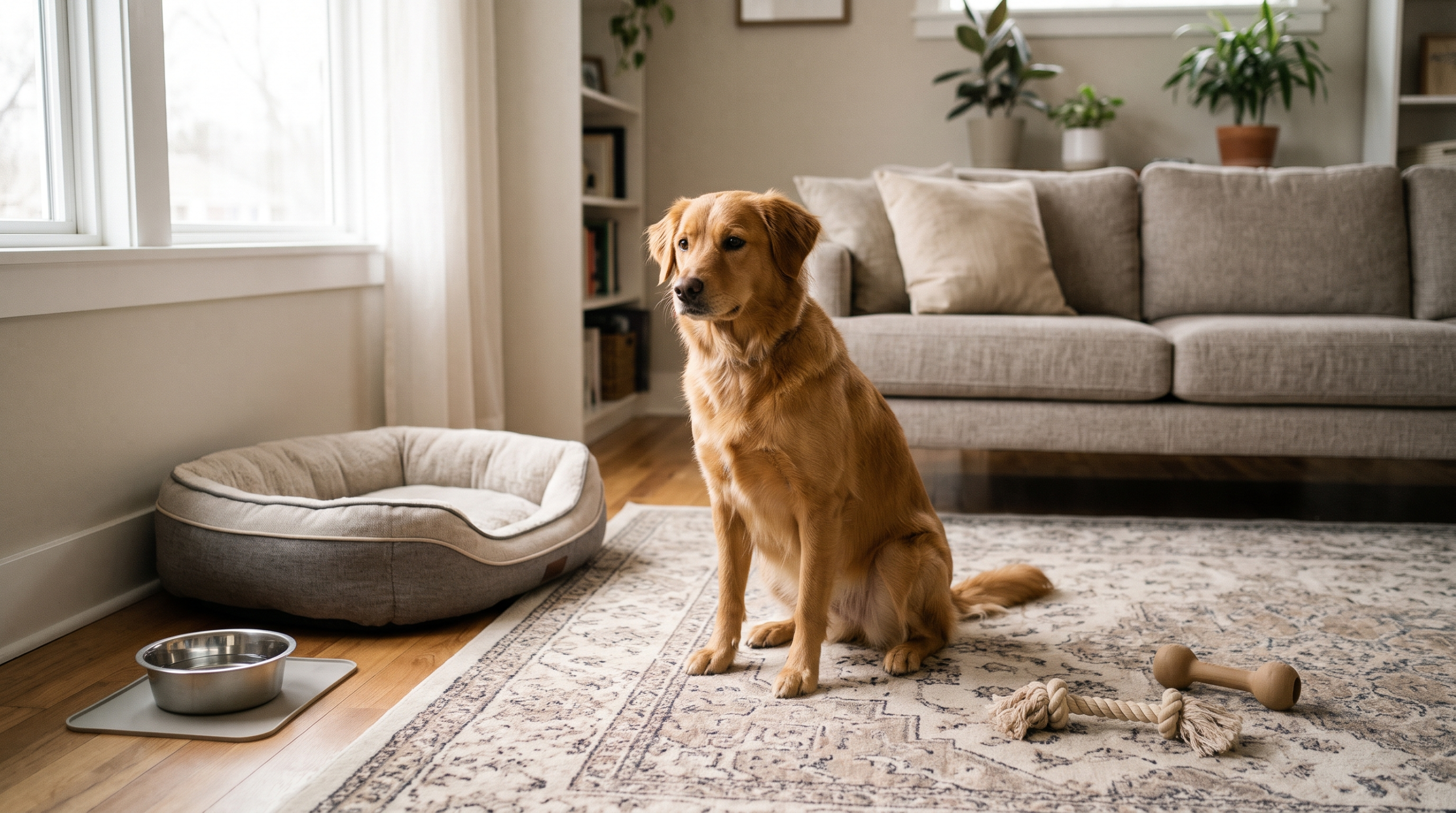
Before a new dog arrives, prepare a comfortable resting area, organise essential supplies and remove hazards from the rooms they may access. Check cupboards, electrical cables, windows, doors and outdoor boundaries, then decide which areas should remain restricted. Whether the dog is a puppy, an adult or a rescue, a carefully prepared home provides a safer environment and makes the practical arrangements easier to manage.
Table of Contents
- What Should You Do Before Your New Dog Arrives?
- How Do You Set Up a Safe Resting and Feeding Area?
- Which Supplies Should You Have Ready Before Your Dog Arrives?
- How Should You Dog-Proof Each Room?
- What Should You Check Outside and at Home Entrances?
- How Do You Adapt a Dog-Friendly Apartment Setup?
- Does Preparation Differ for Puppies, Adult Dogs and Rescue Dogs?
- What Should Be on the Final New Dog Home Checklist?
- Frequently Asked Questions
- Conclusion
What Should You Do Before Your New Dog Arrives?
To prepare your home for a new dog, choose a quiet resting area, organise food and water stations, gather essential supplies and secure household hazards. Check doors, windows, stairs, balconies and outdoor gates. Start with one suitable area and decide how the dog will access the rest of the home.
Decide Which Rooms Your Dog Can Access First
A new dog does not need immediate access to every room. Choose an initial area that is comfortable, easy to supervise and free from obvious hazards. This could be part of the living room, a quiet bedroom or another suitable space.
Walk through the property and identify areas that should remain restricted. These may include rooms with accessible cleaning products, electrical equipment, fragile objects or small items that could be swallowed. A secure pet gate or closed door can help manage access where necessary.
Consider how the dog will move between the resting area, feeding station and the appropriate route to the garden or outdoor toilet area. Keep the arrangement simple, with enough space to move comfortably.
A wider understanding of everyday responsibilities can also help put home preparation into context. PetStory's Dog Care Guide for First-Time Owners covers the broader needs of dog ownership beyond the physical home setup.
Agree on Household Rules and Responsibilities
Everyone in the household should understand which areas the dog can use and which items must remain out of reach. Agree on practical arrangements before the dog arrives.
For example, decide whether the dog will be allowed on furniture, which doors should remain closed and where food, toys and cleaning supplies will be stored. If children live in the home, explain that the dog's resting area is a place where it should be left undisturbed.
It is also useful to decide who will complete the final safety check. One person can inspect the rooms, cupboards and outdoor boundaries to make sure the preparation is complete.
How Do You Set Up a Safe Resting and Feeding Area?
A suitable resting area should be quiet, comfortable, clean and away from constant household activity. Dogs need somewhere they can relax without being disturbed, as well as access to a safe place where they can retreat when they want space. The RSPCA's guidance on a dog's home environment recommends providing a comfortable, quiet resting place and a safe space within the home.
Choose a Quiet, Easy-to-Clean Resting Place
Choose a location where the dog can rest without people repeatedly walking past or making unnecessary noise. Avoid placing the bed directly beside busy entrances, loud appliances or areas where household members regularly move furniture and equipment.
Prepare comfortable bedding that suits the dog's size and sleeping habits. It should be easy to clean and placed on a dry, stable surface. If the previous caregiver or rescue organisation can provide familiar bedding, ask whether it can accompany the dog. A familiar scent may provide some comfort in an unfamiliar environment.
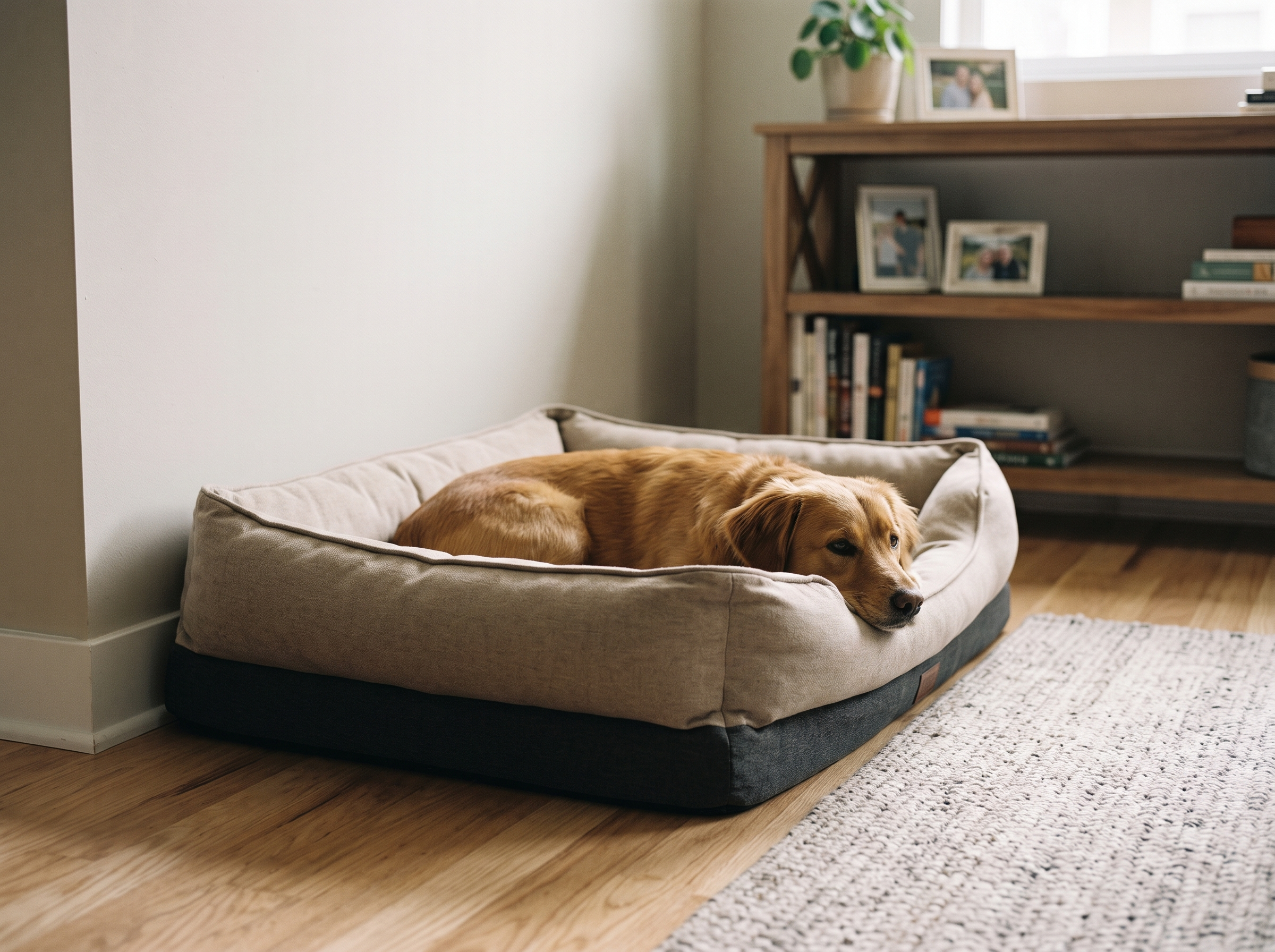
A crate or playpen can be useful in certain households, but neither is essential for every dog. A suitable room or clearly defined resting area may work just as well. If a crate is used, it should be appropriately sized and comfortable enough for the dog to stand, turn around and lie down. The dog should not be forced inside or prevented from using its safe space freely. The RSPCA's safe-space guidance for dogs provides further information on creating a comfortable place to retreat.
Set Up Food and Water Stations
Choose a feeding location that is easy for the dog to reach and away from rubbish bins, household chemicals and busy walkways. Place stable food and water bowls on a surface that is easy to clean.
Ask the previous owner, breeder or rescue organisation which food the dog currently eats. Keep some of that food available before arrival rather than introducing an unfamiliar diet at the same time as a change of home. If a diet change is planned, ask a veterinarian how to make the transition appropriately.
Store dry food in a closed container or secure cupboard. Keep food packaging, rubbish and other stored items out of reach. The BC SPCA's guidance on bringing a new dog home includes practical preparation advice for a dog's arrival.
Which Supplies Should You Have Ready Before Your Dog Arrives?
Prepare the supplies needed for comfort, feeding, safe handling and everyday cleaning. Separating essential items from optional equipment helps avoid unnecessary purchases and keeps the setup practical.
Everyday Essentials to Prepare Before Collection
The basic supplies will depend on the dog's size, age and individual needs. Most households should have the following ready:
| Essential Item | What to Consider |
|---|---|
| Bedding | Choose a comfortable bed that suits the dog's size and resting habits. |
| Food and water bowls | Use stable bowls that are easy to wash. |
| Familiar dog food | Ask what the dog currently eats and have an appropriate supply ready. |
| Collar or harness | Select a suitable fit for the dog's size and build. |
| Leash or lead | Keep one ready for safe handling outside the home. |
| Identification tag | Prepare identification with current contact details. |
| Waste bags | Store them somewhere easy to reach. |
| Cleaning supplies | Keep suitable cleaning products available and stored securely. |
Choose toys that match the dog's size and chewing habits. Avoid items with parts that can break off or be swallowed. Inspect toys regularly and remove damaged ones.
Optional Equipment to Choose for the Individual Dog
Some equipment can make household management easier, but not every dog needs the same arrangement.
| Optional Equipment | When It May Be Useful |
|---|---|
| Crate | When the dog is comfortable using one and it suits the household arrangement. |
| Exercise pen | To create a defined area in a suitable room. |
| Baby or pet gate | To restrict access to stairs, rooms or other areas. |
| Puppy pads | When they form part of an appropriate puppy toilet-training arrangement. |
| Interactive toys | To provide suitable activities and enrichment. |
Choose equipment based on the dog and the available space. A compact apartment may need a different arrangement from a house with several rooms. Avoid buying equipment simply because it appears on a general pet-supply checklist.
A barrier should be stable, appropriately sized and positioned so it does not create a tripping or entrapment hazard. Check that the dog cannot push it over, squeeze through it or become caught in gaps.
How Should You Dog-Proof Each Room?
A room-by-room check helps identify hazards that may be easy to overlook. Inspect the home from a dog's level and look for objects within reach, exposed cables, open storage and anything that could be chewed, swallowed or knocked over.
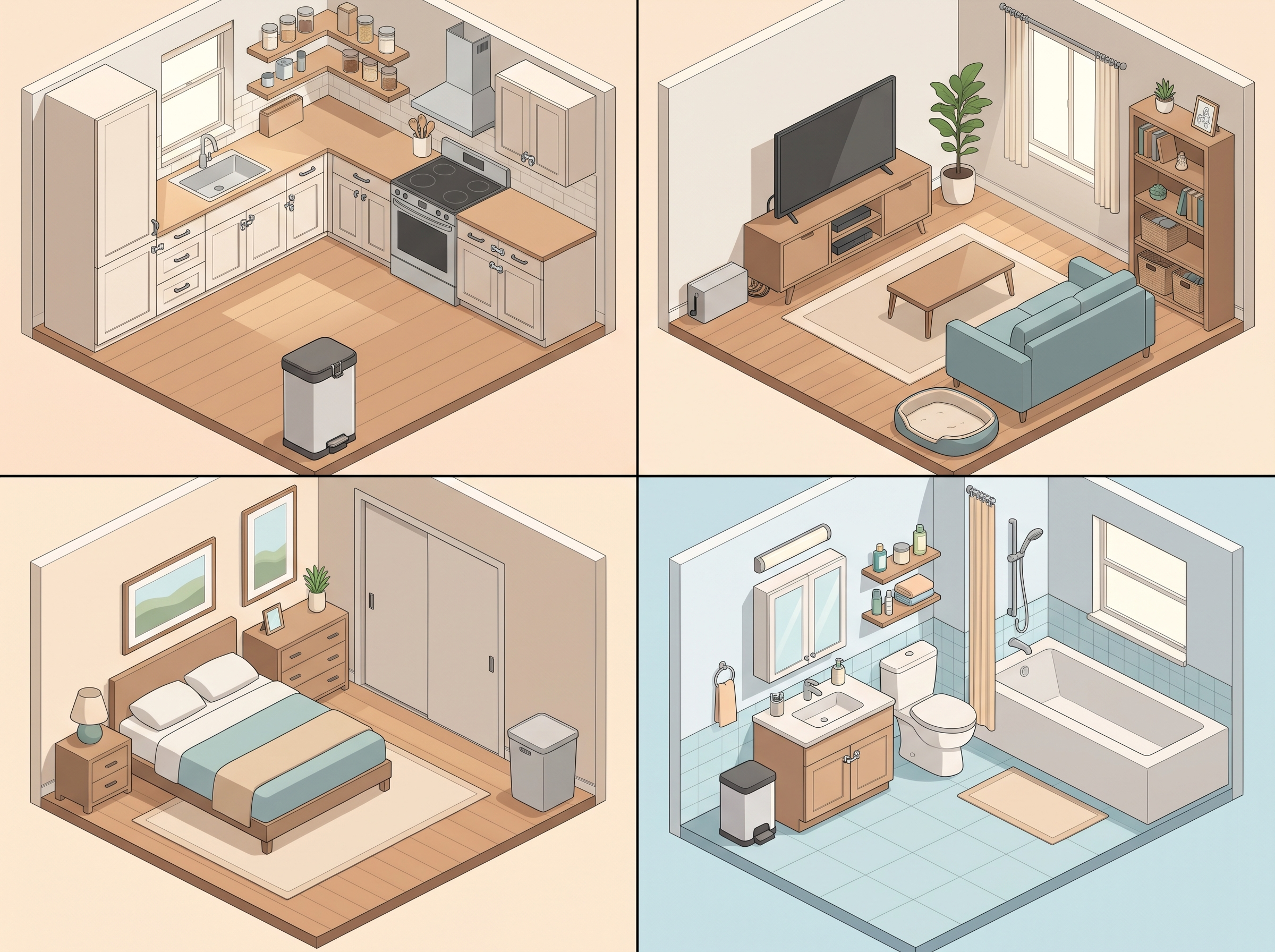
The American Kennel Club's puppy-proofing guidance highlights electrical cords, medicines, cleaning products, small objects, rubbish and potentially harmful plants as household hazards. Many of these precautions also apply when preparing a home for an adult dog.
Check the Kitchen and Dining Area
The kitchen contains food, rubbish, cleaning products and equipment that should not be within a dog's reach.
- Store human food in closed cupboards or secure containers.
- Keep rubbish bins covered or inside a secured cupboard.
- Move cleaning products, dishwasher products and detergents into inaccessible storage.
- Keep knives, sharp tools and small kitchen objects away from accessible surfaces.
- Do not leave food wrappers or packaging on low tables or floors.
Pay particular attention to foods that may be dangerous to dogs. Examples include chocolate, grapes and raisins, onions, garlic and products containing xylitol. Keep these items securely stored rather than relying on the dog to avoid them. The US Food and Drug Administration's pet-safety guidance lists potentially dangerous household foods and products.
Check the Living Room, Bedrooms and Bathrooms
Living areas often contain loose objects, electrical equipment and personal belongings that dogs may investigate.
Secure exposed electrical cables and keep chargers, headphones and small accessories out of reach. Store shoes, jewellery, coins, batteries and other small objects where the dog cannot access them.
In bedrooms, check bedside tables, laundry baskets and accessible storage. In bathrooms, secure toiletries, medicines and cleaning products. Keep toilet lids closed and store bathroom waste where the dog cannot reach it.
Also inspect window-blind cords and other hanging loops. Secure or remove them where they could become entanglement hazards.
Secure Medicines, Chemicals, Foods and Plants
Human medicines should remain in closed, inaccessible storage. Do not assume that a medicine is safe simply because it comes in familiar household packaging. The FDA warns that medicines intended for people or other pets may be harmful to animals unless specifically directed by a veterinarian. See its overview of potentially dangerous items for pets.
Store household cleaners, detergents, pesticides, fertilisers and other chemicals securely. Follow product instructions when using cleaning products and keep the dog away from treated areas for the period stated on the label.
Check indoor and outdoor plants against a reliable dog-specific toxicity reference. Some common household and garden plants can be harmful if chewed or eaten. Because plant toxicity varies, identify the plants in the home rather than assuming that familiar decorative varieties are safe.
If a dog is suspected of eating a potentially dangerous item or coming into contact with a hazardous substance, contact a veterinarian or an appropriate local animal poison service promptly. Do not try to treat a suspected poisoning at home without professional guidance. The ASPCA's information on poisonous household products provides further reference material.
What Should You Check Outside and at Home Entrances?
Preparing the indoor space is only part of dog-proofing. Doors, windows, outdoor boundaries and access points also need attention before the dog arrives.
Check the Garden, Fences, Gates and Outdoor Hazards
Walk around the garden or outdoor area and inspect its boundaries. Look for gaps under fences, loose panels, damaged gates and openings that could allow a dog to escape.
Secure gardening tools, chemicals, fertilisers and rubbish. Check the area for harmful plants, sharp objects, exposed wires and other hazards that may be accessible at ground level.
If the property has a pool, pond or other water feature, assess access and install suitable physical barriers where needed. A fenced garden does not replace supervision when a dog is outside.
The AKC's outdoor puppy-proofing guidance also highlights fences, toxic plants, pools, garden chemicals and supervision as important safety considerations.
Secure Doors, Windows, Stairs and Balcony Access
Check that exterior doors close properly and that household members understand which entrances need extra attention. A dog should not be able to push through an unsecured door and reach an unsafe outdoor area.
Inspect windows and screens rather than assuming they provide secure containment. Secure blind cords and keep accessible window openings appropriately restricted.
Use a stable gate where access to stairs needs to be managed. In apartments, keep balcony access restricted unless the area has been properly assessed and made secure for the individual dog. Do not rely on ordinary railings or insect screens to prevent falls or escapes.
How Do You Adapt a Dog-Friendly Apartment Setup?
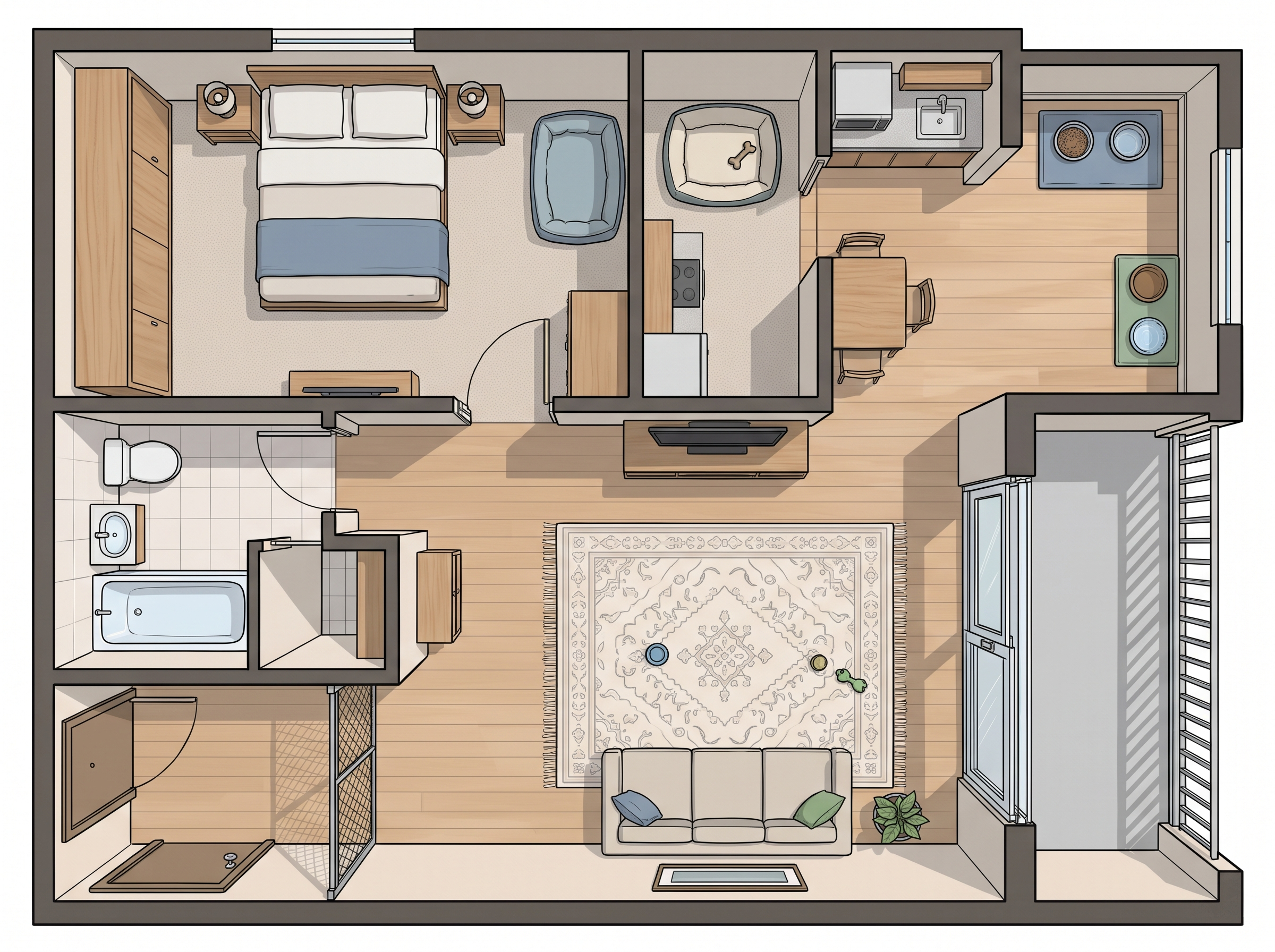
An apartment may have less available floor space, fewer separate rooms and shared entrances. The aim is to create clear areas for resting, feeding and suitable activities without blocking normal household movement.
Create Practical Zones in a Smaller Home
Choose a quiet corner or suitable part of a room for the dog's bed. Place food and water bowls in a separate, accessible location. Keep toys and everyday supplies in secure storage.
Avoid placing the bed in a busy doorway or directly beside noisy appliances. Make sure the dog can move around without knocking over bowls, lamps or other household items.
Pet gates or appropriate barriers can help manage access in compact homes. Choose equipment that fits the layout and can be installed securely without creating another hazard.
The resting area should remain available even when other parts of the apartment are in use. If the home has limited space, a simple arrangement with a bed, bowls and secure storage may be more practical than adding several pieces of equipment.
Check Entry Doors, Windows, Balconies and Rental Restrictions
An apartment's main entrance may open directly onto a shared corridor or common area. Consider this when planning how the dog will move through the home.
Check windows, balcony doors and access to shared spaces. Keep balcony access restricted unless the area is genuinely secure for the individual dog.
If the property is rented or part of a managed building, check the lease and relevant building rules before installing permanent fixtures or making structural changes. Reversible barriers may be more suitable where permanent alterations are not permitted.
The safest arrangement is one that fits the dog's size and behaviour as well as the apartment's physical layout.
Does Preparation Differ for Puppies, Adult Dogs and Rescue Dogs?
The main preparation steps remain similar, but some details depend on the individual dog. Consider age, size, mobility and any known needs when deciding which areas to secure and what equipment to prepare.
| Dog | Preparation Considerations |
|---|---|
| Puppy | Check low surfaces, small objects, cables, cupboards and spaces behind furniture particularly carefully. |
| Adult dog | Choose bedding, barriers and equipment that suit the dog's size, strength and mobility. |
| Rescue dog | Ask the organisation or previous caregiver about familiar bedding, current food and any known physical or sensory needs. |
Extra Checks for Puppies
Puppies are often curious about objects they can reach, chew or pick up. Inspect floors, low shelves and areas behind furniture for small objects and accessible cables.
Secure cupboards and rubbish bins. Check whether gates and barriers are suitable for the puppy's size, since a small puppy may fit through gaps that would not be a problem for an adult dog.
Keep potentially harmful foods, medicines, chemicals and plants out of reach. Puppy-proofing measures should remain in place as the dog grows, with adjustments made as its size and behaviour change.
For guidance on what happens after the home is prepared, PetStory's guide to a puppy's first 24 hours covers the homecoming and the first day.
Preparing for an Adult or Rescue Dog
An adult dog may need different equipment from a puppy. Check the dog's size, mobility and any known physical needs before choosing a bed, gate or resting location.
For a rescue dog, ask the organisation or previous caregiver about the food the dog currently eats and whether familiar bedding or safe toys can accompany it. These are practical preparation details that can help make the physical setup more familiar.
Keep the initial home area suitable for that individual dog. Avoid assuming that every adult or rescue dog has the same equipment requirements or household preferences.
What Should Be on the Final New Dog Home Checklist?
Before bringing the dog home, walk through the property once more. Use this checklist to confirm that the basic setup is ready.
- ☐ A quiet, comfortable resting area is prepared.
- ☐ Food and water bowls are clean and accessible.
- ☐ The dog's current food and essential supplies are ready.
- ☐ A suitable collar or harness, leash or lead, and identification tag are available.
- ☐ Electrical cables and small objects are secured.
- ☐ Medicines, cleaning products and household chemicals are inaccessible.
- ☐ Food, rubbish and potentially harmful plants are secured.
- ☐ Doors, windows, stairs and balcony access have been checked.
- ☐ Garden boundaries and gates are secure.
- ☐ Restricted rooms and household access rules are clear to everyone.
- ☐ Any optional crate, playpen or gate is suitable for the individual dog.
Completing this final check helps confirm that the home is ready before the dog arrives. Revisit the setup if the dog will have access to additional rooms or outdoor areas later.
Frequently Asked Questions
1. How do you prepare your home before bringing a dog home?
Start by choosing a quiet resting area and deciding which rooms the dog can access. Prepare food and water bowls, gather essential supplies and secure household hazards. Check doors, windows, stairs, garden boundaries and any other areas the dog may reach.
2. Which household hazards should be secured or removed?
Secure electrical cables, medicines, cleaning products, rubbish, sharp objects and small items that could be swallowed. Keep potentially harmful foods and plants out of reach. Check each room from the dog's level instead of inspecting only shelves and surfaces used by people.
3. How can an apartment be arranged with a safe dog resting area?
Choose a quiet corner or suitable part of a room for bedding. Keep food and water accessible but separate from busy walkways. Use secure barriers where needed, and check windows, entry doors and balconies before allowing access.
4. What supplies should be ready before a new dog arrives?
Prepare comfortable bedding, food and water bowls, the dog's familiar food, a suitable collar or harness, a leash or lead, an identification tag and waste bags. Choose additional equipment, such as a gate or crate, according to the dog's needs and home layout.
5. Does every dog need a crate?
No. A crate is one possible way to organise a resting or management area, but it is not essential for every dog. A suitable room, quiet corner or playpen may also work. Any crate should be appropriately sized and introduced without forcing the dog inside.
6. Should a new dog have access to the whole house immediately?
Not necessarily. Preparing one suitable area first can make household management easier. Decide which rooms are safe and accessible, and use appropriate barriers or closed doors to manage the rest of the home. The arrangement can be reviewed as the dog's needs become clearer.
7. What should be checked before a dog uses the garden?
Inspect fences, gates and possible escape routes. Secure garden chemicals, tools and rubbish, and check for plants or objects that could harm the dog. Assess access to pools or ponds, and plan to supervise the dog outdoors.
Conclusion
Preparing a home for a new dog starts with a safe resting area, essential supplies and a careful check of indoor and outdoor hazards. Adapt the setup to the dog's needs and the space available rather than buying equipment that may not be necessary. Once the physical environment is ready, PetStory's daily dog care routine guide can help organise the everyday care that follows.
Sources and Further Reading
The following animal-welfare and veterinary information resources provide additional guidance on preparing a home, creating a safe resting area and identifying common household hazards:
- RSPCA: Dogs and Their Home Environment - Guidance on providing a suitable home environment and resting space.
- RSPCA: A Safe Space for Dogs - Information on creating a quiet and comfortable area where a dog can retreat.
- BC SPCA: Bringing a New Dog Home - Practical preparation advice for welcoming a dog into a household.
- American Kennel Club: Puppy-Proofing Your Home and Yard - Common indoor and outdoor hazards to consider when preparing a home.
- US Food and Drug Administration: Potentially Dangerous Items for Your Pet - Examples of foods, medicines and household products that may endanger pets.
- ASPCA: Poisonous Household Products - Reference information about household substances that can be hazardous to animals.
About the Author
Irfan Hyder is the editor of PetStory.org, an independent publication covering pet care, adoption, nutrition and behaviour. He has spent around 8 years caring for pets at home, including his Golden Retriever, Max, his Persian cat, Luna, and pet birds, and writes alongside veterinary and reputable sources.
Explore More Dog Care Guides
Preparing the home is an important first step in welcoming a dog. Explore PetStory's dog care resources for further practical guidance on everyday routines, nutrition, behaviour and responsible ownership.