Table of Contents
There is a particular kind of heartbreak that comes with realizing your dog will not be with you forever. Most dog owners know it is coming, but few feel truly prepared. You watch them age — the gray muzzle, the slower mornings, the naps that last a little longer — and wish, more than anything, you could slow it down.
The reality is that dogs don’t all age at the same rate. Some breeds are just hitting their prime while others are already entering their senior years. Dog breeds known for longevity, like Chihuahuas and Toy Poodles, often live for 15, 16, or even 18 years, staying active well into their teens. In contrast, giant breeds such as Great Danes or Mastiffs are considered seniors by age six and may not reach their tenth birthday.
This significant difference isn’t just due to chance. A dog’s potential lifespan is influenced by a combination of genetics, body size, and the history of its selective breeding. However, the daily choices you make as an owner—from diet and exercise to preventative veterinary care—also play a crucial role in determining not just how long your dog lives, but how well.
Understanding canine longevity gives you real influence. In this article, you will learn which breeds live longest, why size and genetics play such a major role, and what you can start doing today to give your dog more time.
Why Do Some Dog Breeds Live Longer Than Others?
The short answer is that lifespan in dogs is driven by a combination of genetics, body size, and metabolic rate — and all three are deeply connected to how each breed was developed.
Body size is the single strongest predictor of lifespan in dogs. Smaller dogs generally live longer than large ones, which is the opposite of what we see in most other mammals. Scientists believe this is linked to the fact that larger dogs grow faster and produce more growth-related hormones — particularly IGF-1 — which accelerates the aging process at the cellular level. The faster a body grows, the faster it tends to break down.
Genetics and breeding history matter just as much. Some breeds were developed over centuries for working in demanding conditions, which naturally selected for robust health and hardiness. Others were bred primarily for appearance or temperament, sometimes at the cost of structural or genetic health. Breeds with a wider gene pool and fewer inherited disorders tend to age more gracefully.
Metabolic rate also plays a role. Smaller dogs have relatively slower metabolic processes compared to their body mass, which may contribute to less oxidative stress over time — the cellular wear and tear that accumulates with age.
What this means for you: your dog’s lifespan potential is partly written into their biology. But lifestyle factors — nutrition, weight, exercise, veterinary care — can meaningfully shift that potential in your favor. Genetics sets the ceiling; how you care for your dog determines how close to it they get.
Dog Breeds With the Longest Lifespans

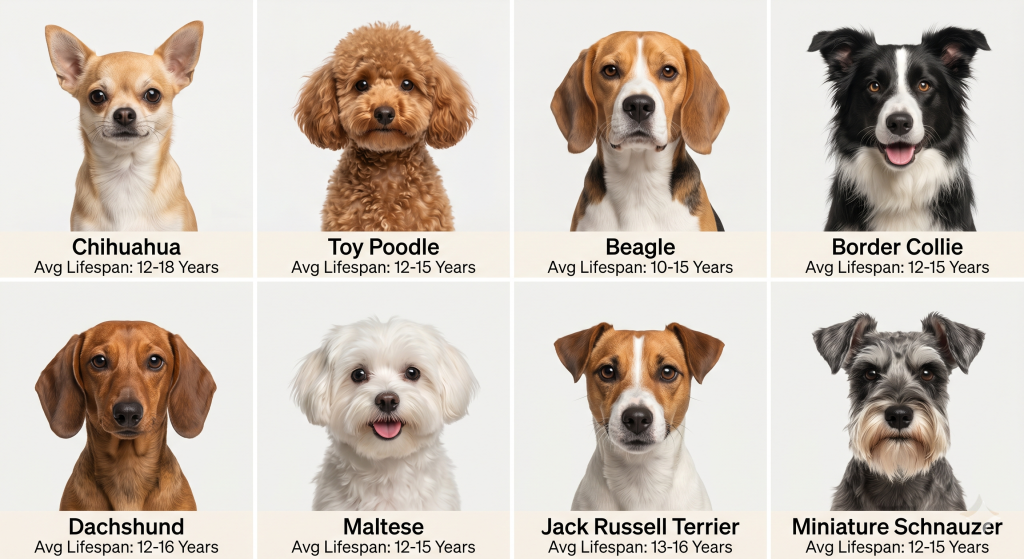
Some of the world’s longest-living dogs are also among the most beloved companions. Here is a closer look at 12 breeds consistently recognized for exceptional longevity, based on data from sources including the American Kennel Club (AKC) and veterinary research.
Comparison Table: Longest Living Dog Breeds
| Breed | Average Lifespan | Size Category | Notable Health Strength |
|---|---|---|---|
| Chihuahua | 14–18 years | Toy | Low rate of inherited structural disease |
| Toy Poodle | 14–18 years | Toy | Genetically diverse, highly adaptable |
| Maltese | 12–15 years | Toy | Few breed-specific hereditary conditions |
| Jack Russell Terrier | 13–16 years | Small | High energy, lean build, strong constitution |
| Dachshund | 12–16 years | Small | Resilient and hardy when weight is managed |
| Miniature Schnauzer | 12–15 years | Small | Sturdy with low cancer rates |
| Shih Tzu | 10–18 years | Small | Known for remarkably long individual lifespans |
| Lhasa Apso | 12–15 years | Small | Ancient breed with a strong natural constitution |
| Beagle | 12–15 years | Medium | Hardy working breed with a diverse gene pool |
| Basenji | 13–14 years | Medium | Primitive breed with minimal inherited disease |
| Border Collie | 12–15 years | Medium | Athletic, lean, highly active |
| Australian Cattle Dog | 12–16 years | Medium | Exceptionally robust working breed |
Chihuahua — 14–18 years
Chihuahuas are among the longest-lived of all dog breeds. Their tiny frames carry fewer structural stresses, and they tend to avoid many of the joint and cardiac conditions that affect larger dogs. They are spirited, loyal, and surprisingly low-maintenance in terms of exercise needs.
Toy Poodle — 14–18 years
The Toy Poodle combines intelligence, adaptability, and genuine genetic strength. Their varied gene pool has helped prevent the concentration of inherited disorders, and their lean, active build supports long-term health. Mental stimulation is especially important for keeping them sharp as they age.
Jack Russell Terrier — 13–16 years
Jack Russells were bred for demanding work, and that ancestry shows in their health. They are athletic, lean, and energetic well into old age. Consistent exercise and mental engagement are key to their longevity.
Australian Cattle Dog — 12–16 years
One of the most celebrated examples of canine longevity is that of individual dogs documented living past 20 years. This breed was shaped by generations of physically demanding farm work, which created an exceptionally robust constitution. They thrive with purpose, plenty of activity, and a consistent routine.
Beagle — 12–15 years
Beagles are a hardy, scent-driven breed with a working dog’s resilience. Their moderate size and relatively diverse genetics make them one of the more balanced breeds in terms of health. They do benefit from careful weight management, as they have a strong appetite.
Basenji — 13–14 years
One of the oldest and most primitive dog breeds, the Basenji has had minimal modification through selective breeding. That natural diversity in their gene pool translates into fewer hereditary diseases. They are clean, quiet, and surprisingly cat-like in their independence.
Border Collie — 12–15 years
Border Collies are bred for endurance, intelligence, and sustained physical output. Their lean, muscular build and exceptional activity levels support cardiovascular and joint health throughout their lives. Mental stimulation is as essential as physical exercise for this breed.
The Role of Size in Canine Longevity

The relationship between a dog’s size and how long they live is one of the most well-established patterns in veterinary science — and it tends to surprise people who are new to it.
In most animals, larger species outlive smaller ones. Elephants outlive mice. But dogs are a notable exception. Within the canine species, smaller individuals consistently outlive larger ones — and the lifespan difference can be dramatic.
Why Does Size Shorten a Large Dog’s Life?
Large and giant breed dogs grow rapidly in their first two years of life. That accelerated growth requires high levels of hormones — particularly insulin-like growth factor 1 (IGF-1) — which are associated with faster cellular aging. The larger the dog, the more of this growth activity the body undergoes, and the earlier it begins to show signs of age-related decline.
Giant breeds also face a higher statistical risk of:
- Cancer — the leading cause of death in large breeds like Great Danes and Bernese Mountain Dogs
- Cardiac disease — dilated cardiomyopathy is more common in large and giant breeds
- Orthopedic deterioration — more body weight means more stress on joints, cartilage, and bone over time
Small breeds, by contrast, grow more slowly, carry less physical stress on their frames, and tend to develop fewer degenerative conditions as they age.
Average Lifespan by Size Category
| Size Category | Weight Range | Average Lifespan |
|---|---|---|
| Toy / Small | Under 20 lbs | 14–18 years |
| Medium | 20–50 lbs | 11–15 years |
| Large | 50–100 lbs | 9–13 years |
| Giant | Over 100 lbs | 7–10 years |
Of course, these are just averages. A dog’s lifespan also depends on genetics, diet, exercise, and veterinary care. While size plays a role, it doesn’t determine a dog’s fate; a well-cared-for large dog can easily outlive a neglected smaller one. Ultimately, responsible ownership is the best way to help your dog live a long and healthy life.
Genetics, Breed-Specific Health Risks, and What They Mean for Lifespan

Every dog breed carries a genetic fingerprint shaped by decades — sometimes centuries — of selective breeding. That fingerprint includes both strengths and vulnerabilities.
Some breeds carry higher genetic risks for life-shortening conditions:
- Cavalier King Charles Spaniel — mitral valve disease is nearly universal in this breed by age 10. Early screening through the Orthopedic Foundation for Animals (OFA) cardiac protocol is strongly recommended.
- Boxer — one of the breeds with the highest rates of cancer and cardiomyopathy. Regular cardiac checkups and cancer surveillance are important from middle age.
- English Bulldog — brachycephalic (flat-faced) anatomy creates respiratory challenges that affect sleep quality, exercise capacity, and long-term health. Many Bulldogs also experience significant orthopedic stress.
- German Shepherd — degenerative myelopathy and hip dysplasia are well-documented in this breed, requiring proactive joint monitoring and appropriate exercise management.
None of these risks make a shorter life a certainty. They mean that if you own one of these breeds, you and your veterinarian should work together from early on — screening proactively, monitoring regularly, and making lifestyle adjustments before problems become serious.
Breeds with relatively lower inherited disease burdens include the Australian Cattle Dog, Basenji, Jack Russell Terrier, and mixed-breed dogs generally. Mixed breeds benefit from what geneticists call heterosis — the health advantage that comes from greater genetic diversity.
Knowing your dog’s breed-specific risks is not cause for anxiety. It is a practical advantage. Breed-aware owners are better prepared, more proactive, and more likely to catch problems early enough to make a real difference.
How Nutrition, Weight, and Exercise Affect How Long Your Dog Lives

This is where you have the most direct influence over your dog’s longevity. Genetics and size are largely fixed. Nutrition, weight, and exercise are choices you make every day.
The Weight-Lifespan Connection
One of the most compelling pieces of research in canine longevity comes from a long-term Purina study that tracked Labrador Retrievers over their lifetimes. Dogs maintained at a lean body condition lived a median of 1.8 years longer than their overweight littermates. That is nearly two full years, simply from maintaining a healthy weight.
Even moderate overweight status increases your dog’s risk of:
- Type 2 diabetes
- Joint disease and osteoarthritis
- Heart disease
- Certain cancers
- Reduced immune function
How Nutrition Supports Healthy Aging
High-quality nutrition supports your dog’s body in ways that compound over time:
- Organ function — quality protein and appropriate fat levels support kidney, liver, and heart health
- Immune health — antioxidants, omega-3 fatty acids, and balanced micronutrients reduce systemic inflammation
- Coat and skin health — an outward reflection of nutritional balance
- Cognitive function — emerging research links specific nutrients to slower cognitive decline in senior dogs
Look for foods that list a whole protein source first, avoid unnecessary fillers, and choose formulas appropriate for your dog’s life stage. Consult your vet before making significant dietary changes.
For more guidance on feeding your dog well at every age, explore the PetStory.org Dog Nutrition Guide.
The Role of Exercise
Consistent, age-appropriate exercise does far more than manage weight. It:
- Maintains muscle mass, which supports joint stability and metabolic health
- Supports cardiovascular function, reducing cardiac risk in breeds prone to heart disease
- Slows cognitive decline by promoting circulation and brain stimulation
- Reduces behavioral stress, which has direct effects on immune function and overall well-being
Adjust exercise to your dog’s age and condition:
- Puppies — controlled, moderate activity. Avoid repetitive high-impact exercise that stresses developing joints.
- Adult dogs — daily walks plus structured play, scaled to breed energy level.
- Senior dogs — shorter, more frequent outings. Gentle movement is better than extended exertion. Swimming is excellent for older dogs with joint issues.
Practical Ways to Help Your Dog Live a Longer, Healthier Life

You cannot change your dog’s breed or rewrite their genetics. But the decisions you make every day as their owner have a measurable impact on how long and how well they live. Here is where to focus.
- Schedule regular veterinary checkups. Annual exams catch developing problems early. For dogs over seven, twice-yearly visits give your vet a clearer picture of how aging is progressing. Ask your vet about breed-specific screenings.
- Keep vaccinations and parasite prevention current. Preventable diseases and parasites place real stress on the immune system. Staying current with your dog’s preventive care schedule is one of the simplest longevity investments you can make.
- Manage weight actively. Do not estimate — measure your dog’s food. Use your vet’s body condition score chart to assess their weight at each visit. Treats should make up no more than 10% of daily calories.
- Prioritize dental health. Periodontal disease is directly linked to heart, kidney, and liver disease in dogs. Brush your dog’s teeth regularly, provide dental chews approved by the Veterinary Oral Health Council (VOHC), and schedule professional cleanings as recommended. Find more dental care guidance at the American Veterinary Medical Association (AVMA).
- Provide daily mental stimulation. Cognitive health is physical health. Puzzle feeders, training sessions, scent games, and varied walks all keep your dog’s brain engaged and help slow age-related cognitive decline.
- Minimize unnecessary stress. Chronic stress suppresses immune function and accelerates aging. Predictable routines, a stable home environment, positive reinforcement-based training, and respectful handling all reduce your dog’s daily stress load.
- Know your breed’s health risks — and act on them early. Talk to your vet about what your dog’s breed is most susceptible to. Early screening for cardiac disease, hip dysplasia, or other breed-specific conditions can mean earlier intervention and significantly better outcomes.
For breed-specific health guidance, the Orthopedic Foundation for Animals (OFA) maintains one of the most comprehensive breed health databases available.
Every Year With Them Is Worth Protecting
The dogs that live longest are not just lucky. They tend to be well-fed, appropriately exercised, closely monitored by caring owners, and seen regularly by a veterinarian who knows their history.
You cannot guarantee any number of years with your dog. But you can stack the odds in their favor — starting today, with the food you choose, the walks you take, and the vet appointments you keep.
The time you invest in your dog’s health now pays back in years — and in the quality of every one of them.
Ready to go deeper? Visit PetStory.org to explore more breed profiles, senior dog care guides, expert health and wellness articles, and trusted buying guides for every stage of your dog’s life. Whether you are raising a puppy or caring for a senior companion, we have got the resources to help you give them the best life possible.