Best Ways to Take Care of a New Puppy — Complete Owner's Guide


Let’s be completely honest for a second. There are few things in life as magical as bringing a new puppy home. That warm, fuzzy bundle of joy with oversized paws, puppy breath, and a wildly wagging tail is guaranteed to melt your heart. You’ve probably spent weeks picking out the perfect name, buying cute toys, and imagining all the fun park visits in your future.
But then, the first night happens. The crying starts. You find a puddle on your expensive rug. Suddenly, the reality of pet parenthood hits you like a freight train. You find yourself standing in the living room at 3:00 AM, exhausted, wondering exactly how to take care of a new puppy without completely losing your mind.
If you are a first-time puppy parent feeling a mix of overwhelming love and sheer panic, take a deep breath. You are not alone, and it gets better. Raising a dog is a massive commitment, similar to bringing a newborn baby home. The early weeks and months are crucial, but they don't have to be a nightmare.
This comprehensive, no-nonsense new puppy owner guide is designed to walk you through everything you actually need to know. We aren't just going to give you generic advice; we're diving deep into surviving the first 24 hours, mastering potty training, establishing real-world routines, and building a bond that will last a lifetime.
Table of Contents
- The First 24 Hours: Setting the Stage
- The "First Night" Survival Guide
- The Real Must-Have Supplies (No Fluff)
- The 1-Up, 2-Down Sleep Routine & Diet
- Puppy Development Timeline (8 to 16 Weeks)
- A Potty Training Masterclass
- Introducing Your Puppy to Children Safely
- Health, Grooming, and Toxic Hazards
- Frequently Asked Questions (FAQ)
The First 24 Hours: Setting the Stage
The biggest mistake new owners make is overwhelming the puppy the moment they walk through the door. Think about it from the dog's perspective: they have just been taken away from the only family and smells they have ever known. They are terrified.
When you bring your puppy home, don't immediately invite the whole neighborhood over to play. Keep things quiet and calm. Before you even walk inside the house, take the puppy to their designated "potty spot" in the yard. Let them sniff around for 10-15 minutes. If they go to the bathroom, praise them calmly. This immediately establishes where the bathroom is.
Once inside, restrict their access. Do not let them roam the entire house. Block off a small, puppy-proofed area (like the kitchen or living room) using baby gates. Let them explore this small space at their own pace. Sit on the floor, let them come to you, and offer gentle pets. This builds trust without overwhelming their senses.
The "First Night" Survival Guide
We’ve all heard the horror stories of the first night. Your puppy is in a strange place, and whining or howling is a perfectly natural instinct—they are calling out to their mother so they aren't left behind. Here is your battle plan for surviving the first few nights:
- Keep the Crate in Your Bedroom: Do not put the puppy in a dark laundry room on the other side of the house. Place the crate right next to your bed. Hearing your breathing and knowing you are nearby provides immense emotional comfort.
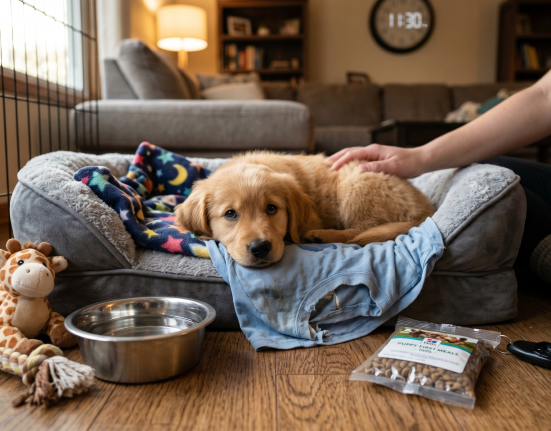
- Mimic a Littermate: Add a warm, unwashed t-shirt that smells like you into the crate. Many owners swear by "Snuggle Puppies"—stuffed toys that have a battery-operated beating heart inside.
- The Middle-of-the-Night Bathroom Break: An 8-week-old puppy physically cannot hold their bladder all night. Set an alarm for about 3-4 hours after they fall asleep. Carry them out quietly, let them pee, and put them straight back in the crate. No playing, no talking.
- Tough Love on Whining: If you are 100% certain they don't need a potty break, you must ignore the crying. Every time you open the crate to comfort a crying puppy, you teach them that noise equals attention. Use earplugs if you have to.
The Real Must-Have Supplies (No Fluff)
Walking into a pet store is dangerous for your wallet. You don't need 50 different outfits for your dog. Focus on the essentials that actually make your life easier:
- The Right Crate: Buy a crate with a divider. You want the crate to be just big enough for the puppy to stand up, turn around, and lie down. If it's too big, they will sleep on one side and pee on the other.
- Enzymatic Cleaners (Crucial): Regular floor cleaners do not work on pet urine. You need a cleaner with enzymes (like Nature's Miracle) that actually breaks down the uric acid. If a dog smells their old pee, they will pee there again.
- KONG Toys: Hard rubber toys that you can stuff with peanut butter or wet food and freeze are lifesavers. They soothe teething pain and keep the puppy occupied for hours in their crate.
- A Fixed-Length Leash: Avoid retractable leashes. They teach puppies to pull and offer you zero control. A standard 6-foot nylon or leather leash is perfect.
"Your money is better spent on high-quality food and an enzymatic cleaner rather than a dozen squeaky toys they will destroy in three minutes."
The 1-Up, 2-Down Sleep Routine & Diet
Puppies are a lot like human toddlers. When they get overtired, they don't just fall asleep; they throw tantrums. They become hyperactive, start biting everything, and forget all their manners. To fix this, you need a strict nap schedule.
The Golden Rule of Puppy Sleep:
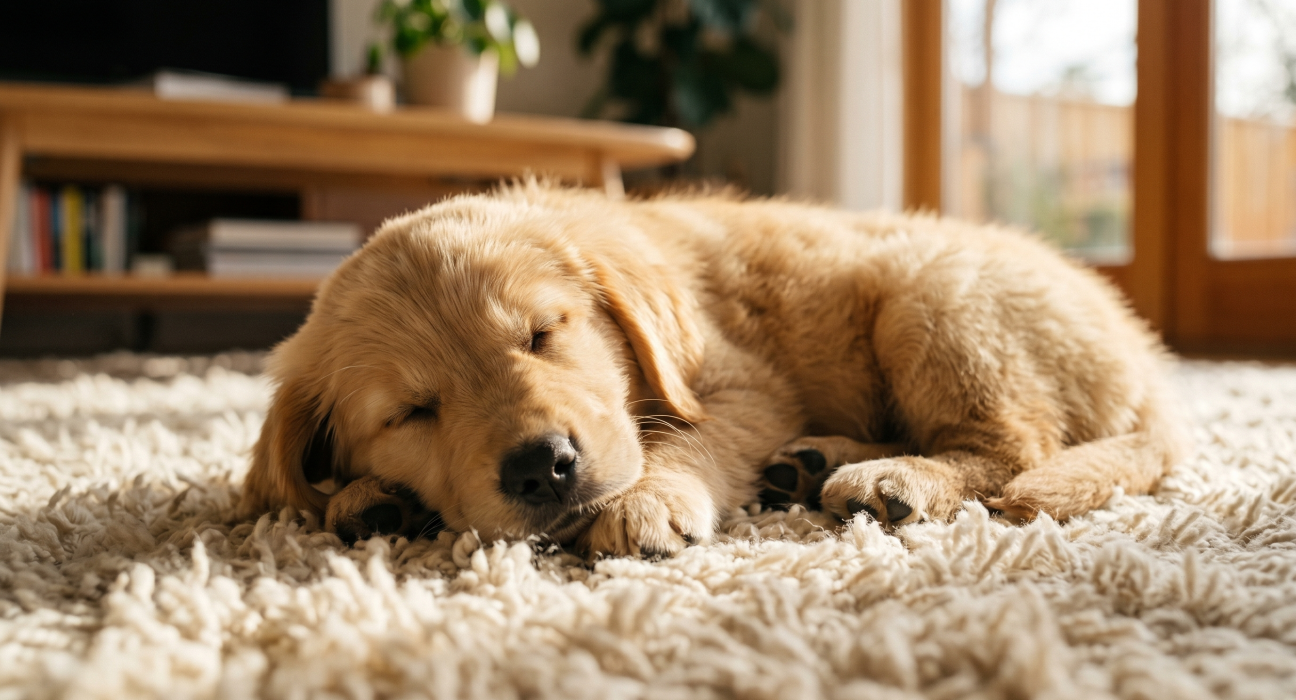
For every 1 hour your puppy is awake and playing, they need 2 hours of uninterrupted sleep in their crate. Growing puppies need 16 to 20 hours of sleep a day. Enforcing naps is the secret to a calm, well-behaved dog.
Nailing the Diet
Puppies have sensitive stomachs. When you bring them home, keep feeding them the exact same brand of food the breeder or shelter was using. If you want to switch brands, do it slowly over a period of 7-10 days, mixing the old and new food gradually to avoid diarrhea.
Feed an 8-week-old puppy three times a day. Measure their food according to the bag's instructions for their target adult weight. Don't leave food out all day (free-feeding), as it makes potty training nearly impossible.
Puppy Development Timeline (8 to 16 Weeks)
Knowing what is happening inside your puppy's brain helps you tailor your training and understand their weird behaviors.
| Age Range | What's Happening | Your Job as an Owner |
|---|---|---|
| 8 - 10 Weeks | The Fear Impact Period. They are very sensitive to scary experiences. | Keep things positive. Reward them heavily for exploring new surfaces. Avoid loud, crowded places. |
| 10 - 12 Weeks | Testing boundaries. They want to see what they can get away with. | Consistency. If they bite, play stops immediately. Begin teaching basic commands like "Sit" and "Leave it." |
| 12 - 14 Weeks | Teething begins in earnest. Their gums hurt and they need to chew. | Provide lots of frozen toys. Do not let them chew on old shoes, or they will think all shoes are toys. |
| 14 - 16 Weeks | Flight Instinct Period. They might suddenly ignore your calls. | Keep them on a leash outdoors. Practice recall ("Come") with high-value treats like boiled chicken. |
A Potty Training Masterclass
Potty training requires hawk-like supervision. If you take your eyes off the puppy for two minutes, an accident will happen. Use the umbilical cord method: tie the puppy's leash to your belt while you are in the house. If they start sniffing in circles, immediately rush them outside.
Take them out on a strict schedule:
- The very second they wake up from a nap.
- 15-20 minutes after they eat or drink water.
- Immediately after a vigorous play session.
- Right before bedtime.
When they go outside, throw a mini-party. Use a high-pitched, happy voice, say "Good Potty!", and give them a treat within 3 seconds of them finishing. If they have an accident inside, don't yell or rub their nose in it (this just makes them afraid of you). Just clean it up quietly and take them out more frequently.
Introducing Your Puppy to Children Safely
Bringing a puppy into a lively household means setting clear boundaries, not just for the dog, but for the kids too. It’s essential to teach children how to interact safely to prevent accidental nips and ensure the puppy feels secure.
Show your daughter how to gently stroke the puppy's back or chest instead of reaching directly for the face or pulling the ears. Remind your son to keep his small action figures or Legos off the floor, as a teething puppy won't know the difference between a toy and a chew bone. Establish absolute rules: no picking the puppy up without an adult, and never, ever disturb the dog while they are sleeping or eating in their crate. Creating this mutual respect early on helps build a beautiful, lifelong family bond.
Health, Grooming, and Toxic Hazards
Your puppy's immune system is still developing, making them vulnerable to viruses. Until your vet confirms they have had all their booster shots (usually around 16 weeks), avoid dog parks, pet store floors, and areas where unknown dogs frequent. According to the American Veterinary Medical Association (AVMA), controlled socialization with fully vaccinated dogs in safe environments is still highly encouraged during this period.
Kitchen Hazards You Must Know
Puppies explore with their mouths, and your kitchen is full of toxic dangers. Ensure everyone in the family knows that these common human foods are highly toxic to dogs:
- Grapes and Raisins: Can cause sudden kidney failure.
- Chocolate and Caffeine: Extremely dangerous, especially dark chocolate.
- Xylitol (Birch Sugar): Found in sugar-free gum, some peanut butters, and toothpaste. It can be fatal even in tiny amounts.
- Onions and Garlic: Damages red blood cells.
Frequently Asked Questions (FAQ)
Why is my puppy biting my hands and ankles so aggressively?
This is completely normal and is called "puppy mouthing." Puppies play with their littermates by biting. When they bite you, loudly say "Ouch!", cross your arms, and completely ignore them for 10 seconds. This teaches them that biting makes the fun stop. Offer a chew toy as an alternative.
When can I finally start walking my puppy outside?
You can walk them in your own private, fenced backyard immediately. However, you should avoid public sidewalks, dog parks, and grassy areas shared by unknown dogs until about 1-2 weeks after their final round of puppy vaccinations (usually around 16 weeks of age).
How long can a new puppy hold its pee?
As a general rule, a puppy can hold their bladder for one hour for every month of age, plus one. So, a two-month-old puppy can hold it for about three hours maximum while sleeping. When awake and active, expect them to need a potty break every 30 to 45 minutes.
Should I put puppy pee pads in the crate?
No. Putting pee pads in the crate encourages the puppy to use the bathroom where they sleep, which completely ruins their natural instinct to keep their den clean. Pee pads should only be used in a larger playpen area if you work long hours, but taking them outside is always the preferred method.
Ready to Raise the Perfect Pup?
Taking care of a new puppy is exhausting, messy, and testing. But the reward is a lifetime of unconditional love, goofy smiles, and unwavering loyalty. By following this guide, enforcing boundaries, and loving them fiercely, you are setting your furry best friend up for an amazing life.
For more expert advice, breed-specific tips, and training tutorials, keep exploring PetStory.org. You've got this!