Why Is My Cat Biting Me Unprovoked? 5 Reasons & How to Stop It
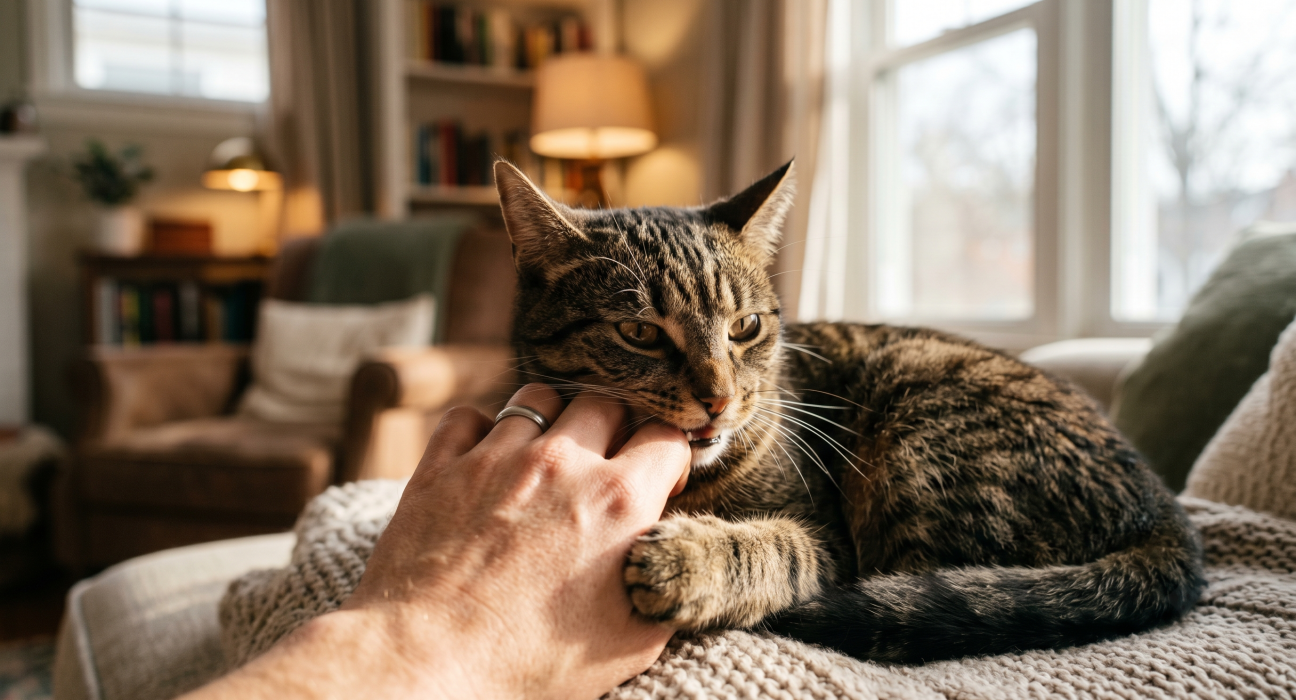
We have all been there. You are relaxing on the couch, your cat is curled up in your lap, purring like a tiny engine. You are gently stroking their soft fur, enjoying a perfect bonding moment. Then, out of absolutely nowhere, they spin around and sink their teeth into your hand.
It can feel like a sudden betrayal when your furry best friend attacks. Many pet owners are left bleeding, feeling confused, and wondering, "Why is my cat biting me unprovoked? Did I do something wrong, or is my cat's personality changing?"
If you find yourself constantly searching online for "why is my cat biting me unprovoked", rest assured you are not alone. While some breeds are known for their naturally docile temperament—making them perfect candidates for therapy work—even the calmest cat can lash out if their boundaries are crossed. To us, the bite feels incredibly sudden and completely unprovoked. But in the intricate and fascinating world of feline psychology, there is almost always a very specific, logical reason behind the attack.
Cats do not bite out of malice or spite. They bite to communicate when other subtle signals have failed. In this comprehensive guide, we will break down the top five reasons your cat suddenly turns into a tiny tiger, how to accurately read their secret warning signs, and the exact step-by-step methods to stop this behavior for good.
Table of Contents
- 1. Petting-Induced Overstimulation (The Most Common Culprit)
- 2. Play Aggression: Hands Are Not Toys
- 3. Redirected Aggression: The Invisible Threat
- 4. Hidden Pain or Underlying Illness
- 5. Fear and Stress Reactions
- How to Read the Warning Signs Before a Bite
- Safety First: Teaching Children Feline Boundaries
- How to Fix This: Why Is My Cat Biting Me Unprovoked?
- Frequently Asked Questions (FAQ)
1. Petting-Induced Overstimulation (The Most Common Culprit)
If your cat bites you while you are actively petting them, it is almost certainly due to petting-induced aggression (also known as overstimulation). Hair follicles in cats are highly sensitive. What starts as an enjoyable back scratch can quickly turn from "feels good" to "too much, stop it right now!"
When looking into specific cat breed characteristics, you will find that breeds like Ragdolls or Persians have remarkably high tolerance levels, which is exactly why they often excel as therapy animals in stressful environments. However, even a highly trained therapy cat has a breaking point. On the other hand, an energetic Bengal or an independent Maine Coon might have a much lower threshold for physical affection. Many cats simply tolerate petting until their neurological threshold is crossed. Once that limit is reached, their sensory receptors overload, resulting in a sudden bite to force you to stop the interaction immediately. This is often the primary answer to why is my cat biting me unprovoked during a seemingly peaceful petting session.
Furthermore, if a kitten was separated from its mother and littermates too early, they might not have learned proper "bite inhibition"—meaning they don't realize how much their bite actually hurts human skin.
"Cats have a strict 'petting threshold.' Once you cross it, their sensory receptors overload, and their instinct is to bite to end the physical contact immediately. It is a biological response, not a personality flaw."
2. Play Aggression: Hands Are Not Toys
Did you use your fingers to wrestle with your cat when they were a tiny, adorable kitten? It was cute back then, but now you have inadvertently taught an adult predator that human flesh is a perfectly acceptable toy.
A cat's natural predatory sequence involves stalking, pouncing, catching, and "killing" (biting). Indoor cats rarely get to complete this sequence naturally. If your cat lunges at your ankles as you walk by, or hides under the bed to ambush your feet, this is classic play aggression. They have excess energy and strong hunting instincts. If you haven't provided appropriate outlets for this energy—like kicker toys or interactive feather wands—your moving hands and feet become the default target.


3. Redirected Aggression: The Invisible Threat
Redirected aggression is one of the most dangerous and confusing types of feline behavior. Imagine your indoor cat is looking out the window and spots a stray cat encroaching on their territory, or hears a terrifyingly loud noise outside. Your cat gets highly agitated, their tail puffs up like a bottle brush, and they start growling.
If you walk over and try to pick them up or pet them to calm them down during this heightened state of arousal, they will likely turn around and attack you. They are taking the intense aggression meant for the outside trigger and redirecting it onto the closest available target. This specific scenario perfectly explains why is my cat biting me unprovoked right after seeing another animal outside. In these moments, do not touch them. Instead, block their view of the window, turn off bright lights, and give them time to decompress, which can sometimes take several hours.
4. Hidden Pain or Underlying Illness
Cats are masters at hiding pain. In the wild, showing weakness makes them a target for larger predators. Therefore, a cat will often suffer in silence until someone touches a sore spot. If a normally cuddly, affectionate cat suddenly starts biting when you pick them up or brush a specific area, it is a massive red flag.
According to experts at the Cornell Feline Health Center, underlying medical conditions like osteoarthritis in older cats, severe dental disease, or a painful urinary tract infection can cause a cat to react defensively. Whenever you find yourself wondering, why is my cat biting me unprovoked, a thorough veterinary checkup is the absolute first step you should take to rule out medical and physical issues.
5. Fear and Stress Reactions
Cats are creatures of habit, and sudden changes in their environment can trigger deep-rooted fear. Did you recently move to a new house? Bring a new baby or an energetic puppy into the home? Even something as simple as moving the living room furniture or having loud, unfamiliar guests over can cause extreme stress.
A fearful cat operates purely on the "fight, flight, or freeze" response. If they feel cornered under a bed or couch and cannot flee, they will choose to fight (bite) to protect themselves. Creating a truly "cat-friendly" environment is vital to combat this. This means providing plenty of vertical territory like wall shelves or tall cat trees. When a cat is elevated, they can survey their domain safely, and their stress levels naturally decrease.
How to Read the Warning Signs Before a Bite
Cats rarely bite without any warning whatsoever. We simply miss the subtle, rapid shifts in their body language. Before your cat lashes out, look for these telltale signs of overstimulation and annoyance. If you see them, stop touching your cat immediately:
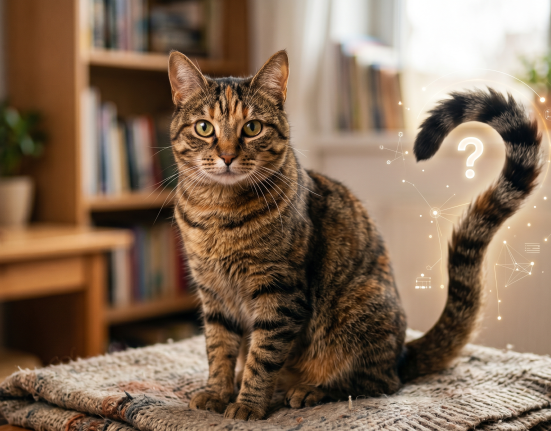
- The Tail: A twitching, thrashing, or rapidly swishing tail moving like a metronome means "Stop what you are doing right now."
- The Ears: Ears that suddenly flatten sideways (often called airplane ears) or pin back aggressively against the head.
- The Eyes: Sudden dilation of the pupils, causing their eyes to look completely black and hyper-focused.
- The Skin & Posture: Rippling or twitching skin along their back, or suddenly shifting their weight away from your hand.
- The Sounds: Low growling, hissing, chattering, or a sudden, abrupt cessation of their purring.

Safety First: Teaching Children Feline Boundaries
It is especially important to teach your daughter and son how to accurately read these feline warning signs. Children often miss the subtle shift from a relaxed, purring tail to an agitated, thumping twitch. Teach them to observe the "three-second rule": let them pet the cat gently for three seconds, then pull their hand back.
If the cat leans in and nudges them for more, they can continue. If the cat walks away, grooms itself, or their tail starts thumping, the petting session is strictly over. Also, teach children to use an "open palm" approach rather than reaching out with pointing fingers, which can look like a threatening poke to a cat. This builds mutual respect, fosters a lifelong bond, and prevents traumatic scratches or bites for everyone involved.
How to Fix This: Why Is My Cat Biting Me Unprovoked?
Once you understand the why behind the behavior, you can implement the how. Here is how to proactively stop the biting habit, redirect their energy, and restore peace in your home:
- Never Punish or Hit: Yelling, hitting, or using a squirt bottle will only make your cat terrified of you. This severely damages your bond, breaks their trust, and will likely increase aggressive, defensive behavior in the long run.
- Go Limp: If the cat bites your hand, do not panic and yank it away. Yanking triggers their predatory reflex to bite down even harder. Instead, push your hand gently into their mouth, which confuses them and forces them to release, then calmly stand up and walk away.
- Redirect with Toys: If you notice the warning signs (like dilated pupils or skin twitching), immediately stop petting. Toss a toy mouse across the room or use a wand toy to redirect their pent-up hunting energy away from your body.
- Respect Their "Safe Zones": Most cats love being gently scratched around the scent glands on their cheeks, chin, and the base of the ears. Very few cats actually enjoy belly rubs, and many highly dislike having the base of their tail or their sensitive paws touched. Learn your individual cat's preferences and stick to them.
- Establish a Routine: Cats thrive on predictability. Feeding, playing, and cuddling at similar times each day reduces overall stress and anxiety, making them less prone to random outbursts.
Frequently Asked Questions (FAQ)
Is there a single main reason why is my cat biting me unprovoked?
No, there isn't just one reason. The answer to why is my cat biting me unprovoked usually ranges from petting-induced overstimulation and play aggression to hidden medical issues or redirected fear.
Why does my cat bite me gently and then lick me right after?
These are often referred to as "love bites." In the feline world, gentle nibbling followed immediately by grooming is a sign of deep affection and social bonding. However, if the bite hurts or breaks the skin, you should still redirect this behavior so they don't learn that biting human skin is an acceptable form of play.
Should I completely ignore my cat after they bite me?
Yes. The best and most effective immediate reaction is to calmly withdraw all of your attention. Stand up, turn your back, or completely leave the room for a few minutes. This negative punishment teaches the cat that biting makes their favorite human—and the fun—disappear instantly.
Why does my cat attack my legs as I walk away from them?
This is classic play aggression and predatory hunting behavior. To a bored cat, your moving legs look exactly like escaping prey. To stop this, ensure your cat is getting at least two 15-minute interactive play sessions daily using a wand toy to thoroughly tire them out before they resort to hunting you.
Do cats eventually grow out of the biting phase?
Kittens usually grow out of intense play-biting by the time they are 1 to 2 years old, provided they are properly trained and redirected. However, an adult cat will not simply "grow out" of overstimulation or fear-based biting. As an owner, you must learn their boundaries and respect their body language to stop the behavior.
Understand Your Feline Friend Better
Figuring out the answer to 'why is my cat biting me unprovoked' can be a stressful journey for any pet parent. But by paying close, careful attention to their body language, ruling out medical issues, and respecting their personal boundaries, you can successfully eliminate unprovoked biting and build a stronger, much more trusting relationship.
For more expert insights on cat psychology, specific breed characteristics, and positive reinforcement training tips, keep exploring PetStory.org.