
Table of Contents
Bringing a new bunny home is an exciting adventure. You probably have a cozy enclosure and plenty of toys ready, but you might be wondering what rabbits eat.
Providing a healthy diet is the most important thing you can do for your new pet. What you put in your rabbit’s bowl directly impacts their energy levels, digestive system, and overall lifespan. A balanced diet also keeps their constantly growing teeth filed down and helps prevent serious health issues.
This guide breaks down what your rabbit needs to thrive. We’ll explore the necessities, highlight safe treats, and help you master beginner rabbit care with confidence.
Understanding a Rabbit’s Nutritional Needs
Before preparing a salad for your rabbit, it helps to understand how their body works. Rabbits are herbivores with highly specialized, sensitive digestive systems. They need a diet high in fiber, low in sugar, and moderate in protein.
A healthy rabbit food pyramid looks very different from ours. A rabbit’s foundation isn’t grains or vegetables, but grass hay. Fresh vegetables act as daily vitamins, while high-quality pellets serve as a small nutritional supplement. Treats sit at the very top of the pyramid and should be reserved for special occasions.
The Role of Hay in a Rabbit’s Diet
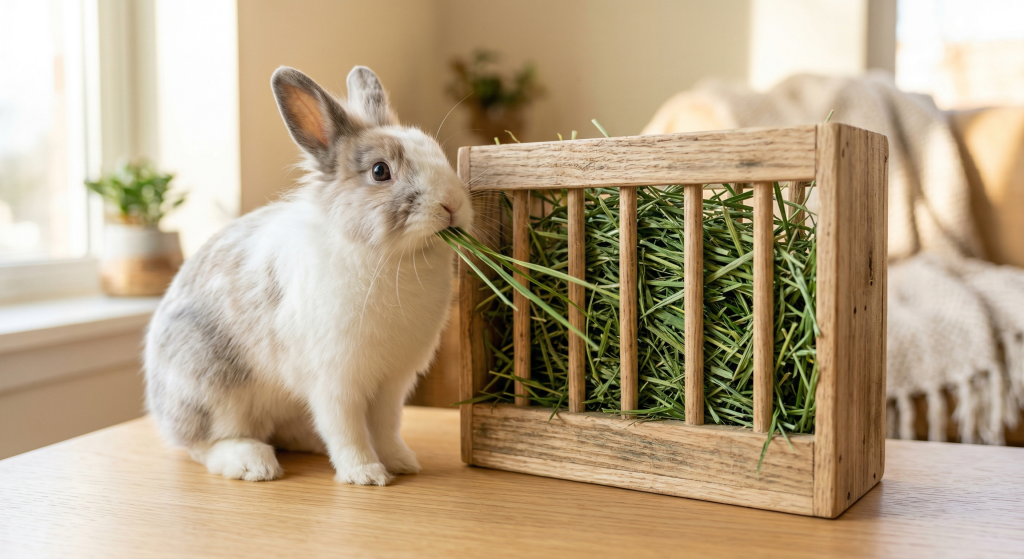
If you remember one thing from this guide, it’s that hay is non-negotiable. Grass hay should make up about 80% of your rabbit’s daily diet. They need unlimited access to fresh hay 24 hours a day.
Hay serves two critical purposes. First, the long fibers keep the digestive system moving smoothly. Second, a rabbit’s teeth never stop growing. The constant chewing required to break down hay naturally grinds down their teeth, preventing painful dental problems.
- Timothy Hay: The gold standard for adult rabbits, it has the perfect balance of fiber, protein, and calcium.
- Orchard Grass: A great alternative if you or your rabbit is allergic to Timothy hay.
- Alfalfa: This is a legume, not a grass. It is too rich in calcium and calories for adult rabbits, but is excellent for growing bunnies under six months old.
Tip: Store hay in a cool, dry place out of direct sunlight. Use a breathable container, like a cardboard box or canvas bag, to prevent mold growth.
Fresh Vegetables and Greens
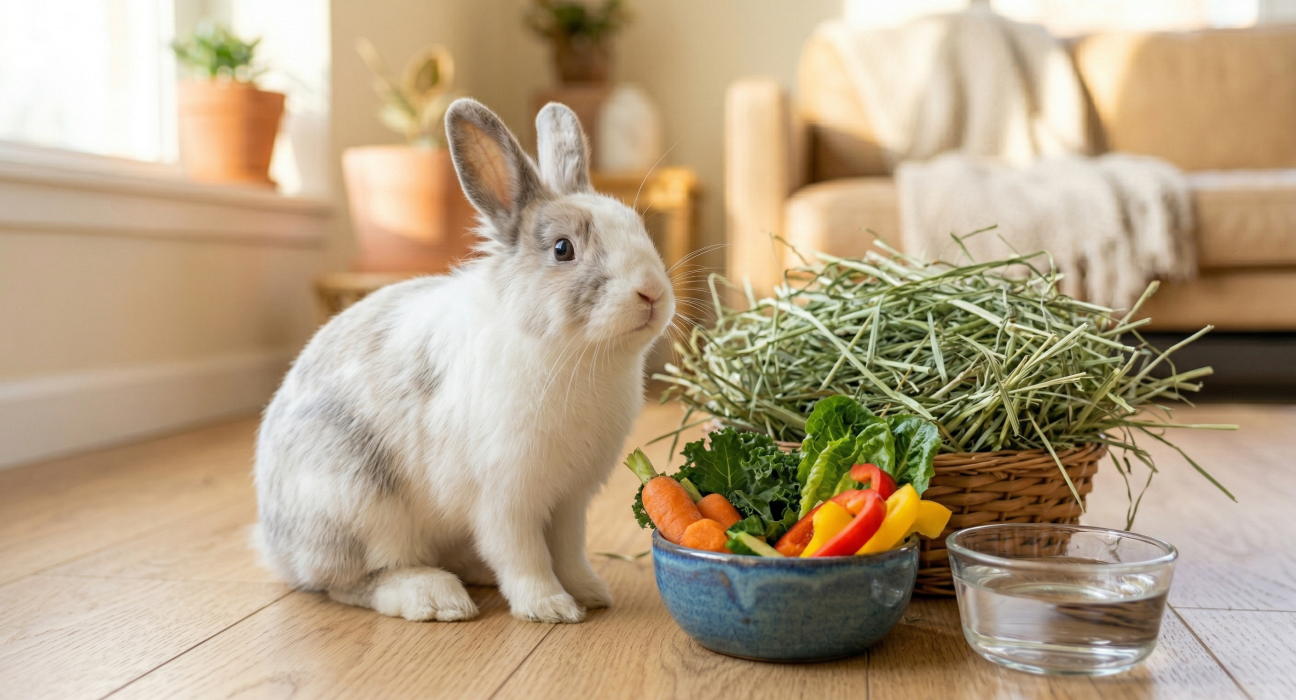
While hay is the main course, fresh greens add moisture, vitamins, and variety to your rabbit’s diet. Adult rabbits should get about one packed cup of leafy greens per two pounds of body weight daily.
Safe, healthy options include:
- Romaine lettuce
- Kale
- Parsley
- Cilantro
- Bok choy
Introduce new vegetables slowly, one at a time, to monitor their droppings and ensure the new food doesn’t upset their stomach.
Vegetables to avoid: Never feed your rabbit iceberg lettuce or potatoes. Iceberg lettuce contains lactucarium, which can be harmful in large quantities, and has almost no nutritional value. Potatoes are too high in complex carbohydrates for a rabbit to digest safely.
Pellets: How Much and What Kind?
Pet stores are filled with colorful rabbit food mixes. While pellets are a helpful part of a rabbit’s diet, they should only be a small fraction of their food intake.
Think of pellets as a daily multivitamin. Choose a high-quality, plain, grass-based pellet. Avoid mixes with colorful pieces, seeds, corn, or dried fruit. These extras are essentially junk food that your rabbit will eat first, leaving the healthy pellets behind.
Portion control is crucial. An average adult rabbit only needs about 1/4 cup of pellets per day. Overfeeding pellets can quickly lead to an overweight rabbit with digestive problems.
Treats: What’s Safe and What’s Not
Treats are great for training and bonding, but they must be given in moderation. Rabbits have a sweet tooth and will fill up on sugar instead of essential hay if given the chance.
Safe treats (in small amounts):
- Small slices of apple (no seeds)
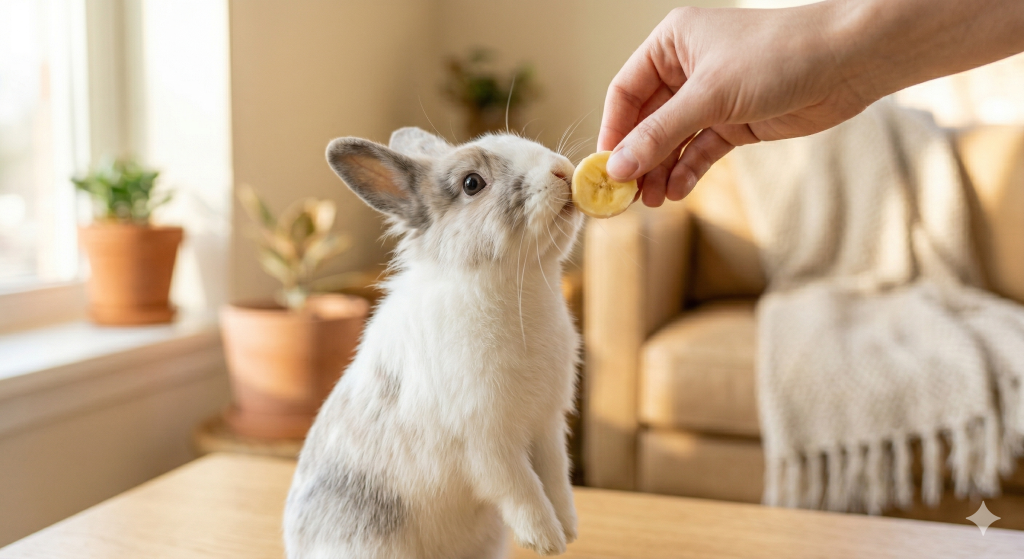
- A thin slice of banana
- A few blueberries
- Fresh herbs like basil or mint
Keep fruit portions very small—about the size of your thumb—and offer them no more than two or three times a week. Never feed your rabbit sugary yogurt drops or processed commercial treats with artificial colors.
Foods to Avoid
A rabbit’s digestive system can’t handle many of the foods we eat. Keep your bunny away from the following toxic items:
- Chocolate and caffeine
- Onions, garlic, and chives
- Avocado
- Meat or dairy products
- Any processed human snacks (crackers, bread, cereal)
Feeding rabbits human food can cause a fatal digestive shutdown. For a full list of household dangers, the ASPCA Animal Poison Control Center offers excellent resources.
Hydration: The Importance of Fresh Water
Proper hydration is essential for moving dry hay through a rabbit’s system. Your rabbit needs constant access to clean water.
While water bottles don’t spill, heavy ceramic water bowls are better for rabbits. Drinking from a bowl is a more natural posture, and studies show that rabbits drink more from a bowl than from a bottle. Clean the bowl daily to keep the water fresh.
Feeding Tips for Beginners
A consistent feeding routine makes life easier for both you and your rabbit. Rabbits are creatures of habit. Try to feed them greens and pellets at the same time every day, like early morning and late evening, when they are most active.
Always monitor your rabbit’s eating habits and litter box. If your rabbit stops eating or producing droppings for more than 12 hours, treat it as a medical emergency. Rabbits are prone to GI stasis, a condition where their digestive tract slows or stops.
When changing your rabbit’s brand of pellets or hay, do so gradually over a week. Mix a small amount of the new food with the old to avoid upsetting their delicate system.
Prioritizing Your Rabbit’s Well-being
Nutrition is the foundation of your rabbit’s health. By understanding their need for large amounts of hay, providing fresh greens, and limiting sugary treats, you are investing in a long, happy life for your pet.
This diet guide is a great starting point, but every bunny is different. We encourage you to schedule a wellness visit with a rabbit-savvy veterinarian to fine-tune your pet’s meal plan. For more information on rabbit care, explore resources like the House Rabbit Society.