
Table of Contents
Bringing a snake home might sound a little wild, but reptiles are quickly becoming popular household pets. They are quiet, fascinating to watch, and rewarding to care for.
If you’re considering getting a pet snake, you just need to choose the right species. Picking a snake that fits your lifestyle is the key to a long, happy friendship with your new scaly companion.
In this guide, we’ll explore what makes a snake “beginner-friendly.” We’ll cover our top five favorites, share essential care tips, and help you set up the perfect habitat. Let’s dive into the world of pet reptiles.

Why Snakes Make Great Pets for Beginners
When you picture a beginner pet, you might think of a hamster or a goldfish, but snakes check almost all the boxes for an ideal first pet. They don’t need daily walks, they won’t bark at the mail carrier, and they won’t scratch your furniture.
Many people believe the myth that all snakes are dangerous or aggressive. In reality, most common pet snake species are docile and shy. When raised properly, they tolerate and may even seem to enjoy human interaction.
Snakes also require surprisingly little daily maintenance. Once you perfect their heating and lighting setup, their day-to-day care takes only a few minutes. Because most snakes eat once a week or less, they are convenient pets for busy people.
What to Look for in a Beginner-Friendly Snake
Not all snakes are suitable for first-time owners. Some require massive enclosures, while others have specific humidity needs that are tough to maintain. When shopping for your first snake, look for these traits:
First, consider the adult size. A snake that stays under six feet is much easier to house and handle. Second, prioritize a calm temperament. You want a snake that is naturally docile and forgiving of occasional handling mistakes.
Finally, consider their feeding habits. Some exotic snakes are notoriously picky eaters, which can cause stress for a new owner. The best pet snakes for beginners have a strong, reliable appetite.
Top 5 Best Pet Snakes for Beginners
Ready to meet your match? Here are the five best beginner-friendly snakes that reptile enthusiasts love.
1. Corn Snake
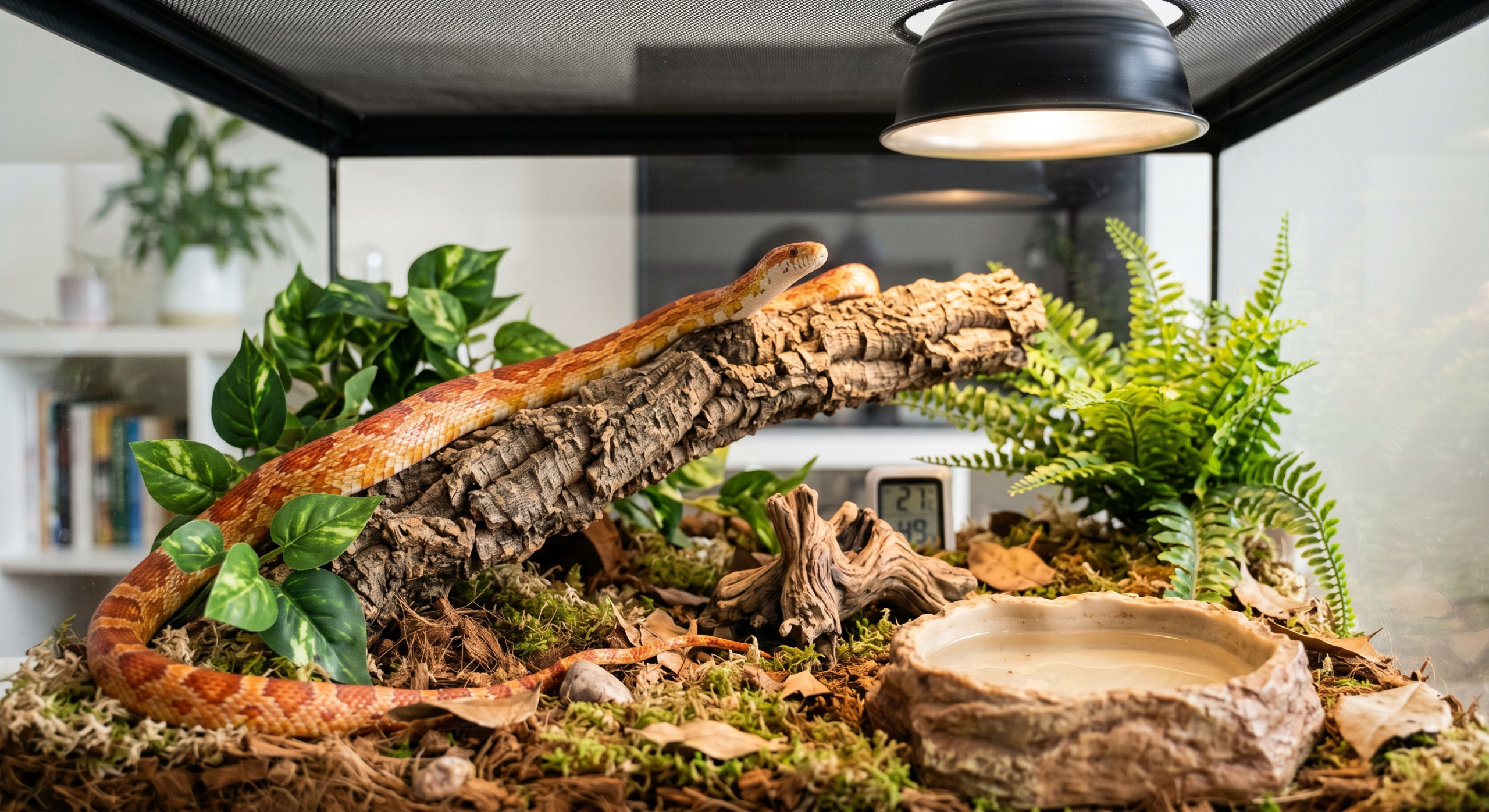
The Corn Snake is widely considered the ultimate beginner reptile. Native to North America, these snakes feature stunning orange, red, and yellow patterns. They are incredibly active, so you’ll often see them exploring their enclosure.
Corn Snakes are famously easy to handle. They are curious but rarely aggressive, making them a fantastic choice for families. Because they stay relatively slender and max out around five feet long, they fit perfectly into a moderately sized enclosure.
Quick Facts:
- Adult Size: 4 to 5 feet
- Lifespan: 15 to 20 years
- Why We Love Them: They are fantastic eaters and rarely refuse a meal.
2. Ball Python
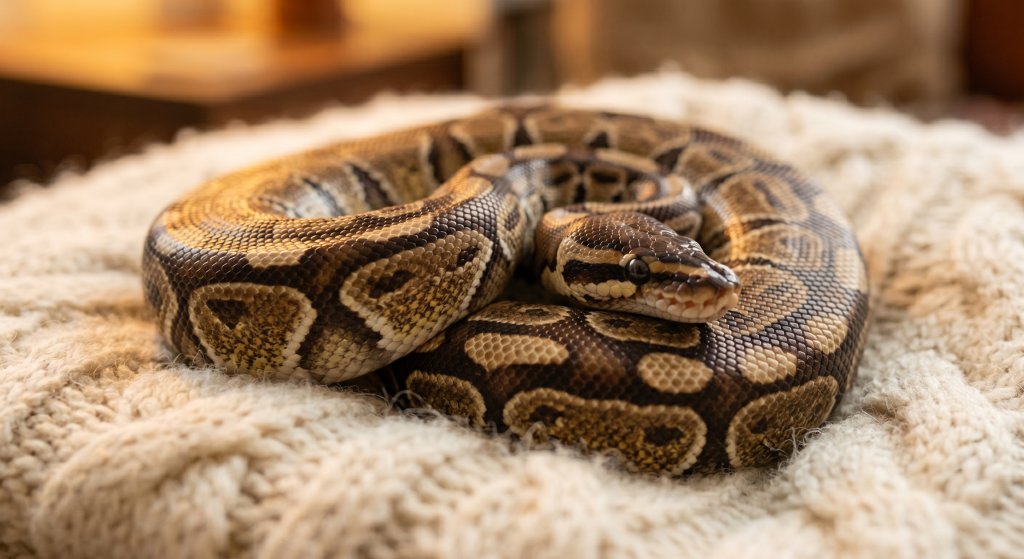
If the Corn Snake is an active explorer, the Ball Python is the ultimate couch potato. These heavy-bodied snakes from West Africa are famous for their calm demeanor. When scared, they roll into a tight ball rather than strike.
Ball Pythons are perfect for owners who want a snake that will chill on their lap while they watch TV. They move slowly and deliberately, which can ease the nerves of anxious handlers. Just keep in mind that they require slightly higher humidity than Corn Snakes to shed their skin properly.
Quick Facts:
- Adult Size: 3 to 5 feet
- Lifespan: 20 to 30 years
- Why We Love Them: Their slow, gentle nature makes them ideal for handling.
3. California Kingsnake
California Kingsnakes are hardy, adaptable, and beautifully patterned. Most feature striking black-and-white bands, though they come in various colors. They are highly active and very curious about their surroundings.
One thing to note about Kingsnakes is their massive appetite. They love to eat and rarely give their owners feeding trouble. However, because they are so food-motivated, you must wash your hands before handling them so your fingers don’t smell like food.
Quick Facts:
- Adult Size: 3 to 4 feet
- Lifespan: 15 to 20 years
- Why We Love Them: They are incredibly resilient and tolerate minor temperature fluctuations.
4. Rosy Boa
The Rosy Boa is a hidden gem in the reptile hobby. These beautiful snakes are native to the American Southwest and feature soft stripes of pink, orange, and brown. They are one of the slowest-moving snakes on our list, which makes them a joy to hold.
Because they come from arid environments, Rosy Boas require very low humidity, making their enclosure setup remarkably simple. They stay small, usually around three feet, making them ideal for small living spaces.
Quick Facts:
- Adult Size: 2 to 3 feet
- Lifespan: 15 to 25 years
- Why We Love Them: Their small size and slow movements make them very unintimidating.
5. Western Hognose Snake
If you want a snake with a big personality, look no further than the Western Hognose. These quirky reptiles have an adorable, upturned snout they use for digging. They are active during the day, so you’ll get to see plenty of their funny antics.
Western Hognose snakes are famous for their dramatic behavior. If they feel threatened, they might flatten their necks like a cobra or even play dead. While they are technically rear-fanged venomous, their venom is mild and generally only affects their prey, making them safe for humans to keep.
Quick Facts:
- Adult Size: 1.5 to 3 feet
- Lifespan: 15 to 20 years
- Why We Love Them: Their cute faces and theatrical personalities are endlessly entertaining.
Essential Care Tips for New Snake Owners
Choosing your snake is just the first step. Providing a safe, comfortable habitat will ensure your scaly friend thrives for years. Here are a few essential care tips.
Set Up Your Enclosure First
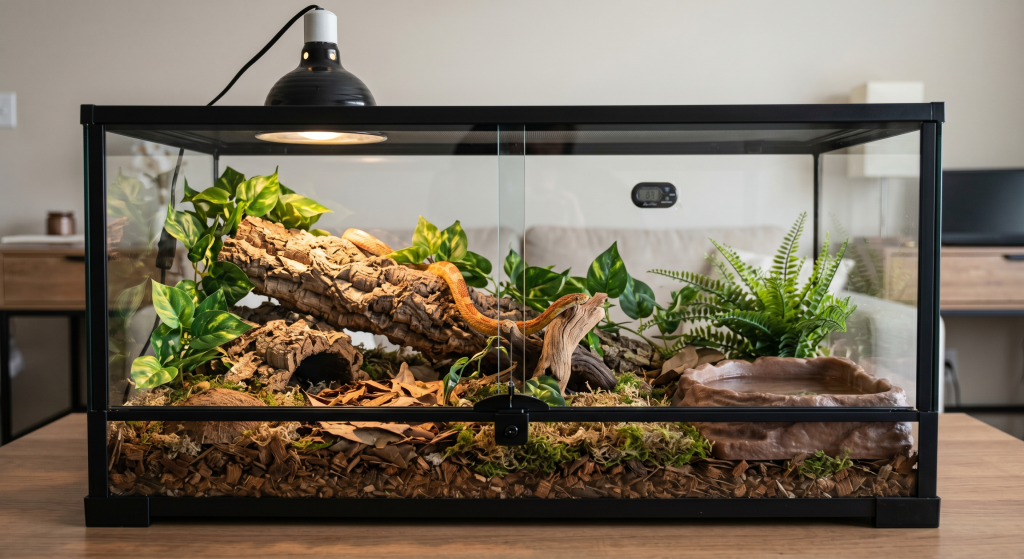
Always set up the enclosure completely before bringing your snake home. You need a secure tank with a tight-fitting lid. Snakes are notorious escape artists and will test every corner for a way out. Provide at least two snug hiding spots—one on the warm side and one on the cool side of the tank.
Master Heating and Humidity
Reptiles are cold-blooded, meaning they rely on you to regulate their body temperature. You must provide a temperature gradient in the tank using under-tank heating pads or overhead ceramic heat emitters paired with a reliable thermostat. Never guess the temperature; always use digital thermometers.
Find an Exotic Veterinarian Early
Standard dog and cat vets rarely have the training to treat reptiles. Before an emergency happens, locate a qualified exotic animal veterinarian in your area. Organizations like the Association of Reptile and Amphibian Veterinarians (ARAV) have search tools to help you find local experts.
Final Thoughts: Finding Your Perfect Pet Snake
Bringing home a pet snake is the start of a rewarding hobby. Whether you choose the active Corn Snake, the cuddly Ball Python, or the dramatic Western Hognose, you’re gaining a fascinating companion.
Remember to research your chosen species thoroughly before making a commitment. Evaluate your space, budget, and comfort level with handling their food. When you match your lifestyle to the right snake, you set both of you up for a lifetime of success.
Are you leaning toward one of these amazing snakes? Share this article with friends and family to help break the stigma around these beautiful animals! For more expert enclosure tips, diet guides, and reptile care advice, explore the rest of our resources here on PetStory.org.