

Table of Contents
Imagine a small, trembling Beagle mix curled up in the corner of a busy animal shelter. Her name is Luna. With each person who passes by, Luna tucks her tail tighter and presses harder against the cold concrete wall. The staff knows she’s a gentle soul, but the chaotic environment has left her completely shut down. She won’t eat, avoids all eye contact, and though she’s adoptable at heart, she’s always overlooked as visitors gravitate toward the outgoing dogs eagerly barking at the front of their kennels.
Then, a volunteer named Mark steps forward. Instead of walking by, he signs a form, gently wraps Luna in a warm blanket, and carries her out the front door. Mark isn’t adopting Luna—he’s fostering her. Over the next three weeks in Mark’s peaceful living room, Luna blossoms. She discovers the comfort of a soft couch, enjoys meals served on a regular schedule, and learns that gentle hands mean affection rather than fear. By the time Luna moves on to her forever home a month later, she leaves with her tail wagging and her head held high.
This is the transformative power of pet fostering. Foster care for animals is one of the most crucial and life-saving elements of modern animal rescue. Without devoted foster homes, shelters simply can’t give every animal the help they need. By temporarily opening your home to a dog, cat, or even a rabbit, you spark a powerful ripple of compassion. Fostering not only heals wounded spirits and eases shelter overcrowding, but also brings immense joy to those who choose to make a difference.

What is Pet Fostering?
At its core, pet fostering means welcoming a homeless animal into your home and giving them love, care, and a safe place until they find their forever family. As a foster caregiver, you become a crucial bridge between a noisy shelter and a calm, permanent home.
When you foster a pet, you take on the daily responsibilities of pet ownership—feeding, walking, socializing, and showing the animal affection. However, most of the financial costs are covered by the rescue organization. Animal shelters and rescue groups generally provide all the necessary supplies, including food, leashes, collars, crates, and toys. They also cover veterinary care and any required medical treatments. Your main role is to provide the time, space, and love that the animal so desperately needs.
Fostering is not a one-size-fits-all commitment. Different animals need varying levels of support, and rescue organizations work carefully to match pets with the ideal foster homes. Here are some of the most common forms of foster care for animals:
- Short-Term Fostering: Also called emergency or vacation fostering, this involves caring for a pet for just a few days or weeks. It provides animals with a much-needed break from the shelter or helps cover gaps when another foster parent is unavailable.
- Medical Fostering: Some pets need a quiet place to recover from surgery, illness, or injury. These animals require fosters who can administer medication and closely monitor their recovery.
- Behavioral Fostering: Dogs or cats that are fearful, reactive, or under-socialized need patient foster homes where they can gradually learn to trust humans and develop good manners.
- Maternity and Neonatal Fostering: Pregnant animals or orphaned puppies and kittens require specialized, round-the-clock care. Neonatal kittens, for example, must be bottle-fed every few hours to survive.
- Hospice Fostering: This compassionate role gives terminally ill or senior pets a loving, comfortable home to spend their final days surrounded by care and dignity.
No matter which kind of foster care you provide, the heart of the mission remains unchanged: you’re offering an animal a safe haven at a time when they need it most.
The Life-Saving Impact of Foster Care
In animal welfare, space is always at a premium. Each year, millions of companion animals enter shelters, and when those shelters reach capacity, staff are faced with heartbreaking choices. This is where the life-saving benefits of pet fostering truly stand out.
When you choose to foster an animal, you’re actually saving two lives. First, you rescue the pet you bring into your home, giving them the relief and comfort they need to recover from the stress of shelter life—a stress that can easily lead to emotional or physical decline. Second, by freeing up a kennel space, you make room for another animal who desperately needs refuge. In this way, foster families truly become a lifeline, offering hope and a vital second chance to more than just one deserving animal.
According to the ASPCA, approximately 6.3 million companion animals enter animal shelters across the United States every year. During peak intake periods—such as spring and summer “kitten season”—shelters can become overwhelmed with litters of tiny, vulnerable kittens who need specialized care that staff simply can’t provide on-site. In these times, community foster networks are essential for saving lives. Without a foster home willing to take in a bottle-baby kitten, their chances of survival in the shelter environment are slim, as their weak immune systems and demanding feeding schedules require round-the-clock attention that only fosters can give.
Adult dogs also face serious risks in the shelter system—especially larger breeds. The nonstop noise, lack of mental stimulation, and confinement can quickly drain even the friendliest dog’s spirit, turning them anxious, withdrawn, or even reactive. Once kennel stress sets in, their chances of adoption drop rapidly. Moving an adult dog into a foster home effectively resets their emotional and mental well-being, often transforming a pet once considered “unadoptable” into one ready for a loving family.
How Fostering Prepares Pets for Adoption
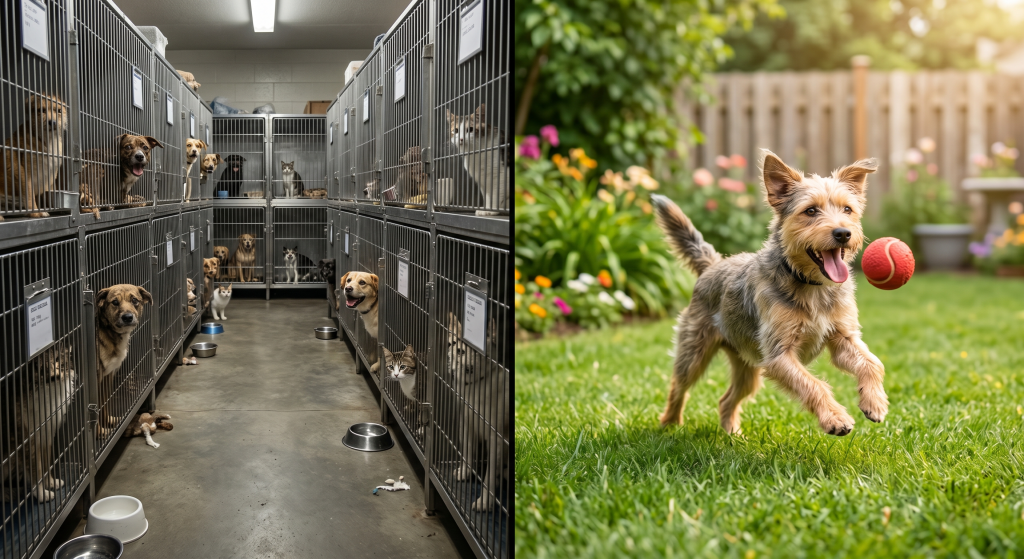
Shelters are not the best places to truly see an animal’s personality shine. A dog who cowers in the back of a kennel might turn out to be a joyful, goofy companion once he feels secure. Similarly, a cat who hisses at everyone passing by may simply be frightened by the noise and barking dogs. In the safety of a quiet bedroom, that same cat could become an affectionate, cuddly friend.
Foster homes are the perfect environment for pets to unwind and reveal their true personalities while they wait for adoption. Freed from the stress and unpredictability of shelter life, animals can relax, learn to trust, and let their unique qualities shine through—qualities that make them wonderful companions.
The 3-3-3 Rule of Decompression
Animal behaviorists often refer to the “3-3-3 Rule” to describe how a rescue pet adapts to a new environment. Foster parents have the special privilege of witnessing this incredible transformation up close:
- The First 3 Days: Your foster pet will likely feel overwhelmed, frightened, and uncertain about their new surroundings. They might hide under furniture, lose their appetite, or sleep much of the time. During this critical adjustment period, the best approach is to provide plenty of patience and space.
- The First 3 Weeks: As your foster settles in, they’ll begin to feel more secure and get used to the household routine. This is when their real personality starts to emerge—they may start playing with toys, seeking affection, and show quirky behaviors that need gentle guidance.
- The First 3 Months: By now, your foster pet feels truly at home. They have built trust with you and learned the house rules—making them ready and confident for their future forever home.
Gathering Vital Information for Adopters
Beyond providing a place for pets to decompress, foster parents play a vital role in preparing animals for successful adoptions. While shelter staff may not always have detailed answers for potential adopters, foster caregivers can share invaluable firsthand observations, such as:
- Is the dog completely house-trained?
- Does the cat scratch furniture, or do they prefer using a scratching post?
- How does the pet react when visitors come to the door?
- Are they comfortable and safe around children and other pets?
- Can they be left alone during a typical workday without causing trouble?
By gathering these details, foster caregivers empower rescue organizations to craft accurate and compelling adoption profiles. Profiles that feature beautiful photos of pets in a home setting—rather than behind kennel bars—can significantly reduce the time it takes for an animal to get adopted. As a foster, you become the pet’s personal public relations manager, setting them up for a lifetime of love and success.
The Emotional Rewards of Being a Foster Parent
While we’ve explored how fostering helps animals and eases the strain on shelters, it’s equally important to recognize the profound impact on the people who open their hearts and homes. The emotional rewards of becoming a foster parent are truly remarkable.
Many people hesitate to foster a pet because saying goodbye feels too difficult. “I could never do it; I’d want to keep them all!” is the phrase rescue coordinators hear most often. This fear is understandable—loving an animal deeply and then letting them go to a new home does require a special kind of courage.
Experienced foster parents will tell you that the joy of seeing a pet find their perfect forever family far outweighs the sadness of letting go.
Testimonials from the Heart
Sarah, a foster mom who has helped more than thirty dogs find new homes, shares her perspective:
“Of course, I cry every single time one of my foster dogs drives away with their new family. It hurts my heart for a day. But then, the rescue sends me a photo of my foster dog sleeping in bed with a little boy who has been begging for a dog for years. The pain vanishes immediately. I didn’t lose a dog; I helped complete a family. And because I let that dog go, I have an empty bed in my house ready to save another life tomorrow.”
For individuals or families who love animals but aren’t able to commit to a pet for the next ten or fifteen years, fostering can be the perfect solution. It provides all the companionship and unconditional love of a pet, without the long-term financial or lifestyle commitment.
Fostering also teaches children incredible life lessons. Families who foster together show their kids empathy, responsibility, and the joy of helping others. Children learn to care for vulnerable animals and experience pride in knowing they’ve made a positive impact.
There’s a unique, unmatched reward in watching a frightened animal slowly learn to trust. When a cat that’s spent weeks hiding finally curls up beside you and begins to purr, the sense of accomplishment is overwhelming. In that moment, you know without a doubt that you’ve truly made a difference.

“Of course, I cry every single time one of my foster dogs leaves with their new family. My heart aches for a day. But then the rescue sends me a photo of my foster dog curled up in bed with a little boy who has always dreamed of having a dog. Suddenly, all the pain disappears. I didn’t lose a dog—I helped create a family. And because I let that dog go, there’s now an empty spot in my home, ready to save another life tomorrow.”
For individuals or families who love animals but aren’t able to commit to a pet for the next ten to fifteen years, fostering is an ideal solution. It offers all the companionship and unconditional love of a pet, without the long-term financial or lifestyle commitments.
Fostering also imparts lasting life lessons to children. When families foster together, kids learn the values of empathy, responsibility, and the beauty of selfless giving. They gain hands-on experience caring for vulnerable animals and enjoy the pride that comes from helping a pet find happiness.
There’s a special kind of joy that comes from watching a frightened animal slowly learn to trust. When a cat who spent two weeks hiding under your bed finally leaps onto the couch and purrs beside you, the sense of accomplishment is unmatched. In that moment, you realize—without any doubt—that you’ve truly made a difference in the world.

How to Get Started with Pet Fostering
If you feel inspired to join the life-saving network of foster homes, you’ll be happy to know that getting started is often easier than you think. Animal rescues and municipal shelters are always eager to welcome new foster parents and are ready to support you at every step. With their guidance, you’ll find the process smooth and rewarding as you help change the lives of animals in need.
Here’s how you can begin your journey as a foster caregiver:
1. Evaluate Your Lifestyle and Living Situation
Before contacting a rescue organization, honestly assess your daily routine and lifestyle.
- How many hours per day are you typically away from home?
- Do you have a fenced yard, or are you prepared to walk a dog several times a day?
- If you rent, does your landlord allow pets? Are there any breed or weight restrictions?
- Do you have other pets at home? Are their vaccinations up to date, and are they friendly with unfamiliar animals?
Understanding your own limits helps you communicate clearly with the rescue, ensuring they can match you with the best pet for your lifestyle. For instance, if you work twelve-hour shifts, fostering a young puppy might not be ideal, but you could be the perfect foster for an independent senior cat who needs less constant attention.
2. Find a Local Rescue or Shelter
Use online directories to find reputable organizations in your area. Seek out groups that communicate clearly and offer strong support systems for their foster parents. A quality rescue organization will assign you a dedicated foster coordinator—someone you can reach out to with questions or emergencies, ensuring you feel confident and supported throughout your fostering journey.
3. Submit an Application
Most rescues require you to complete a standard foster application. They’ll ask for your basic information, details about your living situation, your experience with animals, and personal references. Some organizations may also request a brief home visit—or a virtual video tour—to ensure your environment is safe and suitable for a foster pet.
4. Prepare Your Home
Once you’re approved, it’s time to pet-proof your home.
- Remove toxic plants, secure electrical cords, and put fragile items out of reach.
- Create a “safe zone” for the new arrival—this could be a spare bedroom, a quiet bathroom, or a cozy corner in the living room with a crate.
- Make sure you have all the necessary supplies from the rescue organization: food bowls, blankets, litter boxes, leashes, and toys.
5. Be Patient and Ask for Help
When your first foster pet arrives, keep the 3-3-3 rule in mind. Take a deep breath, move at a calm pace, and let the animal adjust on their own terms. If you run into behavioral challenges or health concerns, don’t try to manage them by yourself. Contact your foster coordinator right away. Rescue organizations want you to succeed just as much as you do, and they have the experience and resources to help you navigate every hurdle along the way.
Become a Hero in an Animal’s Story
Every day, thousands of amazing animals wait in cold, noisy kennels, longing for a quiet moment and a gentle hand. They don’t need you to be a professional dog trainer or veterinarian—they just need someone who cares. What they truly need is a soft place to land while they find their footing and prepare for a brighter future.
Opening your home to a foster pet is one of the most meaningful ways to make a real difference in your community. It requires just a little time, plenty of patience, and a whole lot of heart. The reward—witnessing a once-broken animal heal, flourish, and eventually head off to a loving forever family—is an experience unlike any other.
Are you ready to make a difference? Reach out to your local animal shelter today and ask about their foster programs. If you’d like to discover more expert advice on animal care, inspiring rescue stories, and a supportive community of pet lovers, explore additional resources at PetStory.org. Whether you choose to adopt, volunteer, or foster, you have the power to give a deserving animal a true second chance at happiness.