
We all want our cats to live long, healthy lives, and what goes into their bowl has a big effect on their energy, coat, weight and kidney and urinary health. But the pet food aisle is overwhelming. Should you choose bags of dry kibble or stacks of canned wet food? What about raw or homemade meals?
This cat feeding guide explains what cats need, compares wet and dry food honestly, and covers how much to feed, how often, which foods to avoid and when to call your vet.
I'm Irfan, the editor of PetStory.org and a long-time cat owner, not a veterinarian or a pet nutritionist. This guide draws on widely accepted feline nutrition principles and veterinary sources, and it contains no affiliate links. Use it to understand the basics, and ask your vet to tailor a plan to your own cat.
Table of Contents
What Cats Need to Eat
Cats are obligate carnivores, which means their bodies are built to get nutrients from animal tissue. Unlike dogs or humans, they cannot stay healthy on a plant-based diet.
- High animal protein: Cats need more protein than dogs to maintain muscle and support organs.
- Taurine: This amino acid is found naturally in meat. A diet that lacks taurine can cause serious heart and vision problems, which is one reason complete cat foods add it.
- Water: In the wild, cats get most of their moisture from prey. Pet cats often have a low thirst drive and may not drink enough, so moisture in food matters.
When you pick any food, look for an AAFCO statement saying it is "complete and balanced" for your cat's life stage. AAFCO explains how to read pet food labels, including that statement. Foods marked for "intermittent or supplemental feeding only" should not be your cat's main diet.
Wet vs Dry Cat Food: Which Is Better?
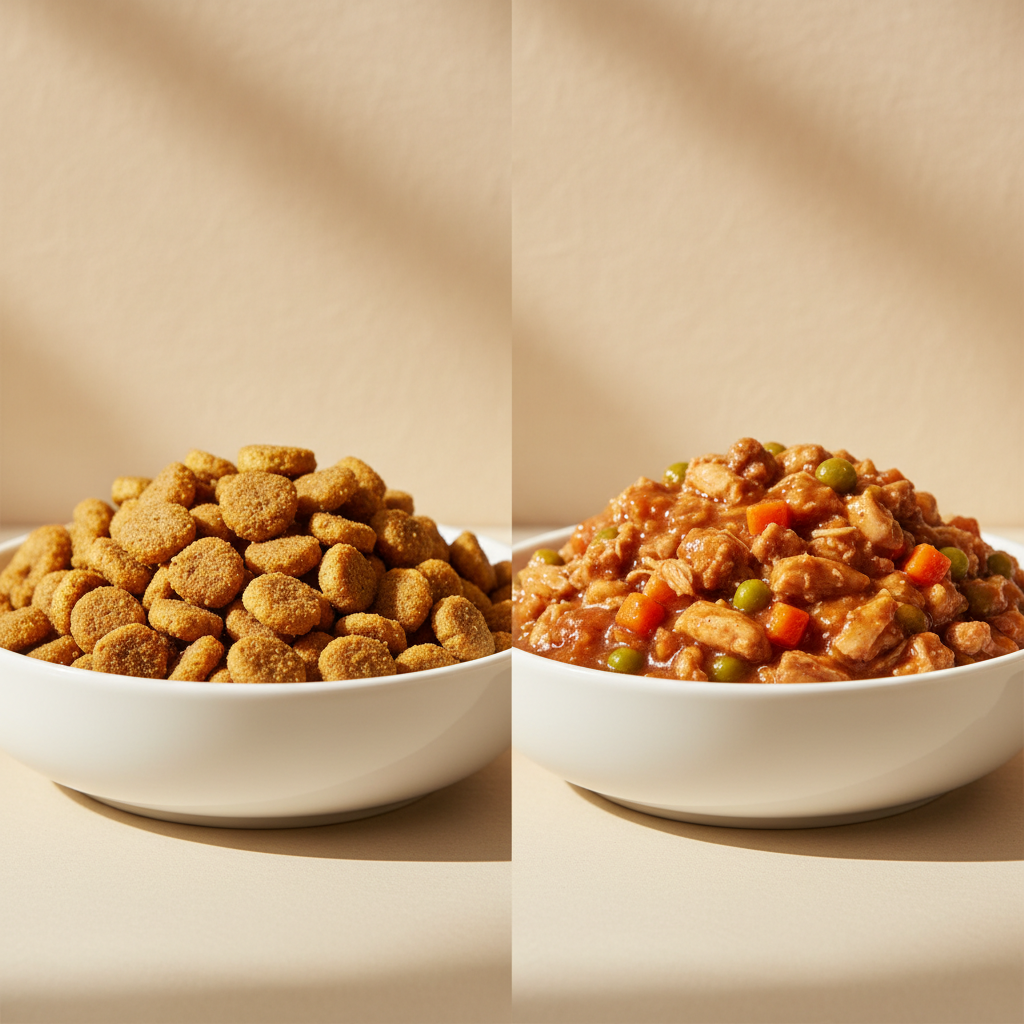
Neither is automatically better. The right choice depends on your cat, your budget and your routine.
| Dry food (kibble) | Wet food (canned or pouch) | |
|---|---|---|
| Moisture | Around 10% | Around 70 to 80% |
| Hydration and urinary health | Cat must drink extra water to make up the difference | Adds a lot of water, which helps dilute urine |
| Carbohydrates | Usually higher, because starch is needed to make kibble | Usually lower and higher in animal protein |
| Cost | Cheaper per day | More expensive per day |
| Convenience | Easy to store and measure. Can sit out for hours. | Spoils quickly once opened. Needs to be refrigerated. |
| Weight control | Calorie-dense, so overfeeding is easy | Less calorie-dense, which can help cats feel fuller |
Dry Cat Food
Dry food is popular because it is affordable, easy to measure and convenient for busy owners. The downsides are low moisture and higher carbohydrate content. Contrary to a common belief, kibble does not clean a cat's teeth in any meaningful way, so dental care still needs its own routine.
Wet Cat Food
Wet food is highly palatable, adds a lot of water to your cat's day, and is usually higher in animal protein and lower in carbohydrates. It costs more, and opened cans should be covered and refrigerated. A good rule is to avoid leaving wet food out for more than an hour or two, and use opened cans within a few days.
The Best of Both: Mixed Feeding
Many owners combine the two, such as wet food at breakfast and dinner with a small measured portion of dry. This keeps costs reasonable while adding moisture. If your cat has had urinary problems, ask your vet how much wet food to include.

How to Read a Cat Food Label
- The first ingredient should be a named protein, such as chicken or salmon.
- Check for the AAFCO "complete and balanced" statement for the right life stage.
- Be cautious with vague terms such as "meat by-products" or "animal digest," and with lots of artificial colors.
Raw and Homemade Diets
Some owners prefer raw or homemade meals to control exactly what their cat eats. These diets can be customized, but they come with real risks:
- Nutritional balance: Homemade diets are very hard to balance without help from a veterinary nutritionist. Missing nutrients such as taurine can cause serious illness.
- Bacteria: Raw meat can carry bacteria such as Salmonella and Listeria, which can affect both your cat and the people in your home, especially children, older adults and anyone with a weak immune system.
The FDA has warned that raw pet food diets can be dangerous to both pets and people. If you want to feed raw or homemade, speak to your vet or a board-certified veterinary nutritionist first, and use a recipe written for cats.
How Much and How Often to Feed Your Cat
Instead of leaving food out all day (free-feeding), switch to structured mealtimes. It makes portion control easier and helps you notice if your cat stops eating. The Cornell Feline Health Center has practical advice in its guides on feeding your cat and how often to feed your cat.
- How often: Most adult cats do well with two meals a day, and some owners split the food into three or four smaller meals. Kittens need more frequent meals.
- How much: Start with the feeding guide on the package, then adjust to your cat's body condition. As a rough starting point, many vets use about 20 calories per pound of ideal body weight for an average adult cat, but this varies, so ask your vet for a number that suits your cat.
- Check the body: You should be able to feel your cat's ribs under a thin layer of fat, and see a waist from above.
- Count treats: Keep treats to a small part of daily calories.
Switching Foods Safely
Change food slowly. Sudden changes can cause diarrhea and vomiting, and some cats simply refuse new food. Mix a small amount of the new food into the old, and increase the ratio over 7 to 10 days. For fussy cats, a slower switch over two weeks may work better.
Feeding by Age: Kitten, Adult, Senior
- Kittens: Growing kittens need more calories, protein and fat for fast bone and muscle development. Feed a food labeled for kittens or "all life stages," in several small meals through the day.
- Adults (about 1 to 7 years): The main goal is a healthy weight. A balanced adult formula with controlled portions helps prevent obesity.
- Seniors (7 and older): Older cats may need easily digestible protein and food that keeps muscle mass while managing weight. Some seniors lose weight and appetite instead, which is a reason to see your vet. Cats with kidney disease need a vet-prescribed diet rather than an ordinary senior food. See Cornell's guide to caring for older cats for more.
Diet-Related Health Problems
Obesity
Obesity is one of the most common nutrition-related problems in pet cats. Extra weight strains the joints and raises the risk of diabetes. The usual causes are overfeeding, constant access to calorie-dense kibble and too little activity. Measure meals and play with your cat daily. Cornell's page on feline obesity explains how to spot and manage it.
Urinary Tract Problems
Crystals, stones and blockages are linked to concentrated urine, and diet plays a role. Moisture-rich food, fresh water and a clean litter box all help. Straining in the litter box, crying while trying to pee or producing no urine can be an emergency, especially in male cats. Call your vet immediately. You can read more about feline lower urinary tract disease from Cornell, or the VCA Animal Hospitals overview of cystitis and lower urinary tract disease.
Special Diets for Health Conditions
Cats with food allergies, kidney disease, diabetes or digestive disease often need therapeutic diets. Allergic cats may have itchy skin or chronic stomach upset and may benefit from a limited-ingredient or novel-protein diet. A cat with kidney disease usually needs a prescription renal diet with controlled phosphorus. Never try to treat a suspected medical problem with diet alone. Your vet can confirm the problem and create a safe plan.
Foods to Avoid
Many human foods are toxic to cats. Keep these away from your cat:
- Chocolate and caffeine
- Onions, garlic and chives (including onion or garlic powder in broths and sauces)
- Grapes and raisins
- Alcohol and raw bread dough
- Xylitol, a sweetener found in some gum, candy and baked goods
- Dog food as a regular meal, because it does not contain enough taurine or protein for cats
Skip table scraps as well. Human food is often too fatty and salty and can trigger painful conditions such as pancreatitis. The ASPCA Animal Poison Control Center has a full list of people foods to avoid feeding your pets. If your cat eats something toxic, call your vet or an emergency clinic right away.
Picky Eaters and Healthy Habits
Some cats are picky. If your cat refuses dinner, try warming wet food slightly to bring out the smell. You can also mix a little plain, onion-free and garlic-free broth into the food, but read the label carefully, since many store-bought broths contain onion or garlic.
Make mealtime more stimulating, too. In the wild, cats hunt for food. Puzzle feeders or small portions hidden around the house tap into those instincts, prevent boredom and slow down fast eaters. For more ideas, browse our cat toys and accessories section.
Do not let a cat go without eating. If your cat refuses food for more than 24 hours, call your vet. Cats that stop eating can develop a serious liver condition quickly. See Cornell's page on loss of appetite (anorexia) in cats.
Frequently Asked Questions
Is wet or dry food better for cats?
Neither is automatically better. Wet food adds moisture, which supports urinary health, and is usually higher in protein and lower in carbohydrates. Dry food is cheaper and more convenient. Many cats do well on a mix. Whichever you choose, make sure it is complete and balanced for your cat's life stage.
How often should I feed my cat?
Most adult cats do well with two meals a day, and some owners offer three or four smaller meals. Kittens need more frequent meals. Structured mealtimes make portion control easier than leaving a full bowl out all day.
How much wet food should I feed my cat per day?
It depends on the food's calories, your cat's weight and activity, and whether you also feed dry food. Start with the feeding guide on the label and adjust to your cat's body condition. Your vet can give you a daily calorie target.
Can cats eat only dry food?
Yes, if it is complete and balanced and your cat drinks enough water, though many vets suggest adding wet food for extra moisture, especially for cats prone to urinary problems. Ask your vet if your cat has had urinary issues or kidney disease.
Why is my cat not drinking water?
Cats have a low thirst drive, so many drink little, especially on dry food. Wet food, a water fountain and several water bowls in different places can help. If your cat suddenly drinks much more or much less than usual, see your vet.
How long can wet cat food sit out?
As a general rule, avoid leaving it out for more than an hour or two, especially in warm weather. Cover and refrigerate opened cans and use them within a few days. Let chilled food warm slightly before serving, since many cats prefer it that way.
What should I do if my cat stops eating?
Call your vet if your cat refuses food for more than 24 hours, or sooner for kittens, seniors or cats with health conditions. A cat that goes without food can develop a serious liver problem quickly.
A Final Word
Good nutrition is the foundation of your cat's health. Choose a complete and balanced food, include moisture, feed measured meals and match the diet to your cat's age and health. Every cat is an individual, so use this guide as a starting point and talk with your vet to fine-tune the plan.
Keep Learning: Cat Care
Explore more in our Cat Care and Wellness guides and our Health & Diet section.
About the Author
Irfan Hyder is the editor of PetStory.org, an independent publication covering pet care, adoption, nutrition and behaviour. He has spent around 8 years caring for pets at home, including his Golden Retriever, Max, his Persian cat, Luna, and pet birds, and writes alongside veterinary and reputable sources. Read more about Irfan.