
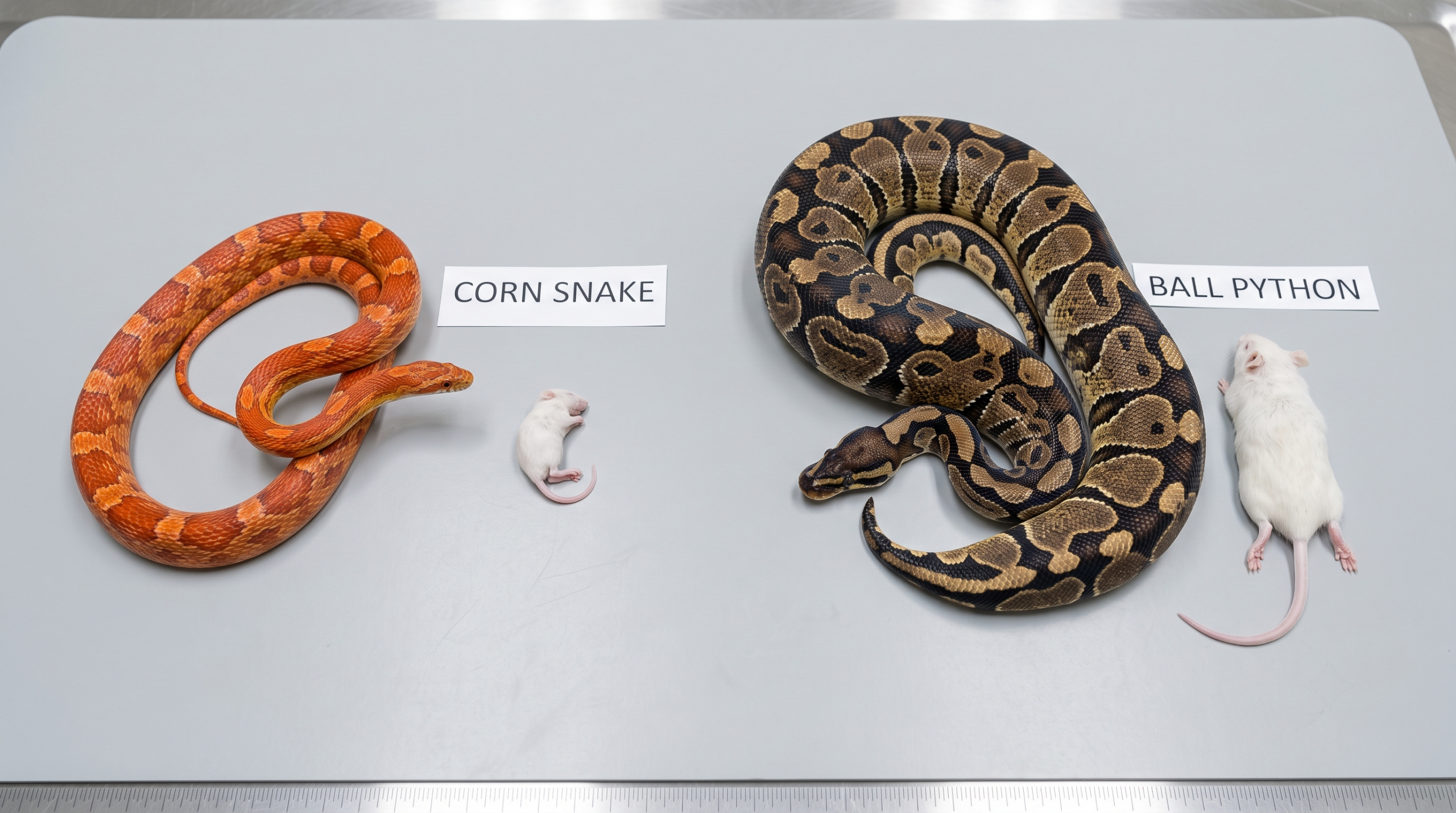
A lot of new snake owners bring home a small, calm hatchling and then hit the same wall a day or two later: nobody actually told them what it eats. Mice? Rats? Something smaller? Does it need vegetables the way a bearded dragon does? It's a more common gap in knowledge than you'd think, and it's not a sign you did anything wrong — snake care information online is often written as if every species eats the same way, which simply isn't true.
So, what do pet snakes eat? Most commonly kept pet snakes are carnivores that eat whole prey, usually mice or rats, but the exact diet, prey size, and feeding schedule depend heavily on the species, age, and size of your snake. A ball python and a garter snake, for example, don't eat the same things or on the same timeline.
If you're still deciding which snake is right for your home, check out our guide to Top 5 Best Pet Snakes for Beginners. Before making a choice, it is vital to know what do pet snakes eat to ensure you can provide a proper diet.
In this guide, we'll walk through what different pet snakes eat, how often they need to be fed, how to pick the right prey size, whether frozen or live prey is the better choice, and what to do if your snake suddenly stops eating.
In this article, you'll learn:
- What different pet snakes eat
- How often pet snakes eat
- How to choose the right prey size
- Frozen/thawed vs. live prey
- Common feeding mistakes and warning signs
Table of Contents
- What Do Pet Snakes Eat?
- What Do Pet Snakes Eat by Species?
- How Often Do Pet Snakes Eat?
- How Much Should a Pet Snake Eat?
- Frozen vs. Live Prey: Which Is Better?
- How to Safely Prepare and Feed Frozen Prey
- What Should You Never Feed a Pet Snake?
- 4 Factors That Affect Snake Feeding and Digestion
- Why Is My Pet Snake Not Eating?
- Why Did My Snake Regurgitate Its Food?
- Safety Facts: Feeding Risks Every Snake Parent Should Know
- Common Snake Feeding Mistakes to Avoid
- Safety & Warning Signs
- When to See an Exotic Vet
- Your Quick Snake Feeding Checklist
- Frequently Asked Questions
What Do Pet Snakes Eat?
Here's the simple version of what do pet snakes eat: most snakes commonly kept as pets are carnivores, and the overwhelming majority of them eat whole prey rather than pieces of meat. Whole prey means the entire animal — typically a mouse or rat — rather than cut-up cuts of meat you'd buy for yourself.
Whole prey isn't just tradition. It provides a complete, balanced source of nutrition, including calcium from bones, that cut meat alone doesn't offer. Feeding a snake random pieces of chicken or beef long-term can lead to serious nutritional deficiencies, since those cuts are missing the skeletal structure and organ content a whole prey item provides.
That said, "whole prey" doesn't mean the same prey for every species. Some snakes eat almost exclusively rodents. Others, depending on their natural history, may eat birds, eggs, amphibians, or even other reptiles in the wild, though captive-bred pet snakes are generally raised on consistent, appropriately sized rodent prey for practicality and safety. So, when figuring out what do pet snakes eat, you have to look at the specific species.
This is exactly why identifying your snake's species matters so much before you even think about a feeding schedule. A rule that works well for a corn snake could be completely wrong for a boa constrictor. Therefore, knowing what do pet snakes eat based on their specific type is critical.
What Do Pet Snakes Eat by Species?
Ball Pythons
Ball pythons are one of the most popular beginner snakes, and their diet is fairly straightforward: appropriately sized mice or rats, offered whole. When owners ask what do pet snakes eat in the case of ball pythons, hatchlings typically start on small mice, and prey size gradually increases to adult mice or small rats as the snake grows.
General feeding frequency guidance often looks something like this: hatchlings every five days or so, juveniles roughly every seven to ten days, and adults stretching out to every two to three weeks. These numbers are widely cited starting points, not fixed rules — individual metabolism, temperature, and body condition all play a role.
Here's where many new ball python owners get stuck: ball pythons are notorious for occasional fasting, sometimes going weeks without eating with no obvious problem. This can be alarming if you don't know it's relatively common in this species, but it's also a good reason to monitor body condition rather than panic over a single skipped meal. Do not attempt to force-feed a ball python that refuses food — work through the troubleshooting steps later in this guide instead, and involve an exotic vet if fasting becomes prolonged or is paired with weight loss.
Corn Snakes
Corn snakes are active, food-driven eaters, and most take to feeding more reliably than ball pythons. If you want to know what do pet snakes eat regarding corn snakes, hatchlings usually start on pinky mice, moving up to fuzzy mice and eventually adult mice as they grow.
Feeding frequency for corn snakes commonly runs every five to seven days for hatchlings and juveniles, stretching to every seven to ten days for adults. Prey size should scale with the snake's body width, which we'll cover in more detail shortly.
Kingsnakes
Kingsnakes are opportunistic feeders in the wild, sometimes eating other snakes and reptiles, but captive kingsnakes are almost always raised on a rodent-based diet of appropriately sized mice. That said, individual variation exists, and some kingsnakes can be pickier eaters than others.
Feeding frequency is broadly similar to corn snakes: more frequent for hatchlings and juveniles, gradually spacing out as the snake matures into adulthood. So, what do pet snakes eat when they are kingsnakes? Mostly mice.
Milk Snakes
Milk snakes, closely related to kingsnakes, follow a similar feeding pattern. Juveniles typically eat appropriately sized mice more frequently than adults, with feeding intervals lengthening as the snake grows and its metabolism slows. When considering what do pet snakes eat for this species, it aligns closely with kingsnakes.
Other Common Pet Snakes
Rosy boas, boa constrictors, garter snakes, and other species kept as pets each come with their own dietary quirks. Boa constrictors, for instance, eat larger prey as adults and may go longer between meals than smaller colubrid species like corn snakes. Garter snakes are a notable exception to the "rodents only" pattern — many garter snakes are primarily fed appropriately sized fish, worms, or amphibians rather than rodents, depending on the individual snake's feeding response. This highlights how varied the answer to "what do pet snakes eat" can be.
There's no universal rule that applies across every species kept as a pet snake, which is exactly why researching your specific species — or asking a reptile-experienced exotic vet — matters more than following generic advice found online about what do pet snakes eat.
Here's a quick side-by-side comparison. These figures are general guidelines only and can vary based on age, size, body condition, environment, and the individual snake — they're not a substitute for species-specific husbandry research or veterinary advice.
| Species | Typical Diet | General Feeding Frequency | Adult Size | Care Difficulty | Common Prey |
|---|---|---|---|---|---|
| Ball Python | Whole rodent prey | Hatchling: ~5 days; Juvenile: 7-10 days; Adult: 2-3 weeks | 3-5 feet | Beginner-friendly | Mice, small rats |
| Corn Snake | Whole rodent prey | Hatchling/Juvenile: 5-7 days; Adult: 7-10 days | 3-5 feet | Beginner-friendly | Pinky to adult mice |
| Kingsnake | Whole rodent prey | Juvenile: 5-7 days; Adult: 7-10 days | 3-4 feet | Beginner-friendly | Mice |
| Milk Snake | Whole rodent prey | Juvenile: 5-7 days; Adult: 7-10 days | 2-4 feet | Beginner-friendly | Mice |
| Rosy Boa | Whole rodent prey | Juvenile: 7-10 days; Adult: 10-14 days | 2-3 feet | Beginner-friendly | Small mice |
| Boa Constrictor | Whole rodent prey | Juvenile: 7-10 days; Adult: 2-4 weeks | 6-10 feet | Intermediate | Mice, rats, larger prey as adults |
How Often Do Pet Snakes Eat?
Feeding frequency depends on a genuinely long list of factors: species, age, size, metabolism, current body condition, enclosure temperature, general husbandry, reproductive status, and even the individual snake's own quirks. Two snakes of the same species and age can have somewhat different appetites. This is important when discussing what do pet snakes eat.
As a general guide only:
- Hatchlings often eat more frequently, commonly every five to seven days
- Juveniles typically eat every seven to ten days
- Adults often eat every ten to twenty-one days, sometimes longer depending on species
This is general guidance, not a rigid schedule. Some species and individual snakes fall well outside these ranges. Ball pythons, as mentioned, are known for irregular appetites even as adults. Larger constrictors may eat far less often than smaller colubrids. Always weigh species-specific information more heavily than a generic timeline when answering the question of what do pet snakes eat.
How Much Should a Pet Snake Eat?
Choosing the right prey size matters more than most new owners expect. A common guideline is that prey width should roughly match the thickest part of the snake's body — not its length, its girth. Prey that's noticeably wider than the snake's midsection puts unnecessary strain on the digestive system and increases the risk of regurgitation. This is a critical aspect of knowing what do pet snakes eat.
That sounds easy enough, but prey size matters in both directions. Bigger prey is not automatically better or more efficient. Oversized meals can cause discomfort, regurgitation, and in some cases genuine health complications. Undersized prey, fed consistently, can leave a growing snake underweight over time.
General sizing by life stage:
- Hatchlings usually start on pinky or small mice, depending on species
- Juveniles move up to fuzzy or small adult mice as their body width increases
- Adults typically eat adult mice or appropriately sized rats, again depending on species and individual girth
Signs that prey may be too large include visible bulging well beyond the body's normal shape, unusual strain during swallowing, or regurgitation shortly after feeding. Regularly checking your snake's body condition — looking for a smoothly tapered shape rather than a sunken or overly bulky one — is a more reliable long-term guide than any single fixed formula for what do pet snakes eat.
Frozen vs. Live Prey: Which Is Better?
This is one of the more debated topics in snake keeping, and there isn't a single universally "correct" answer — but there are clear safety trade-offs worth understanding when researching what do pet snakes eat.
Frozen/Thawed Prey
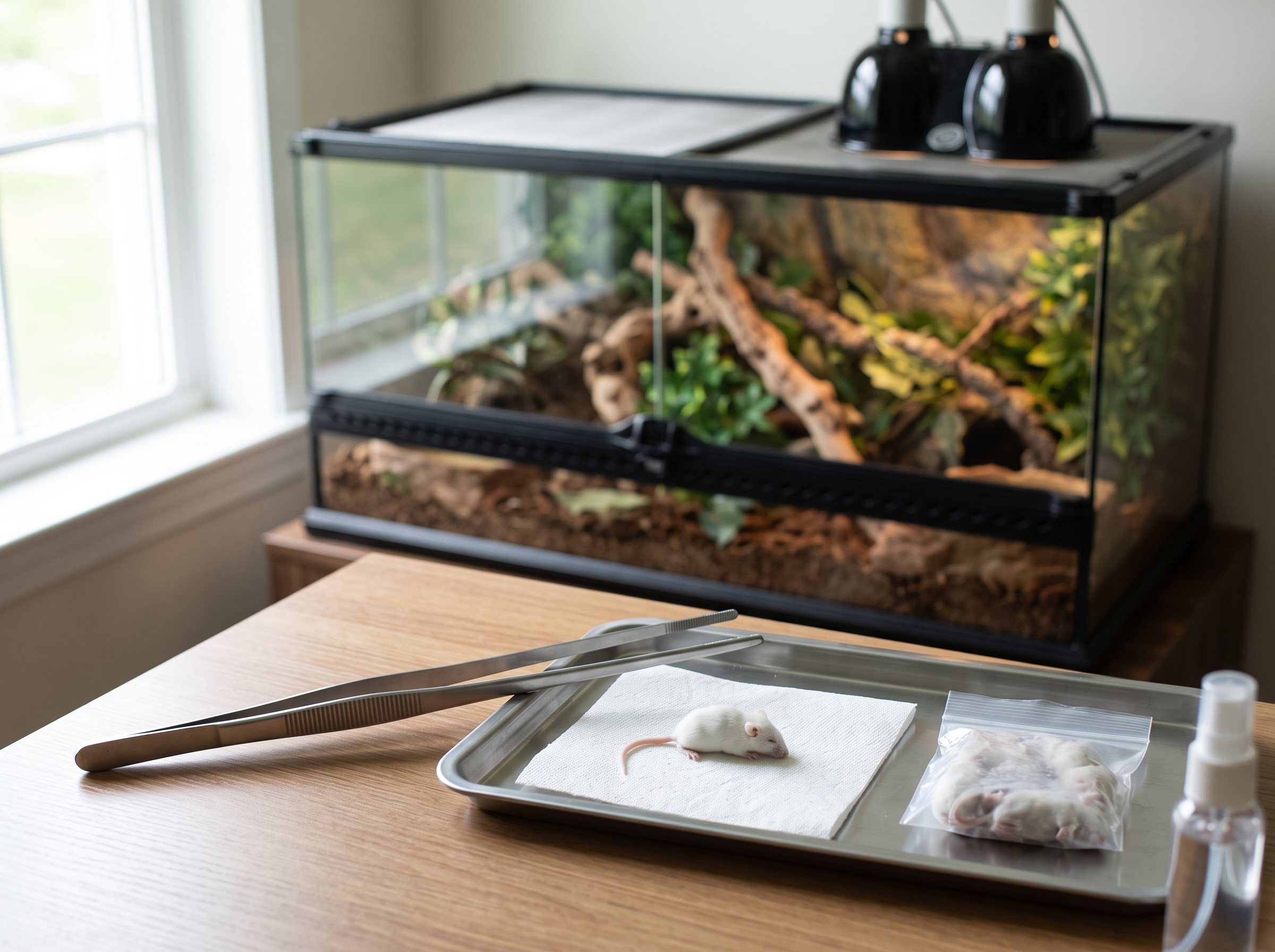
Frozen/thawed rodents are widely recommended by reptile keepers and exotic vets for several practical reasons. They're easier to store in bulk, more convenient to portion correctly, and significantly reduce the risk of the prey injuring your snake, since a thawed rodent obviously can't bite or scratch back. Frozen prey does require safe preparation — proper thawing and warming — which we'll walk through next.
Live Prey
Some snakes respond more strongly to live prey, particularly picky eaters or certain individuals that seem uninterested in frozen/thawed offerings. However, live prey comes with real risks: rodents can bite or scratch a snake, sometimes causing injury, and live prey should never be left unattended with your snake under any circumstances. If you do use live prey, close supervision for the entire feeding is non-negotiable.
Neither option is inherently "cruel" or automatically wrong when done responsibly — the safety of the practice comes down to preparation, supervision, and appropriate prey sizing rather than the frozen-versus-live choice itself. Understanding these options is part of knowing what do pet snakes eat.
How to Safely Prepare and Feed Frozen Prey
Let's break it down into a straightforward process for what do pet snakes eat safely:
- Choose appropriately sized prey based on your snake's current girth and species-specific guidance.
- Thaw the prey safely, typically in the refrigerator overnight or in a sealed bag submerged in cool-to-lukewarm water. Never thaw prey at room temperature for extended periods, since bacterial growth becomes a real concern.
- Warm the prey to an appropriate temperature before offering it — many keepers use warm water in a sealed bag, checking that it isn't hot. Avoid microwaving prey, which can create dangerously hot spots inside while the outside feels only mildly warm.
- Use feeding tongs to present the prey rather than your bare hand, which helps avoid accidental bites triggered by feeding response.
- Present the prey calmly, allowing the snake to strike and constrict as it naturally would.
- Give the snake privacy while feeding — many snakes feed more reliably without direct observation or handling nearby.
- Allow adequate time to digest afterward before any handling, typically at least 24 to 48 hours depending on species and meal size.
What Should You Never Feed a Pet Snake?
When considering what do pet snakes eat, you also need to know what they should never eat. A few feeding practices come up often enough to call out directly:
- Human food of any kind, including seasoned or cooked meats meant for people
- Cooked meat as a substitute for whole prey — it lacks the complete nutritional profile whole prey provides
- Inappropriately sized prey, whether too large or too small for the snake's current size
- Wild-caught prey, which can carry parasites, pesticides, or disease
- Spoiled or improperly stored prey
- Contaminated prey of any kind
- Unsupervised live prey left in the enclosure
- Force-feeding without direct veterinary guidance
Each of these carries a real risk, from digestive problems to injury to parasite transmission, and none of them are shortcuts worth taking when evaluating what do pet snakes eat.
4 Factors That Affect Snake Feeding and Digestion
Temperature & Thermoregulation
Snakes are ectothermic, meaning they rely on their surroundings to regulate body temperature rather than generating their own internal heat the way mammals do. Appropriate enclosure temperatures support normal digestion — a snake kept too cool may struggle to digest a meal properly, sometimes leading to regurgitation. Temperature requirements vary meaningfully by species, so there's no single number that applies universally; research your specific species' needs when investigating what do pet snakes eat.
Humidity & Hydration
Appropriate humidity levels and constant access to clean drinking water support overall health and, depending on the species, normal shedding and digestion. As with temperature, humidity needs differ significantly between species — a desert-adapted species and a tropical species have very different requirements, so avoid applying one humidity percentage across the board.
Stress & Handling
Excessive stress, whether from frequent handling, a loud environment, or a recent move, can suppress feeding behavior in many snakes. Handling immediately after feeding is generally discouraged, since it can increase the risk of regurgitation while the snake is actively digesting a meal. Giving your snake quiet, undisturbed time after eating is a simple habit that supports normal digestion.
Habitat & Hiding Places
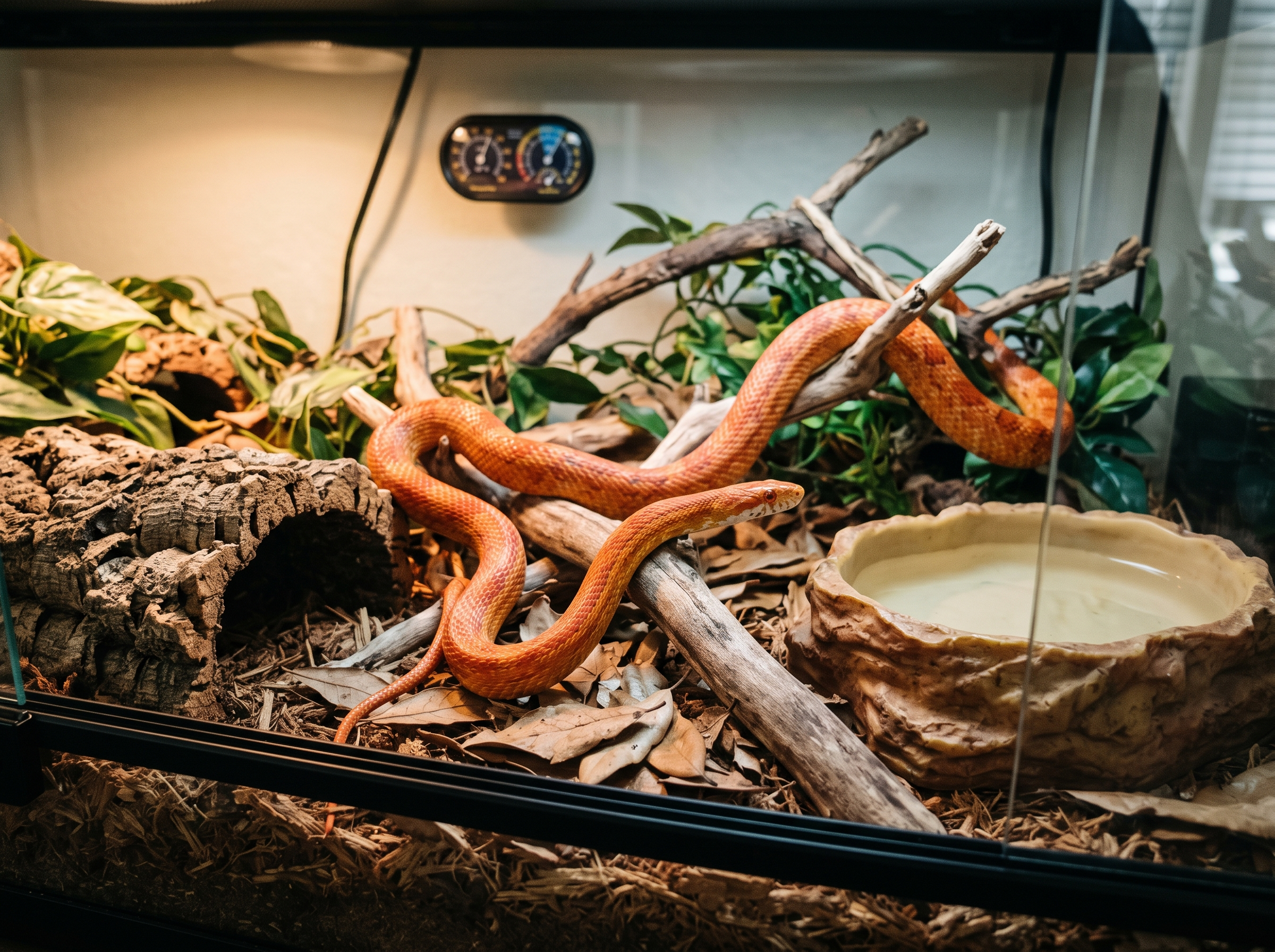
A properly sized enclosure, secure hides, correct environmental conditions, and a stable daily routine all support normal feeding behavior. A snake that feels exposed or insecure in its enclosure may refuse food more often than one with adequate hiding spots and a predictable environment. This directly affects how well they process what do pet snakes eat.
Why Is My Pet Snake Not Eating?
Occasional skipped meals happen, especially in certain adult snakes — ball pythons in particular are known for periods of reduced appetite that don't necessarily indicate illness. That said, there's a meaningful difference between an occasional skipped meal and persistent appetite loss, even if you know what do pet snakes eat.
Common reasons a snake might refuse food include:
- Seasonal changes in appetite, sometimes tied to natural cycles
- Stress from handling, a new environment, or enclosure changes
- Incorrect temperature in the enclosure
- Incorrect humidity levels
- An upcoming shed, during which many snakes temporarily stop eating
- Breeding-related behavior in mature snakes
- Environmental changes, including a recent move or enclosure rearrangement
- Prey that's the wrong size or an unfamiliar prey type
- Underlying illness
A single skipped meal in an otherwise healthy-looking snake usually isn't cause for alarm. Persistent refusal to eat combined with weight loss, lethargy, or other concerning signs is different and worth discussing with an exotic veterinarian. Do not attempt to force-feed a snake at home — this can cause injury and doesn't address the underlying reason the snake stopped eating in the first place.
Why Did My Snake Regurgitate Its Food?
Regurgitation is not a normal or harmless occurrence, and repeated episodes should always prompt a conversation with an exotic vet. Contributing factors can include:
- Handling the snake too soon after a meal
- Enclosure temperatures that are too low to support proper digestion
- Oversized prey relative to the snake's body
- Significant stress around the time of feeding
- An underlying illness affecting digestion
A single regurgitation event still warrants attention to husbandry and feeding practices going forward, and repeated regurgitation is a clear signal that something needs to be investigated rather than repeated. This is a crucial element of managing what do pet snakes eat.
Safety Facts: Feeding Risks Every Snake Parent Should Know
- Feeding bites can happen, particularly if bare hands are used instead of feeding tongs during a strong feeding response
- Live prey can injure a snake through bites or scratches if left unsupervised
- Incorrect prey size increases the risk of regurgitation or digestive strain
- Unsafe thawing methods, including microwaving, can create uneven heating and burn risk
- Spoiled prey can cause illness
- Raw prey handling requires basic hygiene, including handwashing afterward, to avoid cross-contamination (reptiles can carry Salmonella)
- Handling a snake immediately after feeding raises the risk of regurgitation
- Poor enclosure conditions, including incorrect temperature or humidity, can suppress appetite and disrupt digestion
Common Snake Feeding Mistakes to Avoid
- Mistake: Feeding every snake on the same schedule.
Better approach: Follow species-, age-, size-, and body-condition-appropriate guidance instead of a one-size-fits-all timeline when figuring out what do pet snakes eat. - Mistake: Choosing prey that is too large.
Better approach: Choose prey sized to roughly match the snake's body width, not just its length. - Mistake: Leaving live prey unattended.
Better approach: Never leave live prey with a snake unsupervised, even briefly. - Mistake: Handling immediately after feeding.
Better approach: Allow adequate digestion time, typically 24 to 48 hours depending on species and meal size. - Mistake: Ignoring enclosure temperatures.
Better approach: Maintain and monitor species-appropriate temperatures consistently, not just occasionally. - Mistake: Force-feeding without veterinary guidance.
Better approach: Investigate the reason for appetite loss and consult an exotic veterinarian when appropriate. - Mistake: Using wild-caught prey.
Better approach: Use appropriately sourced feeder prey from a reputable supplier to ensure the safety of what do pet snakes eat.
Safety & Warning Signs
- Correct prey size for the snake's current girth
- Properly prepared frozen/thawed prey
- Appropriate feeding tools, such as feeding tongs
- Clean drinking water available at all times
- Species-appropriate temperature and humidity
- Regular monitoring of body condition
- Safe, hygienic prey storage
- Unsupervised live prey
- Oversized prey
- Spoiled prey
- Improper thawing methods
- Offering human food
- Using wild-caught prey
- Handling immediately after feeding
- Unsupervised force-feeding
- Persistent appetite loss combined with weight loss
- Repeated regurgitation
- Significant unexplained weight loss
- Difficulty breathing
- Mouth swelling or discharge
- Persistent lethargy
- Suspected injury
- Persistent digestive abnormalities
- Major behavioral changes
One skipped meal does not automatically mean something is wrong. Context and pattern matter far more than a single missed feeding when figuring out what do pet snakes eat and how they process it.
When to See an Exotic Vet
An exotic animal veterinarian is the right professional to consult for persistent or concerning feeding problems — not general online advice, and not guesswork at home. If you want to know more about snake care and when to involve a professional, the AVMA (American Veterinary Medical Association) offers guidelines. Contact an exotic vet if you notice:
- Persistent refusal to eat accompanied by weight loss
- Repeated regurgitation
- Suspected injury related to prey, live or otherwise
- Breathing problems
- Mouth swelling, discharge, or other abnormalities
- Significant weakness or lethargy
- Persistent abnormal stool
- Suspected ingestion of an inappropriate object or substance
- Any condition that seems to be worsening quickly
These signs don't automatically point to one specific diagnosis, and a vet visit is about getting an accurate answer rather than guessing at home when issues arise around what do pet snakes eat.
Your Quick Snake Feeding Checklist
- ☐ Confirm your snake's species and life stage
- ☐ Choose appropriately sized whole prey based on what do pet snakes eat
- ☐ Use properly sourced feeder prey
- ☐ Thaw and prepare prey safely
- ☐ Use appropriate feeding tools
- ☐ Maintain species-appropriate temperature and humidity
- ☐ Monitor appetite, body condition, and digestion
Frequently Asked Questions
How often do pet snakes eat?
It depends heavily on species, age, and size. As general guidance, hatchlings often eat every five to seven days, juveniles every seven to ten days, and adults every ten to twenty-one days or longer. Always check species-specific recommendations rather than relying on one fixed schedule to understand what do pet snakes eat and how often.
What do pet snakes eat besides mice?
Depending on the species, pet snakes may eat rats, and in some cases, appropriately sized birds, quail, or other prey used by certain species and life stages. Garter snakes are a notable exception, often fed fish, worms, or amphibians rather than rodents.
Should I feed my pet snake live or frozen prey?
Frozen/thawed prey is widely recommended for its convenience, safety, and reduced injury risk, since thawed prey can't bite or scratch back. Live prey is sometimes used for picky eaters but requires constant supervision and should never be left unattended with your snake.
How do I know if my snake's prey is the right size?
A good general guideline is matching prey width to the thickest part of your snake's body, not its length. Signs that prey is too large include noticeable strain during swallowing, excessive bulging, or regurgitation shortly after feeding.
Why is my pet snake not eating?
Occasional skipped meals can be normal, especially in some adult snakes, and may relate to shedding, seasonal changes, stress, or incorrect temperature and humidity. Persistent refusal to eat, especially with weight loss or other symptoms, should be discussed with an exotic veterinarian rather than addressed with force-feeding.
The Bottom Line
If you take one thing away from everything above, let it be this: answering what do pet snakes eat usually comes down to appropriately sized whole prey, but the exact diet, prey size, and feeding schedule depend on your snake's specific species and life stage. There's no single feeding rule that works for every snake, and treating one species' guidelines as universal is where a lot of avoidable feeding problems start.
Frozen/thawed prey is often the more practical and generally safer choice for most owners, and getting the basics right — correct prey size, appropriate temperature and humidity, and a calm, low-stress feeding routine — supports normal digestion far more than any single trick or shortcut.
If your snake's feeding behavior changes in a way that concerns you, or a skipped meal turns into a persistent pattern with other symptoms, an exotic veterinarian is the right person to help you figure out what's actually going on with what do pet snakes eat.
Explore More Reptile Care Tips
For more advice on keeping your cold-blooded friends healthy, check out our full range of Snake Care Guides.
About the Author
Irfan Hyder is a dedicated pet care writer at PetStory.org, specializing in the husbandry and wellness of companion animals. He combines veterinary research with practical, hands-on experience to help pet parents create thriving environments for their reptiles, birds, and small animals.